






Ceramic vs Stainless Steel Frying Pan: Which Should You Buy?
Ceramic nonstick frying pans are easier to cook on and clean and are best for eggs and delicate foods; stainless steel frying pans sear better, take high heat, and last a lifetime. Neither is "better" outright - they do different jobs, and many cooks own one of each.
At a glance
- Food release: Ceramic wins - slick out of the box. Stainless needs proper preheating.
- Searing & browning: Stainless wins - higher heat, better fond for pan sauces.
- Durability: Stainless wins - no coating to wear; lasts decades. Ceramic coatings fade over a few years.
- Ease of use: Ceramic wins - beginner-friendly, low-oil, easy cleanup.
- Heat & oven: Stainless wins - high heat, metal utensils, oven to 500°F.
- Non-toxic: Tie - uncoated stainless has no coating at all; quality ceramic is made without PFAS, PTFE or PFOA but does wear.
How a ceramic nonstick pan cooks
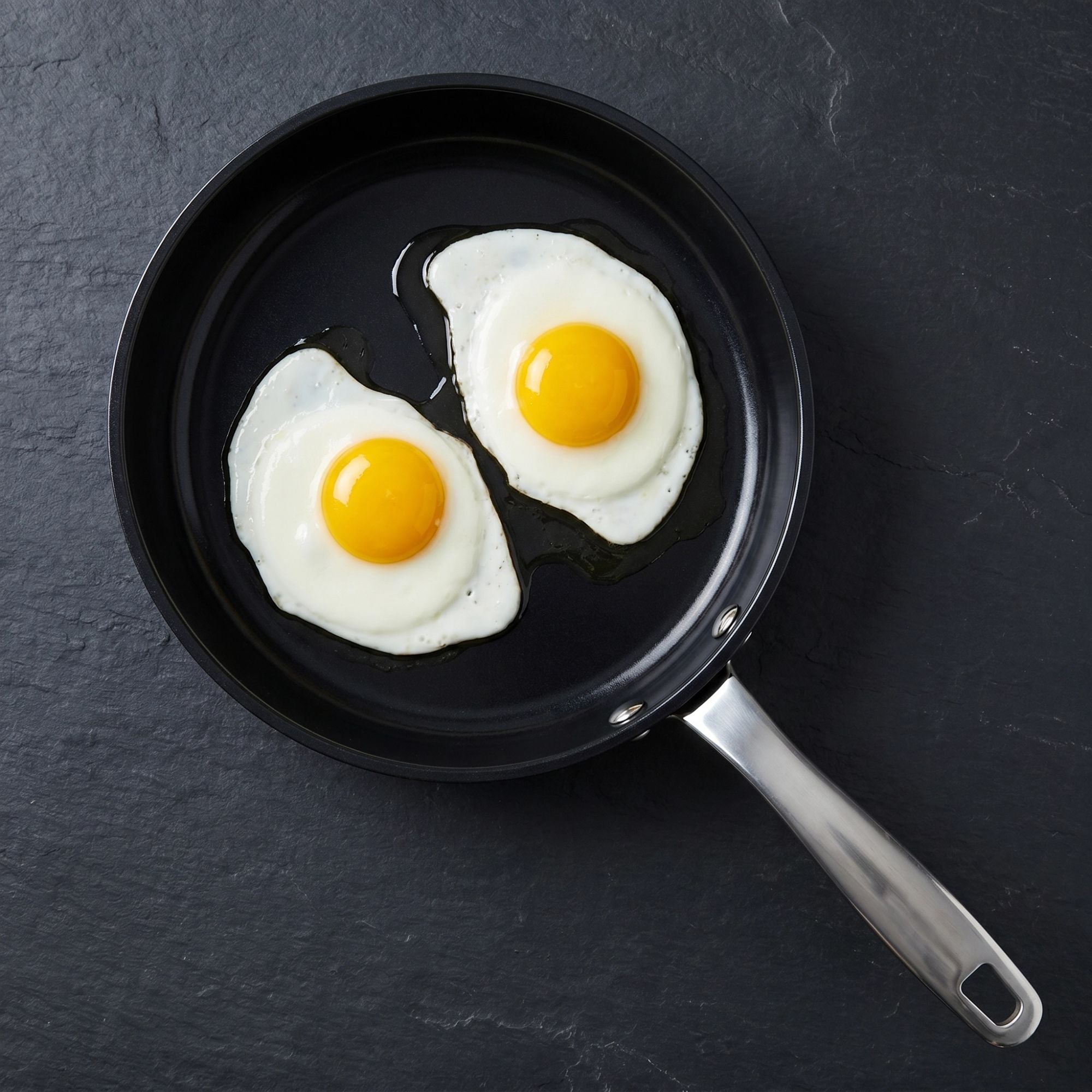
A ceramic coating made without PFAS, PTFE or PFOA releases food with little or no oil, making it the easy choice for eggs, pancakes, fish, and quick cleanup. Keep it to medium heat and soft utensils and it'll serve you for years. Our pick: the Maestro Ceramic Nonstick - see best ceramic nonstick frying pan.

Our Top Pick
5-Ply Stainless Steel Frying Pan
Fully clad 5-ply stainless steel for even heat, better browning and pan sauces. Uncoated, induction-ready, oven-safe to 500°F and backed by a lifetime warranty.
Shop the 5-Ply Frying PanIndependently tested. Alva publishes its third-party lab reports in full, with the lab, report number and date for each line. See the lab reports →
How a stainless steel pan cooks
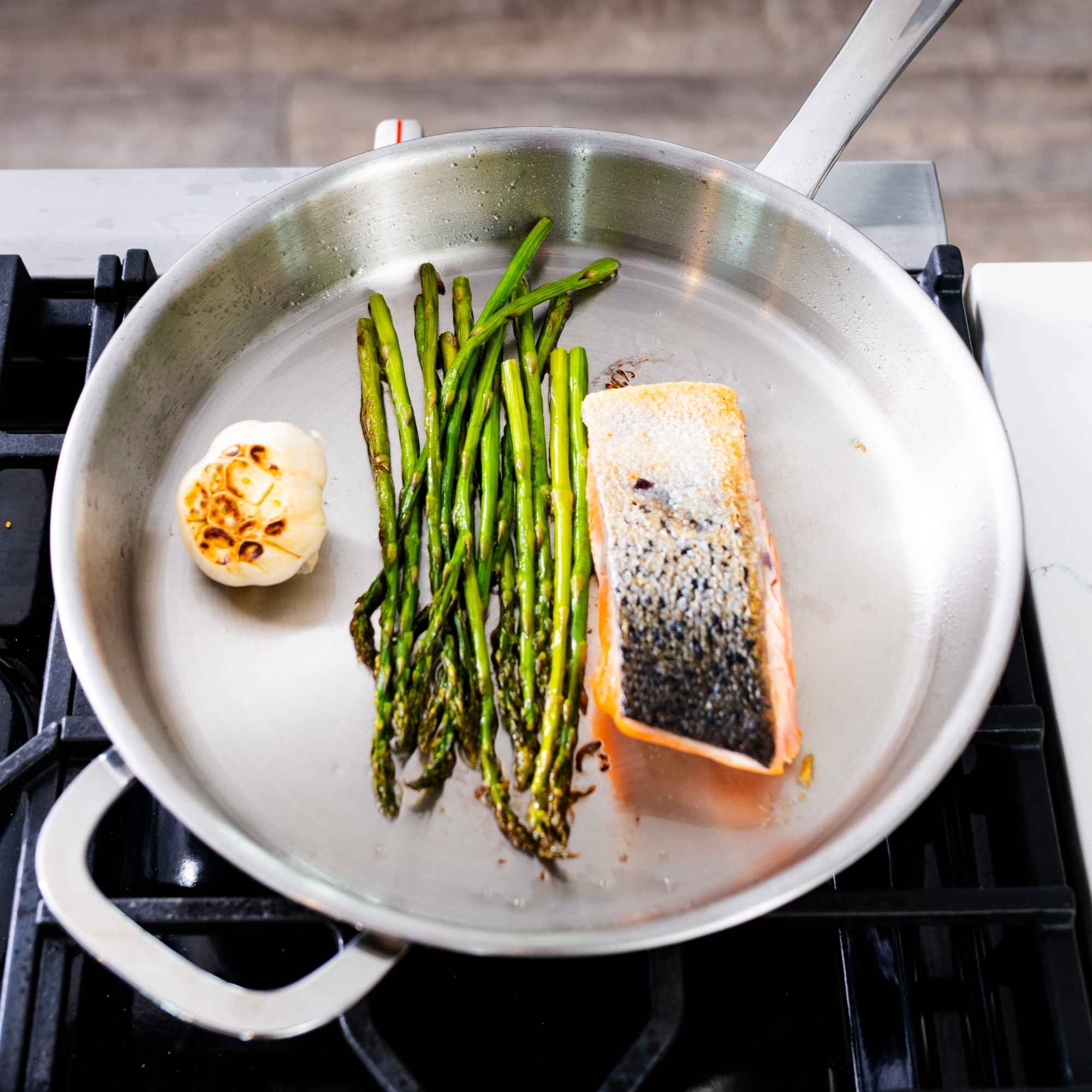
Fully clad stainless heats evenly and takes the high heat that builds a deep sear and fond for pan sauces - the things nonstick can't do. Layer count matters here too - we break down what the extra layers in 5-ply buy you. There's a short learning curve, but the payoff is a pan you'll never replace. Our pick: the Maestro 5-Ply Stainless - see best stainless steel frying pan and the no-stick technique.
Which should you buy?
- Buy ceramic nonstick for eggs, delicate foods, low-oil cooking, and easy cleanup.
- Buy stainless for searing, browning, pan sauces, high heat, and buy-it-for-life durability.
- Own both if you can - they cover each other's weak spots, and Alva's Maestro line offers both so they match on your stovetop.
Both are genuinely non-toxic - more on that in best non-toxic frying pan and stainless steel vs nonstick. If coated aluminum is also on your shortlist, our comparison of stainless steel and hard-anodized pans explains where that route differs.
Frequently asked questions
Is a ceramic or stainless steel frying pan better?
Neither outright — they are built for opposite jobs. Ceramic is easier and better for eggs and delicate foods; stainless sears harder and lasts far longer. If you cook eggs most mornings, start with ceramic. If you cook meat most nights, start with stainless.
Which lasts longer, ceramic or stainless?
Stainless, by a wide margin. It has no coating to wear out, which is why ours carries a lifetime warranty against 10 years on our ceramic. Every nonstick surface is a consumable measured in years; uncoated metal is not.
Is ceramic or stainless safer?
Both are safe. Uncoated stainless has nothing applied to it at all, so there is nothing that can wear or degrade. Quality ceramic contains no PFAS, PTFE or PFOA and is safe throughout its life — that life is simply finite. The difference is durability, not toxicity.
Can you sear a steak in a ceramic pan?
Not properly. A real sear needs heat above what a ceramic coating should be pushed to, and the nonstick surface prevents the browned fond that makes a pan sauce. You will get a cooked steak with a pale exterior. Use stainless, carbon steel or cast iron.
Why do eggs stick to my stainless pan?
Underheating, almost always. Preheat the dry pan until a drop of water beads and glides rather than spitting, then add fat, then the egg. It is genuinely possible to cook eggs on stainless — it just takes a step ceramic does not, which is why most people keep one nonstick pan for exactly this.
Can you use metal utensils on either?
On stainless, yes — there is no coating to scratch, so metal spatulas and whisks are fine. On ceramic, no: metal scratches any coating and shortens its life considerably. Silicone, nylon or wood on anything coated.
The bottom line
Match the pan to the job: ceramic nonstick for everyday ease, stainless for searing and longevity. Free U.S. shipping over $99.
Still deciding between the two?
See every Alva frying pan together — ceramic nonstick and uncoated stainless side by side, with sizes, oven limits, warranties and weights. Free U.S. shipping over $99.


Leave a comment
This site is protected by hCaptcha and the hCaptcha Privacy Policy and Terms of Service apply.