






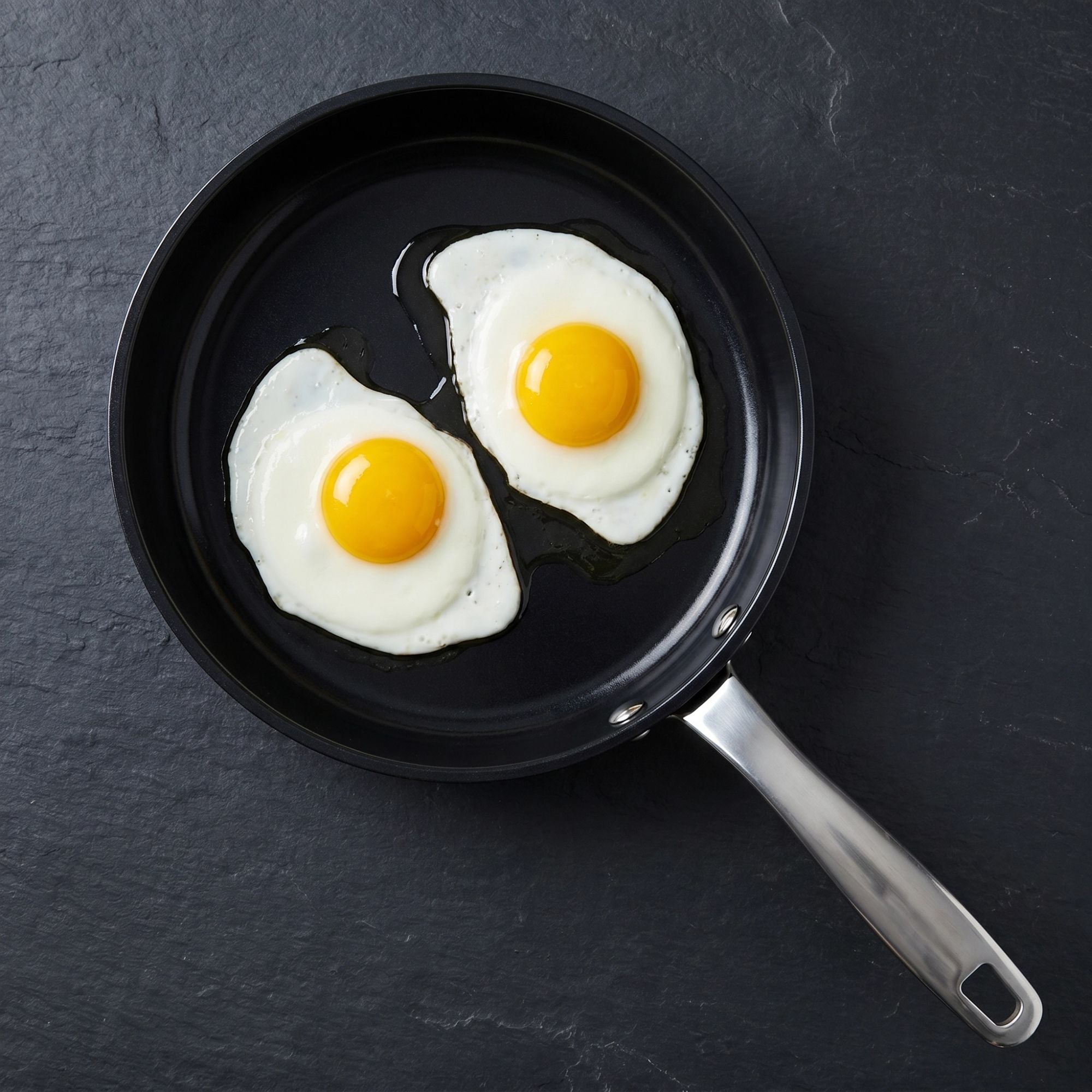
Best Pan for Eggs (2026): How to Get Eggs That Never Stick
The best pan for eggs is a smooth, evenly heated nonstick frying pan in the 8-10 inch range - a ceramic nonstick made without PFAS, PTFE or PFOA is the easiest way to get eggs that slide right out. The pan matters more than your technique: a worn or overheated surface is why eggs stick.
Why eggs stick (and how to stop it)
Eggs are mostly protein and water, and protein bonds to a hot, dry, or scratched surface. The fixes: a smooth nonstick coating, medium (not high) heat, a little fat, and a soft utensil. Even on nonstick, high heat is the fastest way to ruin both your eggs and the coating.

Our Top Pick
Ceramic Nonstick Frying Pan
Easy ceramic nonstick for everyday meals. Made without PFAS, PTFE or PFOA, supported by published third-party testing, induction-ready, oven-safe to 400°F and backed by a 10-year limited warranty.
Shop the Maestro Frying PanIndependently tested. Alva publishes its third-party lab reports in full, with the lab, report number and date for each line. See the lab reports →
What to look for in an egg pan
- Smooth nonstick made without PFAS - ceramic releases eggs cleanly without forever chemicals.
- 8-10 inch size - an 8-inch is the classic 2-3 egg pan; 9.5-10 inch handles omelets and scrambles for the family.
- Even heating - a thick, forged base prevents the hot spots that scorch and stick.
- Gently sloped sides - so a fried egg or omelet slides out in one motion.
- Stay-cool handle and induction compatibility.
Our pick: the Maestro Ceramic Nonstick (8-inch)
The Maestro Ceramic Nonstick Frying Pan is purpose-built for this: the 8-inch is the perfect breakfast pan, with a Belgian-designed sol-gel ceramic surface that's made without PFAS, PTFE or PFOA and independently tested, a 4.5mm forged base for even heat, and a stay-cool handle. Go 9.5 or 11-inch for bigger scrambles and omelets. Backed by a 10-year warranty. See the full best ceramic nonstick frying pan guide. Making crepes or pancakes too? A low-sided pan flips them even more easily - see the best crepe pan guide. Free U.S. shipping over $99.
Making omelettes specifically?
An omelette asks a little more of a pan than a fried egg does - you want sloping sides you can roll the egg against and a surface that releases without tearing. The 8-inch is our pick there too; see the best omelette pan guide for sizing, technique, and the folding method. For pancakes and other flat batters, a low-sided pan is easier again - see the best pancake pan.
What about stainless steel for eggs?
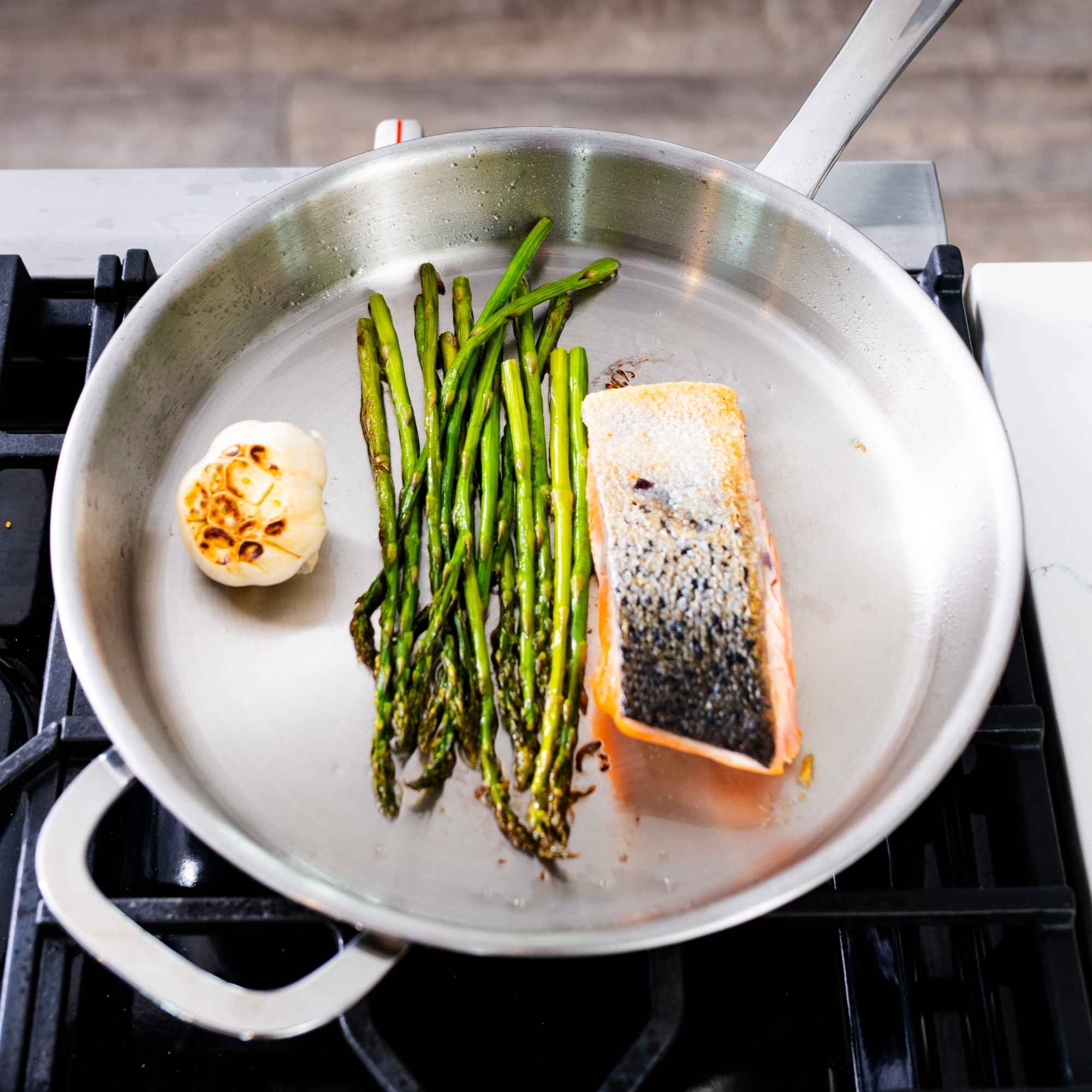
You can cook eggs in stainless, but it takes precise preheating and more fat - great for crispy-edged fried eggs once you've got the water-test technique down, less forgiving for soft scrambles. For everyday eggs, ceramic nonstick is the easier tool. See stainless vs nonstick.
Keep it nonstick longer
Medium heat, soft utensils, no aerosol sprays, hand-wash. Full routine in how to clean a nonstick pan.
Frequently asked questions
What is the best pan for cooking eggs?
A smooth ceramic nonstick frying pan made without PFAS, 8 to 10 inches, with a thick base that heats evenly. Eggs are the one job where nonstick genuinely beats every other material — there is no technique that makes stainless as easy for a soft scramble.
What size pan is best for eggs?
An 8-inch for two or three eggs and single omelettes — small enough that the egg stays thick rather than spreading thin. Go 9.5 or 10 inch for family scrambles. Using too large a pan is a common cause of rubbery eggs, because they cook through before you can move them.
Why do my eggs stick to a nonstick pan?
Usually heat, not the pan. Nonstick works best on medium — high heat makes egg protein bond even to a good coating, and it degrades the surface at the same time. If eggs stick at medium heat with a little butter, the coating is worn and the pan needs replacing.
Do you need oil or butter in a nonstick pan?
A little, yes, and it is worth it. A healthy coating will release an egg with nothing at all, but a thin film of butter or oil conducts heat into the egg more evenly and improves the flavour and texture. Skip aerosol sprays — they leave a residue that builds up and ruins release over time.
Can you cook eggs in cast iron or carbon steel?
Yes, once the seasoning is well established — a properly seasoned carbon steel pan will release a fried egg cleanly, and the crisp edges are better than anything nonstick gives you. Soft scrambles and omelettes are much harder. It is a technique payoff, not a beginner route.
How long should an egg pan last?
Several years with medium heat, soft utensils and hand-washing. Because it is used daily, an egg pan wears faster than the rest of your cookware — that is normal, not a defect. When an egg no longer releases with a little fat, it is time to replace it; ours is covered for 10 years.
The bottom line
For eggs that slide right out, use a smooth ceramic pan made without PFAS at medium heat. The Maestro Ceramic Nonstick 8-inch is the breakfast pan to reach for.
Not sure which size to get?
See every Alva nonstick pan side by side — 8, 9.5 and 11 inch, plus sets — with oven limits, warranties and weights in one place. Free U.S. shipping over $99.
Beyond eggs: a loaded vegetable frittata and the easiest way to cook bacon.
Our top pickCeramic Nonstick Frying PanShop now →


Leave a comment
This site is protected by hCaptcha and the hCaptcha Privacy Policy and Terms of Service apply.