






Best Pan for Cooking Fish (2026): Ceramic, Stainless or Carbon Steel?
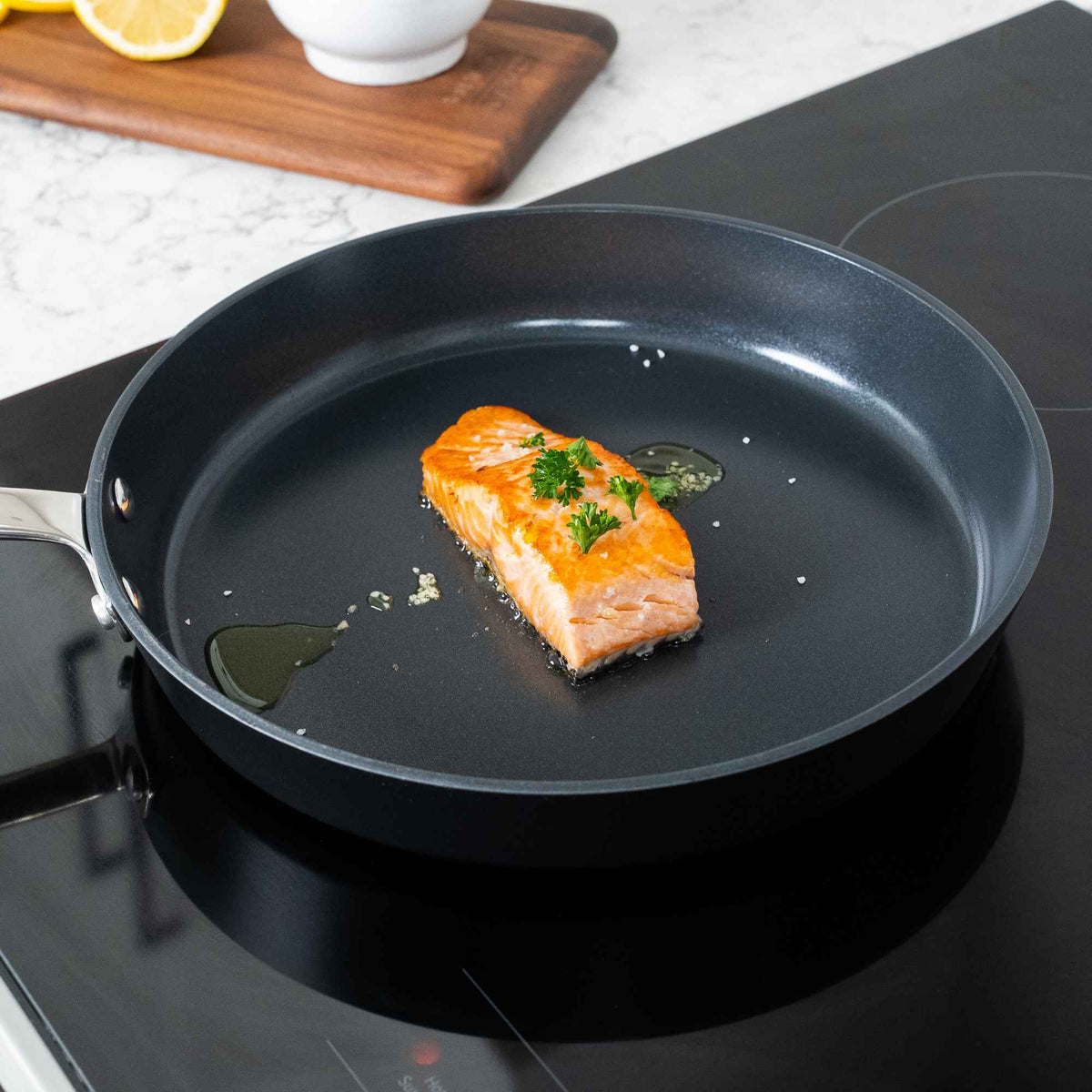
The best pan for fish is the one that releases the skin cleanly and gives you room to flip without breaking the fillet. For most home cooks that means a ceramic nonstick pan for delicate fillets and whole fish, or a well-preheated 5-ply stainless pan if you want a harder sear and dishwasher-safe cleanup. Cast iron and carbon steel work too, but they take more practice and seasoning care.
Independently tested. Alva publishes its third-party lab reports in full, with the lab, report number and date for each line. See the lab reports →
What makes a pan good for fish
Fish is the food most likely to stick and tear, because the skin and flesh bond quickly to a hot metal surface. Three things matter more than brand:
Surface. A smooth nonstick or ceramic surface lets skin release with little oil. Bare metal can release too, but only if the pan is properly preheated and the fish is dry.
Shape. Whole fish such as trout or branzino will not fit a round 10-inch pan. A long, shallow pan keeps the fish intact and gives you room to turn it.
Weight and handle. A fish is awkward to flip. A lighter pan is easier to lift, tilt and slide a spatula under.
Ceramic vs stainless vs carbon steel for fish
| Material | Release | Best for | Trade-off |
|---|---|---|---|
| Ceramic nonstick | Easiest | Delicate fillets, whole fish, skin-on cooking | Needs low-to-medium heat; hand wash recommended |
| 5-ply stainless | Good when preheated | Hard sear, pan sauces, oven finishing | Sticks if the pan is cold or the fish is wet |
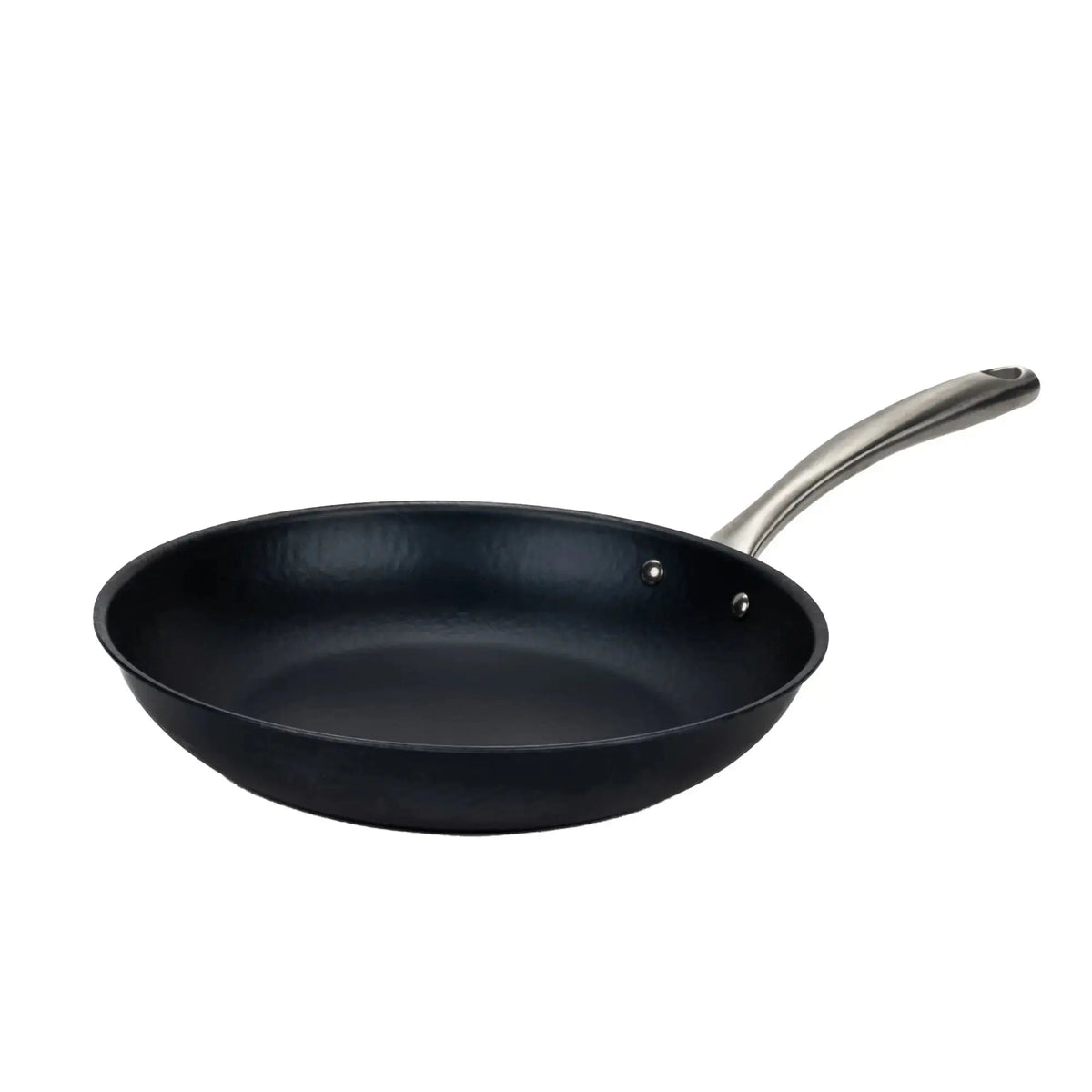
| Carbon steel | Good once seasoned | Crisp skin, high heat | Needs seasoning; not dishwasher-friendly |
| Cast iron | Good once seasoned | Thick fillets, blackening | Heavy; seasoning can pick up fish flavor |
Our pick: the Alva Energy Ceramic Nonstick Whole Fish Pan
The Ceramic Nonstick Whole Fish Pan is built for exactly this job. The elongated, shallow shape holds a whole fish or a pair of fillets, and the smooth ceramic surface helps the skin release instead of staying behind in the pan. The recycled-aluminum body spreads heat along the length of the pan and is lighter to lift than a cast iron fish pan. It works on gas, electric, ceramic, halogen and induction cooktops, and it comes with a 5-year limited warranty against manufacturing defects. Free U.S. shipping over $99.
To keep a ceramic surface performing, cook on low to medium heat, use a little oil or butter, avoid aerosol sprays, use silicone, wood or nylon utensils, and hand wash with a soft sponge after the pan cools.
If you want a harder sear: stainless steel
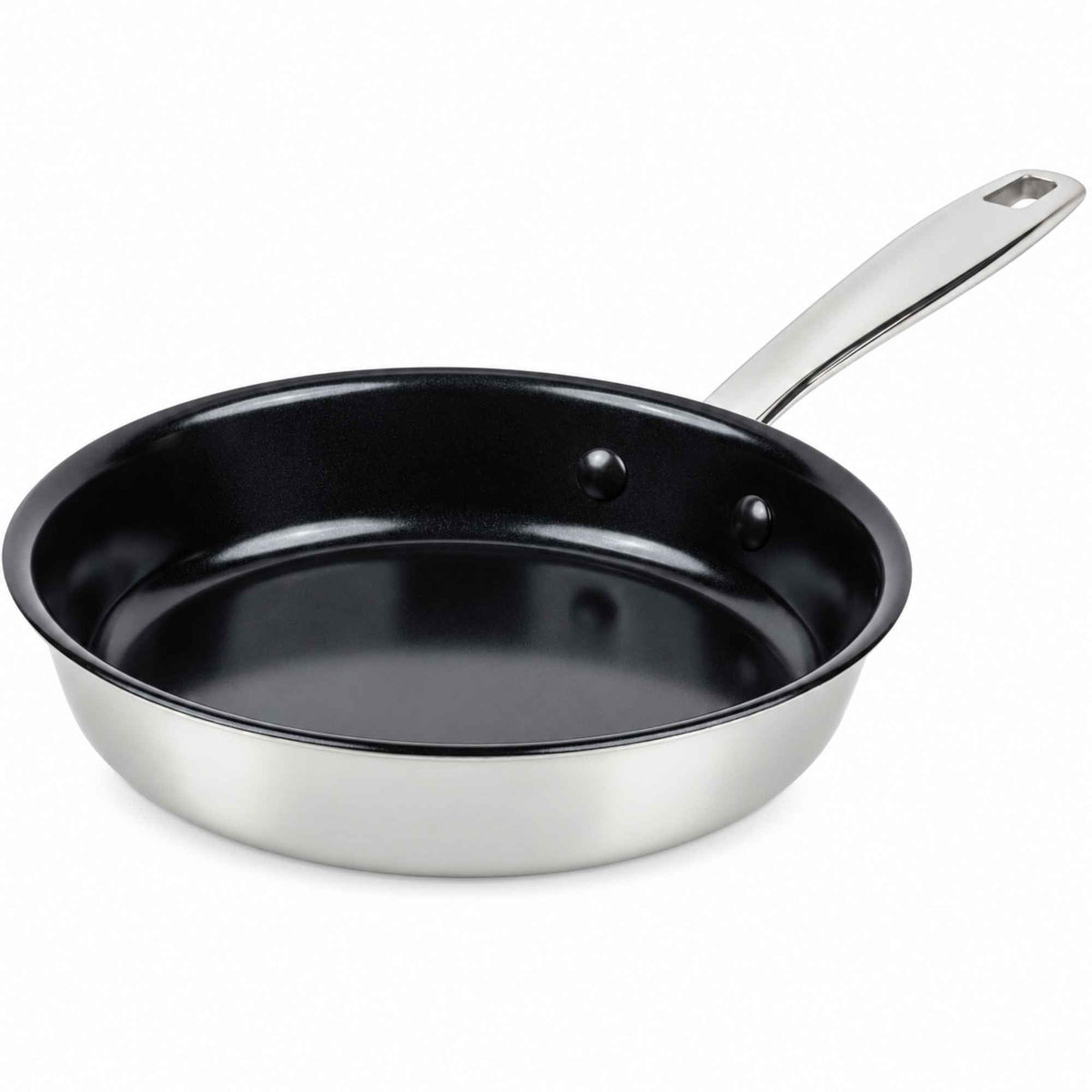
For crisp skin and a pan sauce, a fully clad stainless pan is a solid alternative. The Maestro 5-Ply Stainless Frying Pan comes in 8-inch, 9.5-inch and 11-inch sizes. It is oven-safe to 500°F, so you can sear on the stovetop and finish thicker fillets in the oven, and it is dishwasher-safe. The catch is technique: preheat the pan, add oil, and make sure the fish is dry. If you want help with that, see how to cook on stainless steel without sticking.
How to cook fish so it does not stick
Pat the fish completely dry and season it just before cooking. Preheat the pan, add a thin layer of oil, and lay the fish in skin-side down, away from you. Press gently for the first 10 to 15 seconds so the skin makes full contact, then leave it alone. When the skin has crisped and the fish releases easily, flip it. Fish is cooked through at an internal temperature of 145°F.
Do not force a fillet that is still gripping the pan. It will release on its own once the crust forms.
Where this is not the right choice
The Whole Fish Pan is stovetop only, so it cannot finish a thick fillet in the oven, and it is not dishwasher-safe. If you mostly cook fish fillets a few times a month, a regular ceramic or stainless frying pan will cover it, and a dedicated fish pan is only worth it if you cook whole fish. If you want oven-finishing and dishwasher cleanup, choose stainless instead.
Frequently asked questions
What is the best pan to cook fish in?
A ceramic nonstick pan is the easiest for delicate fish and skin-on fillets because the skin releases cleanly. A preheated 5-ply stainless pan is the best choice when you want a harder sear and an oven finish.
Do you need a special pan for whole fish?
Not strictly, but a long, shallow pan fits a whole trout or branzino and makes flipping much easier than a round skillet.
How do you keep fish from sticking to the pan?
Dry the fish well, preheat the pan before adding oil, and leave the fish alone until the crust forms and it releases naturally.
Can you cook fish in stainless steel?
Yes. Preheat the pan, use enough oil, and start with dry fish. Stainless gives a stronger sear and lets you build a pan sauce from the browned bits.
What temperature should fish be cooked to?
Cook fish to an internal temperature of 145°F.


Leave a comment
This site is protected by hCaptcha and the hCaptcha Privacy Policy and Terms of Service apply.