






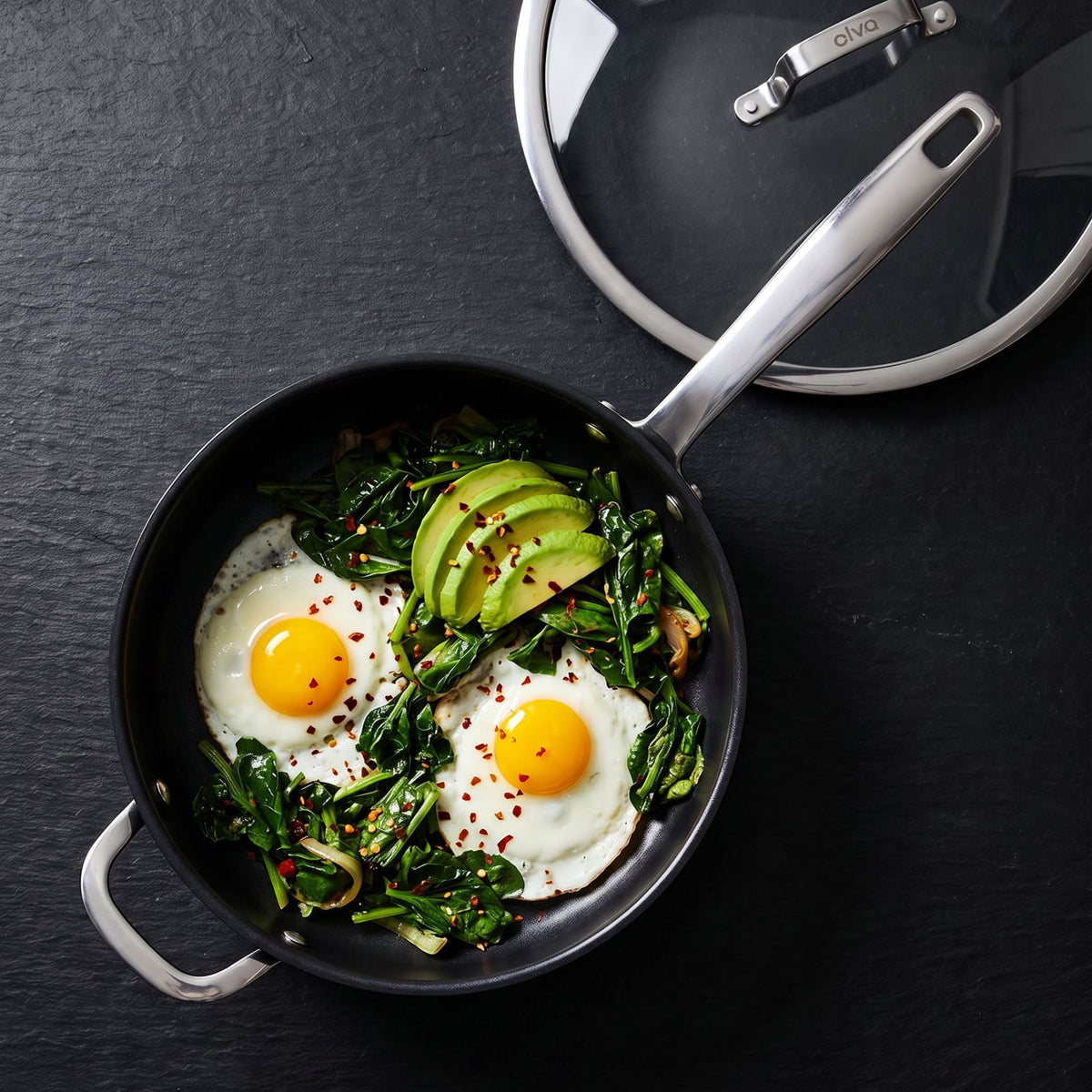
Best Omelette Pan (2026): Non-Toxic Picks for a Perfect Fold
The best omelette pan is an 8-inch pan with sloping sides, a smooth nonstick surface made without PFAS, and even heat that won't scorch eggs at the edges. Our pick is Alva's Ceramic Nonstick Frying Pan in 8-inch — the sloped walls let you roll or fold an omelette in one motion, and the ceramic release means it slides onto the plate instead of tearing. Below: how to choose, our picks by cooking style, and the technique that matters more than the pan.
At a glance
Swipe left or right to compare →
| Pan | Price | Best for | Oven-safe | Warranty |
|---|---|---|---|---|
| Ceramic Nonstick Frying Pan, 8" | See product page | Classic French folded omelettes — our pick | 400°F | 10-year |
| Ceramic Nonstick Frying Pan, 9.5" | See product page | Three-egg American omelettes with fillings | 400°F | 10-year |
| Ceramic Nonstick Crepe Pan, 10" | See product page | Flat omelettes, frittata-style and tortilla española | 400°F | 10-year |
| 5-Ply Stainless Frying Pan, 8" | See product page | Buy-it-for-life, browned-butter omelettes | 500°F | Lifetime |
What makes an omelette pan different from a frying pan
Three things. Sloping sides — an omelette pan flares outward so a spatula can get under the egg and so the omelette rolls onto itself as you tilt the pan; straight-walled sauté pans fight you at exactly the wrong moment. Size — an 8-inch surface sets a two-to-three-egg omelette at the right thickness; too big and the eggs spread thin and overcook before they set. A genuinely smooth surface — egg protein grips anything textured or scratched, so release matters more here than in almost any other pan.

Our Top Pick
Ceramic Nonstick Frying Pan
Easy ceramic nonstick for everyday meals. Made without PFAS, PTFE or PFOA, supported by published third-party testing, induction-ready, oven-safe to 400°F and backed by a 10-year limited warranty.
Shop the Maestro Frying PanIndependently tested. Alva publishes its third-party lab reports in full, with the lab, report number and date for each line. See the lab reports →
How to choose
- 8 inches for a classic omelette, 9.5–10" for a loaded one. Two or three eggs in an 8-inch pan gives you a French omelette you can roll. Add mushrooms, cheese, and peppers and you want the extra room.
- Nonstick made without PFAS over anything else. Eggs are the single hardest test of a nonstick surface. A quality ceramic coating releases them without the forever chemicals — look for published third-party test results, not just a "non-toxic" label.
- Even heat, no hot spots. Omelettes cook fast and low. A thick forged base (ours is 4.5mm) keeps the center and the rim setting at the same rate.
- Light enough to tilt and roll. You lift and swirl this pan constantly. Around 2 lbs is the sweet spot; a heavy cast iron skillet makes the rolling motion awkward.
- A stay-cool handle — you'll be holding it at an angle over heat for the whole cook.
- Induction compatibility if that's your cooktop — check for a magnetic stainless base.
Our pick: Ceramic Nonstick Frying Pan, 8-inch
The Ceramic Nonstick Frying Pan in 8-inch is the omelette pan we reach for. The sol-gel ceramic surface is made without PFAS, PTFE, or PFOA and independently tested (reports published on our safety standards page), the forged aluminum body heats evenly at the low temperature omelettes actually want, and the sloped walls make the roll feel easy rather than fussy. It's induction-ready, oven-safe to 400°F, and backed by a 10-year warranty — the longest we offer on a ceramic coating.
What we like: eggs release cleanly with just a knob of butter, the 8-inch size is right for a two-to-three-egg omelette, and it's light enough to tilt one-handed.
Good to know: ceramic wants low-to-medium heat, soft utensils, and hand-washing — it is not dishwasher-safe, and high heat is the fastest way to shorten any coating's life. Fortunately, omelettes should never be cooked hot anyway.
Shop the Ceramic Nonstick Frying Pan
Cooking a loaded omelette? Size up
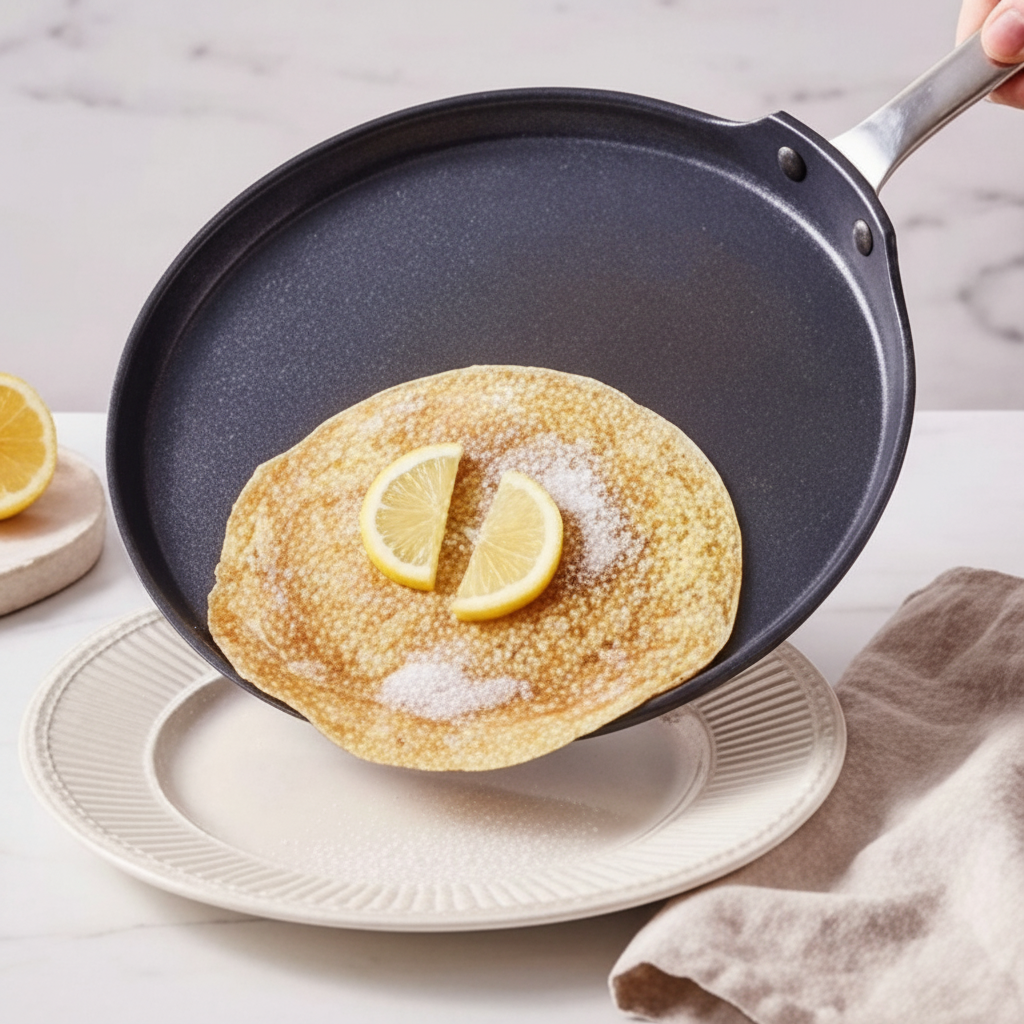
The 9.5-inch is the better choice for a three-egg American-style omelette with fillings, and the 11-inch handles a family scramble. If you make flat, unfolded omelettes — a Spanish tortilla, or a frittata you finish under low heat — the 10" Ceramic Nonstick Crepe Pan is a smart pick: the low sides make sliding a flat omelette onto a plate effortless, and it doubles for crepes and pancakes. See the best crepe pan guide.
The stainless option
The 5-Ply Stainless Frying Pan makes an excellent omelette once you've learned the preheat — and it's the only pan here with no coating to wear out, so it's dishwasher-safe, oven-safe to 500°F, and carries a lifetime warranty. It's less forgiving with eggs than ceramic: you need the pan properly preheated and enough butter. Learn the technique in how to cook on stainless steel without sticking, and compare the two approaches in stainless steel vs nonstick.
Technique: the part the pan can't do for you
Medium-low heat, always. Beat the eggs until no streaks remain, melt butter until it foams but doesn't brown, then pour and stir gently with a silicone spatula for the first fifteen seconds to build small curds. Stop stirring, let the base set, add fillings to one half, and tilt the pan away from you to roll or fold. A French omelette should be pale gold with no browning at all; an American one takes a little more color. If the eggs are browning or setting instantly, your pan is too hot.
Keep the release like new
Low-to-medium heat, silicone or wooden utensils, no aerosol cooking sprays (they leave a residue that builds up and ruins release), and a hand-wash with a soft sponge once the pan has cooled. Full routine in how to clean a nonstick pan. For the safety detail on ceramic coatings, see are ceramic pans safe.
Frequently asked questions
What is the best omelette pan?
An 8-inch pan with sloping sides and a smooth ceramic nonstick surface made without PFAS. Alva's Ceramic Nonstick Frying Pan 8-inch is our pick — the sloped walls make rolling an omelette straightforward and the ceramic releases eggs cleanly.
What size pan is best for an omelette?
8 inches for a two-to-three-egg French omelette; 9.5–10 inches for a larger American omelette with fillings. Too large a pan spreads the egg thin and overcooks it.
Is a nonstick pan necessary for omelettes?
Not strictly — a well-preheated stainless or seasoned carbon steel pan works — but nonstick is far more forgiving. Egg protein bonds readily to bare metal, so a smooth ceramic coating made without PFAS is the easiest route to an omelette that rolls out intact.
Can I use an omelette pan for other things?
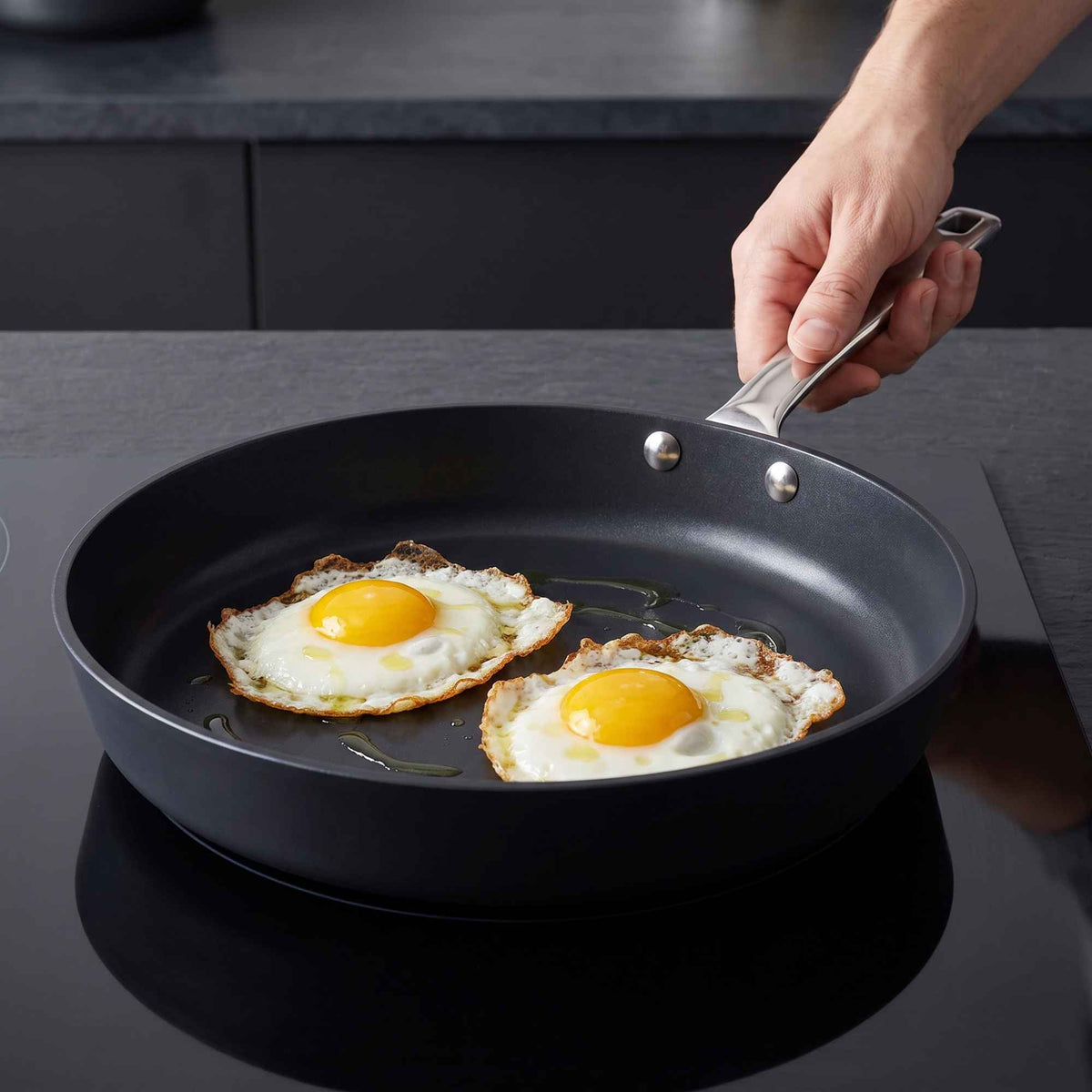
Yes. An 8-inch sloped pan is the ideal everyday egg pan — fried eggs, scrambles, a single grilled cheese — and Alva's is oven-safe to 400°F for finishing a frittata. See our best pan for eggs guide.
Is a ceramic omelette pan non-toxic?
A quality one is made without PFAS, PTFE, or PFOA — but "non-toxic" isn't a regulated term, so look for published third-party lab results. Alva's ceramic coatings are independently tested by TÜV Rheinland, with reports published on our safety standards page.
Why do my omelettes stick even in a nonstick pan?
Usually heat that's too high, not enough fat, or a coating that's worn or scratched. Cook on medium-low with real butter, use soft utensils, and replace a pan once the surface is visibly scratched.
The bottom line
For omelettes that fold instead of tear, get the Ceramic Nonstick Frying Pan, 8-inch and keep the heat low. If you'd rather buy one pan for life and learn the technique, the 5-Ply Stainless 8-inch is the alternative. Free U.S. shipping over $99.
Our top pickCeramic Nonstick Frying PanShop now →


Leave a comment
This site is protected by hCaptcha and the hCaptcha Privacy Policy and Terms of Service apply.