






Article: Is Carbon Steel Cookware Safe? Iron, Seasoning and Rust
Is Carbon Steel Cookware Safe? Iron, Seasoning and Rust
Yes, carbon steel cookware is safe to cook with. It is iron with a small amount of carbon, and a pan like ours has no coating at all, so there is no PFAS or PTFE to worry about. The real questions are practical: how much iron a pan can add to food, what rust means, and which dishes strip the seasoning. Dry the pan after washing, keep it lightly oiled, and it is a low-risk pan that gets better with use.
Our Top Pick
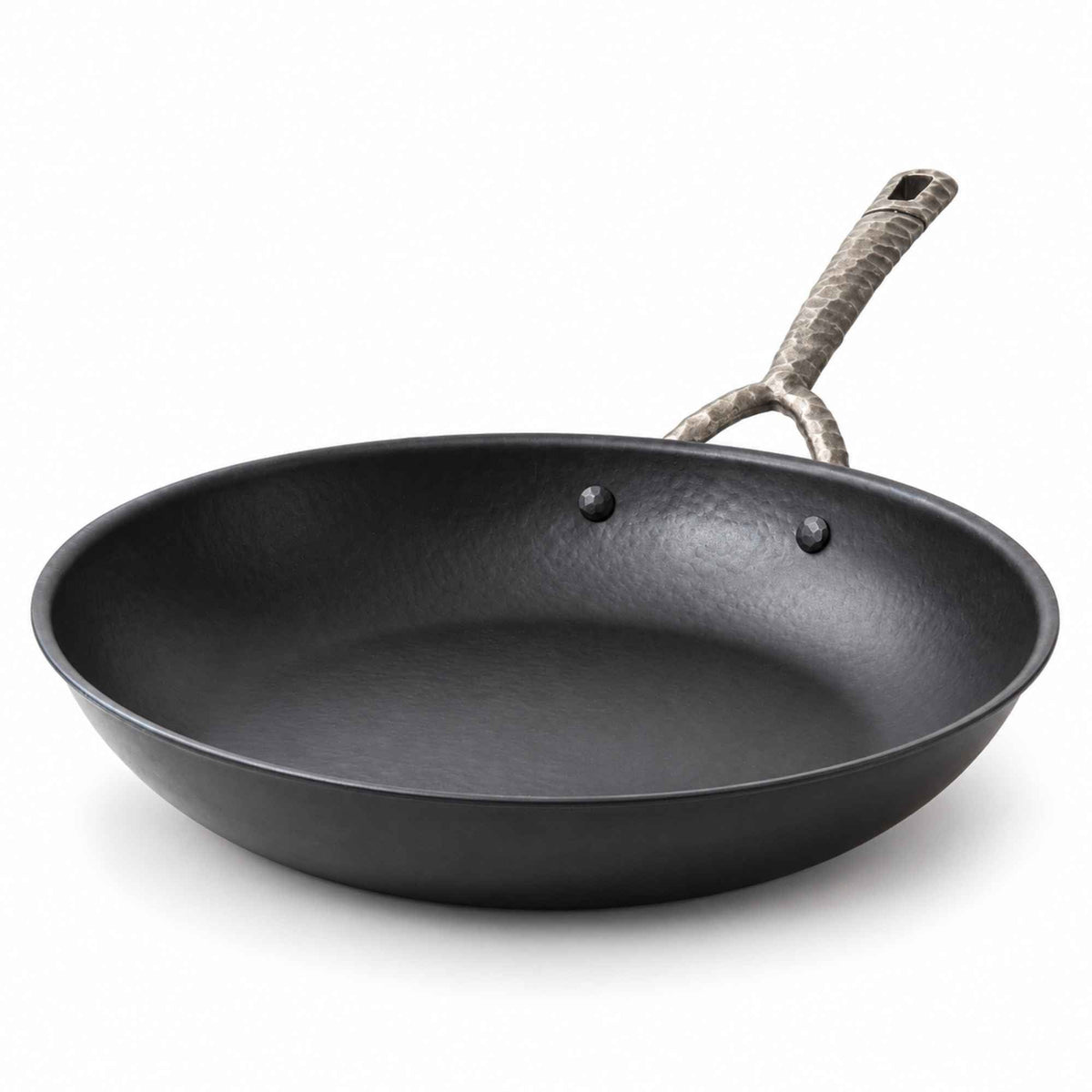
Hammered Carbon Steel Frying Pan
Pre-seasoned and uncoated, with a hammered finish and a forged-style handle. Oven-safe to 500°F, induction-ready and backed by a 25-year limited warranty. Free U.S. shipping over $99.
Shop the Carbon Steel PanWhat carbon steel is made of
Carbon steel is mostly iron with a small amount of carbon, roughly 1% by weight. Unlike stainless steel, it is not alloyed with chromium and nickel, which is why it can take such high heat and why it behaves differently from stainless. It is the same iron-and-carbon family as cast iron, rolled thinner, so it heats faster and weighs less. If you are weighing the two, our guide to carbon steel vs cast iron covers the differences.
A plain carbon steel pan has no nonstick coating. The release comes from seasoning: oil that has been heated until it bonds to the metal as a thin, hard layer. That is why the question is rarely about toxic chemicals and mostly about care.
Iron, acidic food and what actually transfers
Because carbon steel is reactive, a small amount of iron can move from the pan into food. It happens mostly with acidic, long-simmered dishes (tomato sauce, wine reductions, lots of citrus) and on a new pan whose seasoning is still thin. You will often notice it as a metallic taste and a dull patch where the seasoning has worn.
For most healthy adults, iron from a pan is not a concern, and brands that sell carbon steel say the same. We have not run our own migration testing, so we will not put a number on it. If you have a condition that requires you to limit iron, such as hemochromatosis, ask your doctor or a dietitian before relying on iron cookware. For everyone else, the practical fix is simple: keep long acidic simmers for stainless steel or enameled pots, and use carbon steel for searing, sautéing, eggs and stir-fry.
Is rust dangerous?
Rust is a maintenance problem before it is a safety problem. It appears when a carbon steel pan stays wet or is put away damp. Light orange spots are fixable: scrub them off, wash, dry on the burner, and rebuild the seasoning. Our guide to fixing a rusty carbon steel pan walks through it. The point to stop is when rust is deep, flaking or has pitted the surface; a pan in that state is no longer a pan you want to cook in.
| What you see | What it means | What to do |
|---|---|---|
| Dark, uneven patina | Normal seasoning | Keep cooking; it improves with use |
| Light orange spots | Surface rust from moisture | Scrub off, dry fully, re-oil or re-season |
| Sticky, tacky film | Too much oil left on | Wipe back to a thin film and heat the pan |
| Flaking black bits | Seasoning that did not bond | Scrub off and re-season in thinner coats |
| Deep rust, pitting or flaking metal | The surface is compromised | Retire the pan |
Coatings, lacquer and what to check before you buy
The safety differences between carbon steel pans come from what is on the metal. Some budget pans ship with a protective wax or lacquer that has to be scrubbed or burned off before first use, and some are sold as nonstick through a surface treatment or coating. Check the maker’s own description of what the surface is and how it is made. Alva’s carbon steel is uncoated and pre-seasoned: no coating at all. Every Alva line is lab-tested for lead and cadmium; the results are listed on our testing page, and you can read how we approach it in our safety standards. For the wider picture on materials, see best non-toxic cookware and our explainer on PFAS, PFOA and PTFE.
How to keep carbon steel safe and nonstick
- Season it. Our carbon steel seasoning guide shows how to build the first layers.
- Wash by hand and dry at once. Heat the pan for a minute after washing so every drop of water is gone, then wipe on a thin film of oil. Details are in how to clean a carbon steel pan.
- Go easy on acid at first. Cook fatty or neutral food while the patina builds, then add tomato and wine in short cooks.
- Do not soak it or use the dishwasher. Water is what causes rust, and detergent strips seasoning.
Our pick: the Artist Carbon Steel Frying Pan
The Artist Carbon Steel Frying Pan is pre-seasoned, uncoated, induction-ready and oven-safe to 500°F, with a 25-year limited warranty. The Black Angus has the same oven rating and warranty in a plainer pan. The Forest line is stovetop-only with a 10-year warranty. Alva is designed in Belgium (since 1949) and made in China. See everything in our carbon steel collection or compare the full range in best carbon steel cookware.
Where this isn't the right choice
Carbon steel needs a little care, and it does not suit everyone. If you cook a lot of long-simmered tomato or wine dishes, want a pan you can leave wet in the sink, or want the dishwasher, a different material is better. Only our Maestro 5-Ply Stainless line is dishwasher-safe; ceramic nonstick and carbon steel are hand wash only. Our stainless steel vs carbon steel comparison helps you choose.
Frequently asked questions
Is carbon steel cookware safe to cook with?
Yes. Carbon steel is iron with a little carbon, and an uncoated, seasoned pan has no nonstick coating, so there is no PFAS or PTFE. The things to manage are rust, seasoning and acidic food. Alva’s carbon steel is uncoated and pre-seasoned, and every Alva line is lab-tested for lead and cadmium.
Does carbon steel leach iron into food?
A small amount of iron can transfer, mostly with acidic, long-simmered dishes and on a new pan with thin seasoning. For most people this is not a concern. If you need to limit iron, for example because of hemochromatosis, check with your doctor first.
Is rust on a carbon steel pan dangerous?
Light surface rust is a maintenance issue: scrub it off, dry the pan and re-season it. Deep, flaking or pitted rust means the surface is compromised and the pan should be retired.
Can you cook tomato sauce in carbon steel?
You can, briefly, once the seasoning is well established. Long simmers of tomato, wine or citrus strip seasoning and can give food a metallic taste, so use stainless or enameled cookware for those.
Does carbon steel contain PFAS?
Not in an uncoated pan. Carbon steel has no coating at all, so there is no PTFE or other nonstick chemistry on the surface. Alva’s carbon steel is uncoated and pre-seasoned with oil.
Is carbon steel dishwasher-safe?
No. Wash carbon steel by hand, dry it immediately and wipe on a thin film of oil. The dishwasher causes rust and strips seasoning.


Leave a comment
This site is protected by hCaptcha and the hCaptcha Privacy Policy and Terms of Service apply.