






Stainless Steel vs Carbon Steel: Which Pan Should You Actually Buy?
Buy stainless steel if you cook with wine, tomatoes, or citrus, want to finish dishes in the oven, and don't want to think about maintenance. Buy carbon steel if you want natural nonstick release for eggs and fish, cook at high heat, and don't mind a pan that needs drying and oiling. They are not competitors — they're different tools, and most serious kitchens end up with one of each.
Neither has a coating. Both are honest metal. But they behave in almost opposite ways, and buying the wrong one for how you cook is the fastest route to a pan you resent.

Our Top Pick
5-Ply Stainless Steel Frying Pan
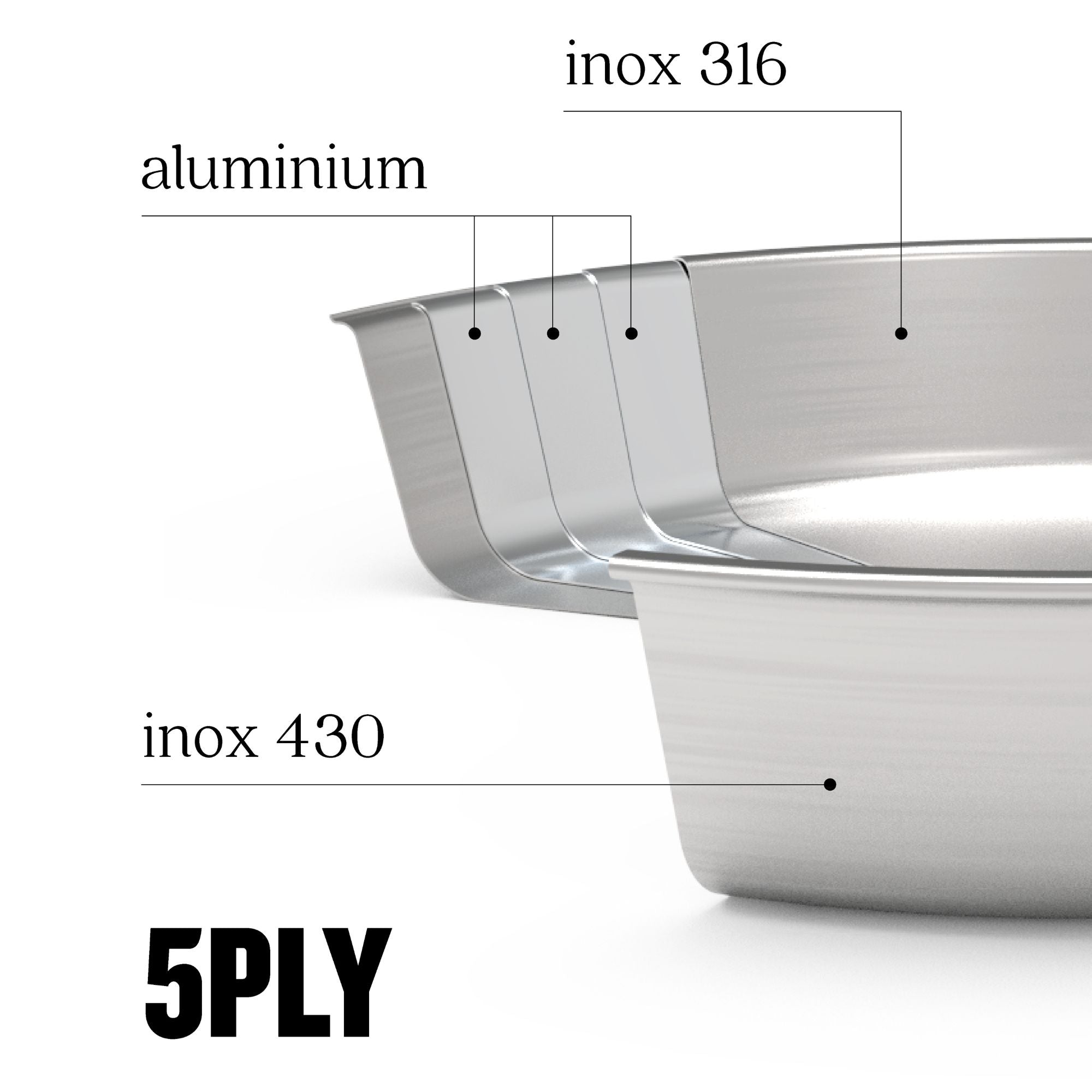
Fully clad 5-ply stainless steel for even heat, better browning and pan sauces. Uncoated, induction-ready, oven-safe to 500°F and backed by a lifetime warranty.
From $129
Shop the 5-Ply Frying PanWant a pan with no coating to wear out — ever?
Alva's carbon steel pans are uncoated and naturally nonstick once seasoned — PFAS-free by design, induction-ready, and built to handle the high heat nonstick coatings can't.
Side by side
| Stainless steel (5-ply) | Carbon steel | |
|---|---|---|
| Nonstick? | No — needs technique | Yes, once seasoned (a natural patina) |
| Acidic foods (wine, tomato, citrus) | Yes — completely non-reactive | No — acid strips the seasoning |
| Pan sauces & deglazing | Excellent — this is its job | Poor — deglazing removes the patina |
| High-heat searing | Very good | Excellent |
| Eggs & delicate fish | Difficult | Excellent |
| Oven | Yes — to 500°F | Alva's Forest is stovetop only |
| Weight | Heavier | Lighter (1.4–2.3 lbs) |
| Dishwasher | Yes | Never |
| Can it rust? | No | Yes, if stored wet |
| Maintenance | Basically none | Dry immediately, oil lightly, re-season occasionally |
| Warranty | Lifetime | 10-year |
| Price (frying pan) | From $129 | From $99 |
The one difference that decides it: acid
This is the fork in the road, and most guides bury it.
Stainless steel is non-reactive. You can deglaze with white wine, simmer a tomato sauce for an hour, finish with lemon — nothing happens to the pan and virtually nothing metallic gets into the food. Stainless is the pan that lets you build a real pan sauce, because the fond sticks, then lifts.
Carbon steel is the opposite. Its nonstick property is a seasoning — a polymerised layer of oil bonded to the metal — and acid dissolves it. Deglaze a carbon steel pan with wine and you will strip the patina you spent weeks building. You can rebuild it. You just have to want to.
So: if a recipe ends with "add the wine and scrape up the browned bits," that's a stainless pan.
The other difference that decides it: eggs
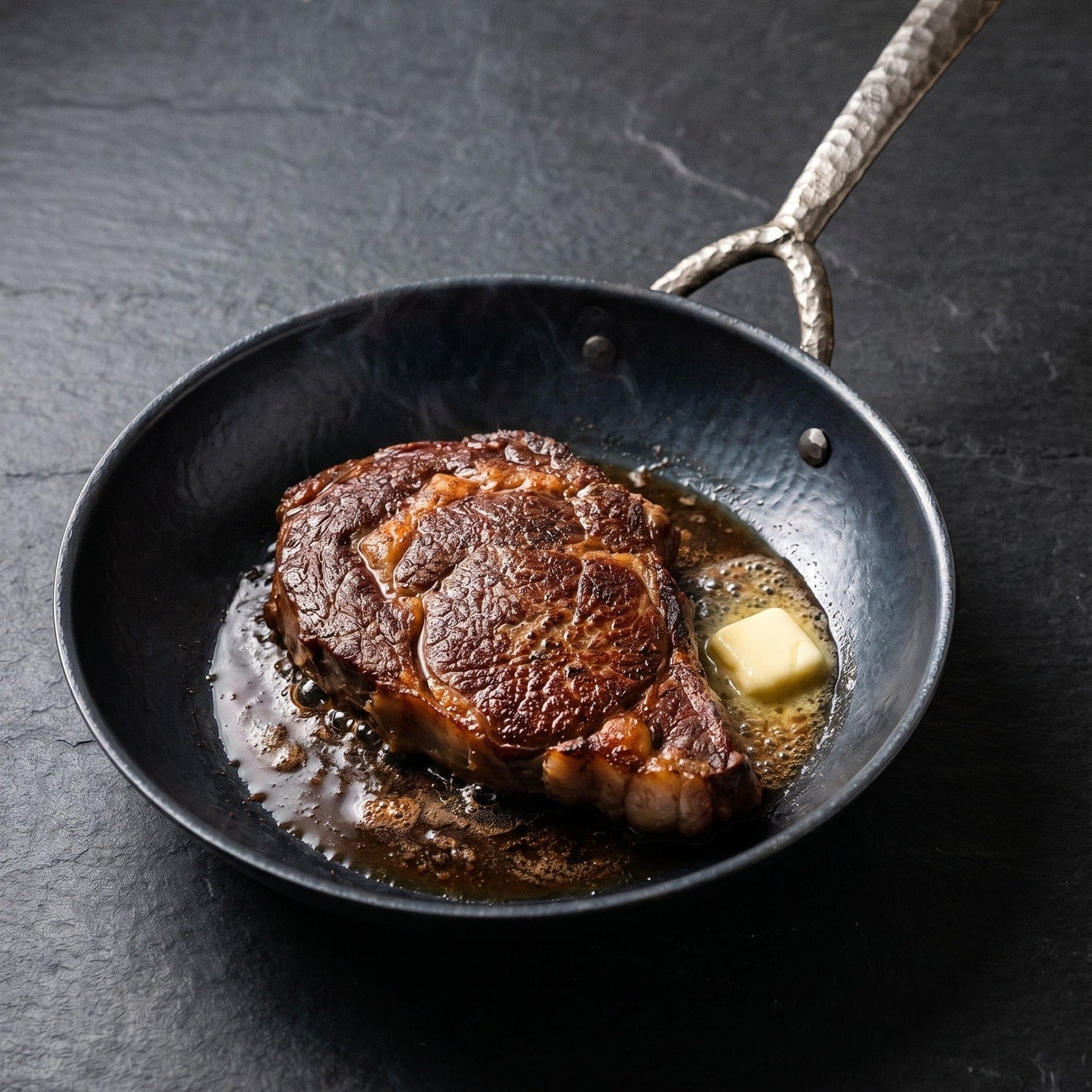
A well-seasoned carbon steel pan releases an egg like a nonstick pan does — no synthetic coating, nothing to scratch off, nothing to wear out. That's remarkable, and it's the reason carbon steel has been the professional line-cook's pan for a century.
Stainless will cook an egg, but it demands technique: preheat properly, add fat, wait for the food to release on its own. Doable — we cover it in how to cook on stainless without sticking — but it is a skill, not a feature.
What each one is honestly bad at
Stainless steel: it isn't nonstick, and no amount of marketing makes it so. If you want to fry an egg without thinking, this is not your pan — a coated pan is, and our comparison of stainless steel vs hard-anodized sets out what you give up by going that way. It's also heavier.
Carbon steel: it will rust if you leave it wet in the sink. It hates acid. It needs drying and a wipe of oil after every wash. Alva's Forest pan is also stovetop only — it is not oven-safe, so you can't sear and finish in the oven with it. It is a pan that asks something of you, and it repays that. If you don't want a relationship with your cookware, buy stainless.
So which should you buy?
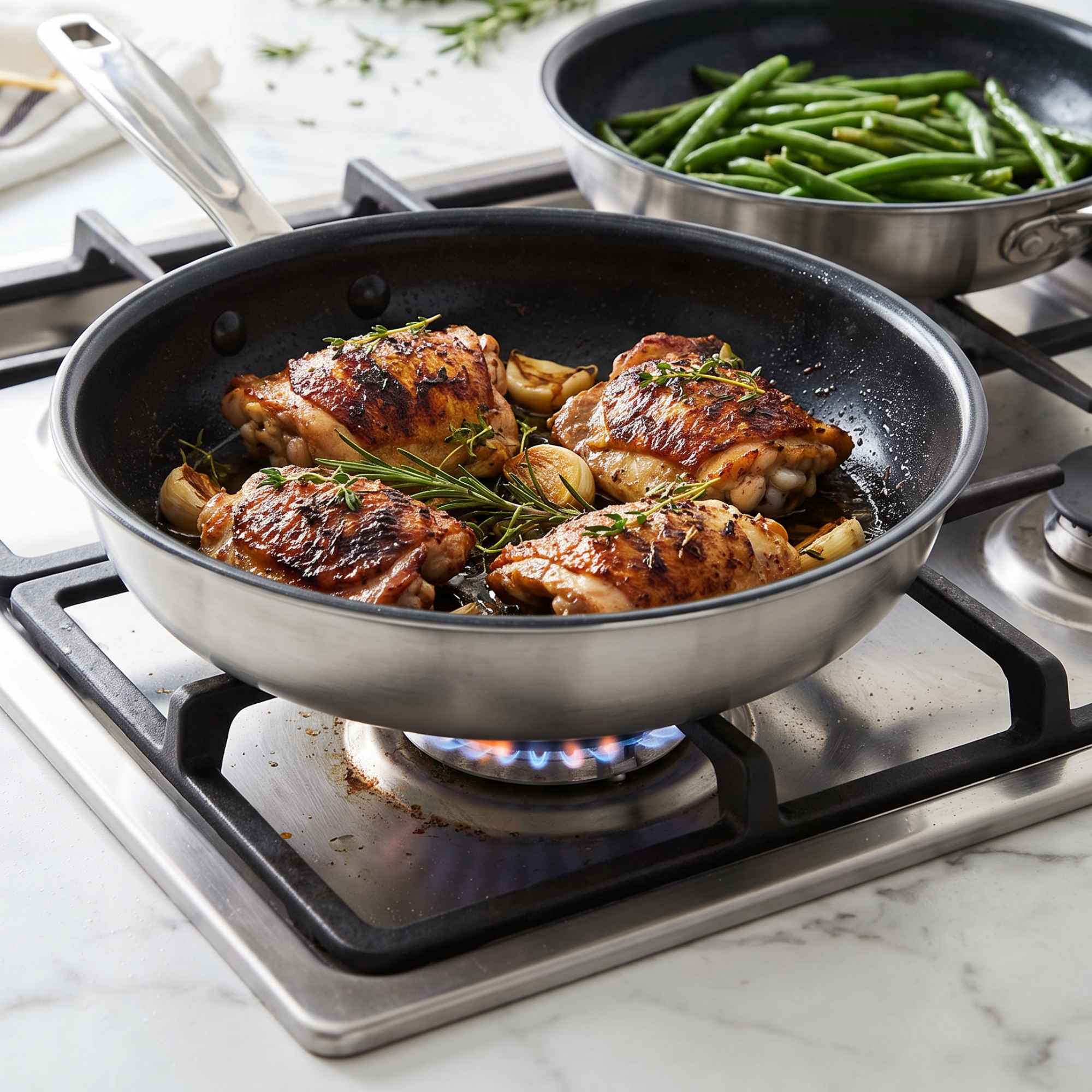
Buy stainless steel if: you make sauces, braise, cook acidic food, want to go stovetop-to-oven, want to run it through the dishwasher, and want to own it forever without maintaining it. Maestro 5-Ply Frying Pan, from $129 — fully clad base to rim, uncoated 18/10, oven-safe to 500°F, lifetime warranty.
Buy carbon steel if: you want natural nonstick release without a coating, you cook eggs and fish often, you sear and stir-fry at high heat, and you want a lighter pan. Forest Carbon Steel Frying Pan, from $99 — pre-seasoned, induction-ready, no coatings, 10-year warranty.
Buy both if you cook seriously. They cover each other's weaknesses almost exactly: carbon steel for the eggs and the sear, stainless for the sauce and the oven. That's not an upsell — it's why professional kitchens have both hanging on the rack.
Frequently asked questions
Is carbon steel better than stainless steel?
Neither is better — they're different tools. Carbon steel develops a natural nonstick seasoning and excels at eggs, fish, and high-heat searing. Stainless steel is non-reactive, so it handles acidic foods, wine, and pan sauces, and it needs no maintenance. Most cooks benefit from owning one of each.
Can you cook tomato sauce in a carbon steel pan?
Not for long. Acid dissolves the seasoning that makes carbon steel nonstick, so simmering tomato, wine, or citrus will strip the patina. Use stainless steel for anything acidic.
Which is better for steak, carbon steel or stainless steel?
Both sear well. Carbon steel gets a slight edge on pure heat and releases the crust more readily. Stainless wins if you want to build a pan sauce afterwards or finish the steak in the oven, because it's non-reactive and oven-safe.
Does carbon steel rust?
Yes. Carbon steel will rust if it is left wet or stored damp. It needs to be dried immediately after washing and given a very thin coat of oil. Stainless steel does not rust.
Is carbon steel non-toxic?
Yes. Carbon steel is just iron and carbon with no synthetic coating — so there is no PFAS or PTFE present by design. The nonstick property comes from seasoning (polymerised oil), not from a chemical coating.
The bottom line
Acid and eggs decide it. Cook with wine and tomatoes and finish in the oven — stainless. Want coating-free nonstick for eggs and a screaming-hot sear — carbon steel.
More: carbon steel vs cast iron · fully clad vs disc-bottom stainless · how to season carbon steel · the best carbon steel pans · our complete carbon steel buyer's guide · best PFAS-free pans for high-heat searing
Our top pick5-Ply Stainless Steel Frying PanShop now →


Leave a comment
This site is protected by hCaptcha and the hCaptcha Privacy Policy and Terms of Service apply.