






Carbon Steel vs Cast Iron: Which Pan Is Right for You?
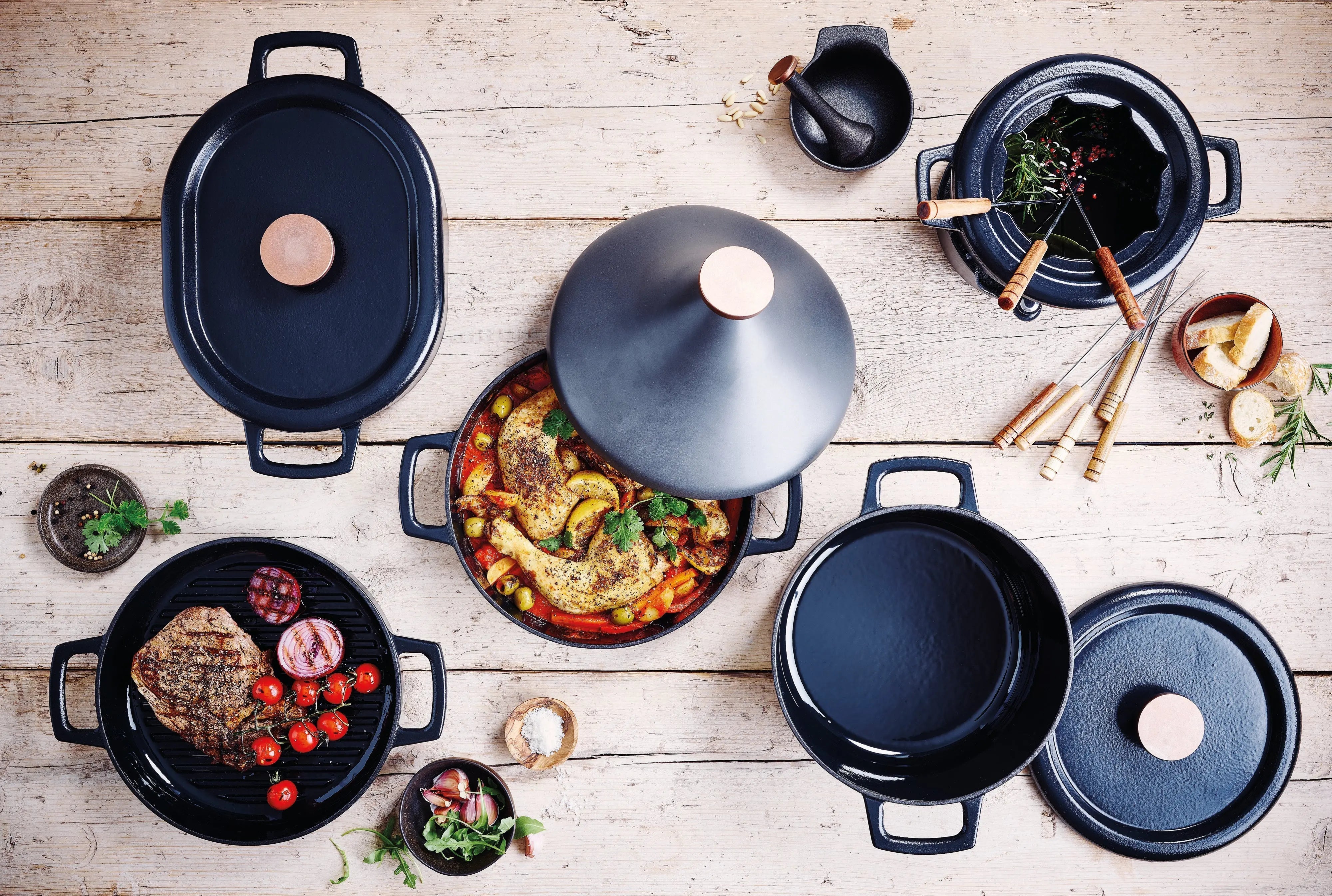
Carbon steel is the lighter, faster, more responsive pan for everyday cooking; cast iron is the heavier pan that holds heat best for steak, deep frying and oven work. The table below gives the verdict at a glance, and enameled cast iron is the option if you want cast iron's heat without ever seasoning a pan.
| Carbon steel | Cast iron | |
|---|---|---|
| Weight | Light — about a third of the weight of comparable cast iron, easy to lift, tilt and toss | Heavy — Alva's 11" enameled grill pan is 7.9 lbs |
| Heat response | Heats in roughly 2–3 minutes and cools quickly when you turn the burner down | Takes roughly 5–10 minutes to heat, then holds the last temperature |
| Seasoning and upkeep | Alva's arrive pre-seasoned; hand wash, dry fully, wipe on a trace of oil | Bare iron needs seasoning; enameled needs none — all Alva cast iron is enameled |
| Induction | Yes | Yes |
| Price tier | Mid-range | Mid-range for bare iron; premium for enameled |
| Oven, grill and campfire | Alva's Black Angus pan is oven-safe to 500°F; the Forest pan and wok are stovetop only. Bare carbon steel generally handles grill and campfire heat, but check the product page | Alva's enameled cast iron is oven-safe to 500°F. Bare cast iron is the classic campfire and grill pan; check the product page before using enameled pieces over open flame |
| Best for | Searing, sautéing, eggs, stir-fry, weeknight cooking — and sear-then-roast on an oven-safe pan | Steak, deep frying, cornbread, braises, anything oven-finished |
| Pick this if… | Pick carbon steel if you want one light, responsive pan for everyday cooking. Shop carbon steel | Pick cast iron if you want maximum heat retention for steak, frying and the oven. Shop enameled cast iron |
Want a pan with no coating to wear out — ever?
Alva's carbon steel pans are uncoated and naturally nonstick once seasoned — no PFAS or PTFE by design, induction-ready, and built to handle the high heat nonstick coatings can't.
Why thickness changes everything
Carbon steel and cast iron are close cousins. Both are iron-based, both hold heat far better than anything with a coating on it, and both will outlive you if you treat them right. The differences are in thickness and weight, and those two things change almost everything about how the pans behave.
The names describe the metallurgy. Carbon steel contains roughly 0.05% to 1.4% carbon; anything above about 2% is classified as cast iron. That extra carbon makes cast iron harder and more brittle, which is why it has to be poured into a mould rather than rolled. Carbon steel, with less carbon, stays ductile enough to be pressed into thin sheets — typically 2–3mm, against cast iron's 4–6mm.
That single manufacturing difference produces every practical difference between the two pans.
A thin pan has less mass to heat, so it comes up to temperature in a couple of minutes and it responds. Drop the burner and the pan follows within seconds. That is why professional kitchens run on carbon steel: when you are cooking twenty covers, you need a pan that does what the dial says, immediately.
A thick pan takes far longer to heat, but once it is hot it stays hot. Drop a cold ribeye into preheated cast iron and the surface temperature barely dips, which is exactly what you want for a hard crust. The same mass makes it clumsy for anything delicate — by the time you notice the garlic is browning too fast, cast iron has already carried on browning it.
Weight follows the same logic, and the gap is bigger than most articles admit. Carbon steel is meaningfully lighter than comparable cast iron, which makes it easier to lift, tilt and pour. If you cook one-handed, toss vegetables, or have any wrist or grip issues, that difference is not a footnote — it decides which pan actually gets used.
More detail: construction, acid, utensils and cleaning
| Carbon steel | Cast iron | |
|---|---|---|
| Construction | Rolled sheet steel, thin walls | Molded in a sand cast, thick walls |
| Heat retention | Good | Exceptional |
| Acidic foods (tomato, wine, citrus) | Avoid prolonged cooking, especially before the seasoning matures | Avoid on bare cast iron; completely fine on enameled |
| Metal utensils | Yes | Yes on bare cast iron; use silicone, nylon or wood on enamel |
| Dishwasher | No — hand wash and dry immediately | No — hand wash and dry immediately |

Best carbon steel starter
Black Angus Carbon Steel Frying Pan
Pre-seasoned and completely uncoated — cast-iron searing at a fraction of the weight, and oven-safe to 500°F so it sears and roasts like cast iron does. Metal-utensil safe, works on induction, and made without PFAS, PTFE or PFOA. Lifetime warranty.
Shop the Carbon Steel PanIndependently tested. Alva publishes its third-party lab reports in full, with the lab, report number and date for each line. See the lab reports →
Seasoning: the difference that decides it for most people
Bare carbon steel and bare cast iron rely on seasoning — a microscopically thin layer of oil baked onto the metal until it polymerises into a hard, slick film. That film is what gives the pan its release, and what keeps it from rusting.
Alva's carbon steel pans arrive pre-seasoned. There is no factory coating to remove and no setup ritual before your first meal — unbox, heat, cook. From there the patina builds on its own every time you use fat in the pan, and you can add a maintenance coat whenever you want to speed it along: oil, wipe almost all of it back off, heat until it smokes. Our seasoning guide covers the full method in about twenty minutes, and the carbon steel wok seasoning guide covers the wok.
Carbon steel builds seasoning noticeably faster than cast iron because the surface is smoother and the pan heats more evenly, so the film sets consistently across the whole cooking surface. Most people see real nonstick behaviour after a handful of cooks.
The upkeep is where people fall down, and it is the same for both: hot water and a brush, no dishwasher, dry it completely, and wipe a trace of oil on before it goes in the cupboard. Rust forms on wet steel, not on used steel. If you want the full routine including how to deal with stuck-on food and how to bring back a rusted pan, read how to clean a carbon steel pan without ruining the seasoning.
Enameled cast iron: the option most comparisons skip
Almost every "carbon steel vs cast iron" article treats cast iron as one thing. It is not. Enameled cast iron is the same heavy iron body finished with a fused glass enamel, and that finish changes the ownership experience completely. Every piece of cast iron Alva makes is enameled, which is a deliberate choice — it removes the two things people most often give up on with bare iron.
- No seasoning, ever. It works from the first meal and it never needs re-seasoning.
- Acid is fine. The enamel is non-reactive, so tomato sauce, wine reductions and citrus braises are no problem — the one thing bare iron genuinely cannot do.
- It will not rust. The iron never touches water.
- Cooktop to oven to table. Alva's enameled cast iron is rated to 500°F and is designed to be served from.
The trade-offs are real: enamel does not develop a nonstick patina the way bare iron does, it needs softer utensils, and it dislikes thermal shock — never run a hot pan under a cold tap. But for a lot of home cooks, "heavy pan, zero maintenance, handles acid" is a better description of what they actually want than anything bare cast iron offers.

Best cast iron starter
Enameled Cast Iron Grill Pan, 11"
7.9 lbs of heat retention with raised ridges for real sear marks. No seasoning required, safe with acidic ingredients, oven-safe to 500°F, and made without PFAS, PTFE or PFOA. Lifetime warranty.
Shop the Cast Iron Grill PanWhich should you buy?
- You want one pan for everyday cooking. Carbon steel. It sears like cast iron but you will actually lift it, and it does eggs and vegetables that cast iron fumbles.
- You mainly cook steak and want the hardest crust possible. Cast iron. The extra mass holds temperature when cold meat hits the surface.
- You want to stop buying replacement nonstick pans. Carbon steel. A seasoned pan gives you natural release with no coating to scratch off or wear out.
- You cook a lot of tomato sauce, wine reductions or citrus. Enameled cast iron. Bare iron of either kind will fight you.
- Maintenance is the dealbreaker. Enameled cast iron. No seasoning, no rust risk, no routine.
- Weight or grip is a concern. Carbon steel, and start at 8" or 9.5".
- You sear then finish in the oven. Either — but pick an oven-rated pan. Alva's Black Angus carbon steel and every piece of Alva enameled cast iron are rated to 500°F; the Forest carbon steel line is stovetop only.
- You want to cover everything. A carbon steel skillet plus one piece of cast iron handles essentially every stovetop and oven job there is. This is what most serious home kitchens end up with.
Still weighing materials more broadly? Compare stainless steel vs carbon steel and stainless steel vs cast iron, or read the full guide to types of pans.
Both are a genuine alternative to nonstick
This is the part that matters if you came to iron cookware because of what is in your current pans. Carbon steel and cast iron have no synthetic nonstick coating at all — so there is no PFAS or PTFE in them by design, not by formulation. There is nothing to scratch, degrade at high heat, or flake into food.
Alva goes further than the design argument. Our coated ranges are tested by TÜV Rheinland, an independent third-party laboratory, against a 638-substance PFAS panel, with every substance below the laboratory reporting limit. Our uncoated carbon steel, cast iron and stainless ranges have no coating to test. The actual reports — report numbers, test dates and downloadable PDFs — are published on our Testing & Materials Transparency page, and the methodology is explained in our safety standards.
If you are auditing what is already in your kitchen, our five-minute non-toxic cookware checklist covers what to look for and what to ignore.
Our picks
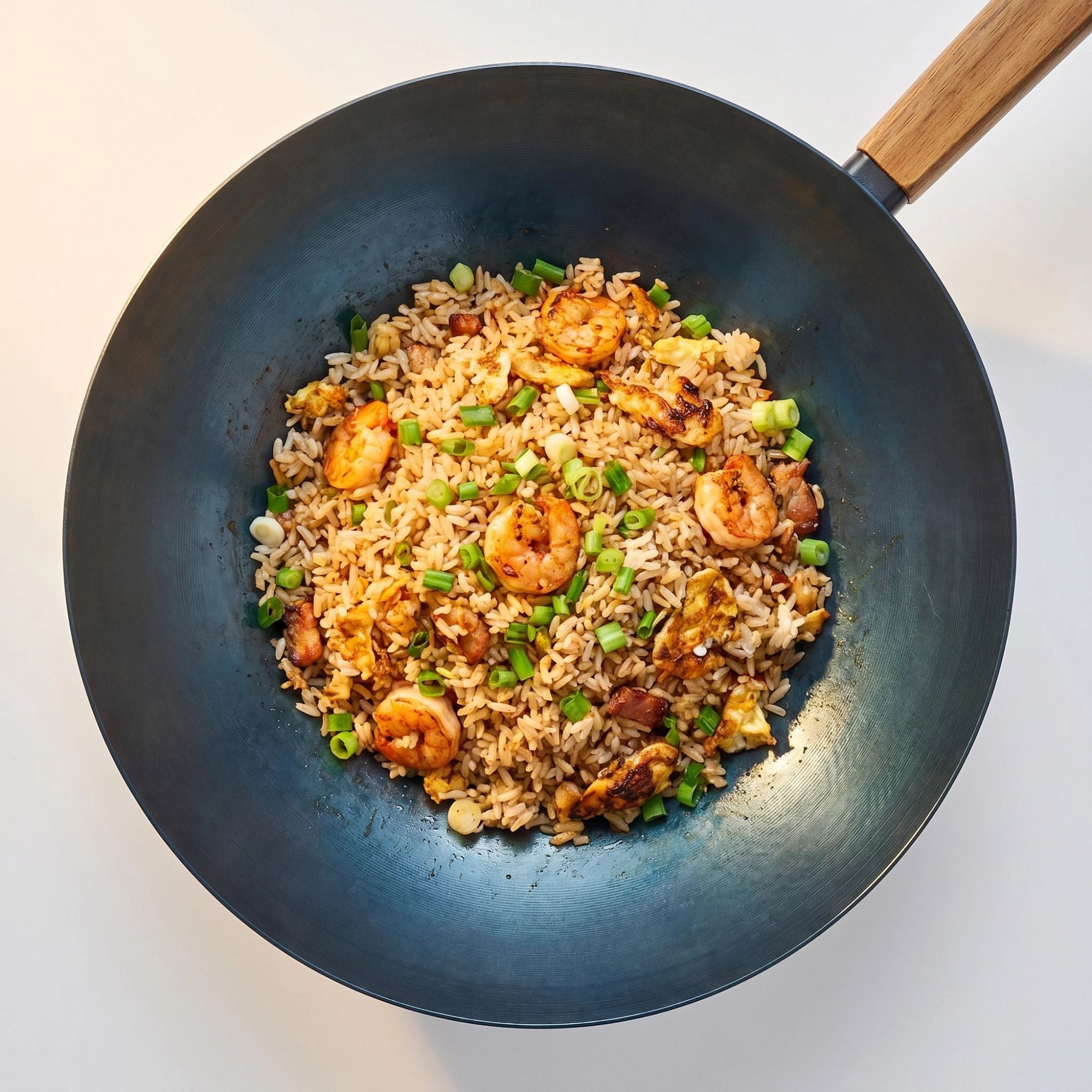
For carbon steel, the Black Angus carbon steel pan is the one to beat — pre-seasoned, rated to 500°F and carrying a lifetime warranty. If your cooking never leaves the stovetop, the Forest carbon steel frying pan is a light, pre-seasoned all-rounder — just note it is stovetop only. For stir-frying, the 12" carbon steel wok — see how to get real wok hei at home. Browse the full carbon steel range or read our best carbon steel pan picks.
For cast iron, the Nori enameled grill pan is the easiest entry point, and the 5-quart round Dutch oven is the workhorse for braises and bread. See the whole enameled cast iron collection or our best cast iron skillet guide.
Frequently asked questions
Is carbon steel better than cast iron?
Neither wins outright — they solve different problems. Carbon steel is thinner and lighter, heats in about two to three minutes, and responds quickly when you change the burner, which suits everyday searing, sautéing and stir-frying. Cast iron is two to three times thicker, so it takes longer to heat but holds that temperature far better, which suits steak, deep frying and oven work. Many cooks own one of each.
Which is better for searing steak?
Cast iron has the edge on pure heat retention. When a cold steak hits a preheated cast iron surface, the temperature barely drops, so the crust forms faster and more evenly. Carbon steel sears extremely well too and is far easier to manoeuvre — if you are cooking one or two steaks and want to move the pan around or baste with butter, carbon steel is the more practical choice.
Do carbon steel and cast iron both need seasoning?
Bare carbon steel and bare cast iron both do, and the process is identical: apply a high-smoke-point oil, wipe nearly all of it off, and heat until it smokes. Alva's carbon steel pans arrive pre-seasoned, so there is nothing to do before your first meal — the patina simply deepens as you cook. Enameled cast iron never needs seasoning at all, and all of Alva's cast iron is enameled.
Which is better for beginners?
Carbon steel is the gentler introduction to seasoned cookware. It is lighter to handle, it heats predictably, and the seasoning develops quickly enough that you get positive feedback within a few cooks. If the maintenance itself is what puts you off, skip seasoned cookware entirely and start with enameled cast iron, which requires no seasoning and cannot rust.
Can you cook tomatoes, wine or citrus in carbon steel or cast iron?
Not for long, and not in either bare material. Acidic ingredients strip young seasoning and can pick up a metallic taste. A well-established patina tolerates a quick pan sauce, but avoid prolonged simmering of tomato, wine or citrus. Enameled cast iron is the exception — the enamel is non-reactive, so acidic braises and long tomato sauces are completely fine.
Which is better for eggs?
Carbon steel, clearly. Eggs need a responsive pan at moderate heat, and carbon steel lets you dial the temperature down instantly. A well-seasoned carbon steel pan releases eggs as cleanly as nonstick. Cast iron holds too much heat to control easily at the low end, and its rougher surface takes far longer to build a comparable release.
Can you use metal utensils?
On bare carbon steel and bare cast iron, yes — metal is fine and cannot damage the pan. Metal spatulas actually help smooth and maintain the seasoning over time. On enameled cast iron, use silicone, nylon or wood instead, because metal edges can chip or scratch the enamel finish.
Do they work on induction and glass cooktops?
Both are magnetic iron, so both work on induction, and on gas, electric, ceramic and halogen. On glass or ceramic tops, take extra care with cast iron: lift rather than slide it, because the weight combined with a rough base can scratch the surface. Carbon steel's lighter weight makes it the easier option on glass.
Is carbon steel a safe alternative to nonstick?
Yes. Carbon steel has no synthetic coating whatsoever, so there is no PFAS or PTFE present by design — nothing to scratch off, break down at high heat, or flake into food. Its release comes from seasoning, a baked-on oil layer you can strip and rebuild indefinitely. Alva's carbon steel is uncoated and made without PFAS, PTFE or PFOA.
How do you clean carbon steel without ruining the seasoning?
Rinse with hot water while the pan is still warm and use a stiff brush or chainmail scrubber. Skip the dishwasher and go easy on soap. Dry it completely — over low heat is best, since rust forms on any water left behind — then wipe a trace of oil across the surface before storing.
What are the disadvantages of carbon steel cookware?
Three, honestly. It will rust if you leave it wet, so it has to be dried properly every time. It cannot handle prolonged acidic cooking — long tomato or wine simmers strip the seasoning. And it holds less heat than cast iron, so it recovers more slowly when you crowd the pan with cold food. None of these are dealbreakers, but they are real, and if any of them sounds like your kitchen, enameled cast iron avoids all three.
Why do chefs not use cast iron?
They do, but rarely on a busy line. Professional kitchens favour carbon steel because it is a third of the weight, heats in a fraction of the time, and responds instantly when the burner changes — all of which matter when you are cooking dozens of covers. Cast iron still appears in restaurants for steak, cornbread and anything that finishes in the oven, where its heat retention is the whole point.
Does carbon steel rust easily?
It rusts if you leave it wet, and not otherwise. A seasoned, dried pan is well protected — the oil layer keeps water off the steel. The failure mode is almost always the same: washing the pan and leaving it in the rack. Dry it over low heat and wipe on a trace of oil before storing. If rust does appear, scrub it back, dry it, oil it and re-season — the pan is not ruined.
Is it healthy to cook in carbon steel?
Yes. Carbon steel is just iron and carbon with no coating, so there is nothing to break down at high heat or flake into food — no PFAS or PTFE present by design. The seasoning is polymerised cooking oil, which is food itself. Like cast iron, it can add trace dietary iron to food, which for most people is neutral to beneficial. Alva's carbon steel is uncoated and made without PFAS, PTFE or PFOA.
Should I just buy both?
If you cook often, it is the most complete setup for the money. A carbon steel skillet covers everyday searing, eggs, vegetables and stir-fry, while one piece of cast iron covers steak, deep frying and anything that finishes in the oven. Between them you rarely need a third pan, and neither will wear out.
Related reading: the best pans for high-heat searing, the best pans for frying chicken, and crispy skillet fried chicken.
Our top pickBlack Angus Carbon Steel Frying PanShop now →


Leave a comment
This site is protected by hCaptcha and the hCaptcha Privacy Policy and Terms of Service apply.