






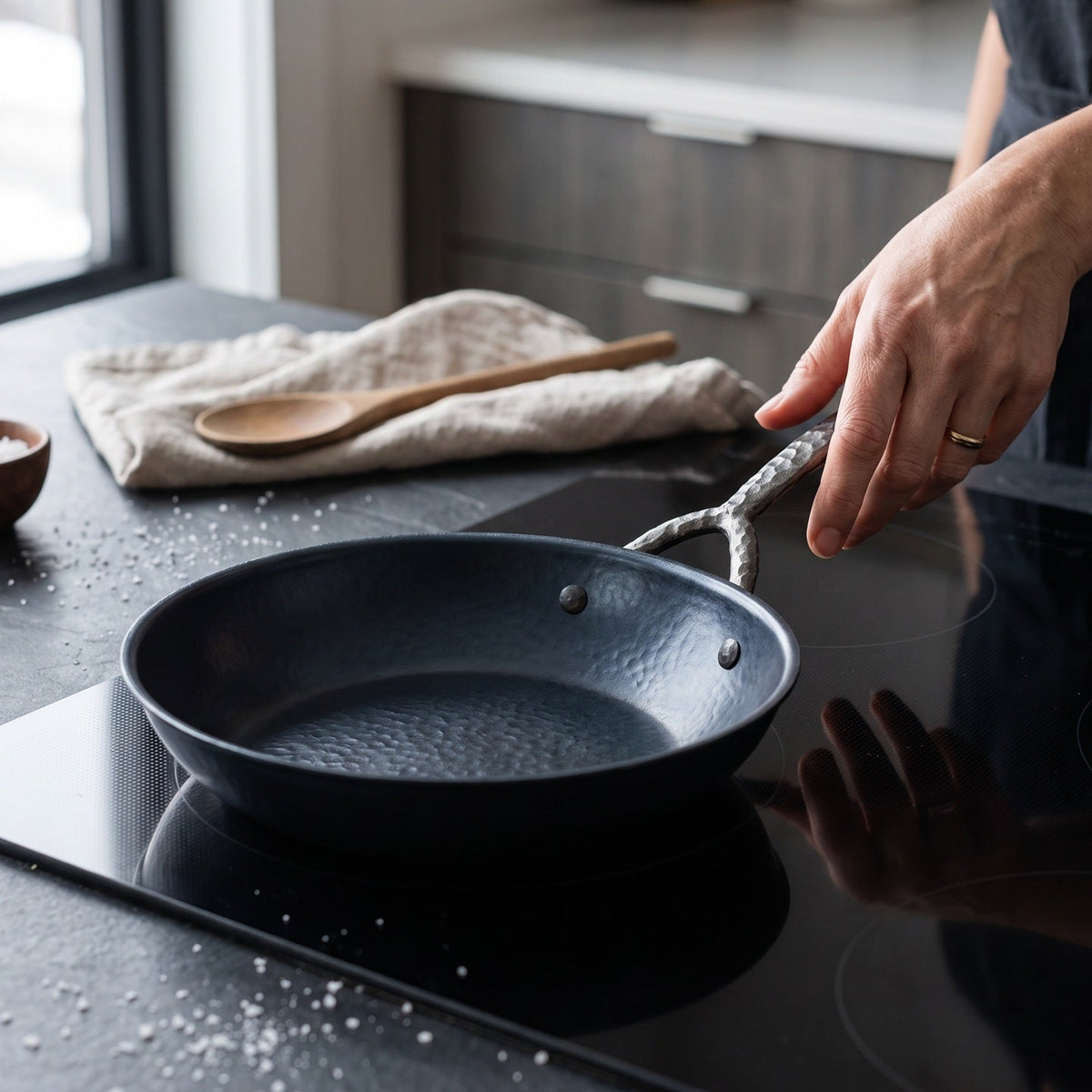
How to Season a Wok (Carbon Steel, Step by Step)
To season a carbon steel wok: scrub off the factory coating, dry it, heat it until the metal turns blue-grey, wipe on a thin film of high smoke-point oil, and heat until the smoke stops. Repeat two or three times, on the stovetop. That baked-on oil layer is the wok's natural nonstick surface. A pre-seasoned wok like Alva's Forest Carbon Steel Wok only needs a light refresh before its first stir-fry.
One note before you start: season a wok on the burner, not in the oven. Stovetop is the traditional wok method, and it lets you heat the sides evenly.

Our Top Pick
Carbon Steel Wok, 12"
Pre-seasoned carbon steel for fast, high-heat stir-frying and better wok hei. Uncoated, metal-utensil safe and induction-ready.
Shop the Carbon Steel WokWhat you need
- A high smoke-point oil: grapeseed, refined avocado or canola (see the oil table below). Skip olive oil and butter.
- Paper towels or a clean cloth, and tongs to hold them.
- A well-ventilated kitchen. Seasoning makes smoke, so open a window and run the fan.
How to season a carbon steel wok, step by step
Plan on about 30 minutes, most of it hands-off heating time.
- Scrub off the factory coating. Wash the whole wok, inside and out, with hot water, dish soap and a non-scratch scrubber for 2 to 3 minutes. This is the one time soap is encouraged. If your wok is pre-seasoned, like the Forest, wash it gently and skip the hard scrub.
- Dry it over heat. Put the wok on the burner over medium heat for 1 to 2 minutes, until every drop of water is gone. Carbon steel flash-rusts if left wet.
- Heat until it turns blue-grey. Turn the heat to high and heat the empty wok for 3 to 5 minutes, until the metal darkens to blue-grey or bronze from the center outward. Tilt and rotate it so the sides heat too.
- Add a thin film of oil. Take the wok off the heat. Add about 1 teaspoon of high smoke-point oil and wipe it over the whole surface with a paper towel held in tongs, until it looks barely shiny. Wipe out any excess, because too much oil turns sticky.
- Heat until the smoke stops. Return the wok to high heat for 1 to 3 minutes. The oil will smoke, then the smoke fades as the oil bonds to the metal. Tilt the wok to carry the heat up the sides.
- Wipe and repeat. Let the wok cool for a minute, wipe it with a fresh towel, then repeat steps 4 and 5 two or three more times. Each pass darkens the surface and builds the nonstick layer.
- Let it cool, then cook. Wipe the wok out once it is cool. It should look bronze-to-dark and slightly uneven. Cook with a little oil to keep building the seasoning.
Want a pan with no coating to wear out, ever?
Alva's carbon steel pans have no coating at all. Seasoning builds a natural nonstick layer, they are induction-ready, and they handle the high heat that nonstick coatings can't.
Oil to use for seasoning a wok
Use a neutral oil with a high smoke point, and apply it in a very thin layer. Thin coats cure hard; thick coats turn sticky.
Swipe left or right to compare →
| Oil | Smoke point | Notes |
|---|---|---|
| Grapeseed | High | The easy all-rounder. Neutral, widely available and forgiving in thin coats. |
| Avocado (refined) | Very high | Handles wok-level heat easily. Choose refined, not unrefined. |
| Canola | Medium-high | Easy to find and works well. Keep the layer extra thin or it turns tacky. |
| Flaxseed | Lower | Caveat: it builds a hard, glossy finish, but it flakes easily if the layer is even slightly thick. Many cooks skip it. If you try it, use the thinnest coat you can. |
The easy all-rounder. Neutral, widely available and forgiving in thin coats.
Handles wok-level heat easily. Choose refined, not unrefined.
Easy to find and works well. Keep the layer extra thin or it turns tacky.
Caveat: it builds a hard, glossy finish, but it flakes easily if the layer is even slightly thick. Many cooks skip it. If you try it, use the thinnest coat you can.
Avoid olive oil and butter. They burn at lower heat and tend to leave a sticky film.
How to tell your wok is seasoned
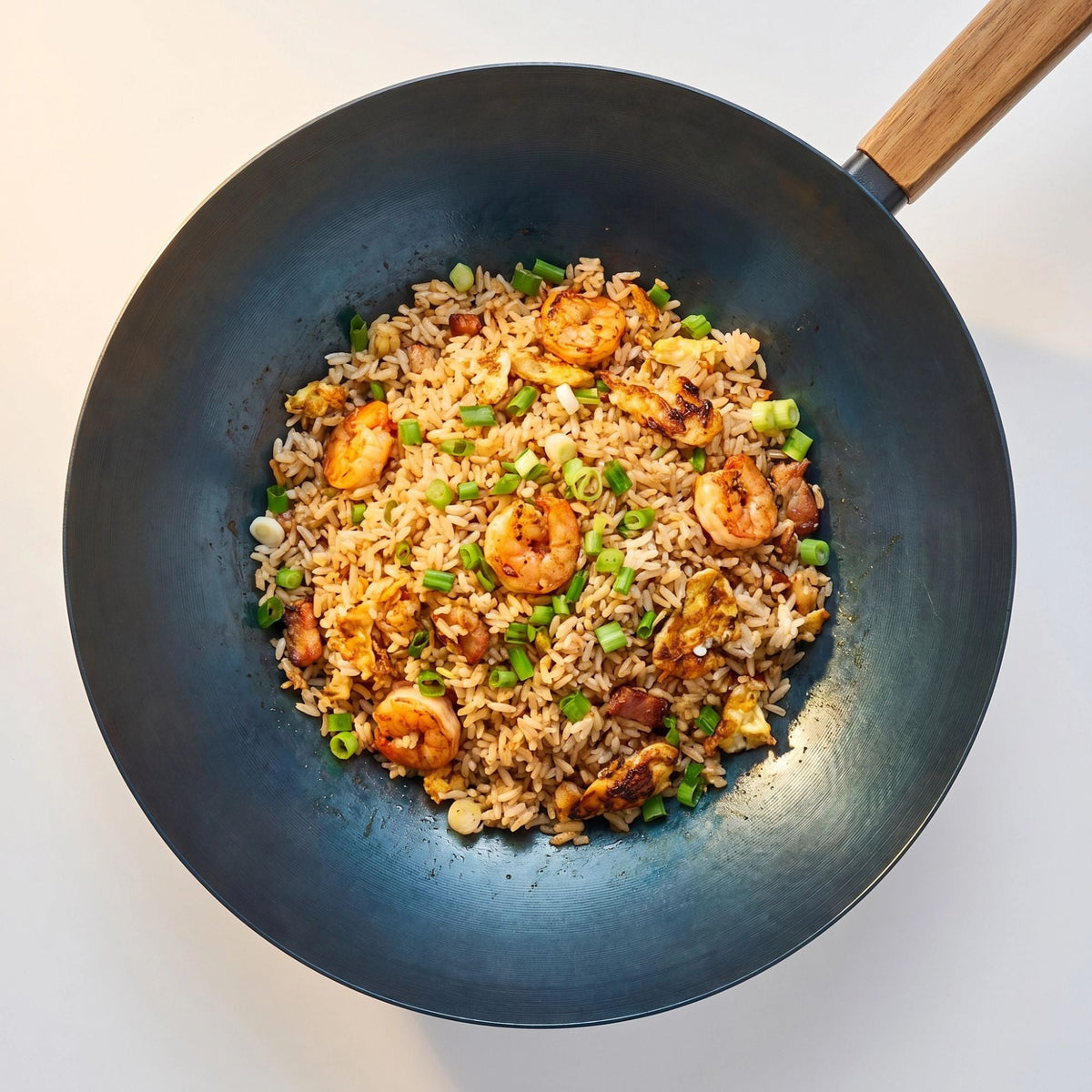
- Color: the surface is bronze-brown to black, often a little uneven.
- Feel: it is smooth and dry when cool, not tacky or sticky.
- Looks: a thin, slightly satin sheen, with no gray, orange or flaking patches.
- Cooking test: heat the wok, add a little oil, and fry an egg or a spoonful of rice. If it releases with a nudge, you are there. If it sticks, add another thin coat.
Seasoning on induction or electric (no open flame)
The Forest wok has a flat bottom and works on induction and electric, but you cannot tilt it into a flame to heat the sides. Heat it in stages and rotate it so each part of the sidewall spends time over the hot element. It takes a little longer, but you will get even seasoning without a gas burner.
The aromatics method (optional)
Many cooks finish with a classic step: stir-fry a handful of sliced ginger, garlic and scallions in a little oil for several minutes, pressing them up the sides. It helps even out the seasoning and tone down any raw-metal smell. Discard the aromatics and wipe the wok out.
Troubleshooting a seasoned wok
Sticky or tacky surface
Too much oil, or not enough heat. Heat the wok on high for 3 to 5 minutes until the tacky layer smokes off. If it stays sticky, scrub it back with hot water and a scrubber, dry it over heat, and apply a thinner coat.
Flaking or peeling
Usually thick layers or flaxseed oil. The flakes are cured oil, not the steel. Scrub them off with a scouring pad, rinse, dry over heat, then build it back with two or three very thin coats.
Rust spots
Orange spots mean bare steel met moisture. Scrub them off with steel wool or a scouring pad, rinse, dry over heat, and re-season that area with two or three thin coats.
Uneven color
Normal. Carbon steel darkens through blue, brown, bronze and black, often in streaks or patches. It evens out as you cook. If you see bare gray patches, wipe on a little oil and heat the wok until it stops smoking.
Food sticking
The seasoning is probably still young. Preheat the wok until it is hot before adding oil, then add the food, and keep cooking with a little oil. It improves with every use.
When to re-season a wok
- After you scrub off rust or flaking.
- After a long simmer of acidic sauce (tomato, vinegar, citrus) or a hard scrub with soap and steel wool leaves the surface dull and gray.
- When food starts sticking even though the wok is preheated and oiled.
A quick refresh is one thin coat of oil heated until it stops smoking. A full re-season repeats steps 1 to 6.
How to keep the seasoning (daily care)
- Cook with a little oil, especially early on.
- Hand-wash with hot water and a soft sponge. Once seasoned, you usually do not need soap. Full cleaning routine here.
- Dry it on the burner, then wipe a few drops of oil over the surface before storing.
- Never put it in the dishwasher, and do not store it wet.
- Go easy on very acidic sauces until the patina is well established, because acid strips seasoning.
Frequently asked questions
How do you season a carbon steel wok?
Scrub off the factory coating, dry the wok over heat, then heat it until it turns blue-grey. Wipe on a thin film of high smoke-point oil and heat until the smoke stops. Repeat two or three times. Do it on the stovetop, with the fan on.
What is the best oil to season a carbon steel wok?
Grapeseed, refined avocado or canola oil, applied in a very thin layer. Flaxseed can build a hard, glossy finish but flakes easily if the layer is even slightly thick, so many cooks skip it. Avoid olive oil and butter, which burn at lower heat and can leave a sticky film.
Do you need to season a pre-seasoned wok?
You can cook on it right away. Alva's Forest wok arrives pre-seasoned, and a round or two of stovetop seasoning before first use can deepen the patina faster. Seasoning keeps building every time you cook with a little oil.
Can you season a carbon steel wok on an induction or electric stove?
Yes. You cannot tilt a flat-bottom wok into a flame, so heat it in stages and rotate it so each part of the sidewall spends time over the hot element. The Forest wok is induction-ready.
Can you season a wok in the oven?
The stovetop is the traditional method and lets you heat the sides evenly. The Forest wok has a wood handle, so season it on the burner rather than in the oven.
How many times should you season a wok?
Two or three thin coats is a good start. After that, regular cooking with a little oil keeps building the seasoning, so you rarely need to repeat the full process.
Is it normal for a carbon steel wok to turn dark or blotchy?
Yes. Carbon steel darkens through brown, bronze and black, often in streaks or patches. Uneven color is normal and evens out with use. What matters is a smooth surface that releases food.
The bottom line
Seasoning a carbon steel wok is just heat and thin oil, repeated on the burner. Do it once to start, then let cooking do the rest. Ready to cook? The pre-seasoned Forest Carbon Steel Wok gets you there fast. Then put it to work with a restaurant-style chicken pad thai, or learn how to use a carbon steel wok for real wok hei. Free U.S. shipping over $99.
Our top pickCarbon Steel Wok, 12"Shop now →


Leave a comment
This site is protected by hCaptcha and the hCaptcha Privacy Policy and Terms of Service apply.