






Article: Is Nonstick Cookware Safe? Teflon (PTFE) vs Ceramic, Explained (2026)
Is Nonstick Cookware Safe? Teflon (PTFE) vs Ceramic, Explained (2026)
Yes, nonstick cookware is safe for everyday cooking if you use it correctly. Traditional PTFE (Teflon) nonstick is stable at normal cooking temperatures but starts to break down above about 500°F, so it should never be preheated empty on high heat. Ceramic nonstick contains no PTFE at all, so it avoids the overheating-fume risk, but its coating wears out sooner.
Below: what PTFE and PFOA actually are, what happens when a pan overheats or gets scratched, how ceramic compares, and how to use any nonstick pan safely.

Our Top Pick
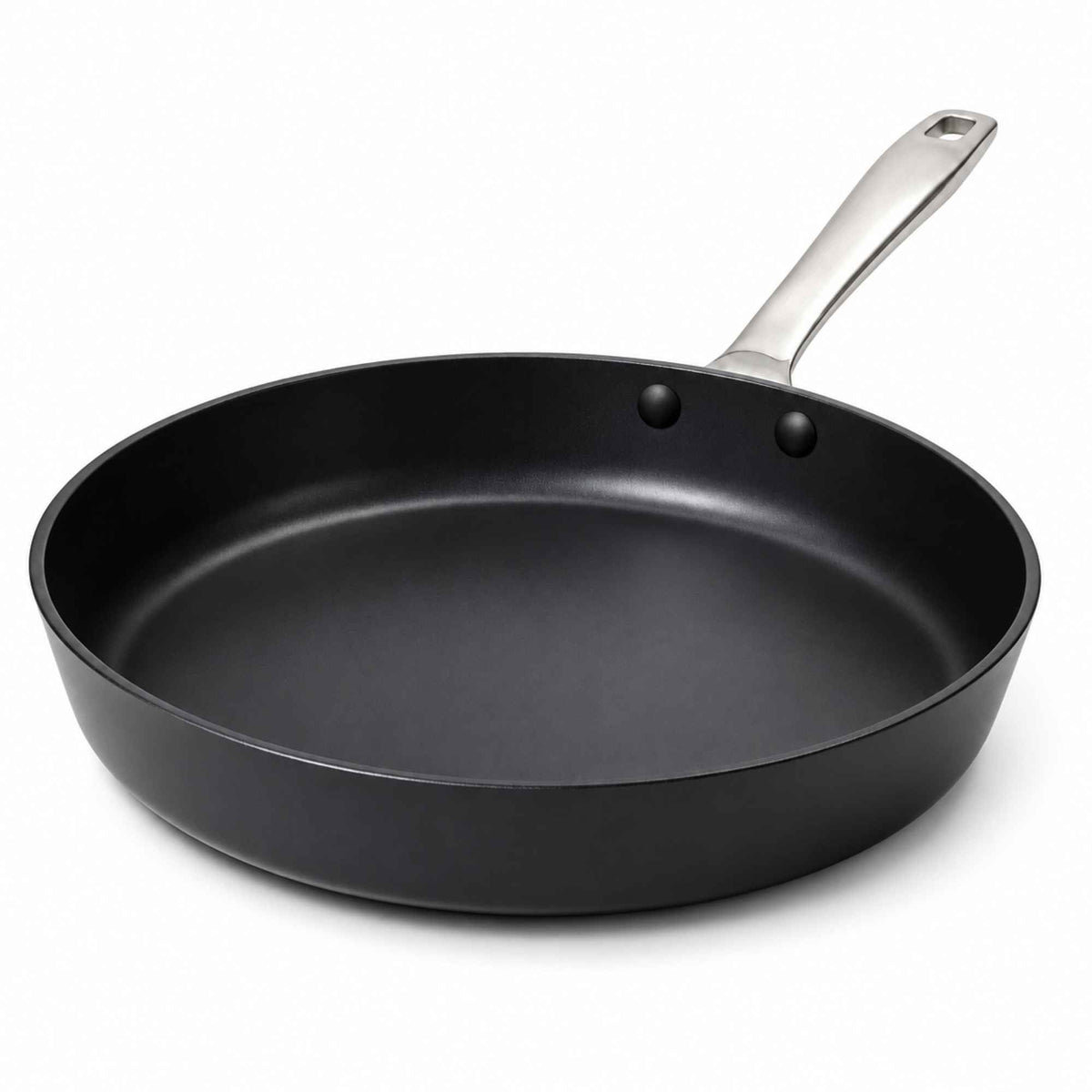
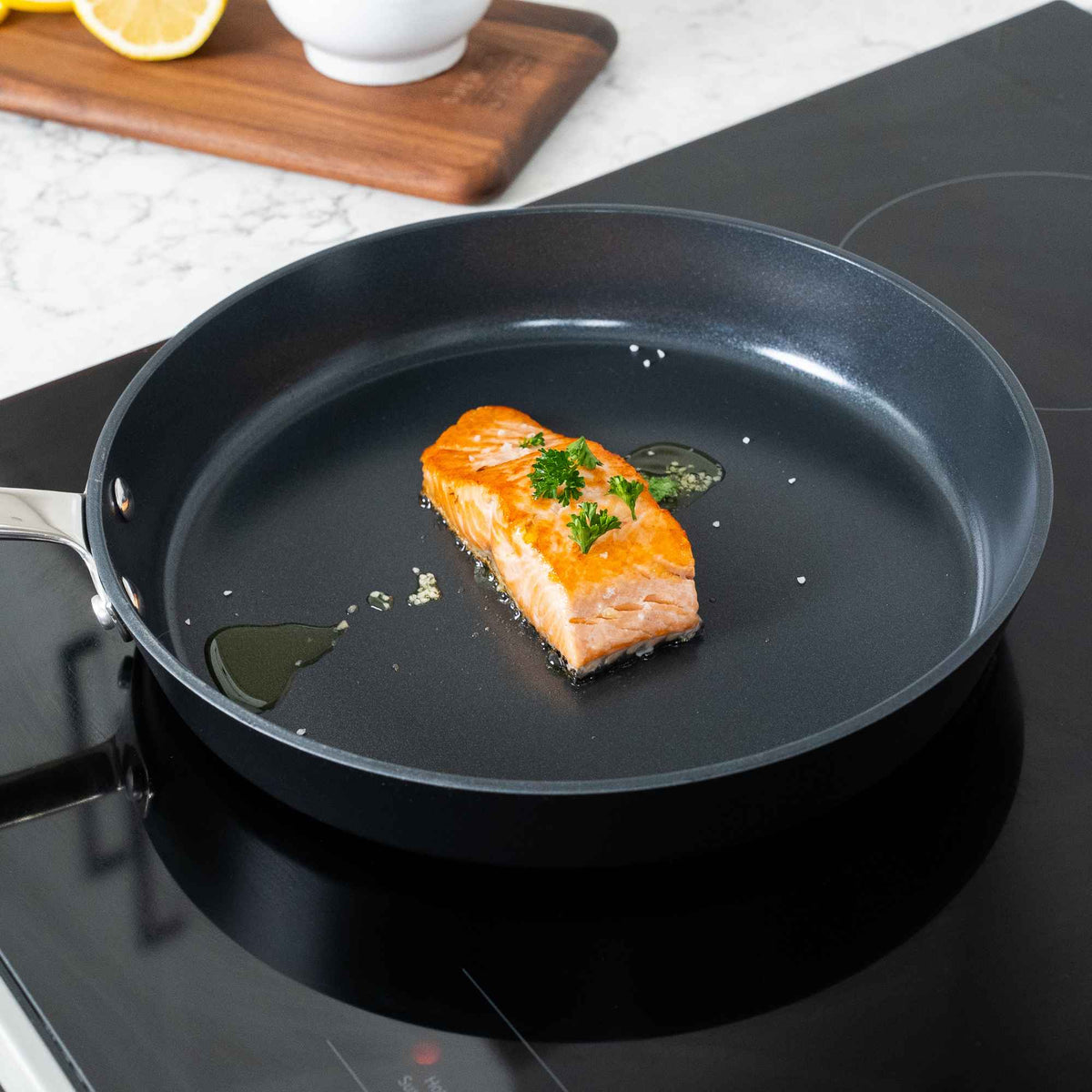
Ceramic Nonstick Frying Pan
Ceramic nonstick made without PFAS, PTFE or PFOA and lab-tested for lead and cadmium. Induction-ready, oven-safe to 400°F and backed by a 10-year warranty.
Shop the Ceramic Frying PanIs nonstick safe? The quick verdict
| Situation | PTFE (Teflon) nonstick | Ceramic nonstick |
|---|---|---|
| Everyday cooking on low to medium heat | Safe | Safe |
| Empty pan preheated on high | Unsafe: can pass 500°F within minutes and start to give off fumes | No fluoropolymer fumes, but high dry heat wears the coating fast |
| Light scratches | Usable, but the coating is starting to wear | Usable; light scratches are cosmetic |
| Flaking or worn to bare metal | Replace the pan | Replace the pan |
| Pet birds in the home | Risky: overheated PTFE fumes can kill birds | No PTFE fumes; still avoid overheating |
| Old pans made before 2015 | May have been made with PFOA; consider replacing | Not applicable |
What is in a nonstick pan?
There are two main families of nonstick coating:
- PTFE (polytetrafluoroethylene), best known by the brand name Teflon. It is a fluoropolymer, a slick plastic made from carbon and fluorine. Most nonstick pans sold as "hard-anodized", "granite", "stone", "titanium" or "diamond" nonstick still use a PTFE coating underneath the marketing name.
- Ceramic (sol-gel) nonstick, a thin mineral coating made mostly from silica. Quality ceramic coatings are made without PFAS, PTFE or PFOA.
If a pan's box does not say which coating it uses, assume it is PTFE. Our guide to PFAS, PFOA and PTFE explains the chemistry in more detail.
PTFE, PFOA and PFAS: what's the difference?
PFAS is the large family of fluorinated "forever chemicals". PTFE is one member of that family, a solid, stable polymer. PFOA is a different PFAS chemical that was used to make PTFE coatings and has been linked to health problems. U.S. manufacturers phased PFOA out of production by 2015 under an EPA program, so a "PFOA-free" label on a new pan tells you very little: virtually all PTFE pans sold today are made without it.
The remaining concerns about PTFE are mainly overheating fumes in the kitchen and the PFAS chemicals used and released when the coating is manufactured. Because of those manufacturing concerns, some states now restrict PFAS in cookware; Minnesota, for example, has banned the sale of cookware with intentionally added PFAS since January 2025.
What happens if a nonstick pan overheats?
PTFE is stable at normal cooking temperatures. Above about 500°F (260°C) it begins to degrade, and at higher temperatures it releases fumes that can cause "polymer fume fever", temporary flu-like symptoms in people. The same fumes can kill pet birds, whose lungs are far more sensitive. The danger is real but avoidable: it happens when a pan is left empty on a high burner, which can pass 500°F within a few minutes. Food or oil in the pan keeps the surface much cooler.
Ceramic coatings contain no fluoropolymer, so they do not release these fumes. They do still degrade faster with very high, dry heat, which is why ceramic pans also do best on low to medium heat.
Is a scratched nonstick pan safe?
A few light scratches are not an emergency. Small flakes of PTFE that end up in food are inert and pass through the body. The bigger issues are that a scratched PTFE surface can shed microscopic plastic particles (a 2022 Flinders University study found a single scratch can release thousands of them during cooking), and that a worn pan sticks, which tempts people to turn the heat up. Replace any nonstick pan, PTFE or ceramic, once the coating is flaking, blistering or worn through to bare metal. For ceramic specifics, see is ceramic cookware safe?
Teflon vs ceramic nonstick: which is safer?
| PTFE (Teflon) nonstick | Ceramic nonstick | |
|---|---|---|
| Coating | Fluoropolymer (a PFAS) | Silica-based sol-gel, made without PFAS, PTFE or PFOA |
| Overheating risk | Fumes above about 500°F | No fluoropolymer fumes |
| Release when new | Excellent | Excellent |
| Typical lifespan | Often 5 years or more with good care | Around 3 to 5 years for quality ceramic, less for cheap pans |
| Best heat | Low to medium | Low to medium |
| Pet-bird households | Use with great care | The safer choice |
Both are safe when used as directed. If you want to avoid fluorochemicals and the overheating risk entirely, ceramic is the safer choice. The full performance comparison is in ceramic vs Teflon pans, and if you are unsure what you already own, how to tell if a pan is nonstick walks you through it.
How to use nonstick cookware safely
- Never preheat an empty nonstick pan on high. Add oil or food first and use low to medium heat.
- Turn on the range hood or open a window when cooking, especially if you keep birds.
- Use wood, silicone or nylon utensils, not metal.
- Hand-wash with a soft sponge; skip abrasive pads and cooking sprays, which leave a sticky residue. See how to clean a nonstick pan.
- Store pans with a liner or pan protector between them so the surfaces do not scratch.
- Replace the pan when the coating flakes, blisters or wears through to metal.
Safer alternatives to nonstick
If you would rather avoid coatings altogether, three uncoated materials cover almost every job: stainless steel for searing and pan sauces, carbon steel for high-heat cooking that becomes naturally slick as it seasons (see carbon steel vs nonstick), and enameled cast iron for braises and soups. Many kitchens keep one ceramic nonstick pan for eggs and fish and use uncoated pans for everything else.
Alva's nonstick: ceramic only
Every Alva nonstick pan uses a ceramic coating made without PFAS, PTFE or PFOA, and every Alva line is lab-tested for lead and cadmium, with the reports published on our testing and materials page. The Maestro ceramic nonstick frying pan is induction-ready and oven-safe to 400°F with a 10-year warranty; for a full kitchen, the Maestro 8-piece ceramic nonstick set covers frying, sautéing and simmering. Ceramic nonstick should be washed by hand. Comparing brands? See the best nonstick pans of 2026. Shop ceramic nonstick →
Frequently asked questions
Is nonstick cookware safe?
Yes, when used correctly. PTFE (Teflon) nonstick is stable at normal cooking temperatures but should never be overheated above about 500°F, and any nonstick pan should be replaced once the coating flakes. Ceramic nonstick contains no PTFE, so it avoids the overheating-fume risk.
Is Teflon still toxic?
Modern Teflon (PTFE) pans are made without PFOA, the chemical behind most of the original health concerns, which U.S. makers phased out by 2015. PTFE itself is inert in normal use, but it releases harmful fumes if overheated, and it is a PFAS, which is why some people and some states now avoid it.
At what temperature does nonstick become dangerous?
PTFE starts to degrade above about 500°F (260°C) and gives off more fumes as it gets hotter. An empty pan on a high burner can reach that within a few minutes, so always add oil or food before heating and cook on low to medium.
Should I throw away scratched nonstick pans?
Throw away any nonstick pan whose coating is flaking, blistering or worn through to bare metal. A few light scratches are not dangerous, but a worn pan sticks more, sheds more particles and tempts you to use higher heat.
Is ceramic nonstick safer than Teflon?
Both are safe when used as directed, but ceramic contains no PTFE, PFOA or PFAS, so it cannot release fluoropolymer fumes if overheated. If avoiding fluorochemicals is your priority, ceramic is the safer choice.
Are hard-anodized or granite nonstick pans safe?
Usually they are PTFE nonstick under a different name: hard-anodized describes the aluminum body, and granite or stone describes the look of the coating. Treat them like any PTFE pan unless the brand states the coating is ceramic and made without PTFE.
Is nonstick cookware safe for birds?
Overheated PTFE pans release fumes that can kill pet birds quickly, even from another room. Bird owners should avoid PTFE or never let it overheat, ventilate well, and keep birds out of the kitchen. Ceramic nonstick contains no PTFE.
How long does nonstick cookware last?
A quality PTFE pan often lasts five years or more with good care, and quality ceramic around three to five years. Low heat, soft utensils, hand washing and skipping cooking sprays all extend the life of the coating.
Does Alva make PTFE nonstick?
No. All Alva nonstick cookware uses a ceramic coating made without PFAS, PTFE or PFOA, and every Alva line is lab-tested for lead and cadmium.


Leave a comment
This site is protected by hCaptcha and the hCaptcha Privacy Policy and Terms of Service apply.