






How to Tell If a Pan Is Nonstick (and If It's Still Safe)
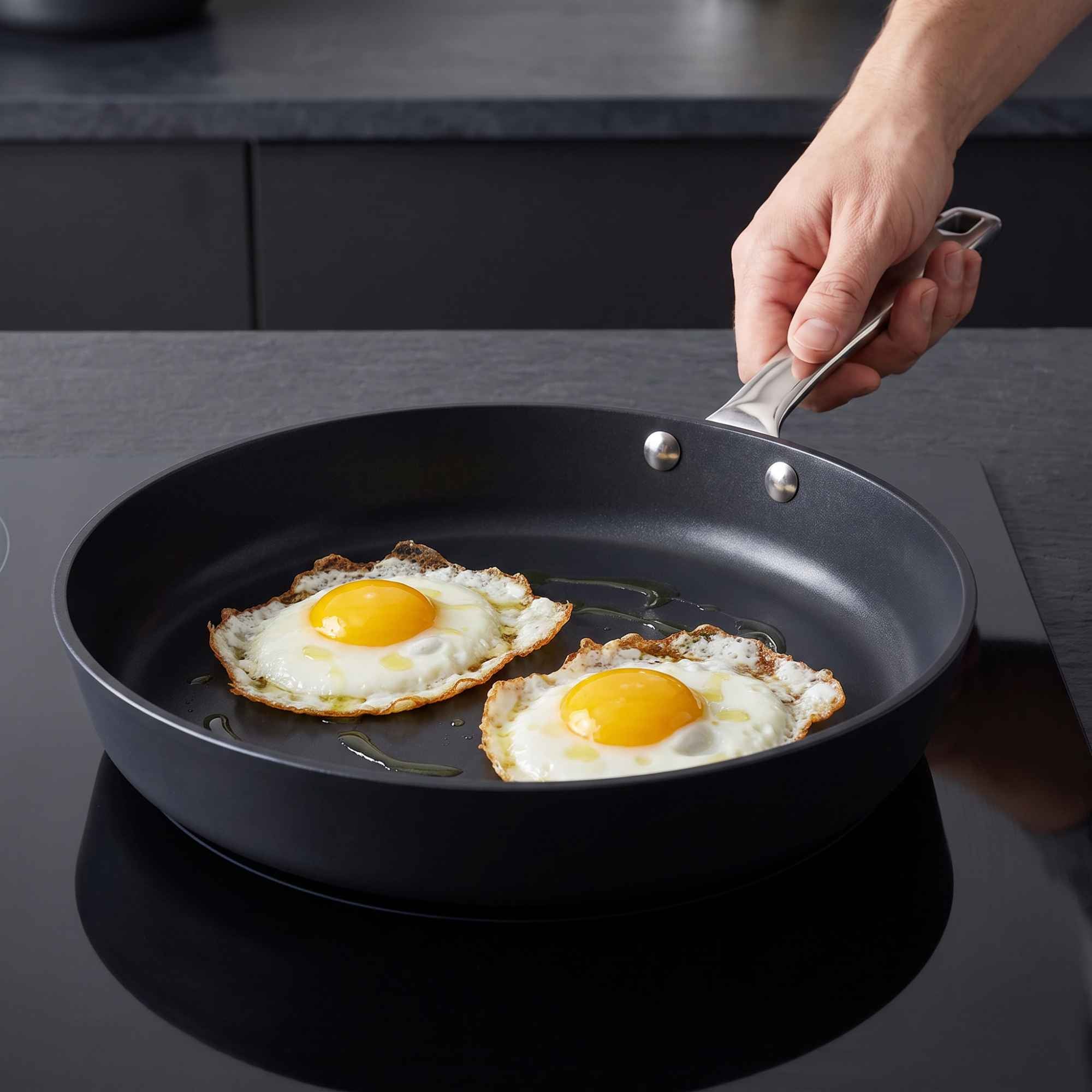
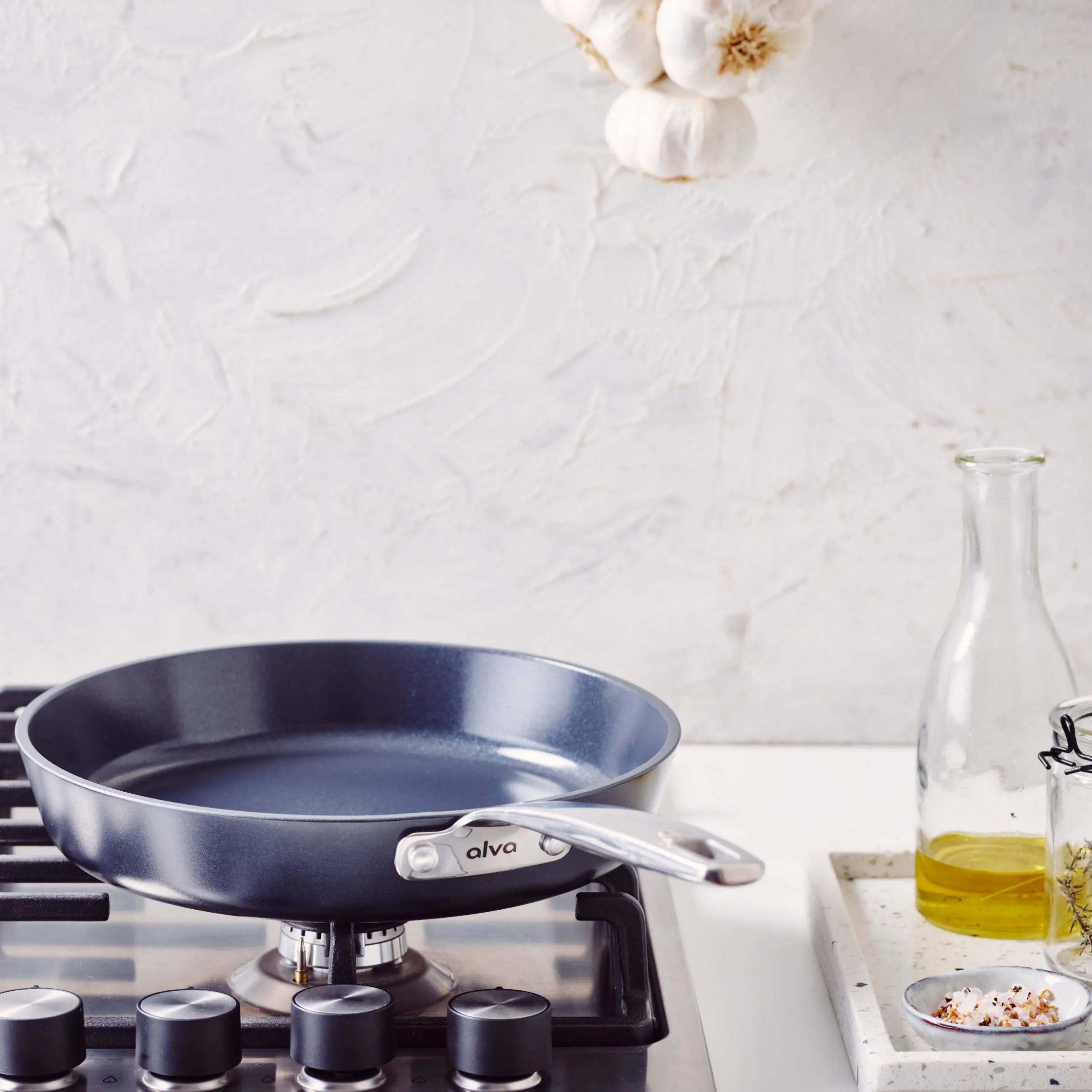
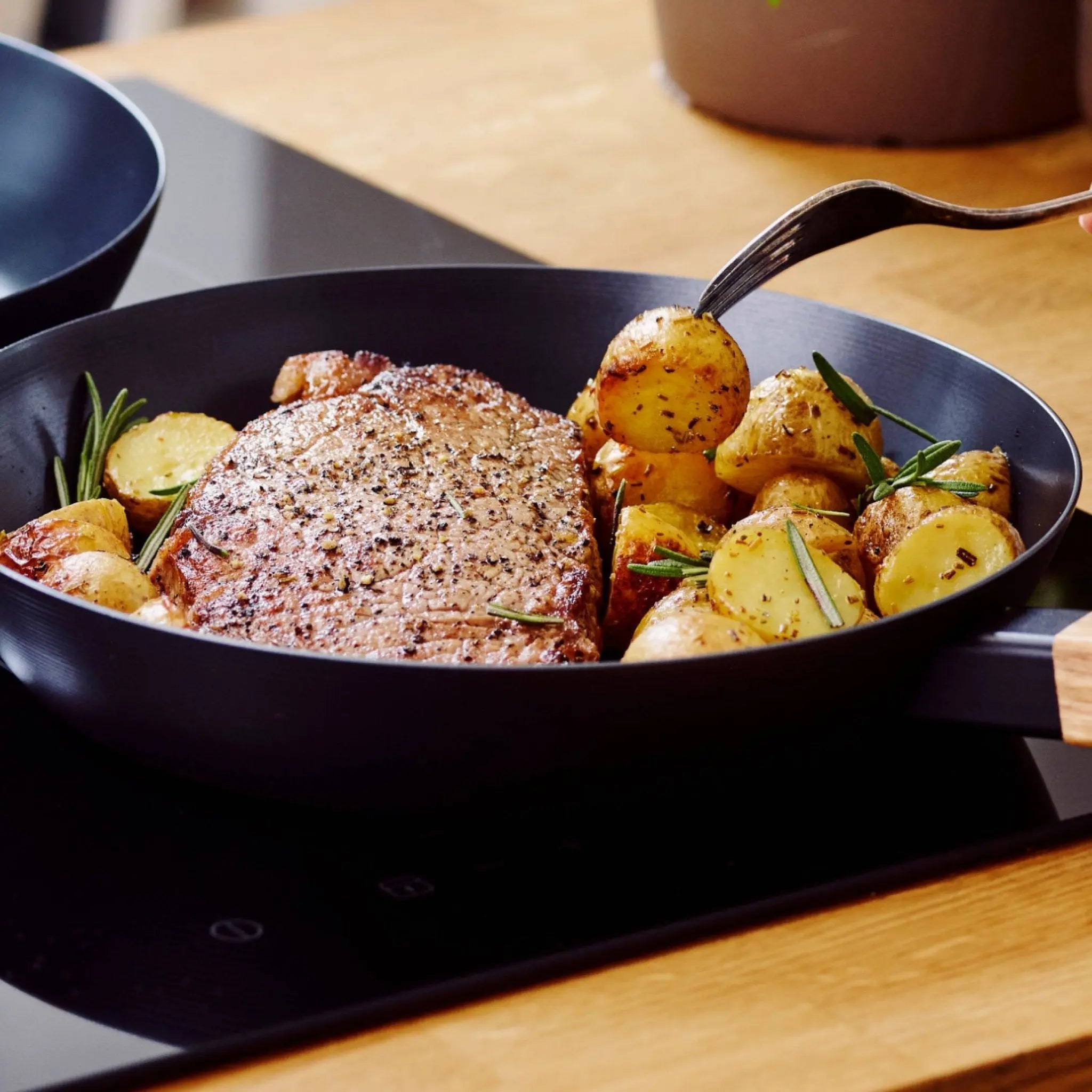
Not sure whether your pan is nonstick? The quickest tell is the surface: nonstick pans have a smooth applied coating (often dark grey, black or speckled) where water and oil bead and food releases with little to no fat. Bare steel, cast iron and carbon steel are not.
Full guide: How to Make Ceramic Nonstick Last (and what "flaking" really means) — our complete ceramic care and durability guide. Ready to replace a worn pan? See our picks for the best nonstick pans of 2026.
Want non-toxic cookware you can trust?
Alva's coated cookware is made without PFAS, PTFE or PFOA and independently tested by TÜV Rheinland against a 638-substance panel — with the lab reports published. Backed by 5–10 year warranties.
Shop non-toxic cookwareSee the lab reportsHow to tell if a pan is nonstick
How to tell: the cooking surface is a smooth applied coating (often dark grey, black, or speckled), and water and oil bead and glide across it, so food releases with little or no fat. Bare stainless steel, cast iron, and carbon steel are not nonstick-coated. If you are still unsure, check the box or manufacturer details before buying or reusing the pan.

Our Top Pick
Ceramic Nonstick Frying Pan
Easy ceramic nonstick for everyday meals. Made without PFAS, PTFE or PFOA, supported by published third-party testing, induction-ready, oven-safe to 400°F and backed by a 10-year limited warranty.
Shop the Maestro Frying PanIs it nonstick? Quick checks
- Look at the surface. Nonstick pans have a smooth, often dark, matte or satin coating over the metal — not bare, shiny steel or seasoned black iron.
- Test it. Heat a little water or cook an egg with no oil; if it slides freely, it is nonstick.
- Check the feel. Coated surfaces feel slightly softer and uniform, not metallic.
Is the coating safe?
This matters more than whether it is nonstick. Older coatings used PFAS/PTFE chemicals. To know yours is safe, look for an explicit no-PFAS, no-PFOA claim backed by third-party testing — not just a marketing buzzword. For background, see our guides to ceramic nonstick and non-toxic nonstick cookware.
Alva nonstick is made without PFAS, PTFE or PFOA and independently tested (TÜV-tested), so you never have to guess. If your current pan is scratched, flaking, or unlabeled, it is worth replacing.
Frequently asked questions
How do I know if my nonstick pan is worn out or needs replacing?
Signs a nonstick pan is worn out: food starts sticking even with oil, and the coating looks scratched, dull, discolored, or is visibly flaking or peeling. Warping that stops the pan sitting flat also hurts performance. Once the coating breaks down, replace it — see how long nonstick lasts for typical lifespans.
Is my pan Teflon (PTFE) or ceramic nonstick?
You often cannot tell by looking, since both feel smooth. Check the box or manufacturer listing: traditional Teflon pans use a PTFE coating, while ceramic nonstick uses a mineral, sol-gel coating. Alva ceramic nonstick is made without PFAS, PTFE and PFOA and is TÜV-tested.
Is it safe to keep using a scratched nonstick pan?
A lightly scratched pan is not an immediate hazard, but deep scratches and flaking mean the coating is failing and small pieces can shed into food. For peace of mind, replace a badly scratched pan — ideally with a non-toxic nonstick option.
What is the egg test for nonstick performance?
Heat the pan over medium, add no oil, and crack in an egg. On a healthy nonstick surface the egg glides and releases cleanly; if it grabs and tears, the coating is wearing out. Wipe clean gently afterward — see how to clean a nonstick pan.
Are all dark or black pans nonstick?
No. Many nonstick coatings are dark grey or black, but so are seasoned cast iron and carbon steel, which are bare metal, not coated. Color alone is not proof — look for a smooth applied coating and check the manufacturer.
Pan failed the egg test?
Compare every Alva nonstick pan and set side by side — sizes, oven limits and warranties in one place, all made without PFAS, PTFE or PFOA. Our pick for a full replacement is the Maestro Essentials 9-Piece Set. Free U.S. shipping over $99.
Still cannot identify it? Replace it
If you cannot work out what your pan is made of, that is reason enough to stop using it. Three routes, depending on budget.
Maestro Ceramic Nonstick Frying Pan
For the pan you reach for every day: sol-gel ceramic on forged aluminium, oven-safe to 400°F, 10-year warranty.
Buy now
Energy Ceramic Nonstick Frying Pan
For the cheapest straight swap: recycled aluminium, stovetop only, 5-year warranty.
Buy now
5-Ply Stainless Frying Pan
For never asking this question again: uncoated 18/10 stainless, dishwasher-safe, lifetime warranty.
Buy nowShop all nonstick cookware or check how long nonstick actually lasts before you decide.
Replacing an old pan? Compare the best non-toxic frying pans and the best ceramic nonstick frying pans.
Our top pickCeramic Nonstick Frying PanShop now →

%20where%20water%20and%20oil%20bead%20and%20food%20releases%20...)
Leave a comment
This site is protected by hCaptcha and the hCaptcha Privacy Policy and Terms of Service apply.