






Best Ceramic Nonstick Frying Pan (2026): Tested Picks & How to Choose
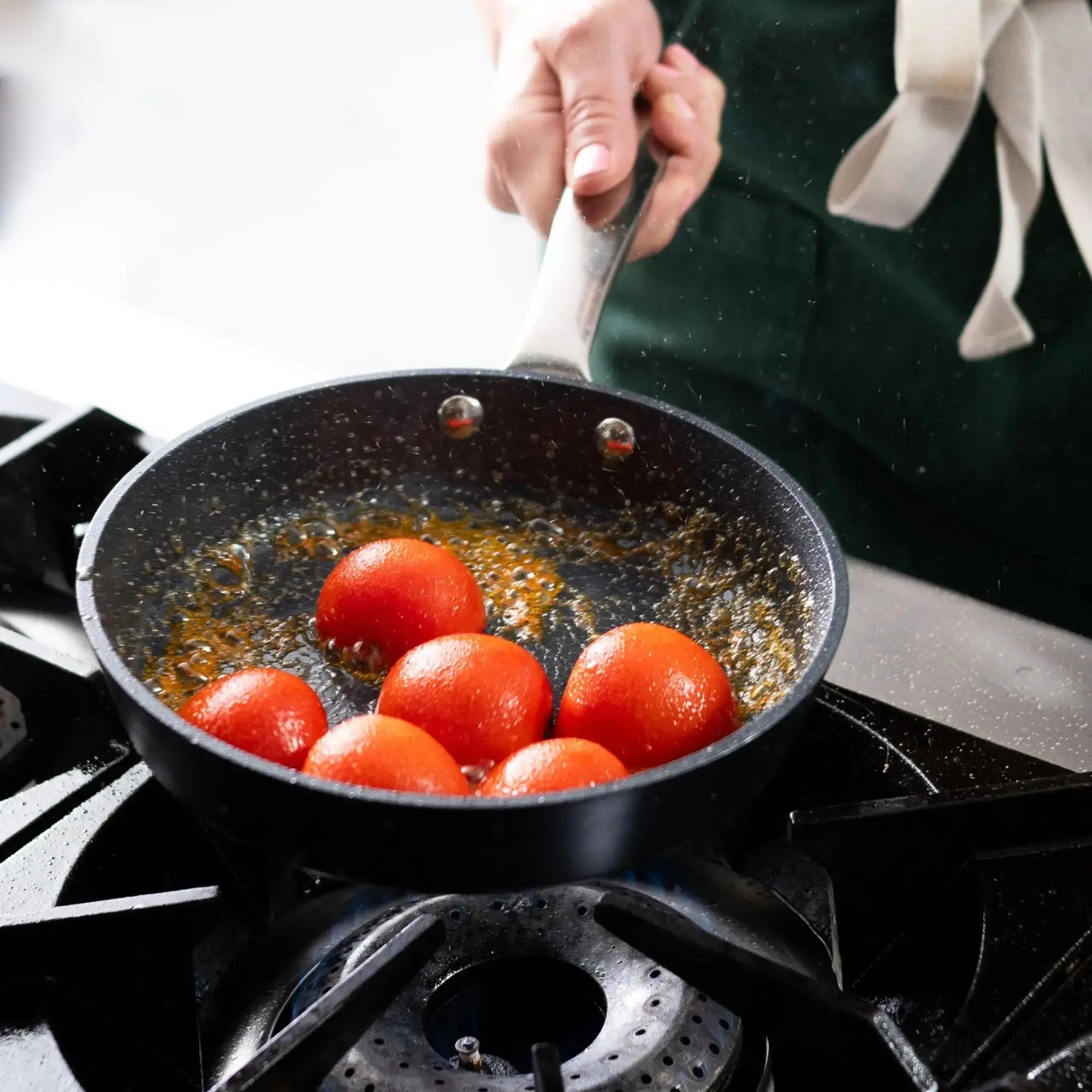
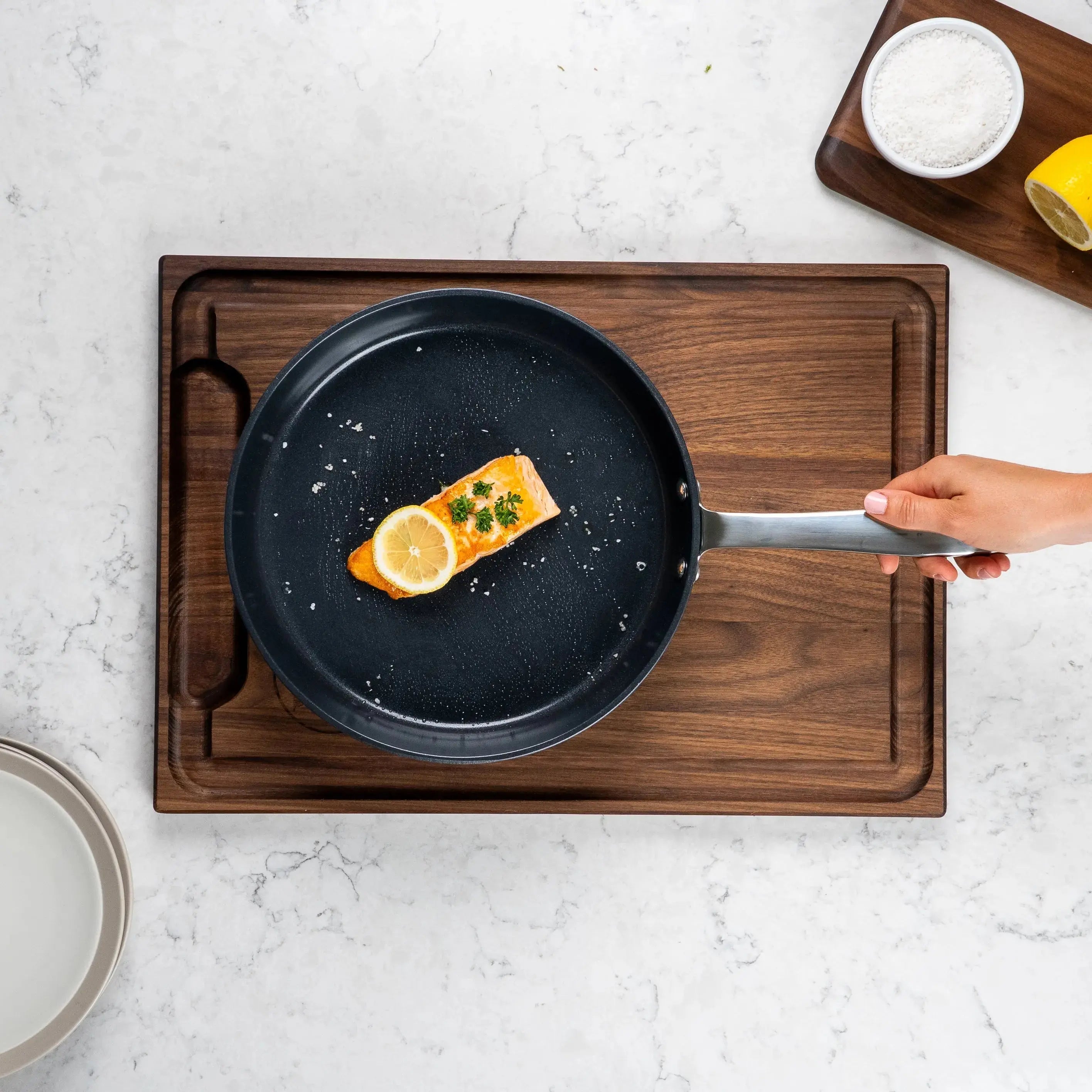
Ceramic suits cooks who want easy release for eggs, fish and pancakes on low to medium heat, a coating made without PFAS, PTFE or PFOA, and a pan they will hand wash. The best ceramic frying pan for most kitchens is the Maestro Ceramic Nonstick Frying Pan: 9.5 or 11 inches, a thick forged base, induction-ready, oven-safe to 400°F and backed by a 10-year limited warranty. The Energy pan is the value option. One caveat: every ceramic coating is a wear surface, so how you treat the pan matters more than the brand.
The best ceramic frying pans at a glance
| Pan | Price | Induction | Oven-safe | Warranty | Best for |
|---|---|---|---|---|---|
| Maestro Ceramic Nonstick Frying Pan | See product page | Yes | 400°F | 10-year limited | Best overall |
| Energy Ceramic Nonstick Frying Pan | See product page | Yes | Stovetop only | 5-year limited | Best value |
| Maestro 5-Ply Nonstick Frying Pan | See product page | Yes | 400°F | 10-year limited | Ceramic on a fully clad stainless body |
| Maestro Ceramic Nonstick Sauté Pan, 3.5-Qt | See product page | Yes | 400°F | 10-year limited | One-pan dinners |
| Maestro Ceramic Nonstick Crepe Pan, 10" | See product page | Yes | 400°F | 10-year limited | Crepes, pancakes, flat eggs |

Our Top Pick
Ceramic Nonstick Frying Pan
Easy ceramic nonstick for everyday meals. Made without PFAS, PTFE or PFOA, supported by published third-party testing, induction-ready, oven-safe to 400°F and backed by a 10-year limited warranty.
Shop the Maestro Frying PanIndependently tested. Alva publishes its third-party lab reports in full, with the lab, report number and date for each line. See the lab reports →
How Maestro compares with other ceramic brands
Competitor figures were checked against each brand's own website in October 2026 (Caraway 10.5" Fry Pan, GreenPan Valencia Pro 10" Frypan, Our Place Ceramic Nonstick Always Pan); Maestro's are from our product page. Specs and warranty terms change, so confirm each brand's current numbers before you buy.
| Brand | Oven limit | Warranty |
|---|---|---|
| Alva Maestro | 400°F | 10-year limited |
| Caraway | 550°F | 1 year |
| GreenPan Valencia Pro | 600°F | 2 years on the ceramic coating; lifetime on other defects |
| Our Place Always Pan | 450°F | 3 years |
The trade is plain: Maestro's oven limit is lower than the other three, and its 10-year limited warranty is longer than the coating or pan warranties listed here, except GreenPan's lifetime cover for non-coating defects. Its third-party lab reports are published in full.
How to choose a ceramic frying pan
Base material
A thin base warps, and a warped pan loses contact with the burner, develops hot spots and wears its coating unevenly. A thick forged aluminum body (Maestro's is 4.5 mm) is the best predictor of how long the release lasts. Fully clad stainless, as in the 5-ply nonstick pan, is the alternative if you want steadier heat up the sides.
Induction base
Induction needs a magnetic base. Maestro's forged aluminum body has a stainless steel induction plate, and the 5-ply pan is clad in stainless, so both work on every cooktop. See best induction cookware for how to check any pan.
Oven limit
The coating, not the metal, sets the limit. Alva's Maestro ceramic pans are oven-safe to 400°F and the Energy line is stovetop-only. Be sceptical of any ceramic pan that claims far more without saying how it was tested.
Coating test evidence
"Ceramic-coated," "granite" and "marble" describe an appearance. Sol-gel ceramic is a material, so ask which one a pan uses and ask for the reports. TÜV Rheinland PFAS reports for Alva's ceramic coatings are published on the testing and materials page. They speak to what is in the coating, not to how long it will last, which is why care still matters.
Warranty
Maestro ceramic pans carry a 10-year limited warranty against manufacturing defects; the Energy pan carries 5 years. A long warranty on a coated pan is the clearest signal of what the maker expects from it. Normal coating wear is not a defect, so read the terms.
Size
Buy 9.5 or 11 inches first. An 8-inch is excellent for one or two eggs but too small for anything you serve to others. An 11-inch handles a family portion of vegetables or two chicken breasts without crowding, and crowding turns searing into steaming. Maestro comes in 8", 9.5" and 11"; the Energy pan also comes in 12.6".
Our picks
Best overall: Maestro Ceramic Nonstick Frying Pan
The Maestro is the pan we point most people to. Forged aluminum body with a stainless steel induction plate, sol-gel ceramic made without PFAS, PTFE or PFOA, oven-safe to 400°F, and a 10-year limited warranty. Hand wash.
Best value: Energy Ceramic Nonstick Frying Pan
The Energy pan is a lighter recycled aluminum ceramic pan, also made without PFAS, PTFE or PFOA, in 8", 9.5", 11" and 12.6", with a 5-year limited warranty. It is stovetop-only, so it is not the pan for finishing dishes in the oven. The 12.6" is the largest ceramic pan in the range, which helps if you cook for four or more.
Ceramic on a stainless body: Maestro 5-Ply Nonstick Frying Pan
The 5-ply nonstick pan puts a ceramic surface made without PFAS, PTFE or PFOA on a fully clad 5-ply stainless body. It is oven-safe to 400°F with a 10-year limited warranty. If the 400°F ceiling puts you off ceramic, skip the coating: the uncoated Maestro 5-Ply Stainless Frying Pan is oven-safe to 500°F with a lifetime warranty.
For one-pan dinners: Maestro Ceramic Nonstick Sauté Pan, 3.5-Qt
Straight sides and a lid make the 3.5-quart sauté pan the better tool for anything with liquid in it, from braised chicken thighs to shakshuka. Same ceramic surface and 10-year limited warranty.
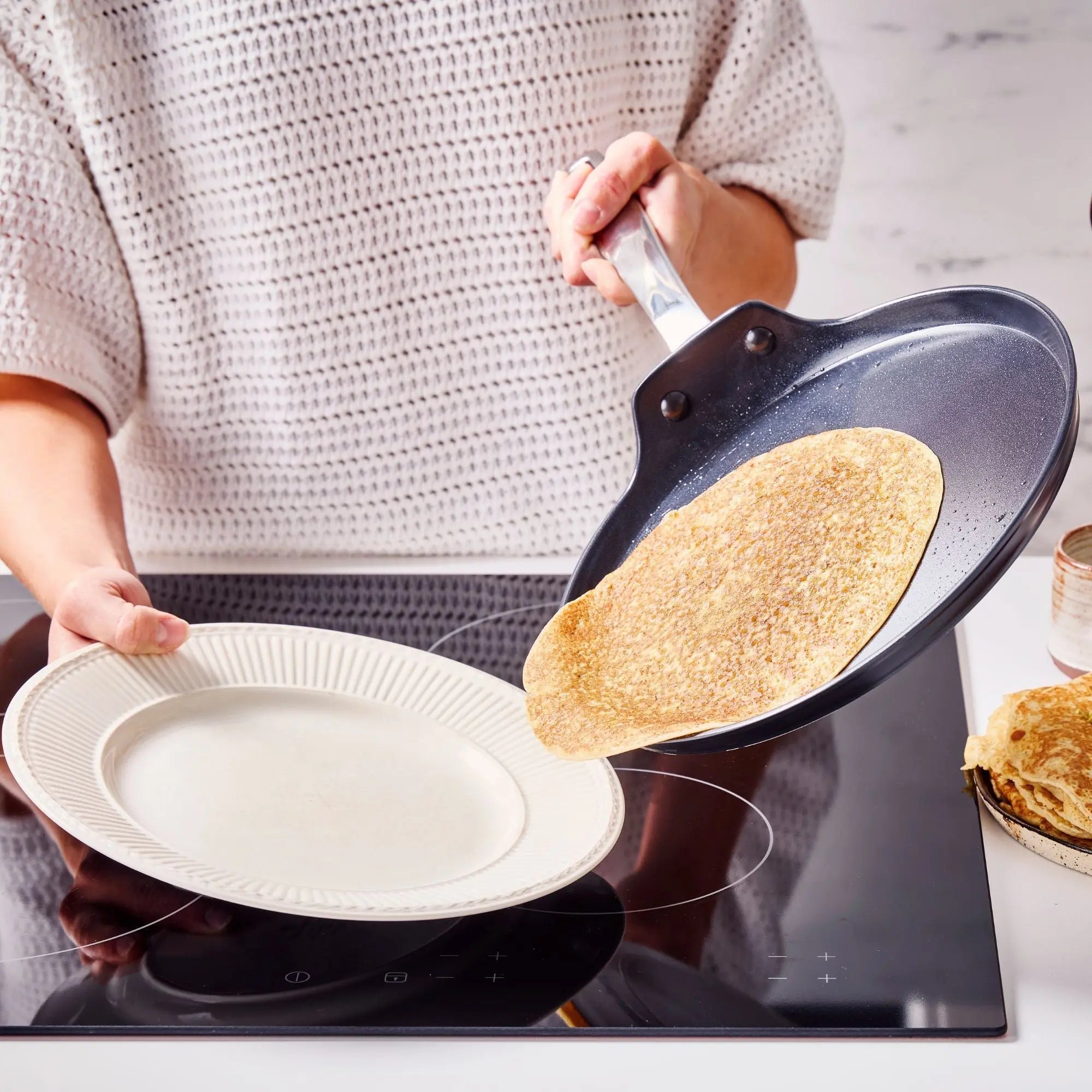
For batters: Maestro Ceramic Nonstick Crepe Pan, 10"
Low sloping sides let a spatula get under a crepe or pancake without tearing it. See the crepe pan, the crepe pan guide and the best pancake pan guide.
How long ceramic nonstick lasts
Ceramic nonstick is a consumable surface on a durable pan. It does not last forever, and it typically does not stay slick as long as a well-treated PTFE coating. How quickly release fades depends mostly on heat and habits. For the full picture, including what scratches, heat and lab results mean, read is ceramic cookware safe.
Ceramic pan care in 5 bullets
- Low to medium heat. Ceramic does not need high heat to release food, and high heat dulls the surface fastest.
- No aerosol sprays. They leave a residue that builds into a sticky film, the usual cause of a "ruined" pan that is just dirty.
- Soft utensils. Silicone, nylon or wood.
- Cool, then wash by hand. Thermal shock can damage the coating and warp the base; skip the dishwasher and abrasive pads.
- Add a little oil or butter. And never preheat an empty pan.
Full routine in how to clean a nonstick pan.
Where ceramic is the wrong choice
Ceramic is the wrong pan for a hard sear on steak, for anything that needs a 500°F oven, and for cooks who will not hand wash. In those cases buy uncoated: carbon steel for high-heat searing, or fully clad stainless for oven work and dishwasher convenience. The honest comparison is in ceramic vs stainless steel frying pan.
Ready to choose? Browse the full ceramic nonstick range, or compare across materials in our best non-toxic cookware guide. Free U.S. shipping over $99.
Frequently asked questions
What is the best ceramic frying pan?
For most kitchens, a 9.5 or 11-inch pan on a thick forged base with a sol-gel ceramic coating made without PFAS, PTFE or PFOA. Our pick is the Maestro Ceramic Nonstick Frying Pan, which is induction-ready, oven-safe to 400°F and backed by a 10-year limited warranty. The Energy pan is the value alternative.
Who should buy a ceramic frying pan?
Cooks who want easy release for eggs, fish and pancakes on low to medium heat, want a coating made without PFAS, PTFE or PFOA, and are happy to hand wash. If you sear steak hard, need a 500°F oven or want a dishwasher-safe pan, uncoated stainless or carbon steel is the better fit.
How long does a ceramic nonstick pan last?
Ceramic is a wear surface, so release fades over time, and heat and care decide how quickly. Low to medium heat, no aerosol sprays, soft utensils and hand washing all extend it. Ceramic is a consumable surface, which is the main trade-off against uncoated stainless or carbon steel.
Is ceramic nonstick safer than Teflon?
Ceramic sol-gel coatings like Alva's are made without PFAS, PTFE or PFOA, while PTFE nonstick (often sold as Teflon) is a PFAS coating by definition. If avoiding those compounds is your goal, ceramic is the option. The trade-off is longevity: PTFE typically stays slick longer.
Can ceramic frying pans go in the oven?
Alva's Maestro ceramic pans, including the 5-ply nonstick stainless pan, are oven-safe to 400°F; the Energy line is stovetop-only. The coating sets that limit, not the metal body. If you need 500°F, choose an uncoated pan such as the Maestro 5-Ply Stainless.
Do ceramic frying pans work on induction?
Only if the base is magnetic. The Maestro ceramic pans have a stainless steel induction plate and work on every cooktop, including induction. The Energy pan is also listed as induction-compatible.
Why has my ceramic pan stopped being nonstick?
Most often it is not worn out but coated in polymerised residue from cooking sprays or oil burnt on at too high a heat. Scrub gently with warm soapy water and a soft sponge first. If food still sticks after cleaning, and the pan has seen years of use, the coating has genuinely worn.
Are ceramic pans dishwasher safe?
Alva recommends hand washing its ceramic pans, because dishwasher detergent is abrasive and can shorten the life of a ceramic coating. The uncoated Maestro 5-Ply Stainless Frying Pan is dishwasher-safe.
What size ceramic frying pan should I buy?
Buy 9.5 or 11 inches as your first pan. An 8-inch is excellent for one or two eggs but too small for a family portion, and crowding a pan steams food instead of browning it. Cooking for four or more? The 12.6-inch Energy pan is the largest in the range.
The bottom line
Buy the Maestro Ceramic Nonstick Frying Pan if you want the longest warranty and the best-built base, or the Energy pan if you would rather spend less and replace sooner. Either way, the coating lasts as long as your habits let it: low heat, soft utensils, no dishwasher.
Easy weeknight recipes for it: sausage and peppers and skillet queso dip.
Comparing ceramic frying pans?
See every Alva ceramic nonstick pan side by side — 8, 9.5 and 11 inch, plus sets, with oven limits and weights in one place. Free U.S. shipping over $99.


Leave a comment
This site is protected by hCaptcha and the hCaptcha Privacy Policy and Terms of Service apply.