






Best Non-Toxic Cookware (2026): A Buyer's Guide to Lab-Tested Pans Made Without PFAS
Updated October 2026 · Coated picks independently tested for PFAS
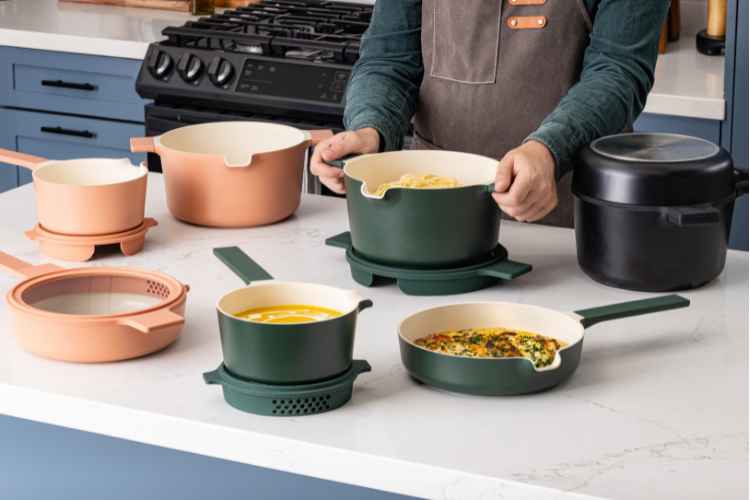
The best non-toxic cookware is uncoated stainless steel, ceramic nonstick made without PFAS, enameled or bare cast iron, or carbon steel, from a brand that publishes independent lab results. For a full kitchen, choose a complete ceramic nonstick set or a 5-ply stainless set; for a single pan, choose ceramic for eggs, stainless for searing or carbon steel for high heat. The brands most often recommended are Alva, Caraway, GreenPan, Our Place, All-Clad, Made In, Le Creuset and Lodge. All of them sell cookware made without PFAS; they differ on oven limits, warranty and how much proof they publish. Our picks: Alva Maestro 5-Ply Stainless for a coating-free kitchen (no coating at all) and Maestro Ceramic for nonstick, whose coating is backed by published TÜV Rheinland PFAS reports.
“Non-toxic” is defined by material, not marketing: stainless steel, ceramic nonstick made without PFAS, enameled cast iron and carbon steel. This guide gives a verdict for each material, ranks the best non-toxic cookware by need, picks the best sets and frying pans, compares the big brands side by side, and links to our five-minute checklist for verifying any claim. See our lab reports on the Testing & Materials page.
Non-toxic cookware: the verdict table
| Material | Verdict | Best for | Watch out for |
|---|---|---|---|
| Stainless steel | Safest all-rounder | Searing, sauces, acidic foods | Food sticks without technique. |
| Ceramic nonstick | Good, if tested | Eggs, fish, easy cleanup | Coating wears over the years. Choose a brand that publishes lab reports. |
| Enameled cast iron | Safe, lasts a lifetime | Braising, soups, acidic sauces | Heavy. Confirm the enamel is lead-free. |
| Carbon steel | Safe, no coating | High-heat searing | Needs seasoning. Long acidic simmers can strip it. |
| Traditional PTFE nonstick | Avoid if you want no PFAS | Not our recommendation | Contains PFAS. Fumes from overheating can harm pet birds. |
Related guides: how to tell if cookware is non-toxic · are ceramic pans safe? · best induction cookware

Our Top Pick
Ceramic Nonstick Cookware Set, 12-Piece
A complete ceramic nonstick kitchen in one set. Made without PFAS, PTFE or PFOA, supported by published third-party testing, induction-ready and backed by a 10-year limited warranty.
Shop the 12-Piece SetThe lab evidence behind our picks
Page updated 7 October 2026 · Most recent lab report on file: 8 December 2025
- PFAS: TÜV Rheinland screened Alva Neat and Energy (reports 180353731b and 180353731a, 8 December 2025) and Maestro Ceramic (reports 180349468a/b/c, 28 October 2025) against a 638-substance PFAS panel. All substances were below the laboratory reporting limit.
- Lead and cadmium: In the Neat report (304117407b, 5 March 2025), tested to FDA 21 CFR 175.300 and 177.2600 food-contact requirements, lead averaged below 0.2 µg/ml (FDA limit 3.0) and cadmium below 0.02 µg/ml (FDA limit 0.5). That report covers the Neat line.
Read the one-page test summary (PDF) · Testing & Materials page

Want non-toxic cookware you can trust?
Alva's coated cookware is made without PFAS, PTFE or PFOA and independently tested by TÜV Rheinland against a 638-substance panel, with the lab reports published. Warranties run from 5 years to lifetime.
Shop non-toxic cookwareSee the lab reportsThe best non-toxic cookware brands, by what you want
The brands that come up most when people ask for non-toxic cookware, with each one's flagship line. We have left out retail prices because most of these brands run near-permanent sales; check each maker's site for the current figure.
| Brand | Best for | Flagship line | Surface | Oven-safe | Warranty |
|---|---|---|---|---|---|
| Alva | Published lab reports; long coating warranty | Maestro Ceramic 9-Piece; 5-Ply Stainless 7-Piece | Ceramic nonstick; uncoated 5-ply stainless | 400°F ceramic; 500°F stainless | 10 years ceramic; lifetime stainless |
| Caraway | Design and storage | Cookware Set (4 pans) | Ceramic nonstick | 550°F | 1 year |
| GreenPan | Highest oven limit; dishwasher-safe ceramic | Valencia Pro 11-Piece | Thermolon ceramic nonstick | 600°F (lids 425°F) | 2 years on the coating; lifetime on the pan body |
| Our Place | Minimalist, multi-use pans | Cookware Set (4 pans) | Thermakind ceramic nonstick | 450°F | 3 years |
| All-Clad | American-made stainless | D3 10-Piece | Uncoated 3-ply stainless | 600°F | Limited lifetime |
| Made In | Restaurant-style 5-ply stainless | Stainless Clad 10-Piece | Uncoated 5-ply stainless | 800°F | Lifetime |
| Le Creuset | Heirloom enameled cast iron | Signature Round Dutch Oven 5.5-Qt | Enameled cast iron | 500°F | Limited lifetime |
| Lodge | Lowest price | Enameled Dutch Oven 6-Qt; cast iron skillets | Enameled or seasoned cast iron | 500°F (enameled) | Limited lifetime |
Every brand here sells cookware made without PFAS. The biggest real differences are how long a ceramic coating is covered (Alva 10 years, Our Place 3, GreenPan 2, Caraway 1) and whether lab reports are published, which we compare further down. Full head-to-heads: best ceramic cookware sets, best stainless steel cookware sets and best Dutch oven.
Best non-toxic cookware by material and need
Our top picks across every non-toxic material, so you can match the right pan to the way you actually cook. Alva's coated lines are independently tested by TÜV Rheinland and made without PFAS, PTFE and PFOA; the uncoated stainless, carbon steel and cast iron lines have no coating at all.
- Best overall: Maestro Stainless 5-Ply. Fully-clad stainless that sears, simmers and handles acidic foods with no coating to wear out. Oven-safe to 500°F.
- Best nonstick (ceramic): Maestro Ceramic. Mineral nonstick made without PFAS, for eggs and delicate foods; oven-safe to 400°F.
- Best coating-free: Maestro Stainless 5-Ply. Nothing to flake or degrade, which makes bare stainless the most durable non-toxic surface you can buy.
- Best carbon steel: Forest Carbon Steel. Arrives pre-seasoned and builds a natural nonstick for high-heat searing, with no synthetic coating. Stovetop-only; for oven work, choose the Artist or Black Angus pans instead.
- Best cast iron: Nori Enameled Cast Iron. Lead-free enamel over iron for braises and acidic sauces; built to last a lifetime.
- Best value: Neat 5-Piece Stackable Ceramic Set. A complete nonstick starter set made without PFAS that stacks to save cabinet space.
- Best set: Ceramic Nonstick 12-Piece Set. A full non-toxic kitchen in one box, induction-ready and backed by a 10-year warranty. More sets below.
| Pick | Material | Surface | Oven-safe | Warranty | Shop |
|---|---|---|---|---|---|
| Maestro Stainless 5-Ply (Best overall / coating-free) | 5-ply stainless steel | No coating at all, so no PFAS or PTFE by design | 500°F | Lifetime | Shop |
| Maestro Ceramic (Best nonstick) | Ceramic nonstick | Made without PFAS, PTFE, PFOA | 400°F | 10-year | Shop |
| Forest Carbon Steel (Best carbon steel) | Carbon steel | Pre-seasoned, no coating at all, so no PFAS or PTFE by design | Stovetop only | 10-year | Shop |
| Nori Enameled Cast Iron (Best cast iron) | Enameled cast iron | No synthetic coating; porcelain enamel | 500°F | Lifetime | Shop |
| Neat Stackable Ceramic Set (Best value) | Ceramic nonstick | Made without PFAS, PTFE, PFOA | 400°F | 5-year | Shop |
| Ceramic Nonstick 12-Piece Set (Best set) | Ceramic nonstick | Made without PFAS, PTFE, PFOA | 400°F | 10-year | Shop |
Best non-toxic cookware sets
The best non-toxic cookware set is one made from a material you will actually use, by a maker that can prove it. For most households that is a ceramic nonstick set made without PFAS, PTFE or PFOA (the 12-piece for a full kitchen, the 9-piece for value, the 4-piece to start), or a 5-ply stainless set if you never want to replace a coating.
What a good set includes
- The pieces you cook with every week: a frying pan or two, a couple of saucepans with lids, a sauté pan and a stockpot. Padding with extra lids and duplicates adds cost, not value.
- A named cooking surface. “Ceramic-coated,” “granite” and “diamond” are finishes, not materials. If a brand won't say whether the surface is sol-gel ceramic or PTFE, assume PTFE.
- Proof and a matching warranty. Published third-party reports for any coating, and a warranty that fits the claim: a coating covered for one year tells you how long the maker expects it to last.
Which materials to look for in a set
- Fully clad stainless steel: no coating, non-reactive, nothing to wear out. The safest everyday choice, with a learning curve on sticking.
- Enameled cast iron: a fused glass surface over iron that needs no seasoning and is fine with tomato and wine. Choose a brand that says its enamel is made without lead and cadmium. See enameled vs bare cast iron.
- Carbon steel: just iron and carbon with a seasoning of cooking oil. Nearly indestructible, but it rusts if left wet.
- Verified ceramic nonstick made without PFAS: the safest coated option when the brand publishes independent testing. It is a wear item, so expect to replace it eventually. More in is ceramic cookware safe.
| Set | Material | Price | Oven-safe | Warranty | Best for |
|---|---|---|---|---|---|
| Ceramic Nonstick Set, 12-Piece | Ceramic nonstick | See product page | 400°F | 10-year | Best overall: a complete kitchen |
| Ceramic Nonstick Set, 9-Piece | Ceramic nonstick | See product page | 400°F | 10-year | Best value complete set |
| Stainless Steel Set, 5-Piece | 5-ply stainless | See product page | 500°F | Lifetime | Best uncoated: nothing to wear out |
| Neat 5-Piece Stackable Set | Ceramic nonstick | See product page | 400°F | 5-year | Best for small kitchens |
| Ceramic Nonstick Cookware Set, 4-Piece | Ceramic nonstick | See product page | 400°F | 10-year | Best starter set |
| Carbon Steel Set, 4-Piece | Carbon steel | See product page | Stovetop only | 10-year | Best for high-heat searing |
| Enameled Cast Iron Set, 12-Piece | Enameled cast iron | See product page | 500°F | Lifetime | Best for braising and slow cooking |
- Ceramic sets (12-, 9- and 4-piece): same sol-gel ceramic made without PFAS, induction-ready, with the same 400°F limit and 10-year warranty. The 9-piece is the more honest buy for a first kitchen; the 4-piece covers most weeknight cooking and you can add pieces later. Hand-washing on low-to-medium heat is what makes any ceramic coating last.
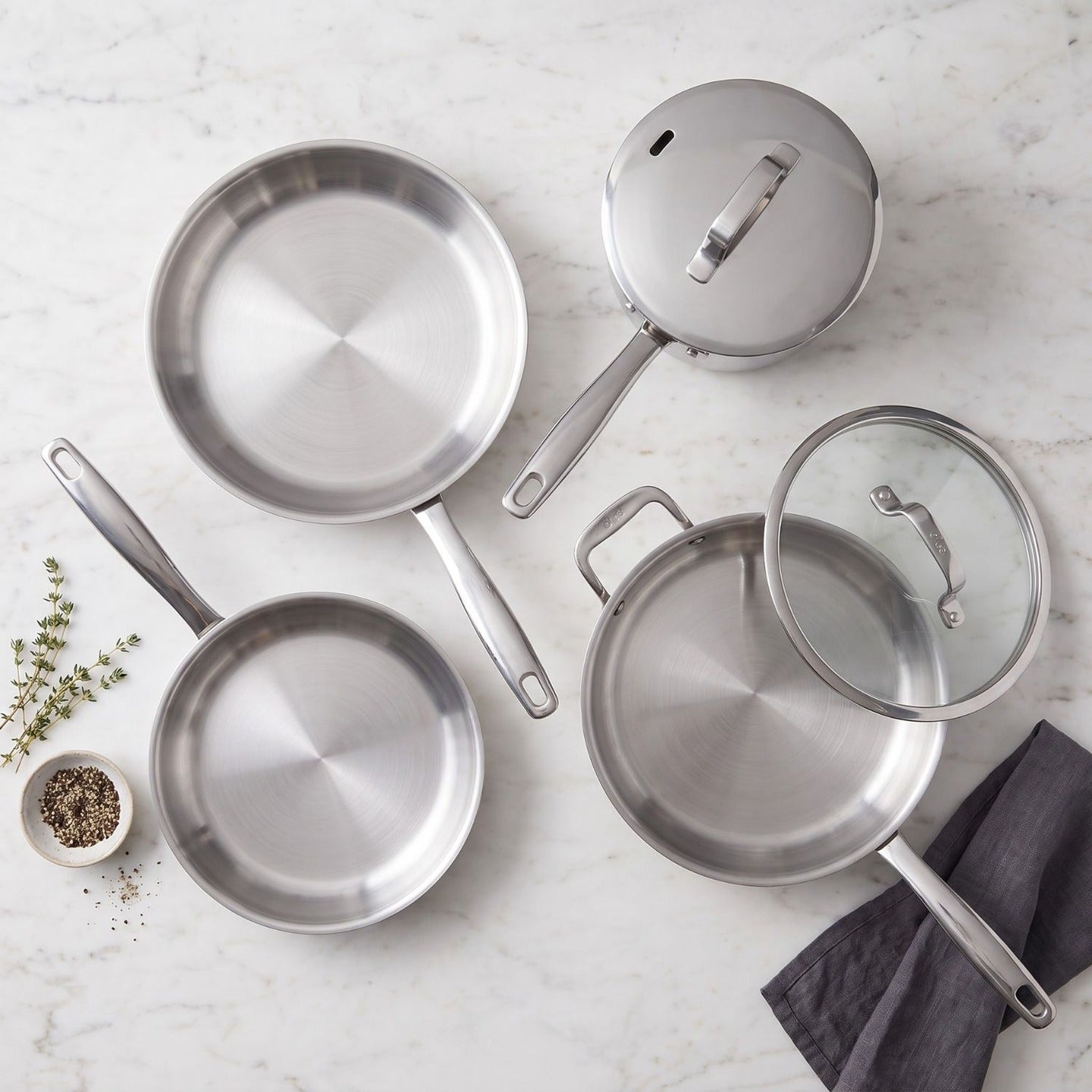
- Stainless 5-piece: the structural answer to “non-toxic”, because there is no coating at all. Metal-utensil safe and the only Alva set that is dishwasher-safe. The trade is a learning curve: food sticks until you preheat properly.
- Neat stackable set: nests into one vertical stack with strainer lids, which is what makes it the pick when cabinet space is the constraint. Its 5-year warranty is shorter than the Maestro ceramic lines. More in non-toxic cookware for small kitchens.
- Carbon steel 4-piece: 8", 9.5" and 11" pans plus a 12" wok, all pre-seasoned. Stovetop-only, and it needs drying and oiling after every wash. Read the carbon steel buyer's guide first.
- Enameled cast iron 12-piece: the most expensive set here and the one most likely to outlive its owner, but heavy and slow to heat. Buy it for stews, braises and bread, not as a general-purpose set.
All of these work on gas: stainless, carbon steel and enameled cast iron handle a strong flame best, while ceramic wants the flame under the base and low-to-medium heat (see best cookware for gas stoves). When a set is the wrong purchase: sets only pay off if you use most of the pieces. If your cooking is concentrated, two or three well-chosen pans cost less, and mixed materials beat matched ones: a ceramic pan for eggs, a stainless pan for searing and one cast iron piece cover more ground than any single-material set. How many pots and pans you actually need works through it. Browse all cookware sets → Free U.S. shipping over $99.
Best non-toxic frying pans
The best non-toxic frying pan has no PFAS, PTFE or PFOA on the cooking surface, and there are three good routes to one: a verified ceramic nonstick pan (easiest to cook with), an uncoated stainless steel pan (nothing to wear off), or a carbon steel or cast iron pan (naturally nonstick once seasoned). All three are genuinely non-toxic, so pick by how you cook.
| Route | Our pick | Oven-safe | Cleanup | Warranty | Choose it if |
|---|---|---|---|---|---|
| Ceramic nonstick | Maestro Ceramic Nonstick Frying Pan (See product page for price) | 400°F | Hand wash recommended | 10-year limited | You cook eggs, fish and delicate foods and want easy release with little oil |
| Uncoated stainless | Maestro 5-Ply Stainless Frying Pan (See product page for price) | 500°F | Dishwasher-safe | Lifetime | You sear, make pan sauces and want a buy-it-for-life pan with no coating at all |
| Carbon steel / cast iron | Black Angus Carbon Steel Frying Pan (See product page for price) | 500°F | Hand wash, dry and oil | Lifetime | You sear steaks at high heat and want a surface that improves with use |
- Ceramic: the most beginner-friendly route, with one trade-off: even the best ceramic coatings wear over a few years and dislike high heat. Details in our best ceramic nonstick frying pan guide.
- Stainless: sears better, takes metal utensils and lasts decades. The small learning curve is preheating properly (here's the technique); more in the best stainless steel frying pan guide.
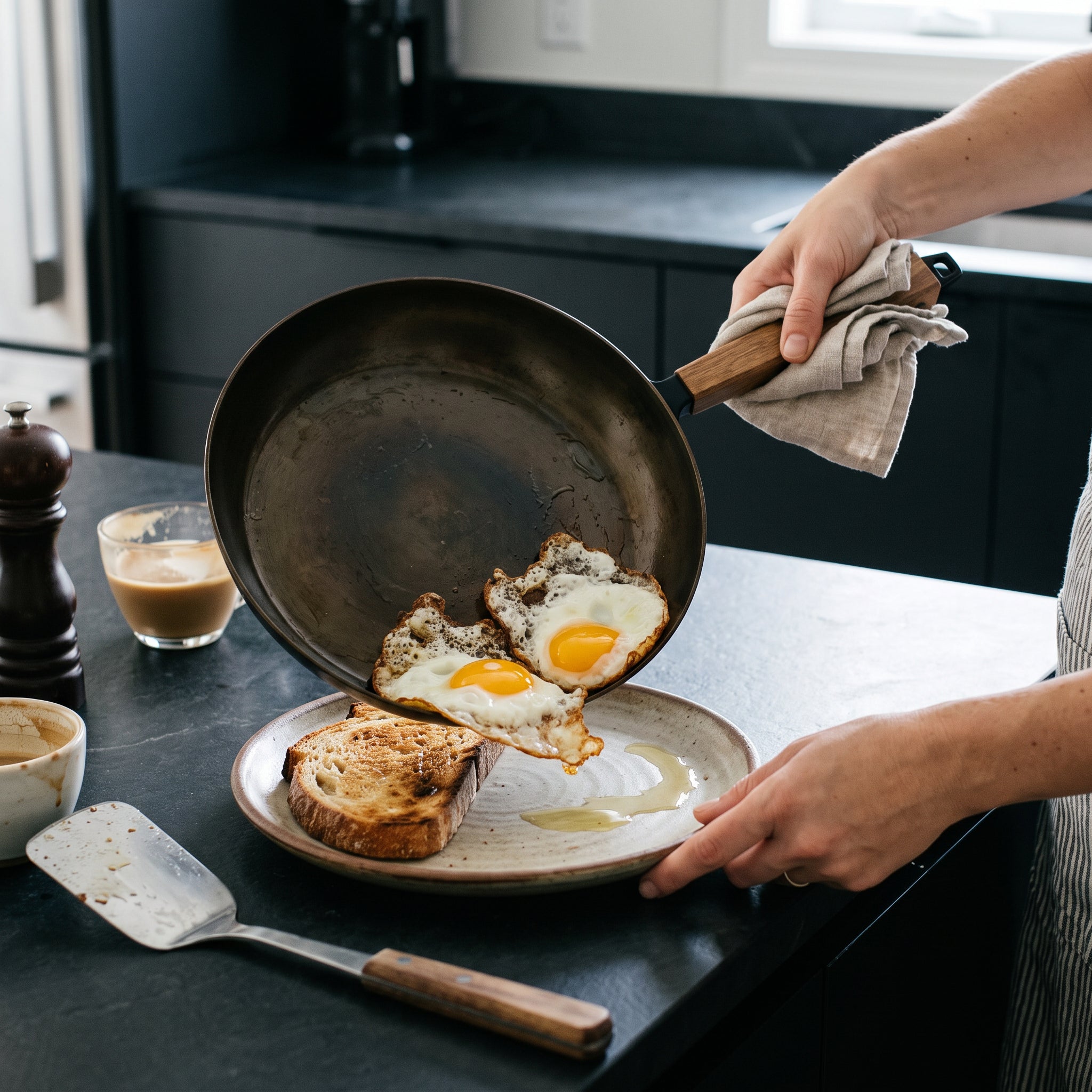
- Carbon steel or cast iron: iron and carbon, with a seasoning of baked-on oil as the nonstick surface. Trade-offs: they need drying and a little oil after washing, can rust if left wet, and acidic foods like tomato sauce can strip young seasoning. Carbon steel is lighter and heats faster; cast iron is heavier and holds heat longer. On a tight budget, a Lodge cast iron skillet costs about $25. See carbon steel vs cast iron.
Most kitchens want two: a ceramic pan for eggs and a stainless or carbon steel pan for everything else. Be careful with hybrid and “titanium” pans: HexClad says its current pans use a PTFE-free ceramic nonstick, but older HexClad pans used a PTFE-based coating, and many “titanium” or “diamond” nonstick pans are PTFE coatings reinforced with mineral particles. Look for the coating type and a test report, not the material name. Also check the oven limit, which the handle usually sets. Shop all frying pans →
What “non-toxic” really means (and why the label is often meaningless)
There is no legal definition of “non-toxic” cookware. Any brand can print it on a box. What matters is (1) what the cooking surface is made of, (2) whether it can release anything into your food under normal cooking heat, and (3) whether an independent lab has verified it. To vet a specific claim in five minutes, use our non-toxic cookware checklist: it covers the questions to ask and the red flags, such as “PFOA-free” and “granite”, to ignore.
The chemicals people are actually trying to avoid:
- PFAS (“forever chemicals”): Used in traditional nonstick coatings (PTFE/Teflon-type). They persist in the body and environment. Cookware made without PFAS is the single most requested feature in non-toxic cookware.
- Lead & cadmium: Heavy metals that can appear in low-quality glazes, enamels and exterior paints. Reputable brands test finished products to confirm they are absent or within safe limits.
- PFOA: An older PFAS compound, now phased out of most cookware but still worth confirming.
The best non-toxic cookware materials, ranked by use
Stainless steel: best all-around
Non-reactive, durable, and safe for acidic foods. Fully-clad 5-ply stainless is the workhorse of a non-toxic kitchen. See Is Stainless Steel Cookware Safe? and shop the Maestro 5-ply collection.
Ceramic nonstick: best nonstick made without PFAS
A mineral-based coating that delivers nonstick performance without PFAS. Ideal for eggs and delicate foods; plan to replace it every few years as the coating wears. See Are Ceramic Pans Safe? and shop ceramic nonstick.
Cast iron & enameled cast iron: best for high heat and longevity
Naturally non-toxic, essentially lasts forever, and enameled versions handle acidic braises. Shop enameled cast iron.
Carbon steel: best natural nonstick for searing
Seasons to a natural nonstick surface with no coating to wear off. A great high-heat alternative to nonstick; Alva's carbon steel arrives pre-seasoned. Shop carbon steel.
How the big non-toxic brands compare on proof
Most brands that come up in a non-toxic search make cookware without PFAS. Where they differ is how much proof they publish. Here is what each flagship line says about itself on its own US website, checked in September and October 2026.
| Brand and line | Cooking surface | What the maker claims | Lab reports on its site | Warranty |
|---|---|---|---|---|
| Alva Maestro Ceramic | Sol-gel ceramic nonstick | Made without PFAS, PTFE or PFOA | Yes: TÜV Rheinland reports on our testing page | 10 years |
| Alva Maestro 5-Ply Stainless | 18/10 stainless, uncoated | No coating at all, so no PFAS by design | Not needed: no coating to test | Lifetime |
| Caraway | “Proprietary non-stick ceramic” | “Crafted without PTFE, PFOA, and PFAS” | Yes: third-party testing page | 1 year |
| Our Place Always Pan 2.0 | Thermakind ceramic nonstick | Made without PFAS, PTFE, PFOA, lead and cadmium | Yes: third-party testing page | 3 years |
| GreenPan Valencia Pro | Thermolon ceramic nonstick | “Made without intentionally added PFAS” | Says third-party tested; reports not found | 2 years on the coating; lifetime on the pan body |
| HexClad Hybrid | Stainless over ceramic nonstick | “Made without PFAS” | Partial: summary results on product page | Lifetime (defects) |
| Made In Stainless Clad | 5-ply stainless, uncoated | Made without PFAS, PFOA, PTFE, lead and cadmium | Says third-party tested; report not found | Lifetime |
| All-Clad D3 | Stainless, uncoated | No coating; “third-party tested for safety” | Report not found | Limited lifetime |
| Le Creuset Signature | Porcelain enamel over cast iron | No coating claim; chemical disclosures page | Report not found | Limited lifetime |
| Lodge Classic | Seasoned bare cast iron | “Nontoxic cookware made without PFAS” | Report not found | Lodge warranty |
“Report not found” means we could not find a published lab report on the brand’s US website when we checked. It does not mean the product is unsafe.
How to read it. Uncoated stainless, cast iron and carbon steel contain no PFAS by design, so a lab report matters less there. For coated pans, a published report is the difference between a claim and proof, and that is the column worth checking before you buy. Alva publishes third-party lab results; see the Testing & Materials page.
Building a fully non-toxic kitchen
You don't need to replace everything at once. Start with the pan you use most, usually an everyday skillet (see the frying pan picks above), then add a nonstick for eggs and a pot for soups and pasta, or go straight to one of the sets above. If you want to go a level deeper on which materials are genuinely healthy to cook on, we've broken that down separately. Cross-shopping the big ceramic brands? We compare them directly in Caraway vs GreenPan and Caraway vs Our Place. New to cookware overall? Our Complete Cookware Buying Guide walks through every decision.
How we chose these picks
Every recommendation here clears the same bar we hold our own cookware to:
- Material first. The cooking surface has to be an inherently safe material (coating-free stainless, carbon steel or cast iron, or a mineral ceramic made without PFAS), with no PTFE/Teflon-type nonstick.
- Free of what matters. No PFAS, PTFE or PFOA on the cooking surface, and for coated or enameled pieces a maker that addresses lead and cadmium specifically.
- Third-party tested. We prioritize cookware that has been independently tested. Alva's coated lines are verified by TÜV Rheinland against a 638-substance PFAS panel with results below the reporting limit.
- Published reports. The lab results are public, not just a “safe” claim on the box.
- Built to last. Warranties run from 5 years to lifetime.
Still deciding between materials? Compare them in our non-toxic cookware guide and ceramic cookware guide, compare collections head-to-head, or find your cookware with our quiz. Weighing Alva against another brand? See the best Caraway alternatives.
Frequently asked questions
What is the best non-toxic cookware brand?
It depends what you want. Alva publishes its third-party lab reports in full and covers its ceramic coating for 10 years; Caraway leads on design and storage; GreenPan has the highest ceramic oven limit (600°F) and is dishwasher-safe; All-Clad and Made In make uncoated stainless with no coating to test; Le Creuset and Lodge make enameled and bare cast iron. All of these sell cookware made without PFAS.
What is the safest non-toxic cookware?
Stainless steel, ceramic nonstick made without PFAS, cast iron, and carbon steel are the safest, most widely recommended non-toxic materials. The safest specific products are ones with published independent lab tests confirming they are made without PFAS and are free of lead and cadmium.
What is the best non-toxic cookware set?
For a full kitchen, a ceramic nonstick set made without PFAS, PTFE or PFOA, such as the Alva 12-piece set, is the most complete. If you would rather never replace a coating, a 5-ply stainless set is the buy-it-once answer, and a stackable ceramic set suits small kitchens. Whatever the material, choose a set whose maker publishes independent test results.
Do I need a whole set, or just a few pans?
A set is good value only if you will use most of the pieces. If your cooking is focused, two or three individual pans in complementary materials will cost less and serve you better than a set padded out with pieces you rarely reach for.
What is the best non-toxic frying pan?
There are three good routes, all with no PFAS, PTFE or PFOA on the cooking surface: ceramic nonstick for eggs and easy cleanup, uncoated stainless for searing and a pan that lasts for decades, and carbon steel or cast iron for high heat and a surface that gets more nonstick with seasoning. Most kitchens want two: a ceramic pan for eggs and a stainless or carbon steel pan for everything else.
Is ceramic or stainless steel more non-toxic?
Stainless, strictly speaking, because there is nothing applied to its surface. Quality ceramic made without PFAS contains no PTFE or PFOA and is safe throughout its life, but that life is measured in years. The practical difference is durability and how they cook, not safety.
Is stainless steel cookware non-toxic?
Yes. Quality stainless steel is non-reactive and does not leach harmful chemicals under normal cooking. It's one of the most trusted non-toxic materials and safe for acidic foods.
Is ceramic cookware really non-toxic?
Reputable ceramic nonstick is made without PFAS, PFOA, lead, or cadmium and is considered non-toxic. Because quality varies, choose ceramic cookware from a brand that publishes third-party test results.
Is GreenPan non-toxic?
GreenPan's Thermolon ceramic contains no PTFE. Its wording is “made without intentionally added PFAS”, scoped to the coated cooking surface, and we could not find published lab reports on its site. Its warranty covers the coating for 2 years and the rest of the pan for life. See Caraway vs GreenPan.
Is All-Clad non-toxic?
All-Clad's stainless lines, such as D3, have no coating, so there is no PFAS or PTFE on the cooking surface. Some All-Clad nonstick lines, such as HA1, use a PTFE coating, so check which line you are buying.
Does “non-toxic” cookware actually mean anything?
Not on its own, because the term is unregulated. It only means something when backed by a clear statement of materials and independent lab testing. Judge cookware by what it's made of and its test results, not the label. Our checklist shows how.
How do I know if my cookware has PFAS?
Traditional nonstick coatings (PTFE/Teflon-type) typically contain PFAS. Stainless steel, cast iron, carbon steel, and modern ceramic-coated pans do not. Check the brand's materials disclosure, and favor ones that state they are made without PFAS and publish testing.
Alva's coated lines are independently lab-tested for PFAS. See the results on our Testing & Materials page, or browse all non-toxic cookware.
What cookware has no PFAS?
Stainless steel, carbon steel, cast iron and enameled cast iron contain no PFAS because they have no synthetic nonstick coating. Modern ceramic nonstick is also made without PFAS, PTFE or PFOA. Alva's coated ceramic lines are made without PFAS, PTFE or PFOA and independently tested by TÜV Rheinland to confirm it; the stainless, carbon steel and Nori cast iron lines carry no coating at all.
Which cookware brands publish their lab test results?
Among the big non-toxic brands, Alva, Caraway and Our Place publish third-party test results on their websites. Others, including GreenPan and Made In, say their cookware is third-party tested, but we could not find the reports themselves when we checked. If a claim matters to you, ask the brand for the report.
Is cast iron cookware non-toxic?
Yes. Bare and enameled cast iron have no synthetic nonstick coating, so there is no PFAS or PTFE. Bare cast iron can add small amounts of dietary iron to food; enameled cast iron is non-reactive. With enameled pieces, choose a brand that confirms its enamel is lead-free. Alva’s Nori enamel is.


Leave a comment
This site is protected by hCaptcha and the hCaptcha Privacy Policy and Terms of Service apply.