






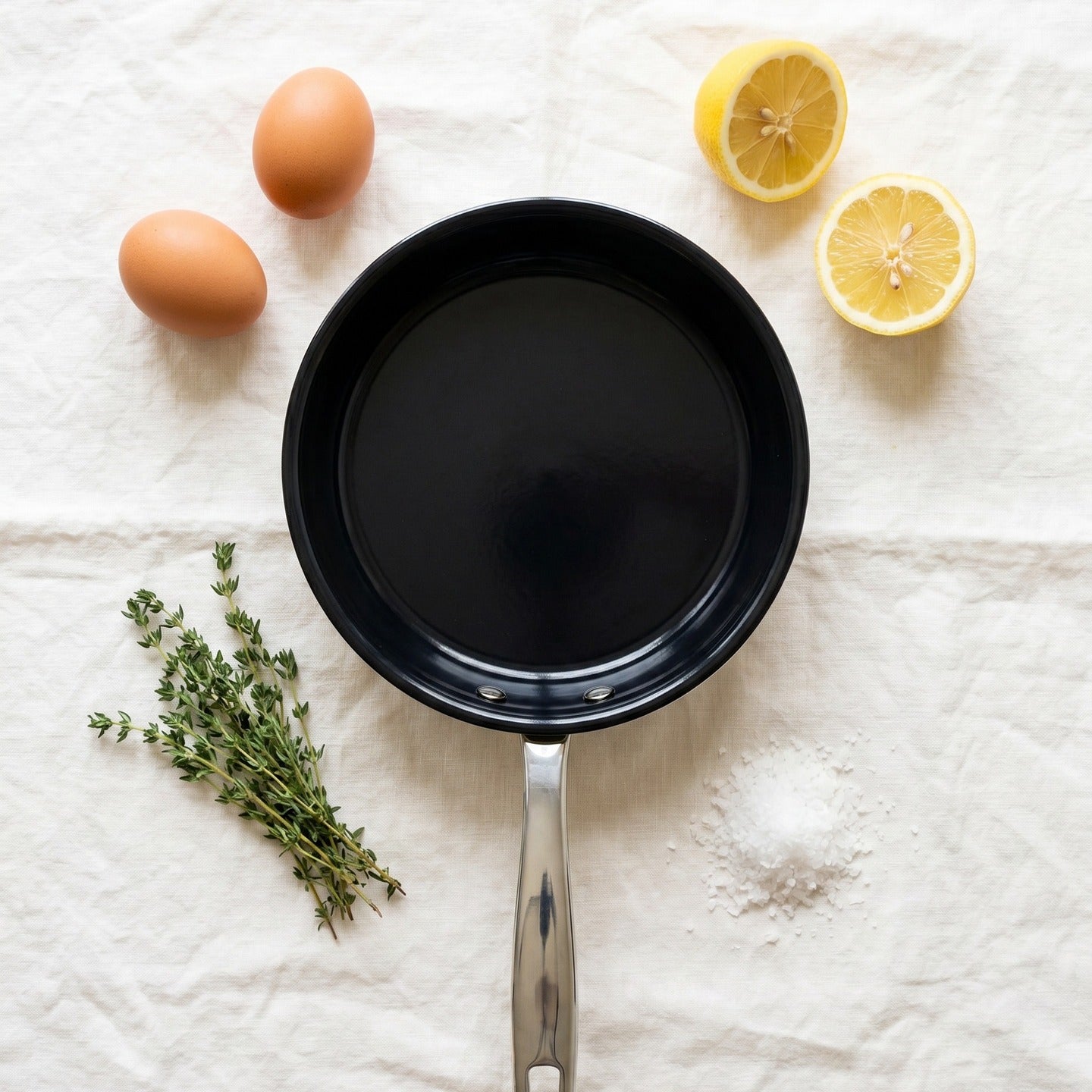
How to Spot Truly Non-Toxic Cookware (The 5-Minute Checklist)
“Non-toxic” is not a regulated term - any brand can print it on a box. This 5-minute checklist gives you the exact questions and red flags to tell the real thing from marketing.
Want the picks instead of the checklist? Our best non-toxic cookware roundup covers the best materials, sets and frying pans, or read the full checklist below.

Our Top Pick
Ceramic Nonstick Cookware Set, 12-Piece
A complete ceramic nonstick kitchen in one set. Made without PFAS, PTFE or PFOA, supported by published third-party testing, induction-ready and backed by a 10-year limited warranty.
Shop the 12-Piece SetFirst, the 5 things you’re actually avoiding
A truly non-toxic pan is verified free of all five of these:
- PFAS - “forever chemicals,” the umbrella family.
- PTFE (Teflon) - the most common PFAS nonstick coating.
- PFOA - an older PFAS already phased out, which is why “PFOA-free” alone means almost nothing today.
- Lead and cadmium - which can hide in some enamels and colored glazes.
The 7-point checklist
- Demand published third-party lab results. A claim is not proof. Reputable brands publish independent test reports for their coatings - if you can’t find one, treat “non-toxic” as marketing. (Here are ours - real reports, numbers, and PDFs.)
- Don’t be fooled by “PFOA-free.” PFOA has been phased out for years; brands still tout it to distract. The real question: is it PFAS- and PTFE-free?
- Decode the coating name. “Granite,” “marble,” “diamond,” “stone,” and even some “ceramic-coated” pans can still be PTFE underneath. Ask what the coating is actually made of - more in what is ceramic cookware.
- Know the genuinely safe materials. Ceramic (sol-gel) made without PFAS, uncoated stainless, enameled cast iron, carbon steel, and bare cast iron are all safe - see the cheat sheet below, or our fuller guide to what’s actually safe to cook on.
- Check the heat & utensil rules. A coating that degrades above 400-500°F or scratches from a metal spoon won’t stay intact - and a damaged surface is the real risk.
- Look for a real warranty. Throwaway coatings get 1-2 years. Quality non-toxic cookware backs itself for 10 years to a lifetime - a signal the maker trusts what’s on the metal.
- Distrust vague halo words. “Natural,” “eco,” “green,” “clean,” and “non-toxic” with no testing behind them are marketing, not evidence.
Safe-material cheat sheet
| Material | Coating | Best for | Safety note |
|---|---|---|---|
| Ceramic (sol-gel) | Mineral coating, no PTFE | Eggs, everyday, low-oil cooking | Verify it’s lab-tested as made without PFAS; the coating does wear over years. See best ceramic nonstick. |
| Stainless steel (18/10) | None | Searing, sauces, acidic foods | Non-reactive, nothing to flake. See best stainless frying pan. |
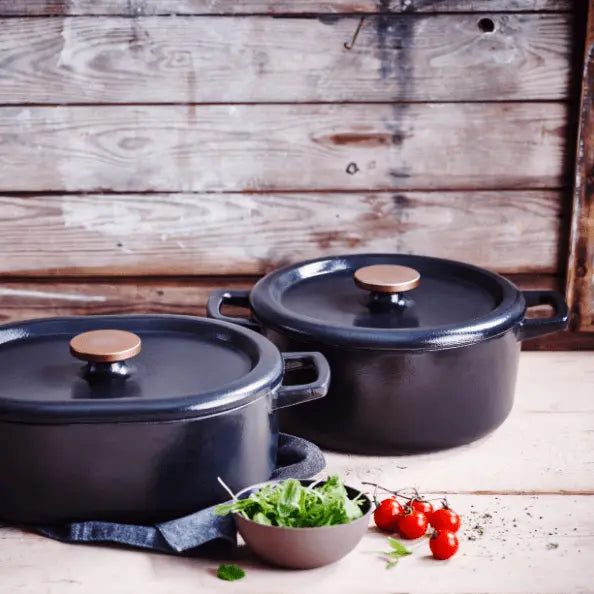
| Enameled cast iron | Porcelain enamel | Braising, stews, slow cooking | Confirm the enamel is lead- and cadmium-free. See best cast iron. |
| Carbon steel | Seasoned (oil) | High heat, stir-fry, searing | Just iron and carbon; builds a natural patina. See best carbon steel. |
| Bare cast iron | Seasoned (oil) | Searing, baking, roasting | Naturally non-toxic; needs seasoning and rust care. |
The 30-second decision guide
- Want easy release for eggs & quick cleanup? → Ceramic nonstick made without PFAS.
- Want a buy-it-for-life searing pan? → 18/10 stainless or cast iron.
- Love braises, stews, and bread? → Enameled cast iron.
- Cook on high heat / stir-fry? → Carbon steel.
Whatever you choose: insist on published lab results and a real warranty. Those two filters eliminate almost every “non-toxic” pretender. For the deeper why, see what PFAS, PFOA and PTFE actually are. Ready to compare real products? Our best non-toxic cookware sets and best non-toxic frying pans are in the main roundup.
Frequently asked questions
How can you tell if cookware is non-toxic?
Look for published third-party lab results showing it is free of PFAS, PTFE, PFOA, lead and cadmium. A claim alone is not proof — “non-toxic,” “green” and even “PFOA-free” are unregulated marketing terms. Genuinely safe materials include ceramic made without PFAS, uncoated stainless, enameled cast iron, carbon steel and bare cast iron.
Is “PFOA-free” cookware safe?
Not necessarily, and this is the single most misleading label in the category. PFOA was phased out of cookware manufacturing years ago, so almost everything is PFOA-free — including PTFE pans. The question that matters is whether it is PFAS- and PTFE-free, verified independently.
What should a lab report actually show?
A named laboratory, a report number, a date, and the specific substances tested with their results. Vague summaries like “tested safe” are worthless. A useful report names the panel — ours covers 638 substances via TÜV Rheinland — and states each result against the reporting limit.
Are “granite,” “marble” and “stone” pans non-toxic?
Sometimes, and the name tells you nothing either way. Those describe a speckled finish, not a material — the pan is aluminium underneath and the coating may be a mineral ceramic or a PTFE nonstick made to look rugged. Ignore the finish and go to the test reports.
Should I throw out my existing nonstick pans?
Not automatically. An intact PTFE pan used at normal cooking temperatures is considered safe by regulators; the genuine risks are overheating an empty pan and cooking on a surface that is flaking. If a pan is scratched through, chalky or peeling, replace it — otherwise you can transition as pans wear out.
Which cookware material is the safest overall?
Uncoated materials, because there is nothing applied that can wear or degrade — stainless, carbon steel and bare cast iron. Enameled cast iron is equally inert provided the enamel is verified lead- and cadmium-free. Quality ceramic nonstick is safe too; it simply has a finite lifespan the others do not.
The bottom line
Cooking shouldn’t come with a chemistry lesson. Alva designs cookware in Belgium whose coated ranges are made without PFAS, PTFE or PFOA and independently tested - backed by 10-year and lifetime warranties. Run the checklist on our Ceramic Nonstick Cookware Set, 12-Piece and it clears every point: sol-gel ceramic rather than PTFE, a published TÜV Rheinland report behind it, and a 10-year warranty in place of a halo word. Browse the full ceramic nonstick collection, or read more about where our pans are manufactured. You can also see the third-party reviews.
Run the checklist on ours
Every Alva range with the lab reports attached — named laboratory, report numbers, dates and downloadable PDFs, not a claim on a box. Free U.S. shipping over $99.
Related reading: how we document our own testing, how to tell if a pan is nonstick and how granite coatings compare to ceramic.
Our top pickCeramic Nonstick Cookware Set, 12-PieceShop now →


Leave a comment
This site is protected by hCaptcha and the hCaptcha Privacy Policy and Terms of Service apply.