






Article: Best Cookware for Gas Stoves (2026): What Actually Works Over a Flame
Best Cookware for Gas Stoves (2026): What Actually Works Over a Flame
The best cookware for a gas stove is carbon steel, fully clad stainless steel, or enameled cast iron — materials that handle direct flame, heat evenly up their sidewalls, and respond quickly when you turn the knob. Carbon steel is the classic gas-range performer: it takes high heat, sears like cast iron, and reacts to flame adjustments in seconds. Ceramic nonstick works on gas too, but it belongs on low-to-medium burners, not over a roaring flame.
Independently tested. Alva publishes its third-party lab reports in full, with the lab, report number and date for each line. See the lab reports →
Why gas stoves reward different cookware
A gas flame doesn't just heat the base of a pan — it wraps around it and licks up the sidewalls. That changes what matters in a pan. On an electric or induction hob, only the flat base gets hot; on gas, a pan with thin or unclad sidewalls develops scorching hot spots exactly where the flame curls up. That's why fully clad construction (conductive layers running up the walls, not just a disc on the bottom) matters more on gas than on any other stove type — we cover the mechanics in our guide to fully clad vs disc-bottom stainless steel.
The upside of gas is responsiveness: turn the knob and the heat changes instantly. Cookware that reacts quickly — carbon steel especially — lets you actually use that control. Gas also frees you from the flat-bottom, magnetic-base requirements of induction, so round-bottom woks and traditional shapes are back on the menu. (Cooking on induction or a glass top electric range instead? See our induction cookware guide.)
Best cookware materials for gas, compared
| Material | Flame tolerance | Responsiveness | Searing | Care | Best for |
|---|---|---|---|---|---|
| Carbon steel | Excellent — built for open flame | Excellent | Excellent | Hand wash, keep seasoned | Searing, stir-fries, everyday high-heat cooking |
| 5-ply stainless steel | Excellent | Very good | Very good | Easy — dishwasher-safe (Maestro 5-Ply Stainless) | Sauces, fond-based cooking, all-purpose |
| Enameled cast iron | Excellent (moderate flame) | Slow but steady | Very good | Hand wash, no seasoning needed | Braises, stews, low-and-slow |
| Ceramic nonstick | Low-to-medium flame only | Good | Fair | Hand wash, gentle utensils | Eggs, fish, delicate foods |
Our top pick for gas: carbon steel
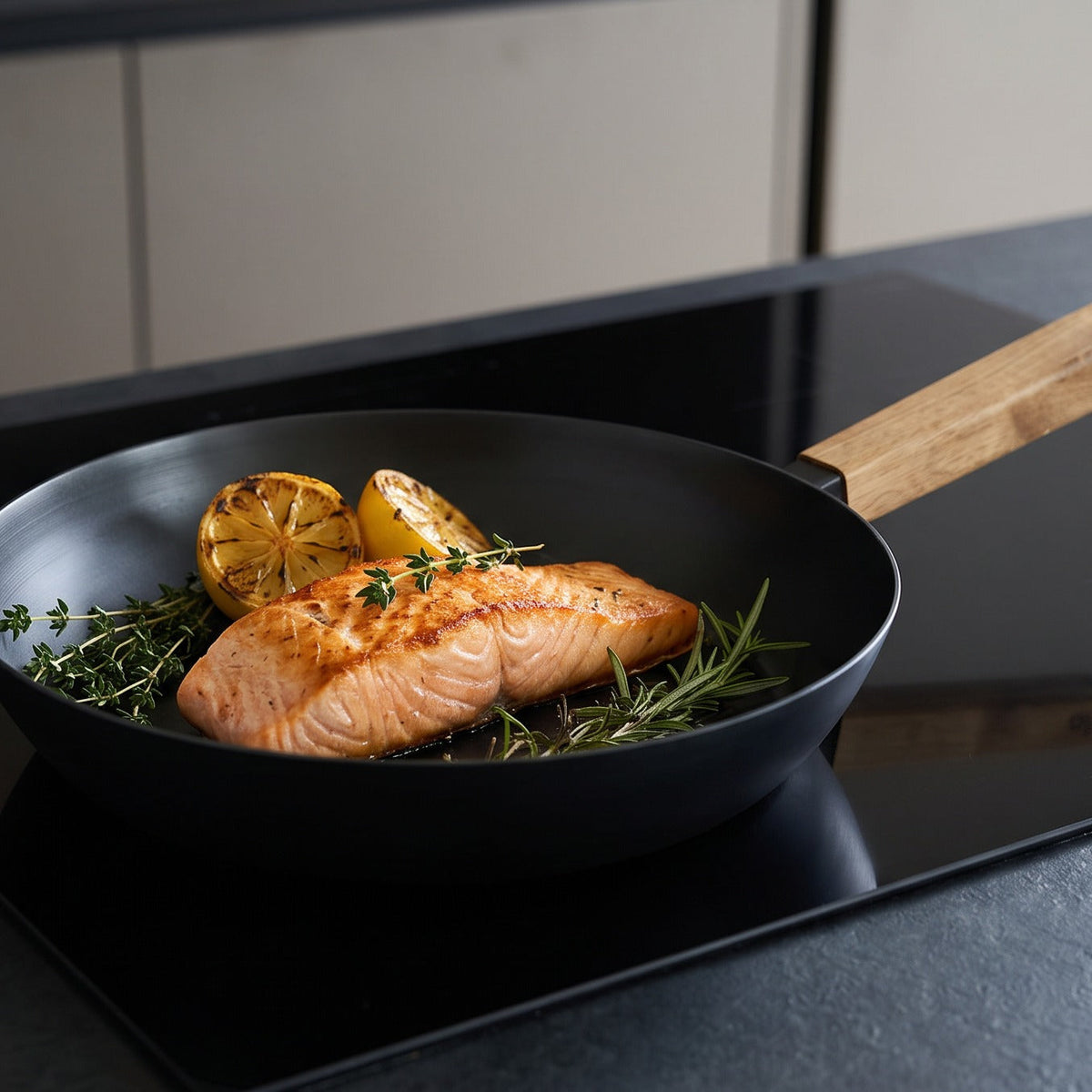
If we could put one pan on every gas range, it would be carbon steel. It's the material professional gas-fired kitchens have run on for a century: thin enough to respond to the flame in seconds, tough enough to take it at full blast, and naturally nonstick once seasoned — no synthetic coating involved. The Alva Forest Carbon Steel Frying Pan is our featured pick: uncoated by nature, made from iron and carbon and nothing else, and covered by a 10-year warranty. One honest caveat: the Forest pan is stovetop-only — it isn't oven-safe, so if your recipes finish under the broiler, pair it with a stainless or cast iron piece. It also wants a little care: hand wash, dry promptly, and keep the seasoning up (our step-by-step seasoning guide makes it easy). For a deeper dive into the material, see our carbon steel buyer's guide.
Strong supporting picks
For sauces and all-purpose cooking: the Alva Maestro 5-Ply Stainless Frying Pan is fully clad — five layers running edge to edge — so the flame licking the sidewalls heats them evenly instead of scorching them. It's oven-safe to 500°F, dishwasher-safe, and carries a lifetime warranty. Torn between the two? Read stainless steel vs carbon steel.
For braises and stews: the Alva Nori Enameled Cast Iron Round Dutch Oven, 5-Qt turns a gas burner's steady low flame into perfect low-and-slow heat, then moves to the oven (safe to 500°F). More in our Dutch oven guide.
For eggs and delicate foods: the Alva Energy Ceramic Nonstick Frying Pan is made without PFAS, PTFE or PFOA and independently tested by TÜV Rheinland. Keep it on a low-to-medium flame — high heat is the fastest way to shorten any ceramic coating's life — and hand wash it.
What to avoid on a gas stove
Skip thin, disc-bottom pans: the flame heats the unclad sidewalls directly and food scorches in a ring around the edge. Be cautious with ceramic nonstick over high flames — it works on gas, but a big burner on full will degrade the coating early. And check handle materials: a wrapping flame can reach further up the pan than an electric element ever would, so all-metal or well-shielded handles are safer bets than plastic.
Frequently asked questions
Is carbon steel good for gas stoves?
Yes — it's arguably the best match. Carbon steel heats fast, responds instantly to flame adjustments, and tolerates the high direct heat gas burners produce. It's the standard in professional gas-fired kitchens.
Can I use ceramic nonstick on a gas stove?
Yes, on low-to-medium flames. Ceramic nonstick performs well on gas for eggs and delicate foods, but sustained high flames shorten the coating's lifespan. Keep the flame under the base of the pan, not curling up its sides.
Do I need fully clad cookware for gas?
For stainless steel, yes — it matters more on gas than any other stove. Because the flame wraps the pan, disc-bottom pans with thin sidewalls scorch food at the edges. Fully clad pans carry conductive layers up the walls so the whole pan heats evenly.
Does cast iron work on gas stoves?
Very well. Enameled cast iron loves the steady, even flame of a gas burner for searing, braising and stews. It's slow to heat and slow to cool, so use it for dishes where stability beats responsiveness.
What size burner should I match my pan to?
Keep the flame tips under the pan's base. If flames visibly curl up the sidewalls, the burner is too big (or too high) for the pan — you'll scorch food at the edges and overheat handles.
Ready to upgrade your gas range? Start with the Forest Carbon Steel Frying Pan. Free U.S. shipping over $99.


Leave a comment
This site is protected by hCaptcha and the hCaptcha Privacy Policy and Terms of Service apply.