






Article: Is Enameled Cast Iron Safe? Lead, Chips and What to Check
Is Enameled Cast Iron Safe? Lead, Chips and What to Check
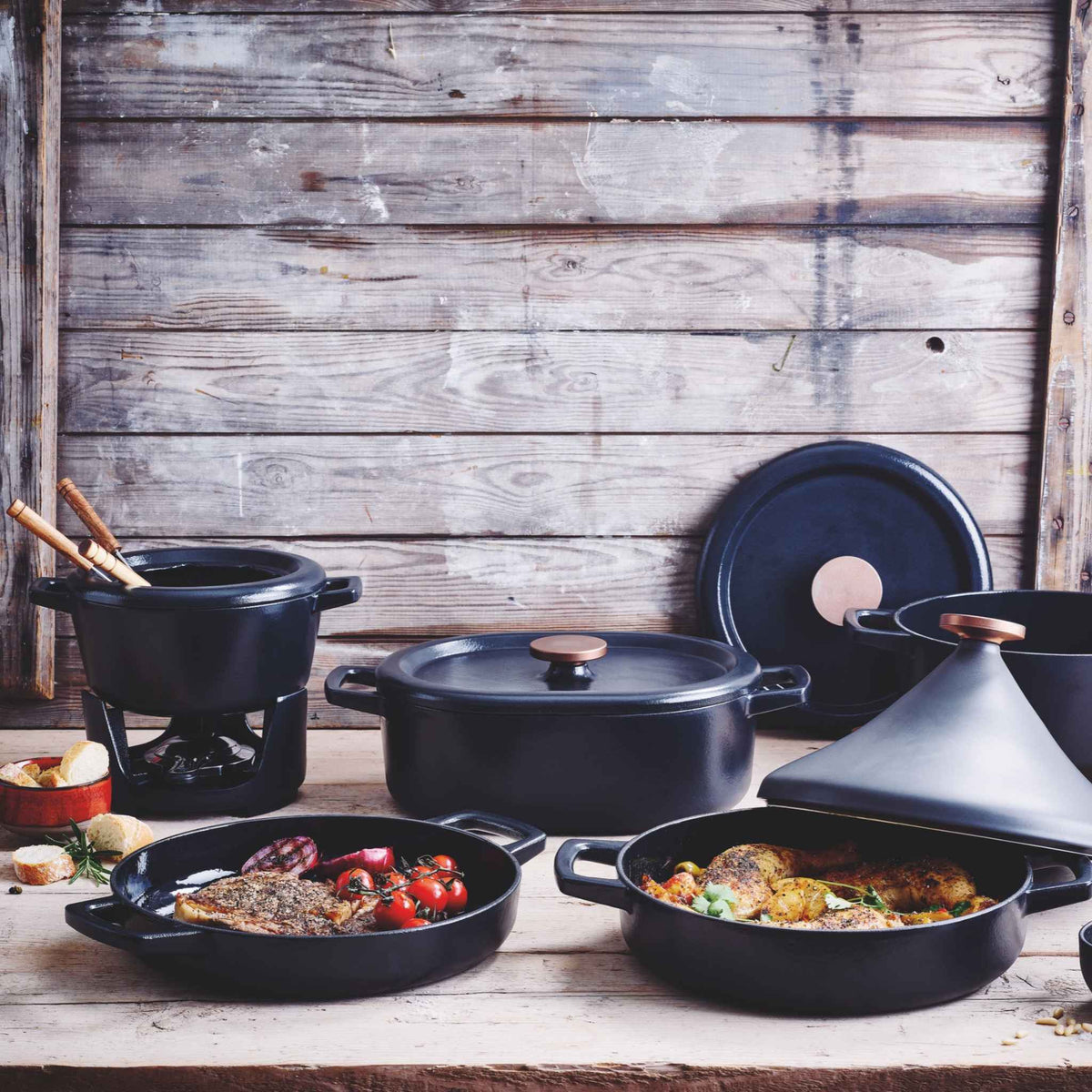
Yes, enameled cast iron is safe to cook with when the enamel is intact and the pot comes from a maker that tests for lead and cadmium. The cooking surface is glass fused to iron, with no nonstick coating, so there is no PFAS or PTFE. The things worth checking are what the brand says about its enamel and whether the surface is chipped or cracked. If the cooking surface is damaged, stop using the pot.
Our Top Pick
Enameled Cast Iron Round Dutch Oven, 5-Qt
Nori enamel is lab-tested for lead and cadmium and handles tomato, wine and citrus without reacting. Backed by a 25-year limited warranty. Free U.S. shipping over $99.
Shop the Dutch OvenWhat enamel actually is
Enameled cast iron is a cast iron body coated in vitreous enamel: powdered glass that is fused to the metal at high heat. It is not a polymer coating like PTFE nonstick, and it does not rely on seasoning like bare cast iron. Once fired, the enamel is a hard, non-porous glass layer that seals the iron away from your food.
The real question: lead and cadmium
Glass enamel is colored with metal-based pigments, and lead and cadmium have historically turned up in some glazes and pigments. That is where the safety concern comes from. The risk sits mostly with low-cost, decorative or unbranded imports, and with cookware that has never been tested. It is not a reason to avoid enameled cast iron as a category.
How to check a brand before you buy:
- Look for a specific statement. "Lab-tested for lead and cadmium" is something a maker can back up. "Non-toxic" with no detail is not. Our best non-toxic cookware guide shows how each material measures up.
- Ask for the test basis. A reputable brand will tell you what was tested and by whom.
- Be wary of unbranded or purely decorative pots. Pieces sold for display, or with no maker identified, are the ones that raise the concern.
Alva's Nori enameled cast iron is lab-tested for lead and cadmium. You can read how we approach testing in our safety standards, and our general guide to ceramic cookware safety covers the other glass-like surface we sell.
When chipped enamel means stop
Enamel can chip if a pot is dropped, knocked against a sink or shocked with cold water while hot. What matters is where the chip is.
| Damage | What it means | What to do |
|---|---|---|
| Small chip on the outer rim or base | Usually cosmetic, away from food | Keep using with care; dry the exposed spot well to prevent rust |
| Chip or rough patch on the cooking surface | Exposes bare iron that can rust and flake | Stop using it and contact the maker |
| Cracks or crazing (fine web of lines) inside | The glass layer is failing | Retire the pot |
| Dull, stained or scratched enamel with no chips | Wear, not a failure | Clean gently; it is still intact |
Heat, thermal shock and acidic food
Intact enamel is non-reactive, so tomato sauce, wine braises and citrus are exactly what it is built for. The enamel's weak point is sudden temperature change. Heat the pot gradually, do not preheat it empty on maximum, and never run cold water into a hot pot. Use wood or silicone utensils, and lift rather than drag it across the stove. Alva's Nori pieces are oven-safe to 500°F, work on induction and are hand wash only.
Our pick: the Nori 5-Qt Round Dutch Oven
The Nori 5-Qt Round Dutch Oven is enameled inside and out, needs no seasoning and is oven-safe to 500°F. It is backed by a 25-year limited warranty. Alva is designed in Belgium (since 1949) and made in China. See the rest of the range in our enameled cast iron collection, or compare it with other pots in our best Dutch oven guide.
Where this isn't the right choice
Enameled cast iron is heavy (the 5-quart Nori weighs 14.7 lb), and the enamel can chip if treated roughly. If you want a lightweight pot or something you can put in the dishwasher, a different material will suit you better. Only our Maestro 5-Ply Stainless line is dishwasher-safe. Enamel also does not forgive a drop onto a hard floor.
Frequently asked questions
Is enameled cast iron safe to cook with?
Yes, from a maker that tests its enamel. The cooking surface is glass fused to iron, with no nonstick coating, so there is no PFAS or PTFE to worry about. The real checks are lead and cadmium in the enamel and the condition of the surface. Alva's Nori enameled cast iron is lab-tested for lead and cadmium.
Is enameled cast iron toxic?
Not when it is intact and from a reputable maker. Concerns about lead and cadmium trace back mainly to colored glazes and decorative or unbranded imports. Ask the brand what it tests for and whether it will share the results, and be wary of any pot that cannot say.
Is chipped enameled cast iron safe to use?
A small chip on the outside rim or base is usually cosmetic. A chip, crack or rough patch on the cooking surface is different: it exposes bare iron that can rust and flake into food, so retire the pot or contact the maker. Do not keep cooking in a pot that is actively shedding enamel.
Can you cook acidic food like tomato sauce in enameled cast iron?
Yes. Intact enamel is non-reactive, so tomato, wine and citrus will not strip a seasoning or pick up a metallic taste the way they can in bare cast iron.
How do I avoid damaging the enamel?
Heat the pot gradually, never run cold water into a hot pot, avoid metal utensils and abrasive scrubbers, and lift rather than drag it. Alva's Nori pieces are hand wash only and oven-safe to 500°F.


Leave a comment
This site is protected by hCaptcha and the hCaptcha Privacy Policy and Terms of Service apply.