






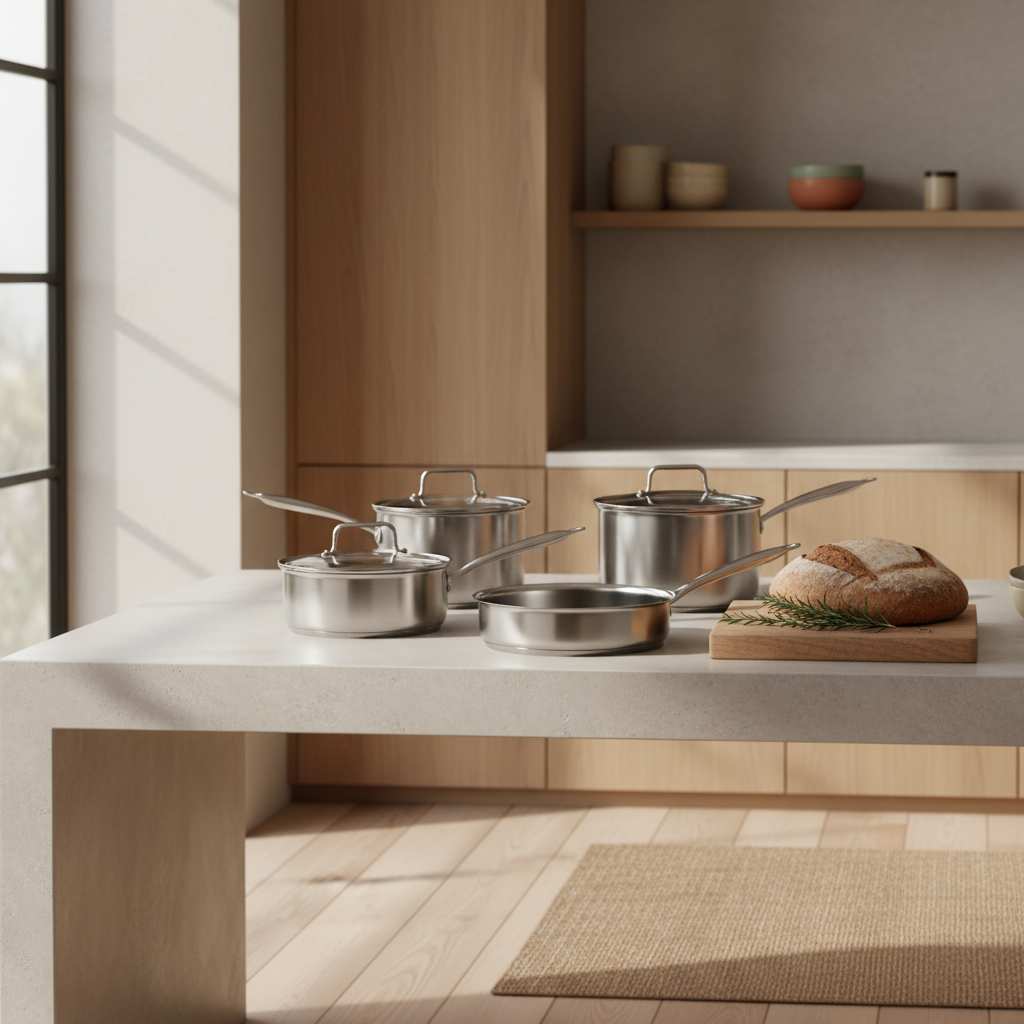
Stainless Steel vs Cast Iron: Which Should You Cook With?
Stainless steel and cast iron are both built to last a lifetime, but they cook very differently. Here is how they compare and when to reach for each.
Or skip seasoning entirely.
Enameled cast iron gives you the same heat retention with a smooth enamel surface — nothing to season, ever.
At a glance
| Stainless steel | Cast iron | |
|---|---|---|
| Heats up | Fast, responsive | Slow, holds heat |
| Heat retention | Moderate | Exceptional |
| Searing | Very good (when hot) | Best in class |
| Acidic foods | Yes (non-reactive) | Enameled only |
| Upkeep | No seasoning; dishwasher-safe | Bare needs seasoning; enameled does not |
| Weight | Lighter | Heavy |
Stainless steel: responsive, non-reactive, low-maintenance
Stainless heats and cools quickly, so you have precise control - ideal for sauces, sauteing, and searing where you adjust heat often. It is non-reactive (cook tomatoes, wine, and citrus freely), needs no seasoning, and is dishwasher-safe. Fully clad 5-ply stainless spreads heat evenly; the trick to no sticking is preheating (see how to cook on stainless without sticking).

Our Top Pick
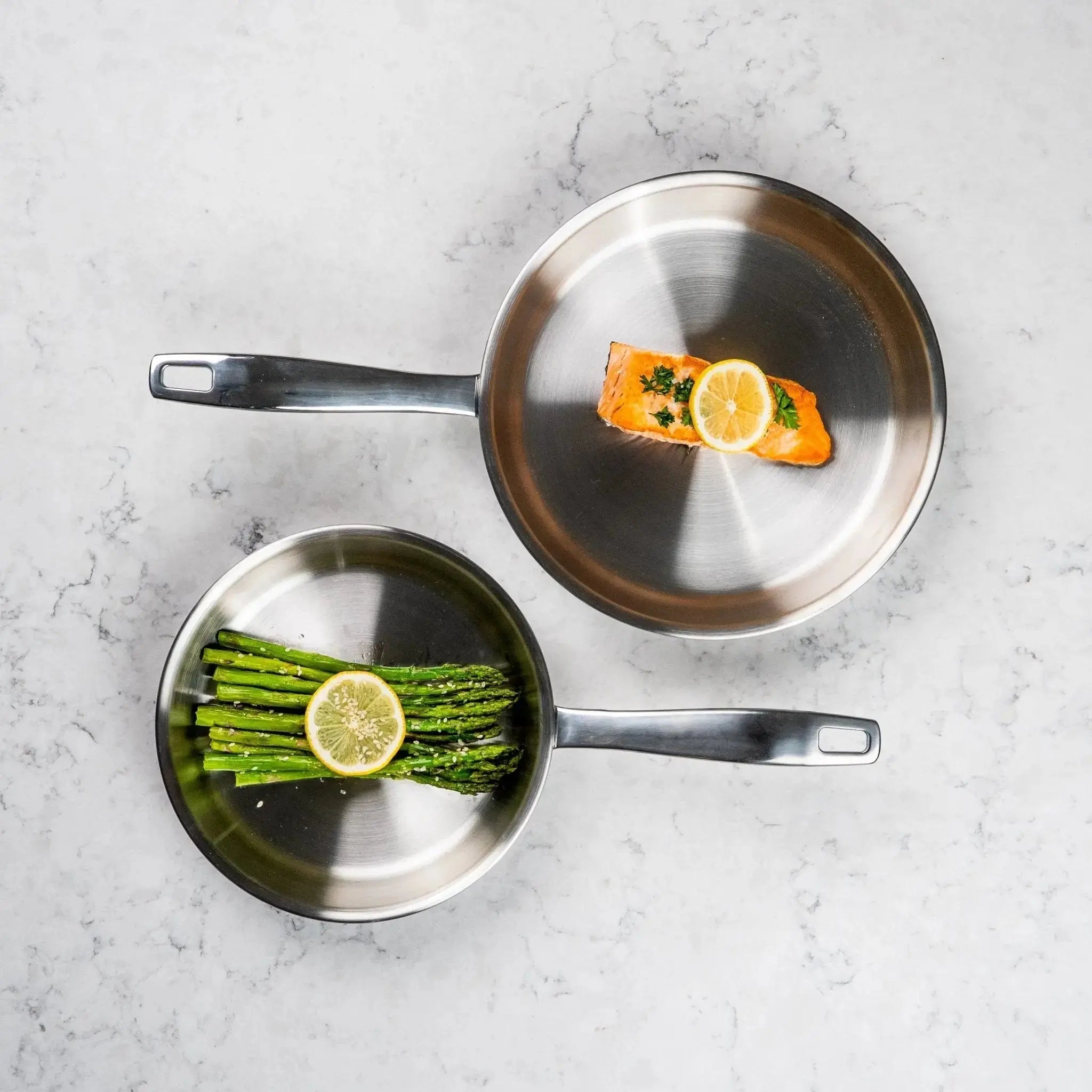
5-Ply Stainless Steel Frying Pan
Fully clad 5-ply stainless steel for even heat, better browning and pan sauces. Uncoated, induction-ready, oven-safe to 500°F and backed by a lifetime warranty.
Shop the 5-Ply Frying PanIndependently tested. Alva publishes its third-party lab reports in full, with the lab, report number and date for each line. See the lab reports →
Cast iron: heat retention and a hard sear
Cast iron holds heat like nothing else, so it delivers a deep, even sear and stays hot when cold food hits it - great for steak, frying, and baking. Bare cast iron needs seasoning and careful drying; enameled cast iron like Alva Nori gives the same heat retention with no seasoning and a non-reactive surface. It is heavier and slower to heat than stainless.
Which should you use?
- Sauces, sauteing, deglazing, quick temperature changes? Stainless steel.
- Steak, smash burgers, deep frying, cornbread, long bakes? Cast iron.
- Acidic dishes (tomato, wine, citrus)? Stainless or enameled cast iron - not bare cast iron.
- Want both? Most kitchens keep a stainless skillet and one cast iron pan.
Our picks
For stainless, the Maestro 5-Ply Frying Pan or a full stainless set. For cast iron, see our best cast iron skillet guide. Neither has a nonstick coating, so there is no PFAS or PTFE in either by design (safety standards). Also weighing nonstick? See stainless steel vs nonstick, and our best stainless steel frying pan pick. Carbon steel in the mix as well? See how the two steels differ in practice.
Frequently asked questions
Which sears better, stainless or cast iron?
Cast iron, because of thermal mass — it barely drops temperature when cold meat hits it, which is what produces an even crust. A properly preheated stainless pan sears very well too, and has the advantage of building better fond for a pan sauce afterwards.
Which is easier to maintain?
Stainless, comfortably — no seasoning, no rust risk, and genuinely dishwasher-safe for the life of the pan. Enameled cast iron is nearly as easy: no seasoning either, though we recommend hand-washing to protect the enamel from knocks. Bare cast iron is the only one that needs a routine.
Can you cook acidic food in cast iron?
In enameled cast iron, yes — the enamel is inert, so tomato, wine and citrus are all fine. In bare cast iron, avoid it: acid strips seasoning and can leave a metallic taste. A quick tomato sauce in a well-seasoned pan will not hurt you, but a long braise will damage the surface.
Which heats up faster?
Stainless, by a long way, and it cools faster too. That responsiveness is the real argument for it — when you turn the heat down, the pan follows within seconds. Cast iron takes several minutes to preheat properly and then stays hot regardless of what the burner is doing.
Is cast iron too heavy for everyday use?
For some people, genuinely yes. A 10-inch cast iron skillet is roughly two to three times the weight of the stainless equivalent, and that matters if you have wrist or grip issues or if you like to toss food in the pan. It is worth handling one before committing.
If I can only buy one, which should it be?
Stainless, for most kitchens. It does more jobs adequately — sauces, searing, deglazing, acidic cooking — where cast iron does fewer jobs superbly. Cast iron is the better second pan, bought once you know that steak and cornbread are things you cook often.
Cast iron recipes worth trying: skillet pizza, skillet meatloaf, skillet mac and cheese and skillet cornbread.
Deciding which to buy first?
Browse both ranges side by side — fully clad 5-ply stainless and Nori enameled cast iron, all uncoated and all lifetime-warrantied. Free U.S. shipping over $99.


Leave a comment
This site is protected by hCaptcha and the hCaptcha Privacy Policy and Terms of Service apply.