






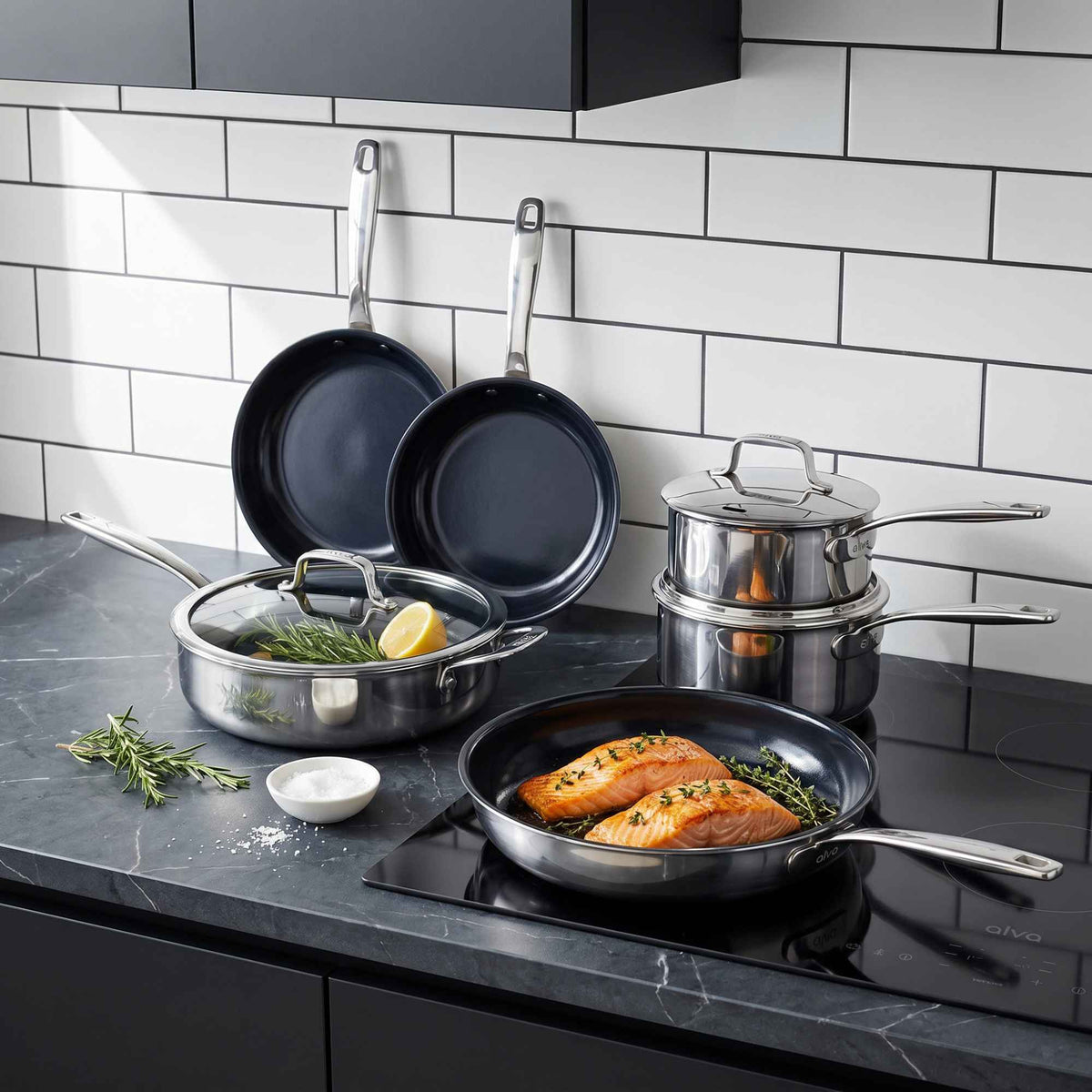
Best Cookware Material: 9 Types of Pots and Pans Compared
Short answer: there is no single best cookware material. Fully clad stainless steel is the best all-rounder, ceramic nonstick is best for eggs and fish, and cast iron or carbon steel is best for high-heat searing. Most kitchens are best served by two or three materials rather than one. This guide compares nine types of pots and pans, with what each is best for and when to skip it.
Not sure which material is right for you?

Our Top Pick
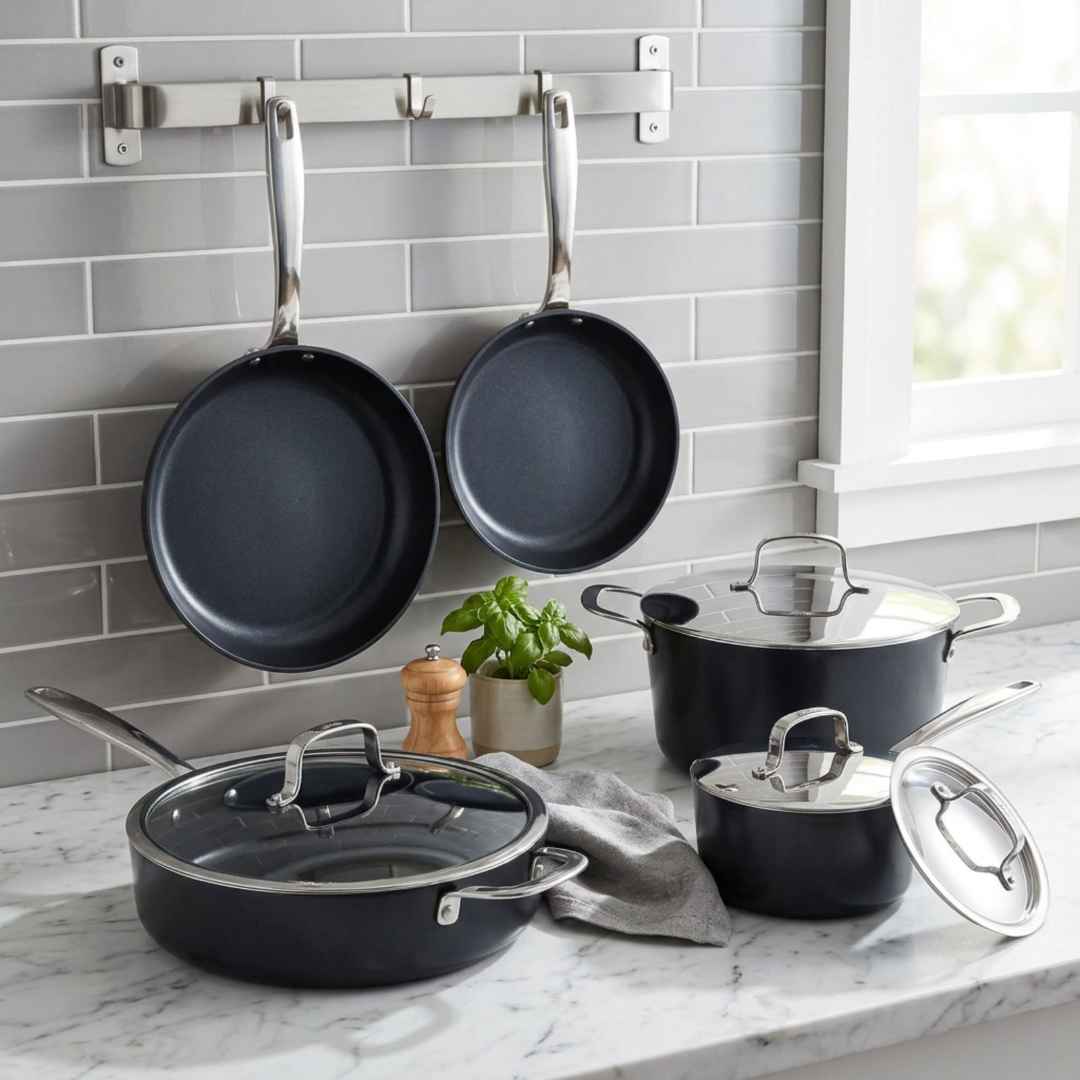
Ceramic Nonstick Cookware Set, 12-Piece
A complete ceramic nonstick kitchen in one set. Made without PFAS, PTFE or PFOA, supported by published third-party testing, induction-ready and backed by a 10-year limited warranty.
Shop the 12-Piece SetTake our 2-minute quiz and get a personalized cookware recommendation based on how you cook — nonstick, stainless, carbon steel, or cast iron.
Find your cookware →Cookware materials at a glance
General characteristics of each material. Individual products vary, so always check the maker's oven limit and care instructions.
Swipe left or right to compare →
| Material | Best for | Skip if | Induction | Care | How long it lasts |
|---|---|---|---|---|---|
| Stainless steel (fully clad) | Searing, browning, pan sauces, acidic foods | You want eggs to slide out with no practice | Yes, most clad lines | Easy; often dishwasher-safe | Decades |
| Ceramic nonstick | Eggs, pancakes, fish, low-oil cooking | You sear on high heat or want one pan for decades | Only with a magnetic base | Hand wash; no metal utensils | 2 to 5 years |
| PTFE (Teflon-type) nonstick | Eggs and delicate foods | You want to avoid PFAS or tend to overheat pans | Only with a magnetic base | Hand wash; avoid overheating | A few years |
| Cast iron | Searing, shallow frying, cornbread | You want a light pan or cook a lot of tomato and wine | Yes | Season; dry and oil; no dishwasher | Generations |
| Enameled cast iron | Braises, soups, stews, tomato sauces | You want a light pan or true nonstick release | Yes | Hand wash; no seasoning needed | Decades |
| Carbon steel | Steaks, stir-fries, everyday high heat | You want dishwasher-easy care | Yes | Season; dry and oil; no dishwasher | Generations |
| Aluminum (bare and hard-anodized) | Light, fast-heating, budget cookware | You cook acidic food in bare aluminum or need induction | Only with a bonded steel base | Hand wash | Varies; hard-anodized outlasts bare |
| Copper | Caramel, delicate sauces, precise control | You want low upkeep, a low price or induction | Only with a magnetic layer | Hand wash; polish | Decades with upkeep |
| Pure ceramic and stoneware | Baking, slow cooking, serving | You want a hard sear, a stir-fry or induction | No | Avoid sudden temperature changes | Long, unless chipped or cracked |
Stainless steel
Stainless steel is the all-rounder: durable, non-reactive and happy on any heat. On its own it is a poor heat conductor, roughly 14 W/m·K for type 304 against about 236 for aluminum (Engineering ToolBox), which is why good pans are fully clad: aluminum layers run through the base and up the sides to spread the heat. Look for 3-ply or 5-ply. One caveat: a 2013 study found new stainless pans release small amounts of nickel and chromium into long-simmered tomato sauce, falling with each use and leveling off after about six cooking cycles (Kamerud et al., 2013), which matters mainly if you have a nickel allergy.
Best for: searing meat and fish, browning, deglazing, pan sauces, soups and acidic foods.
Skip if: you want eggs and delicate fish to release with no technique. Stainless releases well once preheated, but it is never as slick as nonstick or a seasoned pan.
Alva's version: Maestro 5-Ply Stainless has no coating at all, is oven-safe to 500°F, dishwasher-safe and backed by a 25-year limited warranty. Start with the 5-Ply Stainless Frying Pan. Deep dives: Is Stainless Steel Cookware Safe? · Stainless Steel vs Nonstick.
Ceramic nonstick
Ceramic nonstick is a metal pan, usually aluminum, with a mineral-based sol-gel coating made without PFAS. It gives the easy release of traditional nonstick from day one. The trade-off is lifespan: the coating wears in 2 to 5 years, faster with high heat, metal utensils or the dishwasher, so treat it as a replaceable tool. “Ceramic” is not a regulated term, so look for published lab results.
Best for: eggs, omelets, pancakes, delicate fish and cooking with little oil.
Skip if: you sear on high heat or want a pan to hand down. Leave steaks and stir-fries to stainless, cast iron or carbon steel.
Alva's version: Maestro ceramic nonstick is made without PFAS, PTFE or PFOA, tested by TÜV Rheinland against a 638-substance PFAS panel (lab reports), oven-safe to 400°F, hand wash, and backed by a 10-year warranty. Start with the Ceramic Nonstick Frying Pan. Deep dives: Is Ceramic Cookware Safe? · Ceramic vs Stainless Steel.
PTFE (Teflon-type) nonstick
Traditional nonstick uses PTFE, a fluoropolymer that belongs to the PFAS group of chemicals. It releases food very well and is easy to clean, but the coating can break down if a pan is badly overheated, and like any coating it wears out in a few years.
Best for: the same jobs as ceramic nonstick: eggs, pancakes and delicate foods on low to medium heat.
Skip if: you want to avoid PFAS, cook on high heat, or tend to leave an empty pan on the burner.
Alva does not make PTFE cookware. Compare the two coatings in Ceramic vs Teflon Pans, and see Is Nonstick Cookware Safe? for the safety detail.
Cast iron
Bare cast iron heats slowly, then holds that heat better than almost anything else. It builds a natural nonstick seasoning with use and can serve for generations. It can also add a little dietary iron to food (2021 systematic review).
Best for: searing, shallow frying, cornbread and anything that goes from stovetop to oven.
Skip if: you want a light pan, dislike hand washing and oiling, or cook a lot of tomato and wine, which strip seasoning.
Deep dives: Carbon Steel vs Cast Iron · Enameled Cast Iron vs Cast Iron.
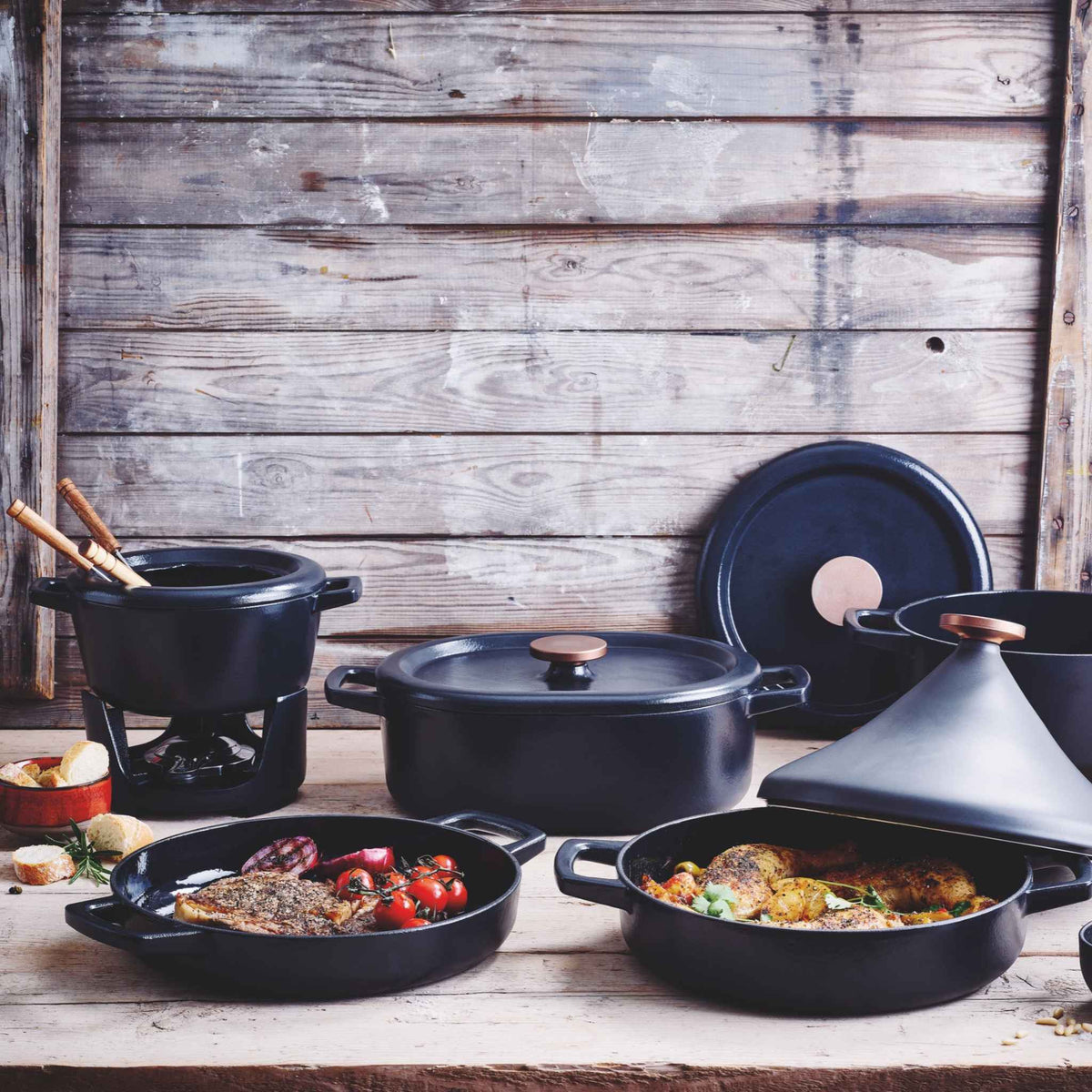
Enameled cast iron
Enameled cast iron has a glass coating fused to the iron, so it keeps the heat retention of cast iron but needs no seasoning, will not rust and does not react with acidic food. It is the classic Dutch oven material.
Best for: braises, soups, stews, tomato sauces and bread.
Skip if: you want a light pan or a truly nonstick surface. It is heavy, and it needs some fat for eggs.
Alva's version: Nori enameled cast iron is oven-safe to 500°F, hand wash, lab-tested for lead and cadmium and backed by a 25-year limited warranty. See the 5-Qt Round Dutch Oven. Deep dive: Is Enameled Cast Iron Safe?.
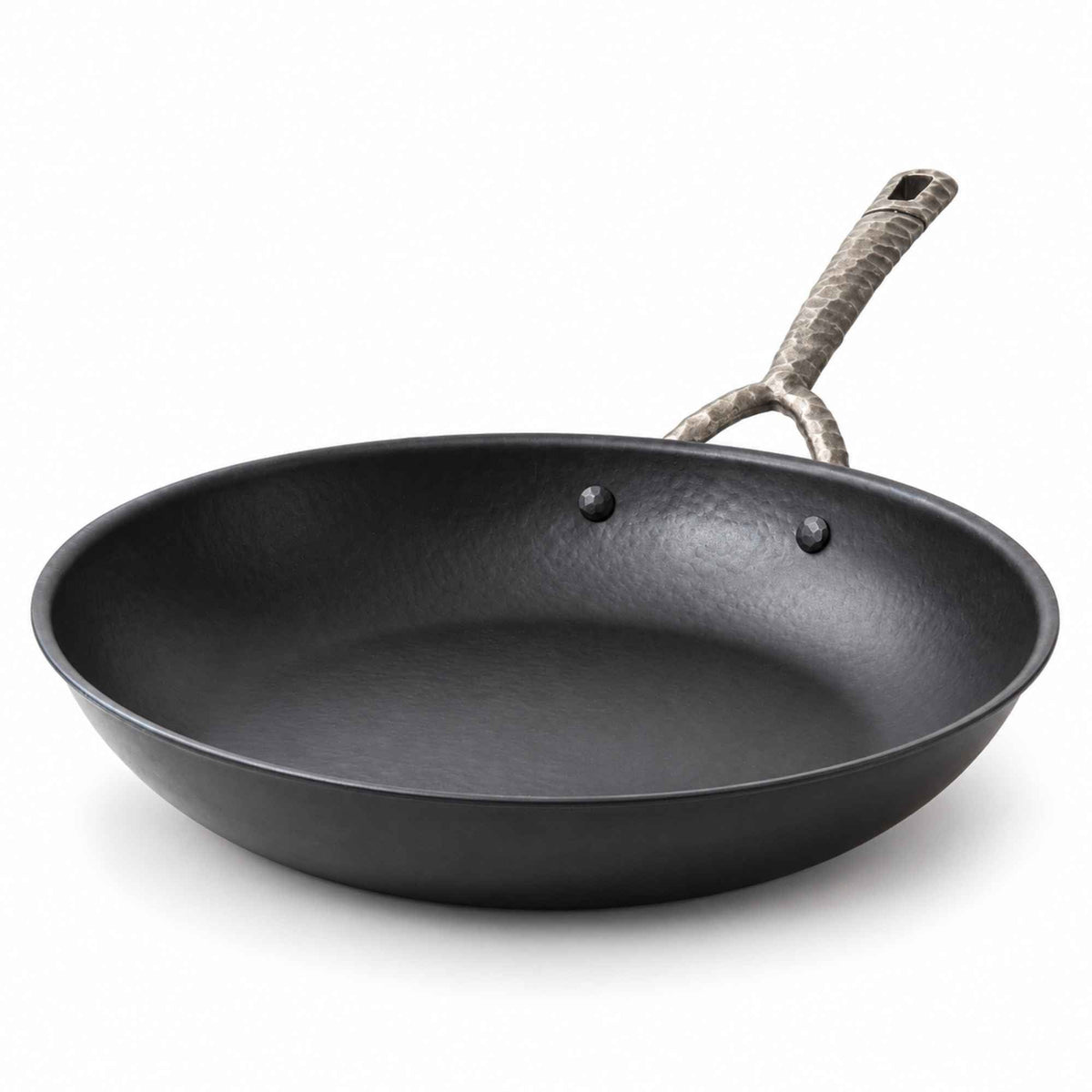
Carbon steel
Carbon steel is iron and carbon with no coating at all. It heats faster than cast iron, weighs less, and builds the same natural nonstick seasoning, which is why it is common in professional kitchens.
Best for: steaks and chops, stir-fries, crêpes and everyday high-heat frying.
Skip if: you put pans in the dishwasher or do not want to season. Carbon steel needs drying and a wipe of oil after washing.
Alva's version: the Black Angus Carbon Steel Frying Pan is oven-safe to 500°F and backed by a 25-year limited warranty; browse all carbon steel. Deep dives: Is Carbon Steel Cookware Safe? · Carbon Steel vs Nonstick.
Aluminum (bare and hard-anodized)
Aluminum is light, inexpensive and an excellent heat conductor, which is why it sits inside clad stainless and under most nonstick coatings. Bare aluminum is soft and reactive with acidic food, so it is usually hard-anodized, coated or used as a core layer. It adds little to your diet: the CDC’s toxic-substances agency says very little enters the body from aluminum cooking utensils (ATSDR).
Best for: lightweight, fast-heating, budget cookware, and as the core of clad pans.
Skip if: you cook acidic food in bare aluminum, or you have an induction cooktop and the pan has no bonded steel base.
Compare in Aluminum vs Nonstick Pan and Stainless Steel vs Hard-Anodized.
Copper
Copper heats fastest and responds to the dial almost instantly, which gives precise control. It is expensive and needs polishing, and because bare copper is reactive it is usually lined with another metal; the FDA Food Code bars copper from direct contact with acidic foods below pH 6 (FDA Food Code).
Best for: caramel, candy, and delicate sauces such as hollandaise.
Skip if: you want low upkeep, a low price or guaranteed induction compatibility. It is a specialist's material more than an everyday one.
Safety notes: Safety of Copper Cookware. Comparison: Ceramic vs Copper.
Pure ceramic and stoneware
Pure ceramic is clay fired in a kiln, with no metal body. It is a different thing from ceramic nonstick, which is a coated metal pan. Pure ceramic heats evenly and stays warm from oven to table, but it can chip or crack and does not work on induction.
Best for: baking, slow cooking and serving.
Skip if: you want a hard sear or a stir-fry, or you cook on induction.
Alva does not make pure ceramic cookware; our ceramic line is ceramic nonstick, above.
Which material for which job?
- Eggs, omelets, pancakes: ceramic nonstick.
- Delicate fish: ceramic nonstick, or well-preheated stainless for crispy skin.
- Steak and chops: carbon steel or cast iron.
- Pan sauces and browning: stainless steel.
- Stir-fries: a carbon steel wok.
- Soups, stews and braises: enameled cast iron or a stainless stock pot.
- Tomato sauce and other acidic food: stainless steel or enameled cast iron.
- Caramel and delicate sauces: copper, or heavy clad stainless.
How to pick the right material
Match the material to the task, not the other way around. Most home cooks are covered by three pieces: a ceramic nonstick pan for eggs and fish, a clad stainless skillet for searing and sauces, and one cast iron or carbon steel pan for high heat. Add an enameled Dutch oven if you braise or make soups often. To decide which pieces and sizes to buy, see the Complete Cookware Buying Guide; to compare Alva's lines side by side, see Compare Collections. If safety is your priority, read Best Non-Toxic Cookware; for induction, Best Induction Cookware.
Sources
We link to primary sources wherever we make a safety, regulatory or materials claim.
- The Engineering ToolBox — Thermal Conductivity of Metals and Alloys
- Kamerud, Hobbie & Anderson (2013), “Stainless steel leaches nickel and chromium into foods during cooking,” Journal of Agricultural and Food Chemistry 61(39)
- Effect of cooking food in iron-containing cookware on blood hemoglobin and iron content of food: a systematic review (2021), Nepal Journal of Epidemiology
- ATSDR (CDC) — ToxFAQs: Aluminum
- U.S. FDA — Food Code 2022 (section 4-101.14, copper and copper alloys)
- Alva Cookware — Testing & Materials (TÜV Rheinland lab reports)
Frequently asked questions
What is the best material for cookware?
Fully clad stainless steel is the best all-around material for most cooking. But there is no single best: ceramic nonstick wins for eggs and fish, and cast iron or carbon steel wins for high-heat searing. The best kitchens mix two or three materials.
What cookware material is the healthiest?
Stainless steel, cast iron, carbon steel, enameled cast iron and ceramic nonstick made without PFAS are all widely considered safe for everyday cooking. If you have a nickel allergy, favor enameled cast iron or carbon steel. Whatever you choose, look for brands that publish independent lab testing.
Which cookware material lasts the longest?
Cast iron, carbon steel and fully clad stainless steel last the longest, often decades, because there is no coating to wear out. Nonstick pans of any kind have the shortest lifespan because the coating wears over a few years.
Is nonstick or stainless steel better?
Neither is better overall. Nonstick is easier for eggs and delicate foods and needs less oil. Stainless sears better, makes better pan sauces, takes high heat and metal utensils, and lasts decades. Most cooks own one of each.
Is ceramic or Teflon nonstick better?
Both release food well when new. Ceramic nonstick is made without PFAS; Teflon-type coatings are PTFE, which is a PFAS chemical and can break down if badly overheated. Both wear out in a few years, so choose ceramic if avoiding PFAS matters to you.
What's the difference between clad and disc-bottom cookware?
Fully clad cookware layers conductive metal through the entire pan and up the sides for even heating. Disc-bottom cookware only has that layer on the base, so it heats less evenly. Clad is generally the better build.
Is aluminum cookware safe?
Anodized aluminum and aluminum used as a core layer inside clad cookware are considered safe. Bare, uncoated aluminum is reactive with acidic foods, which is why it is usually anodized or bonded inside other metals.
Which cookware materials work on induction?
Cast iron, enameled cast iron, carbon steel and most clad stainless steel work on induction because they are magnetic. Aluminum, copper and nonstick pans only work if they have a magnetic steel base. Pure ceramic does not work. Test with a magnet on the base.
What cookware do chefs use?
Professional kitchens mostly use stainless steel and carbon steel, because both take high heat and hard use. Many chefs still keep a nonstick pan for eggs and omelets.
Ready to choose? Browse all cookware or take the 2-minute cookware quiz. Free U.S. shipping over $99.
Go deeper by material
Dedicated guides to each cookware material — what it is, safety, care, and how to choose:


Leave a comment
This site is protected by hCaptcha and the hCaptcha Privacy Policy and Terms of Service apply.