






Safety of Copper Cookware Explained
Copper cookware is prized for its heat control, but it comes with a safety question worth understanding before you cook acidic foods in it.
When copper is a concern
Bare, unlined copper is reactive. Cooking acidic foods — tomato sauce, citrus, wine reductions — in unlined copper can cause small amounts of copper to leach into your food. In large amounts, copper is something the body should not over-absorb, which is why unlined copper is not recommended for everyday acidic cooking.

Our Top Pick
Ceramic Nonstick Frying Pan
Easy ceramic nonstick for everyday meals. Made without PFAS, PTFE or PFOA, supported by published third-party testing, induction-ready, oven-safe to 400°F and backed by a 10-year limited warranty.
Shop the Maestro Frying PanHow lined copper solves it
Most modern copper pans are lined with tin or stainless steel, creating a non-reactive barrier between the copper and your food. Lined copper is considered safe — the trade-off is upkeep (polishing, careful heat) and a high price.
The worry-free alternative
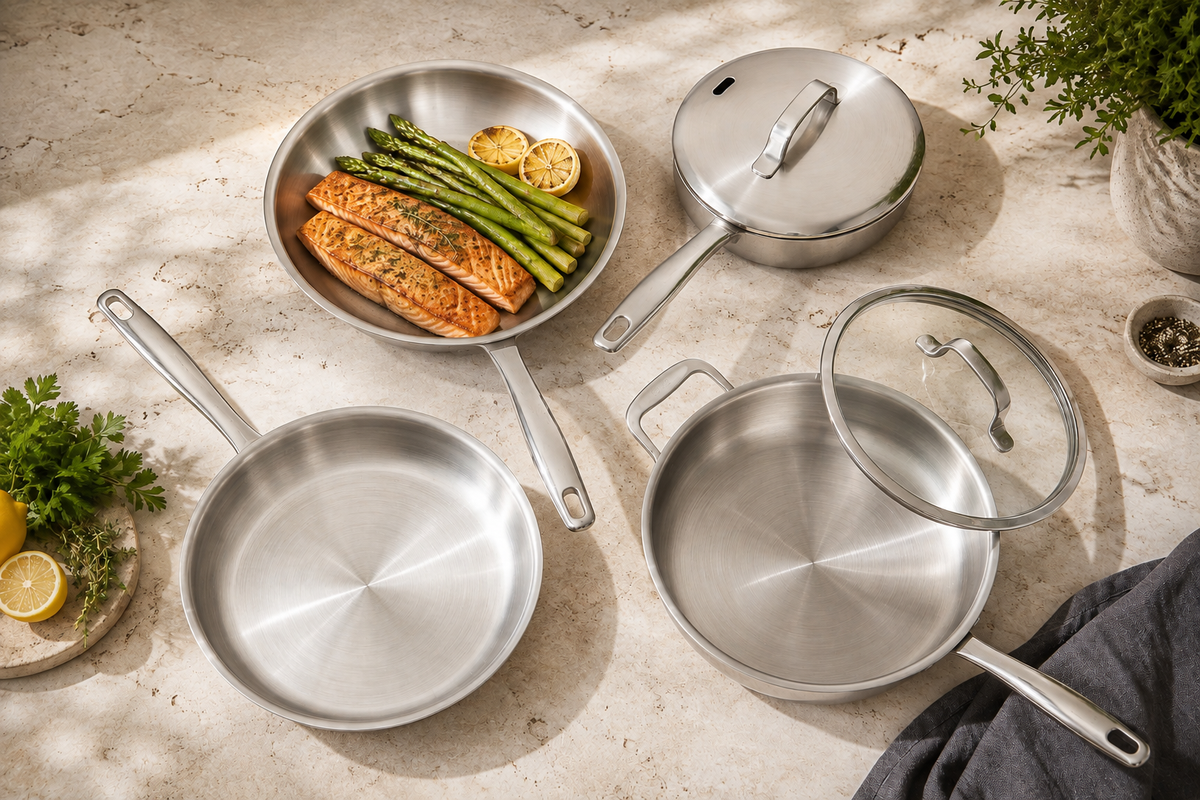
If you want excellent heat performance without the maintenance or leaching question, a fully clad stainless steel pan delivers even heat with a completely non-reactive surface. Alva 5-ply stainless steel wraps an aluminum core in stainless for fast, even heat — safe with any food, dishwasher-friendly, and PFAS-free.
Our pick: the Maestro 5-Ply Stainless Frying Pan, or the full Maestro stainless set. Alva stainless has no nonstick coating - no PFAS or PTFE by design — see our safety standards. New here? Shop best-sellers.
Frequently asked questions
Is copper cookware safe to cook with?
Lined copper is safe. Bare, unlined copper is reactive and can leach into acidic foods, so it is not suited to everyday cooking with tomato, wine or citrus. Almost all modern copper pans are lined with tin or stainless steel for exactly this reason.
Can copper leach into food?
From unlined copper, yes — particularly with acidic ingredients or long cooking times. A tin or stainless lining puts a non-reactive barrier between the copper and the food, which prevents it. Check the lining periodically: tin is soft and wears through eventually.
How can you tell if copper cookware is lined?
Look at the cooking surface rather than the outside. A lined pan has a silvery interior — dull grey for tin, brighter and harder for stainless — while the copper shows on the exterior. If the inside is the same reddish copper as the outside, it is unlined.
Is copper cookware worth the maintenance?
That depends on how much you value the heat response. Copper reacts faster to burner changes than almost anything else, which is why it persists in professional kitchens. Against that: it is expensive, it tarnishes and needs polishing, tin linings can melt at high heat, and it usually isn't induction-compatible.
What is a safer alternative to copper cookware?
Fully clad 5-ply stainless steel. It gives you fast, even heat from an aluminium core with a completely non-reactive stainless cooking surface, no lining to wear through, no polishing, and no reaction with acidic food. It is also oven-safe to 500°F and carries a lifetime warranty.
Looking for a safe alternative? Compare the best non-toxic cookware, the best stainless steel cookware for induction and the best non-toxic cookware sets.
Our top pickCeramic Nonstick Frying PanShop now →


Leave a comment
This site is protected by hCaptcha and the hCaptcha Privacy Policy and Terms of Service apply.