






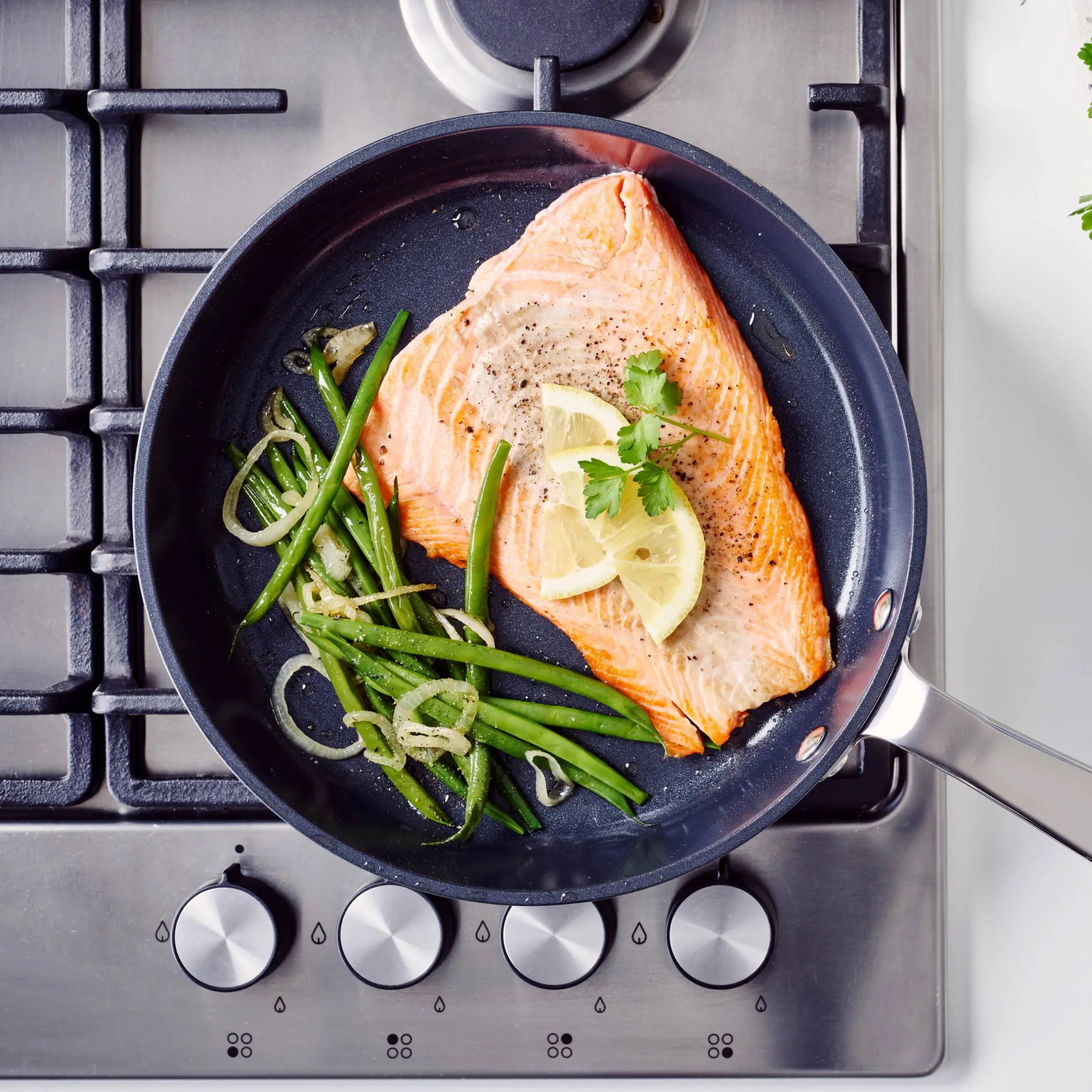
Aluminum VS Nonstick Pan: Best Material for Pans
Aluminum and nonstick are not really opposites — most nonstick pans are built on an aluminum core. The real question is whether the cooking surface is bare metal or coated, and what that coating is made of.
Bare aluminum: fast but reactive
Aluminum is light and conducts heat quickly and evenly, which is why it sits at the heart of most cookware. On its own, though, bare aluminum is reactive — cook acidic foods in it and you can get a metallic taste and minor leaching. It also scratches and warps easily, which is why manufacturers harden the surface — see how hard-anodized aluminum compares to stainless steel if you are choosing between the two.

Our Top Pick
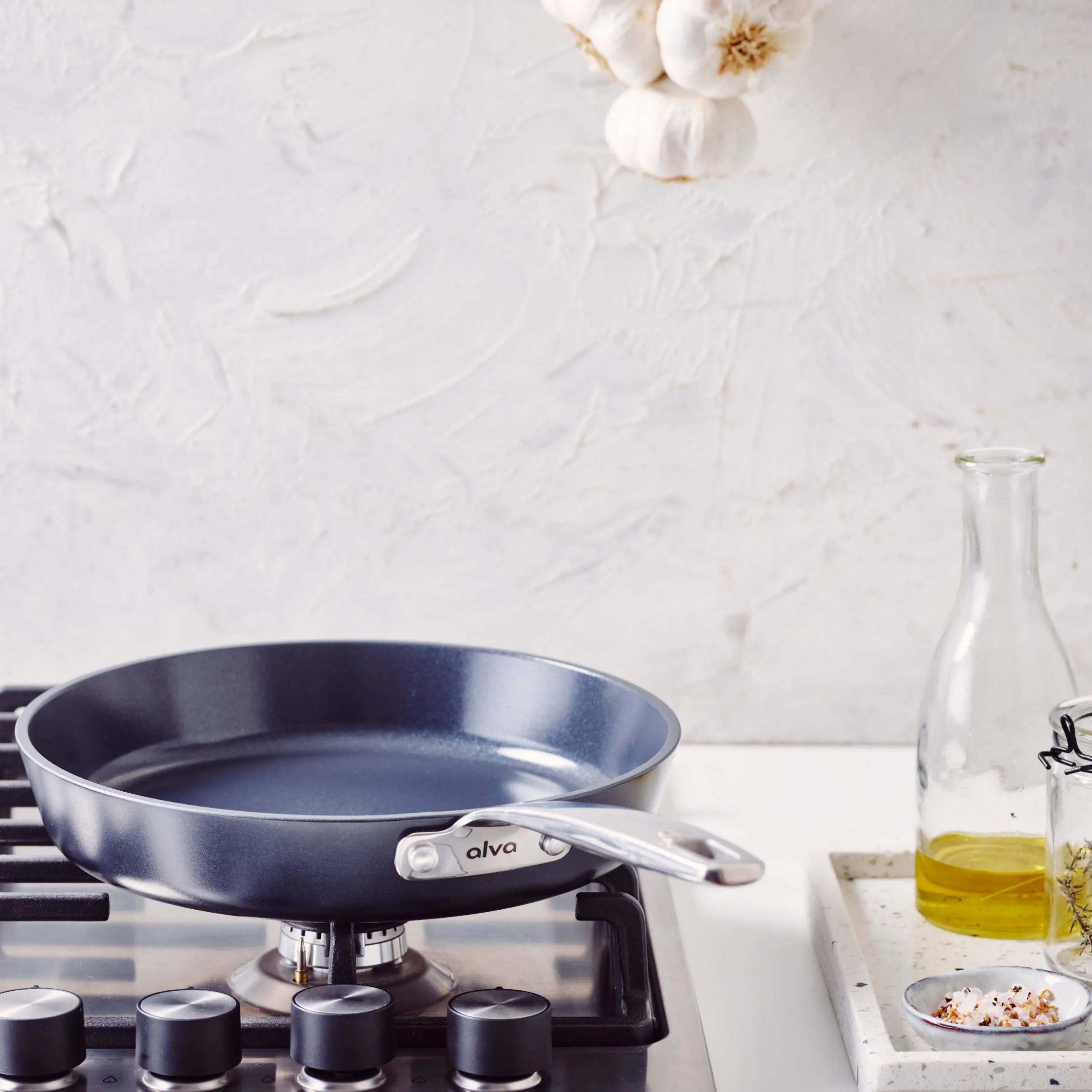
Ceramic Nonstick Frying Pan
Easy ceramic nonstick for everyday meals. Made without PFAS, PTFE or PFOA, supported by published third-party testing, induction-ready, oven-safe to 400°F and backed by a 10-year limited warranty.
Shop the Maestro Frying PanIndependently tested. Alva publishes its third-party lab reports in full, with the lab, report number and date for each line. See the lab reports →
Nonstick: aluminum done right
A nonstick coating over an aluminum core gives you the fast, even heat of aluminum plus an easy-release, non-reactive surface. The catch is the coating: older nonstick used PFAS/PTFE chemicals. Modern nonstick made without PFAS delivers the same effortless release with none of the forever-chemical concern.
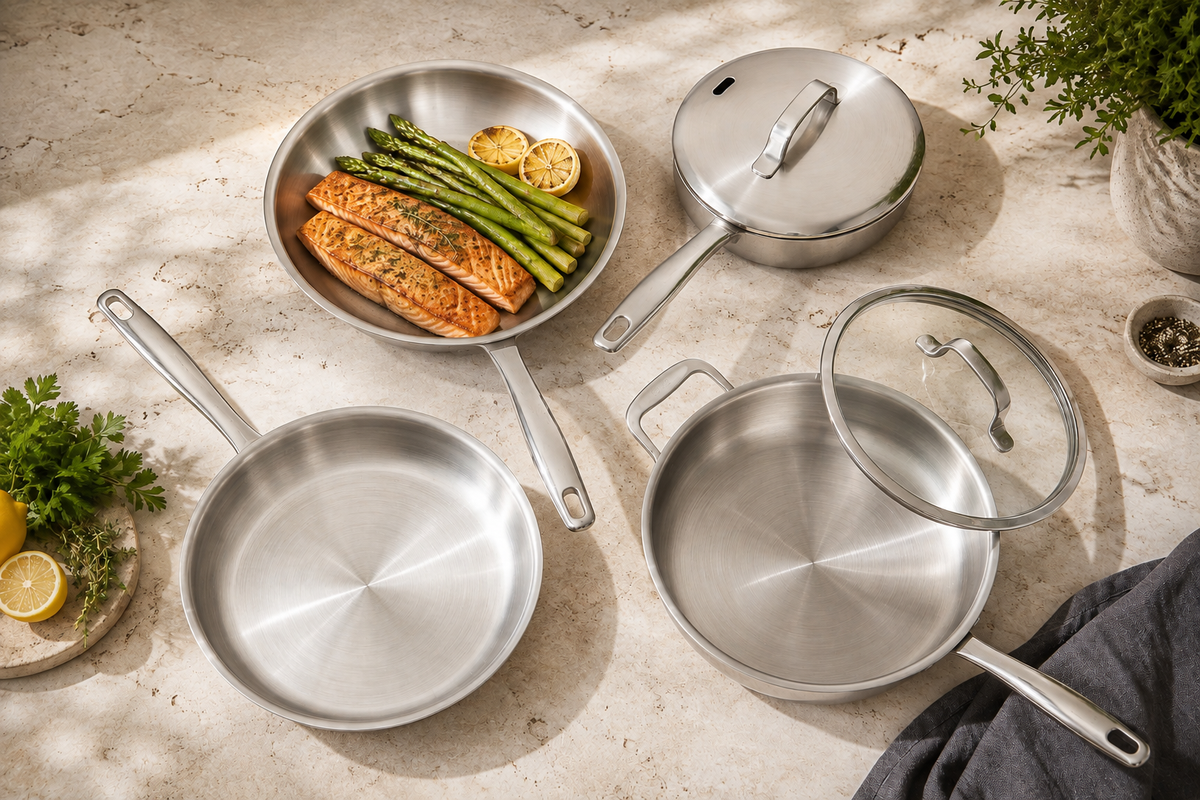
Our pick: Alva nonstick made without PFAS pairs an aluminum core with a coating that is made without PFAS, PTFE or PFOA and independently tested. The Maestro Essentials 9-Piece Set covers everyday cooking in one go.
See how it is tested in our safety standards. New to Alva? Browse best-sellers.
Frequently asked questions
Is aluminum cookware safe?
Aluminum used as a core layer inside coated or clad cookware is considered safe — it never touches your food. Anodized aluminum is also safe, because the surface has been hardened and sealed. Bare, unsealed aluminum is the one to be careful with, since it is reactive with acidic ingredients.
Is aluminum or nonstick better?
It is not really a choice between the two — most nonstick pans are aluminum pans with a coating on top. The meaningful question is whether the cooking surface is bare metal, anodized, or coated, and if coated, what the coating is made of.
Does aluminum leach into food?
Small amounts can transfer from bare aluminum, especially with acidic foods like tomato or citrus cooked for a long time. A coated or anodized surface prevents contact entirely, and an aluminum core sealed inside stainless or under a ceramic coating never touches food at all.
Is hard-anodized aluminum the same as nonstick?
No. Hard-anodizing is an electrochemical process that hardens and seals the aluminum surface, making it far more durable and non-reactive — but it is not a nonstick coating. Some pans are both hard-anodized and coated; check which you are buying. See stainless steel vs hard-anodized for the full comparison.
Which heats more evenly, aluminum or stainless steel?
Aluminum conducts heat far better than stainless, which is exactly why quality stainless pans are built with an aluminum core bonded through them. A fully clad pan gives you stainless on the cooking surface and aluminum doing the conducting — the best of both.


Leave a comment
This site is protected by hCaptcha and the hCaptcha Privacy Policy and Terms of Service apply.