






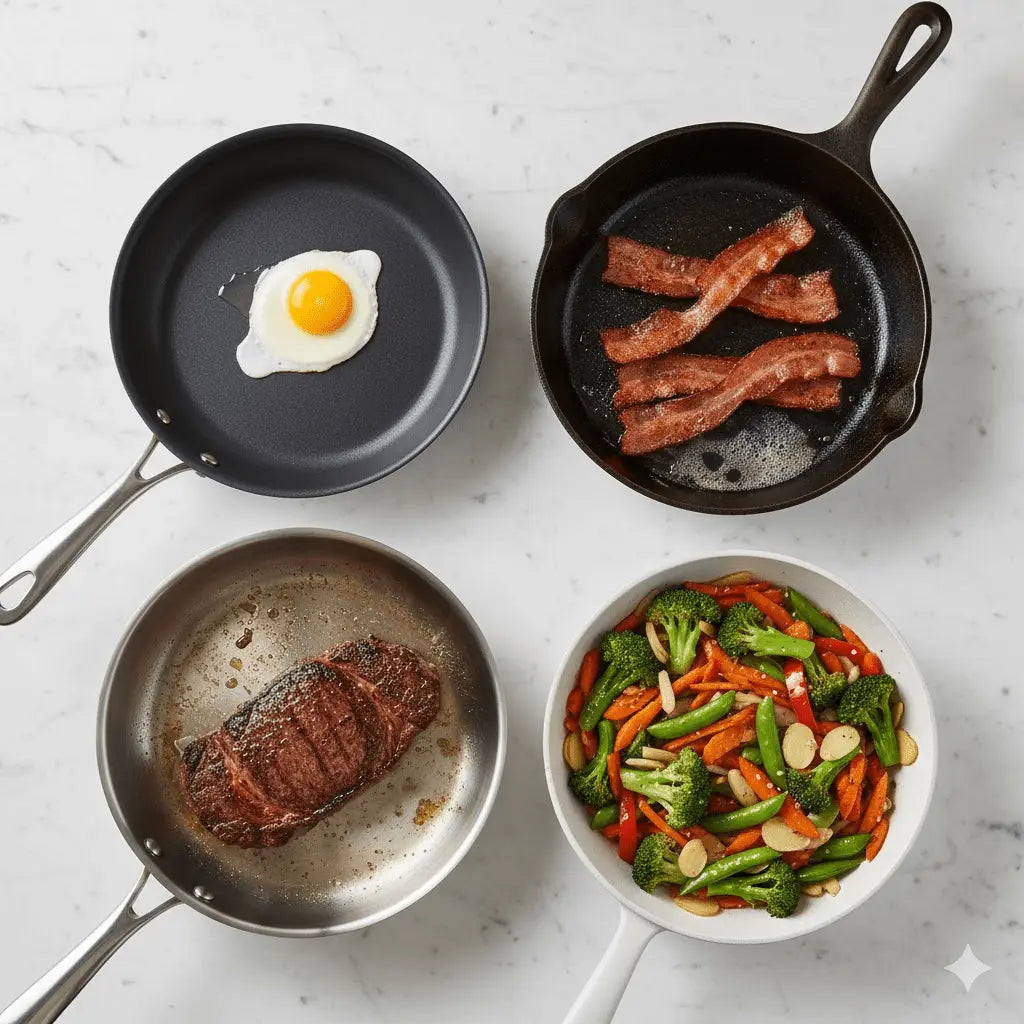
Nonstick Cookware vs Other Cookware: Which Type Is Best
Nonstick is the best cookware for eggs, pancakes and delicate fish, but it isn't the best for everything. Stainless steel is better for searing and pan sauces, cast iron and carbon steel are better for high-heat crusts, and enameled cast iron is best for braises and acidic dishes. Most home cooks are well served by three pieces: a ceramic nonstick pan made without PFAS, a stainless skillet and one cast iron or carbon steel pan.
There is no single best cookware material, only the right tool for each job. Here is how nonstick stacks up against the other workhorses, and how to build a kit that covers everything.

Our Top Pick
Ceramic Nonstick Frying Pan
Easy ceramic nonstick for everyday meals. Made without PFAS, PTFE or PFOA, supported by published third-party testing, induction-ready, oven-safe to 400°F and backed by a 10-year limited warranty.
Shop the Maestro Frying PanIndependently tested. Alva publishes its third-party lab reports in full, with the lab, report number and date for each line. See the lab reports →
Nonstick vs other cookware at a glance
General characteristics of each material. Individual products vary, so always check the maker's oven limit and care instructions.
| Material | Best for | Heat | Food release | Care | Lifespan |
|---|---|---|---|---|---|
| Ceramic nonstick | Eggs, pancakes, fish, low-oil cooking | Low to medium | Excellent from day one | Hand wash; no metal utensils | Several years |
| PTFE (Teflon-type) nonstick | Eggs and delicate foods | Low to medium; avoid overheating | Excellent | Hand wash; no metal utensils | A few years |
| Stainless steel | Searing, browning, pan sauces | Any, up to high | Good once preheated | Easy; often dishwasher-safe | Decades |
| Carbon steel | Steaks, stir-fries, high-heat cooking | Very high | Builds with seasoning | Dry and oil after washing; no dishwasher | Generations |
| Cast iron | Searing, cornbread, shallow frying | Very high; holds heat longest | Builds with seasoning | Dry and oil after washing; no dishwasher | Generations |
| Enameled cast iron | Braises, soups, stews, tomato sauces | Low to high; preheat gradually | Fair; use some fat | Hand wash; no seasoning needed | Decades |
Nonstick: eggs, fish, low-fat cooking
Nothing beats nonstick for eggs, pancakes, delicate fish, and cooking with little oil. There are two main types. PTFE (the Teflon family) is a fluoropolymer, part of the PFAS group of chemicals. Ceramic nonstick is made without PFAS. If you want easy release without that trade-off, choose a ceramic coating like Alva nonstick, made without PFAS, PTFE or PFOA. The downside of any nonstick is lifespan: coatings wear with heat, metal utensils and the dishwasher, so expect to replace a nonstick pan long before a stainless one. Here's whether ceramic cookware is safe.
Stainless steel: searing, sauces, browning
Fully clad stainless steel gives you high-heat searing, fond for pan sauces, and a non-reactive surface that lasts decades. It has no coating, so there is nothing to wear out, and it handles metal utensils. The learning curve is heat control: preheat the pan before adding oil and food releases on its own. See stainless steel vs nonstick for a head-to-head.
Cast iron and carbon steel: high heat and crust
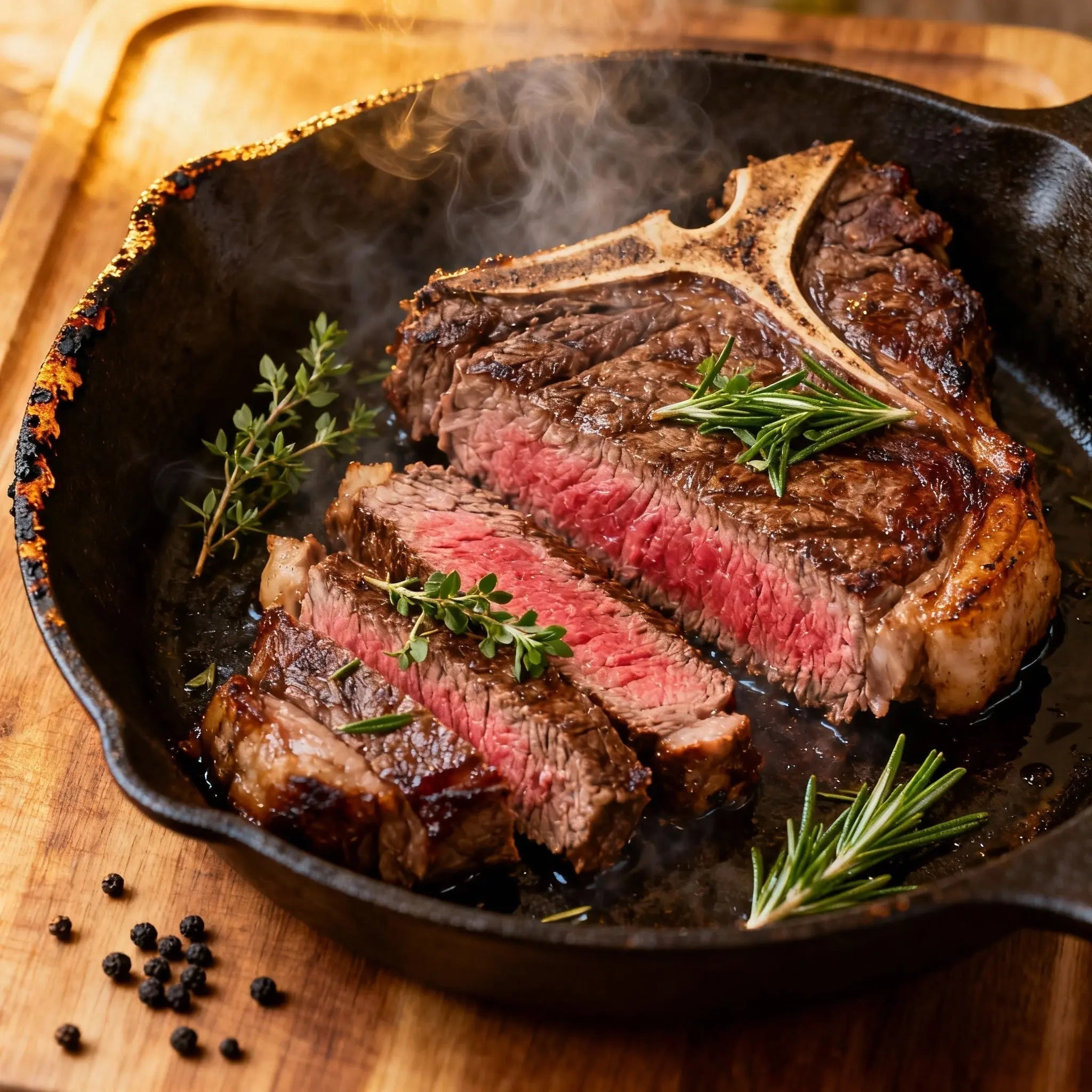
For steaks, stir-fries, and anything that needs a hard sear, cast iron and carbon steel hold and radiate heat better than any coated pan. Both develop a naturally non-stick seasoning that improves with use. Carbon steel is lighter and heats faster; cast iron is heavier and holds heat longer. See carbon steel vs nonstick and carbon steel vs cast iron.
Enameled cast iron: braises and acidic dishes
Enameled cast iron has a glass coating fused to the iron, so it needs no seasoning, won't rust and handles tomato sauces and wine braises without reacting. It's the classic Dutch oven material. It is heavy and isn't a nonstick surface, so it's better for slow cooking than for eggs. See enameled cast iron vs cast iron.
Which cookware for which job?
- Eggs, omelets, pancakes: ceramic nonstick.
- Delicate fish: ceramic nonstick, or well-preheated stainless for crispy skin.
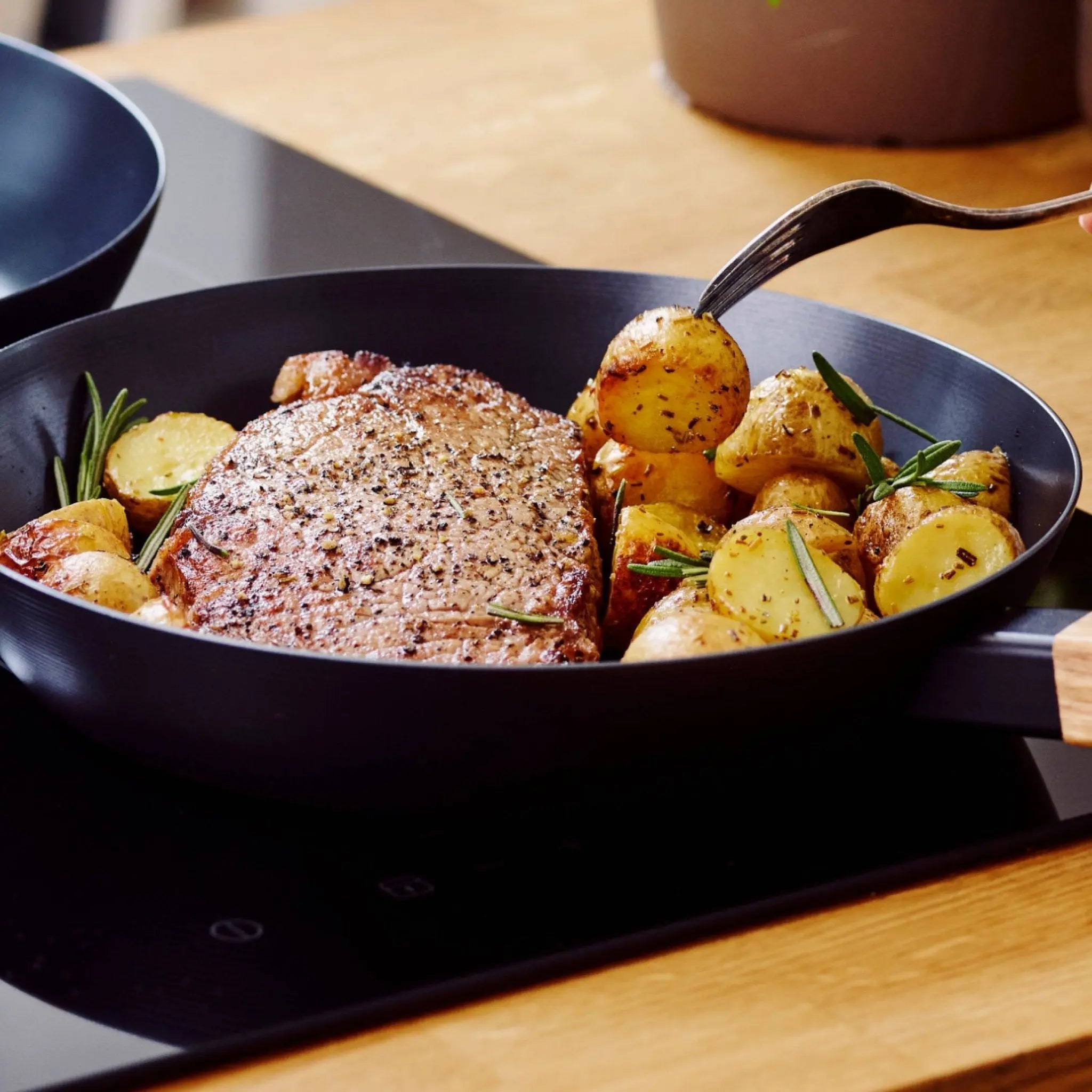
- Steak and chops: carbon steel or cast iron.
- Pan sauces and browning: stainless steel.
- Stir-fries: a carbon steel wok.
- Soups, stews and braises: enameled cast iron or a stainless stock pot.
- Tomato sauce and other acidic food: stainless or enameled cast iron.
How to build your kit
Most home cooks are covered by three pieces: a nonstick made without PFAS for eggs, a stainless skillet for searing and sauces, and one cast iron or carbon steel pan for high heat. Add an enameled Dutch oven if you braise or make soups often. The Alva best-selling sets bundle these so you are not buying piecemeal; compare options in our best ceramic cookware sets and best stainless steel cookware sets guides.
Every Alva coating is independently tested — see our safety standards.
Frequently asked questions
Which cookware type is best for home cooking?
No single material wins everything: ceramic nonstick for eggs and easy cleanup, stainless for searing and sauces, carbon steel for high heat, cast iron for heat retention. A nonstick pan plus one bare-metal pan covers most kitchens.
Is nonstick or stainless steel better?
Neither is better overall. Nonstick is easier for eggs and delicate foods and needs less oil. Stainless sears better, makes better pan sauces, takes high heat and metal utensils, and lasts decades. Most cooks own one of each.
Is nonstick cookware safe?
Ceramic nonstick is made without PFAS, PTFE and PFOA. PTFE (Teflon-type) nonstick is a PFAS chemical and can break down if a pan is badly overheated. If you want to avoid PFAS, choose ceramic nonstick from a maker that publishes third-party test results, or an uncoated pan.
How long does nonstick cookware last compared with other types?
Nonstick coatings typically last several years with good care. Stainless steel, cast iron, enameled cast iron and carbon steel have no coating to wear out and can last decades or longer.
Can nonstick pans go in the oven?
Many can, but at a lower temperature than bare metal. Alva ceramic nonstick is oven-safe to 400°F, while our 5-ply stainless and enameled cast iron go to 500°F. Always check the maker's limit.
What cookware do chefs use?
Professional kitchens mostly use stainless steel and carbon steel, because they take high heat and abuse and never need replacing. Many chefs still keep a nonstick pan for eggs and omelets.
The bottom line
Use nonstick for what it does best, eggs, pancakes and fish, and pair it with stainless or carbon steel for everything that needs high heat. Start with the Maestro Ceramic Nonstick Frying Pan and add a Maestro 5-Ply Stainless Frying Pan. Free U.S. shipping over $99.
Our top pickCeramic Nonstick Frying PanShop now →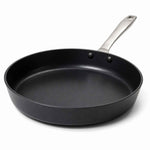


Leave a comment
This site is protected by hCaptcha and the hCaptcha Privacy Policy and Terms of Service apply.