






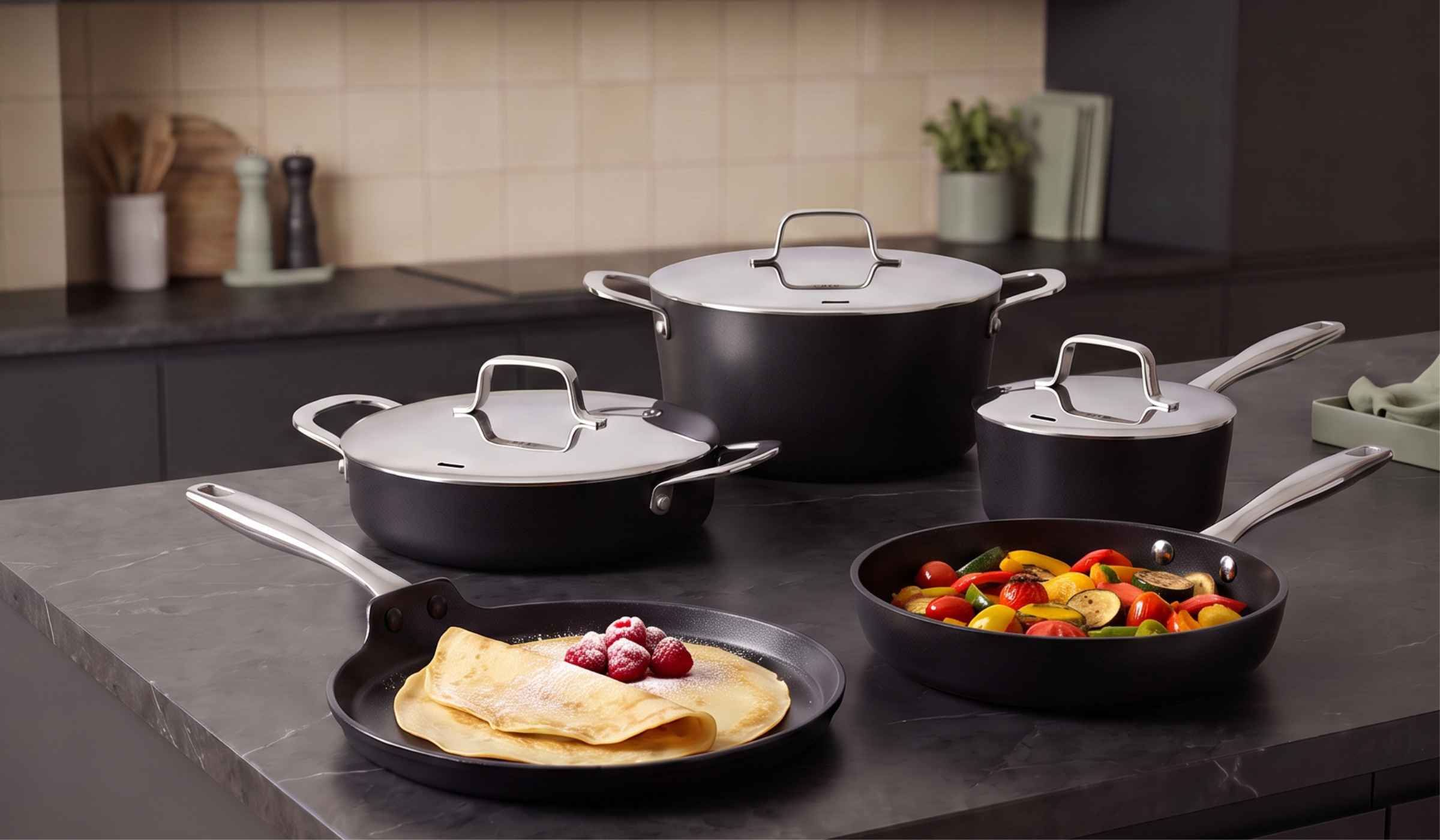
How Long Do Ceramic Pans Last?
Ceramic pans are loved for easy, non-toxic cooking - but how long do they actually last, and can you make them last longer? Here is the honest answer.
Full guide: How to Make Ceramic Nonstick Last (and what "flaking" really means) — our complete care and durability guide.
Typical lifespan
A quality ceramic nonstick pan generally lasts a few years of regular use. Cheaper ceramic can lose its release much faster. As with all nonstick, how you treat it matters more than anything.

Our Top Pick
Ceramic Nonstick Frying Pan
Easy ceramic nonstick for everyday meals. Made without PFAS, PTFE or PFOA, supported by published third-party testing, induction-ready, oven-safe to 400°F and backed by a 10-year limited warranty.
From $109
Shop the Maestro Frying PanWhat shortens their life
- High heat - the fastest way to degrade any coating.
- Metal utensils and abrasive scrubbing.
- Cooking sprays, which leave a residue that ruins release.
- Thermal shock - never run a hot pan under cold water.
How to extend it
Low-to-medium heat, gentle utensils, hand-washing, and a little oil instead of spray. Step-by-step instructions are in our ceramic nonstick durability guide. For how this compares to other coatings, see how long nonstick lasts, and to compare picks, our best nonstick pans guide. If you'd rather buy once, see our pick for non-toxic cookware that lasts 10 years.
When to replace
When food sticks despite good care, it is time. Upgrade to Alva's lab-tested 7-Piece Ceramic Nonstick Set from our nonstick range.
Frequently asked questions
How long do ceramic pans last?
A few years of regular use for a quality pan, and noticeably less for cheap ceramic. There is no fixed expiry date — the coating wears gradually, and how you treat it matters more than the brand. Low heat, soft utensils and hand-washing can easily double the useful life.
How do I know when to replace a ceramic pan?
When food sticks even with oil and gentle heat, and the surface looks dull, scratched or is visibly flaking. A pan that has simply lost a little slickness still cooks fine; one with a damaged, chipping surface should be replaced.
Can you restore the nonstick on a ceramic pan?
Not once the coating has genuinely worn — unlike carbon steel, there is no re-seasoning it. But check first: a great many "dead" ceramic pans are actually coated in polymerised residue from cooking sprays or burnt-on oil. Scrub gently with warm soapy water and a soft sponge before giving up on it.
Why did my ceramic pan stop working so quickly?
Almost always one of four things: cooking on high heat, aerosol sprays, the dishwasher, or metal utensils. Ceramic does not need high heat to release food, so the dial is usually the culprit — and detergent cycles are abrasive enough to shorten any coating's life.
Do ceramic pans last longer than Teflon?
Generally no. A well-treated PTFE coating typically stays slick longer than ceramic. Ceramic trades some of that longevity for a coating made without PFAS, PTFE or PFOA. If maximum coating lifespan is your priority, uncoated stainless or carbon steel outlasts both by a wide margin.
Related reading: how to tell whether a pan is still safely nonstick and dishwasher-friendly fry pan sets.
Our top pickCeramic Nonstick Frying PanShop now →


Leave a comment
This site is protected by hCaptcha and the hCaptcha Privacy Policy and Terms of Service apply.