






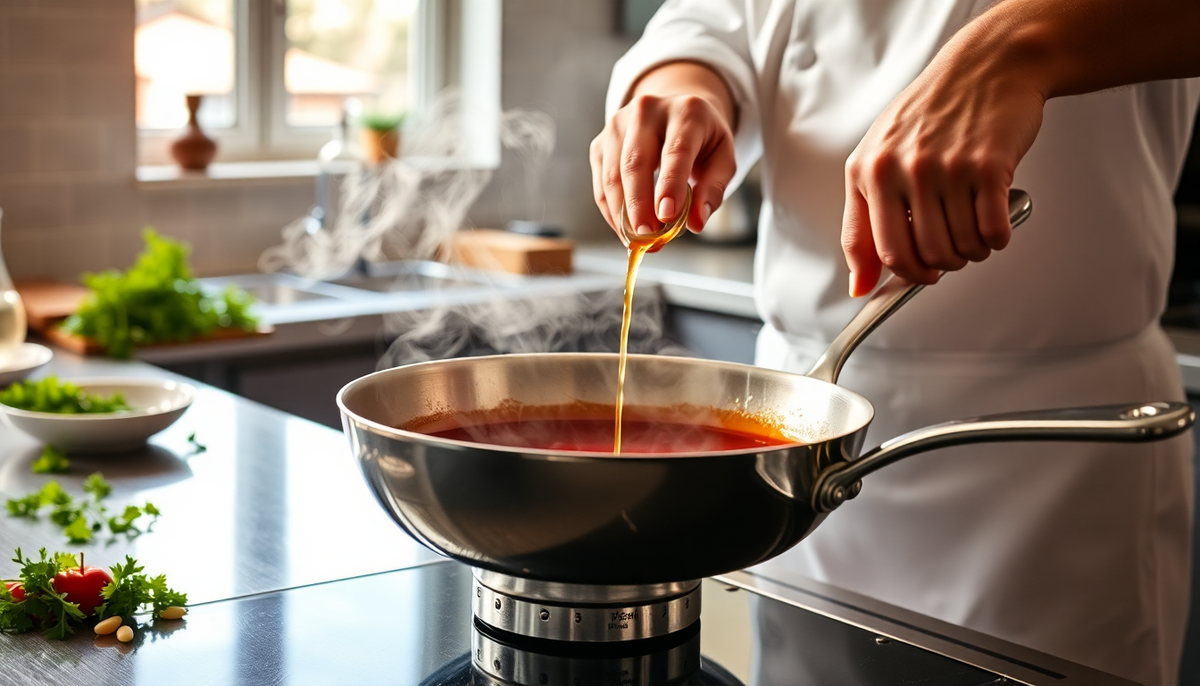
Master Pan Sauces with Alva's 5-Ply Stainless Sauté Pan
A great pan sauce is the difference between a good dinner and a memorable one - and a stainless saute pan is the tool that makes it happen.
Why stainless for sauces
Those flavorful browned bits (the fond) that form on stainless steel are the foundation of a pan sauce. Nonstick will not build them the same way. A fully clad 5-ply stainless pan gives you even heat and a non-reactive surface that handles wine, citrus, and tomato without a metallic taste. If you are weighing the layers, here is how 5-ply compares to 3-ply stainless.

Our Top Pick
5-Ply Stainless Steel Sauté Pan with Lid, 4-Qt
Fully clad 5-ply stainless steel with a lid for searing, deglazing and building pan sauces. Uncoated, induction-ready and backed by a lifetime warranty.
Shop the 5-Ply Sauté PanThe method
Sear your protein, remove it, then deglaze the hot pan with stock or wine, scraping up the fond. Reduce, swirl in butter, and finish - a restaurant-quality sauce in minutes.
The method, step by step
Every pan sauce follows the same six moves. Once they are in your hands you can improvise with whatever is in the fridge.
- 1. Sear. Heat the dry pan over medium-high until a drop of water skates across it, add a tablespoon of neutral oil, then lay in the protein. Leave it alone until it releases on its own. Our guide to cooking on stainless steel without sticking covers the preheat in detail.
- 2. Build the fond. The brown residue left on the pan is concentrated flavor, not mess. It should be deep brown. If it is black, the pan was too hot and the sauce will taste bitter.
- 3. Remove and rest. Move the protein to a warm plate. Pour off all but about a tablespoon of fat. If the recipe calls for shallot or garlic, soften it now for 30 to 60 seconds.
- 4. Deglaze. Add the liquid (wine, stock, cider or water) and scrape with a wooden spoon until the fond dissolves. About 30 seconds.
- 5. Reduce. Simmer until the liquid has reduced by half to two-thirds and coats the back of a spoon. This is where the flavor concentrates.
- 6. Mount with cold butter and season. Off the heat, add cold butter a piece at a time and swirl until it emulsifies into a glossy sauce. Taste, then adjust with salt, pepper and a squeeze of lemon. Pour in any juices from the resting plate.
Three sauces to learn first
Each makes enough for two to four portions and takes under five minutes once the protein is out of the pan.
Pan jus
The simplest, for a roast chicken or a steak. Pour off the fat, add 1 cup of chicken or beef stock, scrape up the fond and reduce to about a third of a cup. Off the heat, swirl in 1 tablespoon of cold butter and season. No wine, no shallot; just the meat and the pan.
White-wine shallot butter
The classic for chicken, pork chops and fish — it is the sauce we spoon around our crispy pan-seared chicken thighs. After searing, soften 1 finely chopped shallot in the remaining fat for 45 seconds. Add half a cup of dry white wine and reduce until almost dry. Add half a cup of chicken stock and reduce by half. Off the heat, mount with 3 tablespoons of cold butter, cubed, one at a time. Finish with a teaspoon of lemon juice and a tablespoon of chopped parsley or chives.
Mustard-cream
For pork, chicken thighs and mushrooms. Soften 1 chopped shallot, deglaze with a quarter cup of white wine or dry cider and reduce until nearly gone. Add half a cup of stock and reduce by half. Stir in a third of a cup of heavy cream and 1 tablespoon of Dijon mustard and simmer for a minute until it coats a spoon. No butter needed; the cream does that job. Season, and add a few thyme leaves if you have them.
Why a 4-qt 5-ply sauté pan suits this
You can make a pan sauce in a frying pan, and for one or two portions our best stainless steel frying pan pick is fine. The 4-qt Maestro 5-Ply Stainless sauté pan with lid is the better tool for three reasons.
- Straight sides hold liquid. A cup of stock in a sloped frying pan spreads thin and reduces before the fond has dissolved. In a sauté pan it pools deep enough to scrape into and reduce at a controlled pace.
- A flat base means more fond. Four chicken thighs or two large steaks brown without crowding, which is what creates the fond in the first place.
- The lid finishes the dish. Return the protein to the sauce, cover and warm through, or slide the pan into a 500°F oven. Uncoated 18/10 stainless does not react with wine or lemon, and the pan is dishwasher-safe afterwards.
Choosing between this and a saucepan? Saucepan vs sauté pan explains why the saucepan is for sauces made from scratch and the sauté pan is for sauces made from a sear.
Common mistakes
- Using nonstick. A ceramic or PTFE surface is designed so nothing sticks, which means almost no fond forms. You get a thin, pale sauce however well you reduce. Sear in stainless or carbon steel and keep the nonstick for eggs.
- A pan that is too hot. Fond that turns black is burnt, and there is no saving it. Medium-high is enough for stainless; if the oil smokes hard before the food goes in, pull the pan off the heat for a moment.
- Adding butter too early. Butter dropped into boiling liquid separates into grease. Take the pan off the heat and let it stop bubbling before the first cube goes in, and keep the butter cold.
- Not reducing enough. A watery sauce is a sauce that was not reduced. Wait until it coats a spoon; it thickens further as it cools.
Our pick
Alva's Maestro 5-Ply pan is built for exactly this - with no nonstick coating, so no PFAS or PTFE by design (see our safety standards). For reducing and simmering those sauces, pair it with our best saucepan pick. See the full best stainless steel sets.
Sauce-led recipes to practice on: skillet beef stroganoff, one-pan lemon chicken and Tuscan chicken in a sun-dried tomato cream.
Frequently asked questions
Why did my pan sauce turn greasy or split?
The butter was added over heat or too quickly. Take the pan off the heat and swirl in cold butter one piece at a time so it emulsifies into a glossy sauce.
Can I make a pan sauce in a nonstick pan?
Not as well. Nonstick is designed so nothing sticks, so very little fond forms, and the fond is where a pan sauce gets its flavor. Stainless steel builds it.
Can I make a pan sauce without wine?
Yes. Deglaze with stock, cider or even water. Finish with a squeeze of lemon for the brightness wine would add.
Why does my pan sauce taste bitter?
The fond burned. It should be deep brown, not black. If it's black, wipe the pan and start the sauce with fresh fat and a lower heat. Our guide to cooking on stainless steel without sticking covers heat control.


Leave a comment
This site is protected by hCaptcha and the hCaptcha Privacy Policy and Terms of Service apply.