






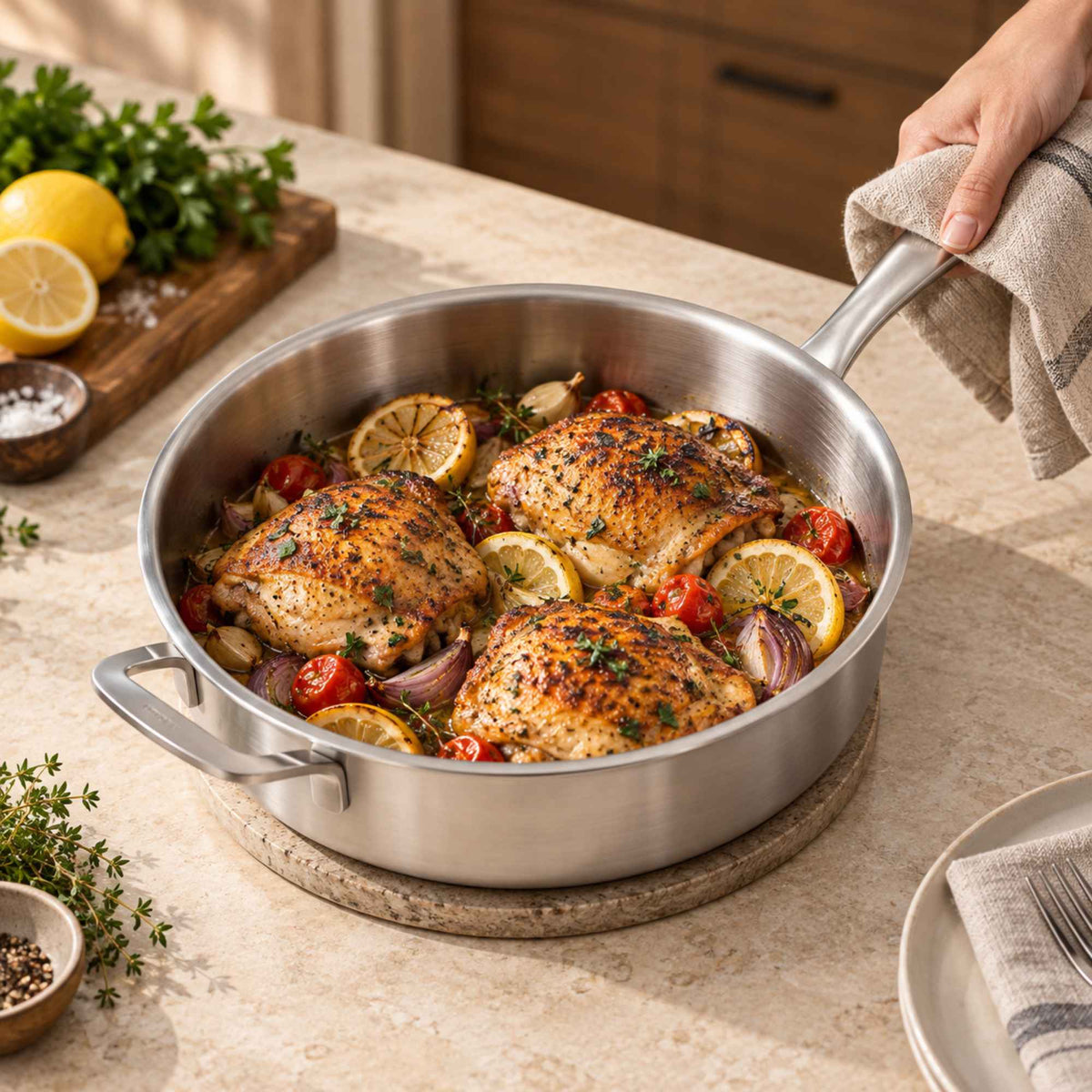
Crispy Skin Chicken Thighs (Pan-Seared, Oven-Finished) with Lemon-Garlic Pan Sauce
The secret to pan-seared chicken thighs with shatteringly crispy skin is a dry bird, a cold start skin-side down, and patience: let the fat render slowly in a stainless steel skillet for 12–15 minutes, then flip and finish in a 425°F oven. The browned bits left behind become a glossy lemon-garlic pan sauce in about five minutes.

Our Top Pick
5-Ply Stainless Frying Pan
Five bonded layers spread heat evenly so every thigh renders at the same rate, and the pan goes from burner to oven (oven-safe to 500°F) and builds the fond for your pan sauce. It is also dishwasher-safe.
Shop the Frying PanPrep time: 10 minutes · Cook time: 35 minutes · Total: 45 minutes · Serves 4
This recipe is for bone-in, skin-on thighs. Cooking boneless, skinless thighs instead? Our 15-minute boneless chicken thighs with garlic butter is the faster weeknight version.
Why a stainless steel pan for chicken thighs?
Nonstick pans can't build fond, the caramelized layer on the pan floor that gives a pan sauce its depth. Stainless can. We tested this recipe in the Alva Maestro 5-Ply Stainless Frying Pan. Its five bonded layers spread heat evenly from edge to edge, so every thigh renders at the same rate instead of the ones in the center burning while the edges stay pale. It's oven-safe to 500°F, so it goes straight from burner to oven for this recipe, and it works on induction. Worried about sticking? The skin releases on its own once it's properly browned. Our guide to cooking on stainless steel without sticking explains why.
Ingredients
For the chicken
- 6 bone-in, skin-on chicken thighs (about 2½ lb / 1.1 kg)
- 1½ tsp kosher salt
- ½ tsp freshly ground black pepper
- ½ tsp smoked paprika (optional)
- 1 tsp neutral oil (avocado, canola or grapeseed)
For the lemon-garlic pan sauce
- 1 medium shallot, finely minced
- 3 cloves garlic, thinly sliced
- ½ cup (120 ml) dry white wine (or extra stock)
- ¾ cup (180 ml) low-sodium chicken stock
- 1 tbsp fresh lemon juice, plus zest of ½ lemon
- 2 tbsp cold unsalted butter, cut into cubes
- 1 tsp fresh thyme leaves (or ½ tsp dried)
- 1 tbsp chopped fresh parsley
Instructions
- Dry and season. Pat the thighs very dry with paper towels, especially the skin. Season all over with salt, pepper and paprika. If you have time, rest them uncovered in the fridge for 1–24 hours; this dries the skin further for even crispier results.
- Heat the oven. Position a rack in the center and heat the oven to 425°F (220°C).
- Start skin-side down. Add the oil to an 11-inch stainless steel frying pan and place the thighs skin-side down in a single layer. Turn the heat to medium. Starting in a moderately warm pan lets the fat render gradually instead of the skin scorching before it crisps.
- Render without moving. Cook undisturbed for 12–15 minutes, adjusting the heat so the fat sizzles steadily but doesn't smoke. The skin is ready when it's deep golden and releases from the pan easily. If it sticks, give it another minute or two.
- Flip and roast. Turn the thighs skin-side up and transfer the pan to the oven. Roast 12–18 minutes, until an instant-read thermometer inserted near the bone (not touching it) reads at least 165°F (74°C). For the most tender thighs, aim for 175–185°F; the extra heat breaks down connective tissue without drying them out.
- Rest. Using an oven mitt (the handle will be very hot), remove the pan. Move the chicken to a plate, skin-side up, and leave it uncovered to stay crisp while you make the sauce.
- Build the sauce. Pour off all but about 1 tablespoon of fat. Set the pan over medium heat, add the shallot and cook 1 minute, then add the garlic and thyme and cook 30 seconds until fragrant.
- Deglaze. Pour in the wine and scrape up the browned bits with a wooden spoon. Simmer until reduced by about half, 1–2 minutes. Add the stock and simmer until reduced to about ⅓ cup, 3–4 minutes.
- Finish. Take the pan off the heat. Swirl in the cold butter a few cubes at a time until the sauce turns glossy, then stir in the lemon juice, zest and parsley. Taste and adjust the salt.
- Serve. Spoon the sauce around (not over) the chicken so the skin stays crisp. Good with mashed potatoes, crusty bread or a green salad.
Tips for the crispiest skin
- Dry skin = crispy skin. Moisture steams, and steam is the enemy of crunch. Don't skip the paper towels.
- Don't crowd the pan. Six thighs fit snugly in an 11-inch pan. If yours are very large, cook them in two batches or use two pans.
- Leave them alone. Moving the thighs early tears the skin. They release once they're browned.
- Trust a thermometer, not the clock. Thigh sizes vary a lot. 165°F is the safe minimum; 175–185°F is where thighs taste best.
- Clean up while it's warm. Deglazing loosens most of the fond. For anything left over, see how to clean a stainless steel pan. The Maestro 5-Ply is also dishwasher-safe.
The pan we used
This recipe was developed in the Alva Maestro 5-Ply Stainless Frying Pan, available in 8", 9.5" and 11" sizes. It's fully clad, oven-safe to 500°F, induction-ready, dishwasher-safe and covered by a 25-year limited warranty. Designed in Belgium, where Alva has been making cookware since 1949, and lab-tested for lead and cadmium. Comparing options first? Read our best stainless steel frying pan guide, or shop all cookware. Free U.S. shipping over $99.
Frequently asked questions
What temperature should chicken thighs be cooked to?
The USDA safe minimum for chicken is 165°F (74°C), measured in the thickest part without touching the bone. Thighs are dark meat with plenty of connective tissue, so most cooks take them to 175–185°F, where they're more tender and still juicy.
Can I use boneless, skinless chicken thighs?
Yes, but you won't get crispy skin. Sear them over medium-high heat for 5–7 minutes on the first side and 4–5 on the second until they reach at least 165°F, with no oven step needed. Then make the pan sauce exactly as written, or follow our boneless chicken thighs with garlic butter recipe.
Why is my chicken skin sticking to the stainless steel pan?
It usually just isn't ready yet. As the skin renders and browns, it releases from the pan naturally. Wet skin, a crowded pan or heat that's too low can also cause sticking. Pat the thighs dry, give them space, and wait until they let go on their own.
Can I make the pan sauce without wine?
Yes. The recipe lists extra chicken stock as a substitute for the dry white wine. Deglaze the pan with it the same way, scraping up the browned bits, then continue with the stock and butter.
Can I season the chicken ahead of time?
Yes. After seasoning, rest the thighs uncovered in the fridge for 1–24 hours. This dries the skin further for even crispier results.


Leave a comment
This site is protected by hCaptcha and the hCaptcha Privacy Policy and Terms of Service apply.