






Best Mortar and Pestle (2026): Why Material and Weight Decide Everything
The best mortar and pestle is a heavy one in a hard, dense material — granite or enameled cast iron — with a bowl of at least two cups. Mass does the crushing, capacity keeps ingredients in the bowl, and the material decides how much upkeep you sign up for. Get those three things right and a mortar and pestle will outlast every electric gadget in your kitchen; get them wrong and it becomes counter decoration.
Grind like it's 1949.
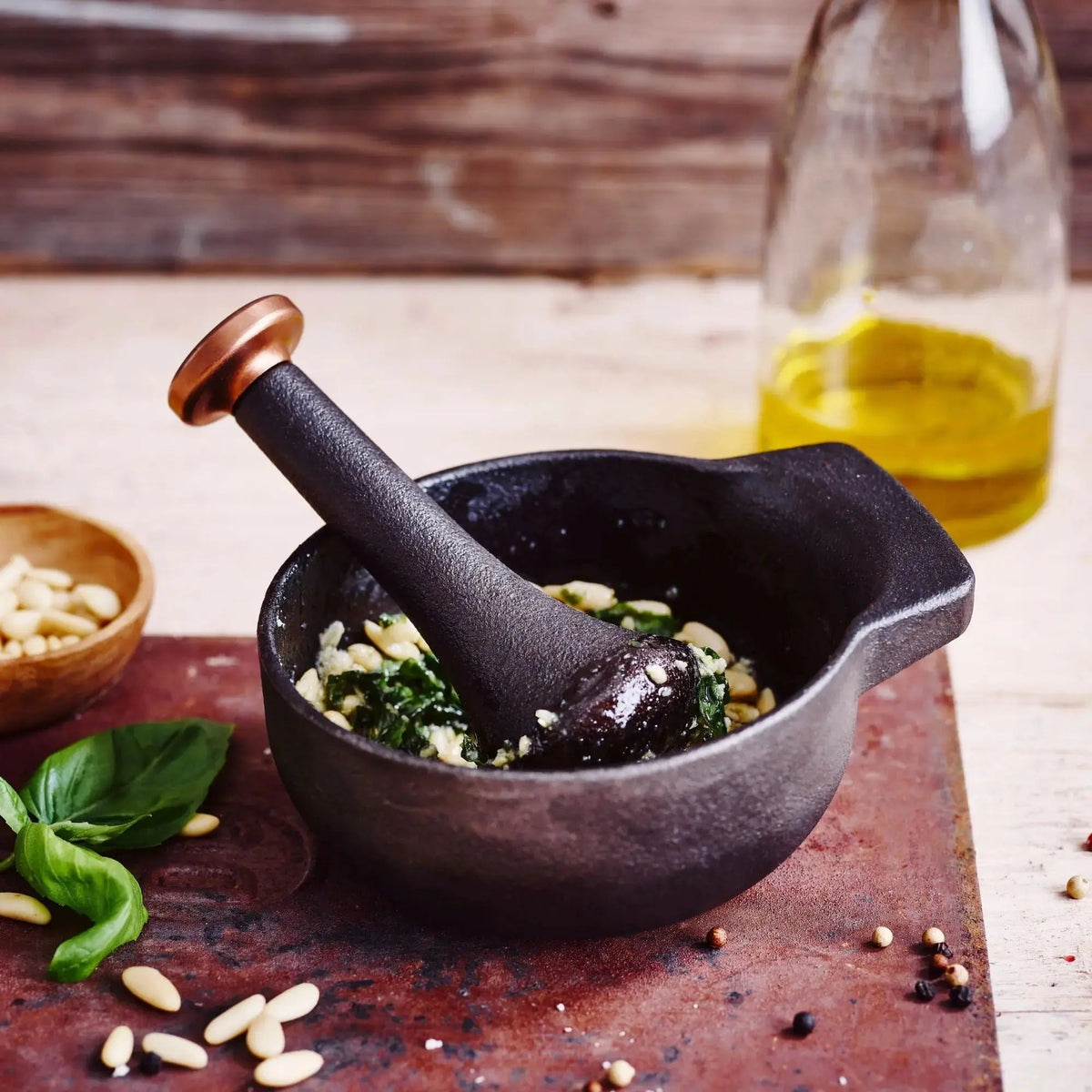
The Alva Nori mortar & pestle is enameled cast iron — 2-cup capacity, serious weight for real crushing power, and a textured grinding surface that grips herbs and spices instead of letting them slide.
Independently tested. Alva publishes its third-party lab reports in full, with the lab, report number and date for each line. See the lab reports →
The three things that actually matter
Weight. A mortar works by mass. A heavy bowl stays planted on the counter and absorbs the shock of every strike, so your effort goes into the peppercorn rather than into steadying the tool. Light mortars skid across the counter, bounce with each hit, and send half your spices over the rim. If you remember one rule from this guide, make it this: when in doubt, buy the heavier one. It is why granite and cast iron dominate working kitchens while dainty ceramic sets gather dust on open shelving.
Bowl capacity. Tiny mortars are for crushing pills, not cooking. Two cups is the practical minimum: enough room for a batch of pesto, guacamole for two, or a tablespoon of whole spices without cumin ricocheting across the stove. Below about one cup you will fight spillage on every task; much beyond four cups the tool becomes something you have to plan storage around. A two-cup bowl in the four-inch range hits the sweet spot — big enough for real recipes, small enough to live on the counter.
Material. Material determines three things: how hard you can strike, whether flavors and odors soak into the bowl, and how much maintenance you owe the tool. It is the biggest real difference between two mortars of the same size, and the place where most buying mistakes happen. So let's compare honestly.
Mortar and pestle materials: an honest comparison
| Material | Weight & crushing power | Surface | Maintenance | Best for |
|---|---|---|---|---|
| Granite | Heaviest; the gold standard for pastes | Coarse stone, excellent grip | Needs initial seasoning (grinding-in); porous | Big-batch curry pastes, salsas |
| Marble | Heavy but softer stone | Smooth, less grippy — seeds slide | Can stain and etch with acids | Looks; light-duty grinding |
| Wood | Light; little crushing power | Grippy but soft | Absorbs odors and oils; no soaking | Muddling drinks, bruising herbs |
| Ceramic / porcelain | Light to medium | Hard, often ridged | Easy to clean but brittle — chips and cracks | Small dry-spice jobs |
| Enameled cast iron | Heavy; real crushing power | Textured grinding surface, enamel finish | No grinding-in ritual; hand wash and dry | Everyday spices, pastes, guacamole |
Granite earns its reputation, and we won't pretend otherwise. It is the heaviest common option, the coarse stone bites into ingredients, and a large Thai granite mortar will turn lemongrass, galangal and chilies into curry paste faster than anything without a motor. The tradeoffs are real, though: granite is porous stone, it needs an initial seasoning before first use — repeatedly grinding wet rice and aromatics through it to purge stone grit — and a full-size one is heavy enough that it tends to live wherever you first put it down.
Marble is the beautiful one, and if a mortar has to double as decor it's a fair pick. But marble's polished surface is noticeably less grippy than rough granite — whole seeds skate around the bowl instead of catching — and the stone can stain or dull when it meets acidic ingredients like citrus or tomato.
Wood is light, quiet and pleasant in the hand, which makes it lovely for muddling mint or bruising basil. Light is also the problem: there isn't enough mass to crush a coriander seed without repeated effort, and wood is porous, so garlic and spice oils soak in permanently. Yesterday's curry paste has a way of showing up in today's mojito.
Ceramic and porcelain grind reasonably well — many have ridged interiors for grip — but the material is brittle. Drop the pestle at the wrong angle, or strike a hard spice with real force, and you're shopping for a replacement. They're best kept to small, gentle, dry-spice work.
Enameled cast iron is the option most buyers haven't considered, and it solves the two complaints people actually have about stone. You get granite-class weight and crushing power from the solid cast iron, but with none of granite's break-in: there is no grit to purge and no grinding-in ritual before first use. Care is simply hand wash and dry. The honest tradeoffs: it's hand-wash only, it should be dried thoroughly after washing, and — like every mortar worth owning — it is not light.
Where granite still wins — and where cast iron takes over
If you pound big batches of Thai or Indian curry paste every week, buy the giant granite mortar and season it properly; nothing else matches that combination of bowl size and coarse stone, and the break-in is a one-time cost you'll amortize over years. That's the classic pick for a reason, and it deserves the concession.
For everything else — cracking whole spices, mashing garlic to paste, pesto, guacamole, marinades, dressings and small-batch sauces — enameled cast iron is the smarter buy. Same crushing mass, a fraction of the ceremony, and it goes from cupboard to counter to sink without a care routine you have to remember. If you're weighing a mortar against an electric gadget instead, our mortar and pestle vs spice grinder comparison settles that question honestly.
Our pick: the Alva Nori enameled cast iron mortar & pestle
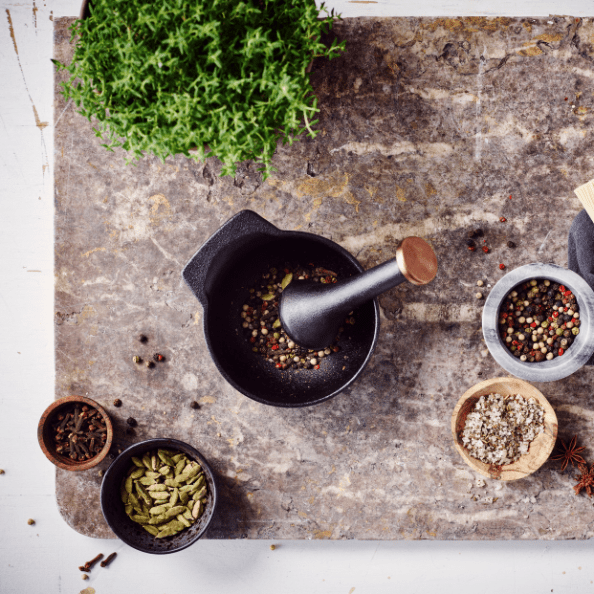
The Nori mortar & pestle is our pick for heavy crushing with zero fuss. It's a 2-cup, 4-inch-wide bowl in solid cast iron, so it has the heavyweight stability that keeps it firmly planted while you grind. The textured interior grips herbs, spices and aromatics rather than letting them slide around the bowl, and crushing whole ingredients releases the oils and flavor that pre-ground jars lost months ago. It's made without PFAS, PTFE, PFOA, lead and cadmium, and the care routine is the whole point: hand wash with warm water and mild soap, dry thoroughly, done.
It also happens to be the best cookware gift under $100 we sell — it holds the stocking-stuffer slot in our cast iron gift guide. And once it's on your counter, our guide on how to use a mortar and pestle covers the grinding, crushing and muddling techniques that make it earn its keep.
Frequently asked questions
What material is best for a mortar and pestle?
Granite and enameled cast iron are the two best materials, because both are heavy and hard enough to genuinely crush. Granite is the classic for large-batch pastes but is porous and needs an initial grinding-in; enameled cast iron matches the weight with no break-in ritual and simple wash-and-dry care. Marble is prettier but less grippy, wood absorbs odors, and porcelain chips.
What size mortar and pestle should I buy?
Aim for a bowl of about 2 cups for general cooking. That's enough capacity for pesto, guacamole or a batch of spice rub without ingredients jumping out, while staying compact enough to store easily. Go larger — 4 cups or more — only if you regularly pound big batches of curry paste.
Do you need to season a mortar and pestle before using it?
It depends on the material. Porous stone like granite (including molcajetes) should be seasoned before first use: grind wet rice and aromatics through it in batches until the rice stops turning gray with stone grit. Enameled cast iron needs no seasoning or grinding-in — just wash it and start cooking.
Is a mortar and pestle better than a blender?
For small quantities, yes. A mortar crushes and tears ingredients, rupturing cells and releasing aromatic oils, and it gives you complete control over texture — coarse, cracked or paste. A blender slices and usually needs added liquid and volume to work at all. For big batches or smooth liquids, the blender wins; for spices, garlic paste, pesto and guacamole, the mortar produces noticeably better flavor and texture.
Next up: learn the technique in how to use a mortar and pestle, or see how it stacks up against electric options in mortar and pestle vs spice grinder.


Leave a comment
This site is protected by hCaptcha and the hCaptcha Privacy Policy and Terms of Service apply.