






Best Stock Pot (2026): What Size, What Material, and Our Pick
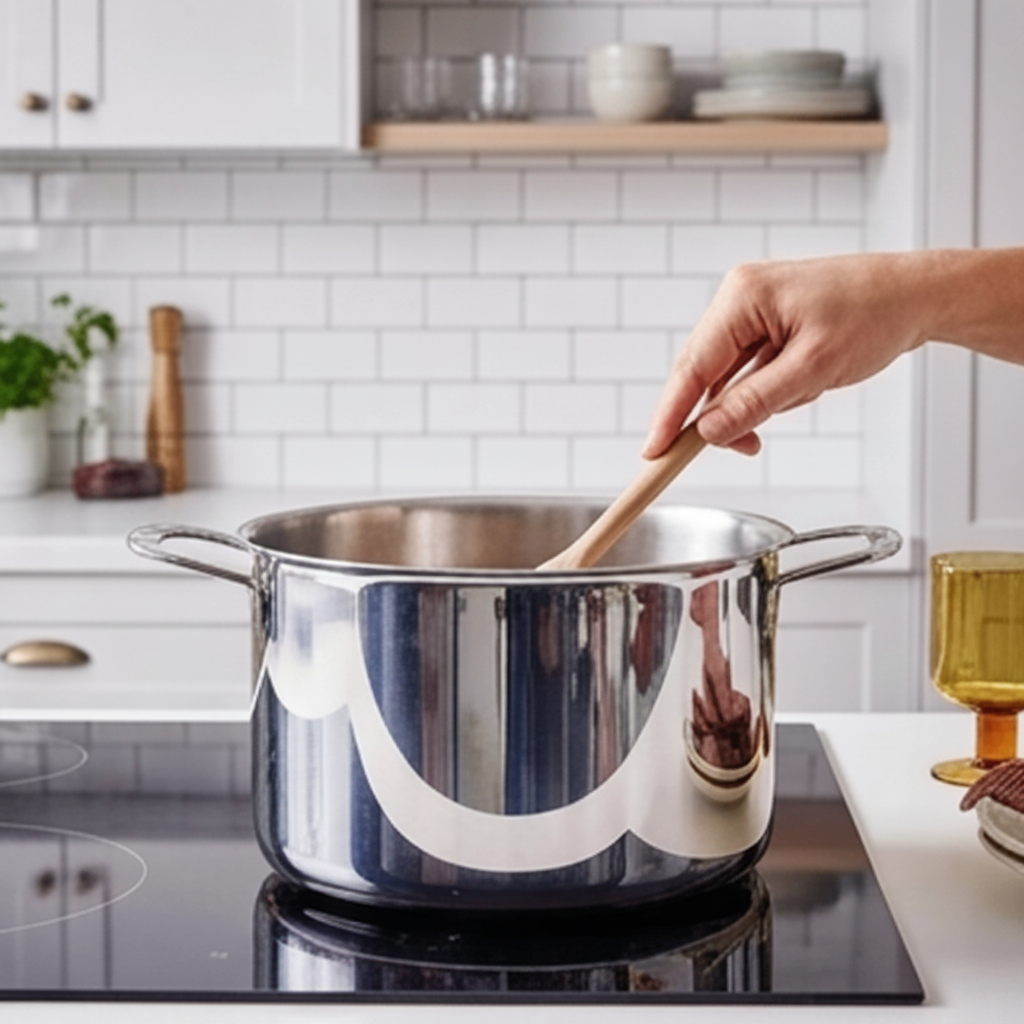
The best stock pot for most home kitchens is a 6- to 8-quart, fully clad stainless steel pot with a tight-fitting lid and riveted handles. Stainless doesn't react with tomatoes or wine, it has no coating to wear out, and a clad base keeps soups and stocks from scorching. Our pick is the Alva Maestro 5-Ply Stainless Stock Pot, 7-Qt, at $229.
A stock pot is the one piece of cookware you use at the largest scale: pasta for a crowd, a weekend batch of chili, a chicken carcass simmered into stock. That makes capacity, heat distribution and cleanup matter more than they do on a frying pan. Here's how to choose.
Independently tested. Alva publishes its third-party lab reports in full, with the lab, report number and date for each line. See the lab reports →
How big should a stock pot be?
| Capacity | Good for | Where it falls short |
|---|---|---|
| 4–5 qt | Soup for 2–4 people, a pound of pasta, small-batch sauces | Too small for bone-in stock or big-batch cooking |
| 6–8 qt | Family soups and stews, pasta, chili, a whole chicken's worth of stock | Heavy when full; needs a burner and cabinet space to match |
| 10–12+ qt | Canning, large gatherings, multi-pound seafood boils | Overkill for everyday cooking; many stovetops can't heat it evenly |
If you cook for one to four people most nights, 6 to 8 quarts is the sweet spot. It's big enough to batch-cook but still fits a standard burner and a normal cabinet. If you already own a Dutch oven for braises, our enameled cast iron Dutch oven guide explains how the two overlap and where a stock pot is the better tool.
What material is best for a stock pot?
Fully clad stainless steel is the most versatile choice. It's non-reactive, works on every cooktop including induction when the exterior is magnetic, and can be scrubbed without worrying about a coating. Layers of aluminum inside the steel spread heat up the sidewalls, not just the base, which helps when you're simmering a thick soup and don't want it catching on the bottom.
Single-layer or thin-bottom stainless is cheaper but heats unevenly. Thick soups and tomato sauces are the first things to scorch in one.
Enameled cast iron holds heat superbly and is great for braises and stews, but it's much heavier than a clad pot, which is a real drawback when you're draining a full pot of pasta.
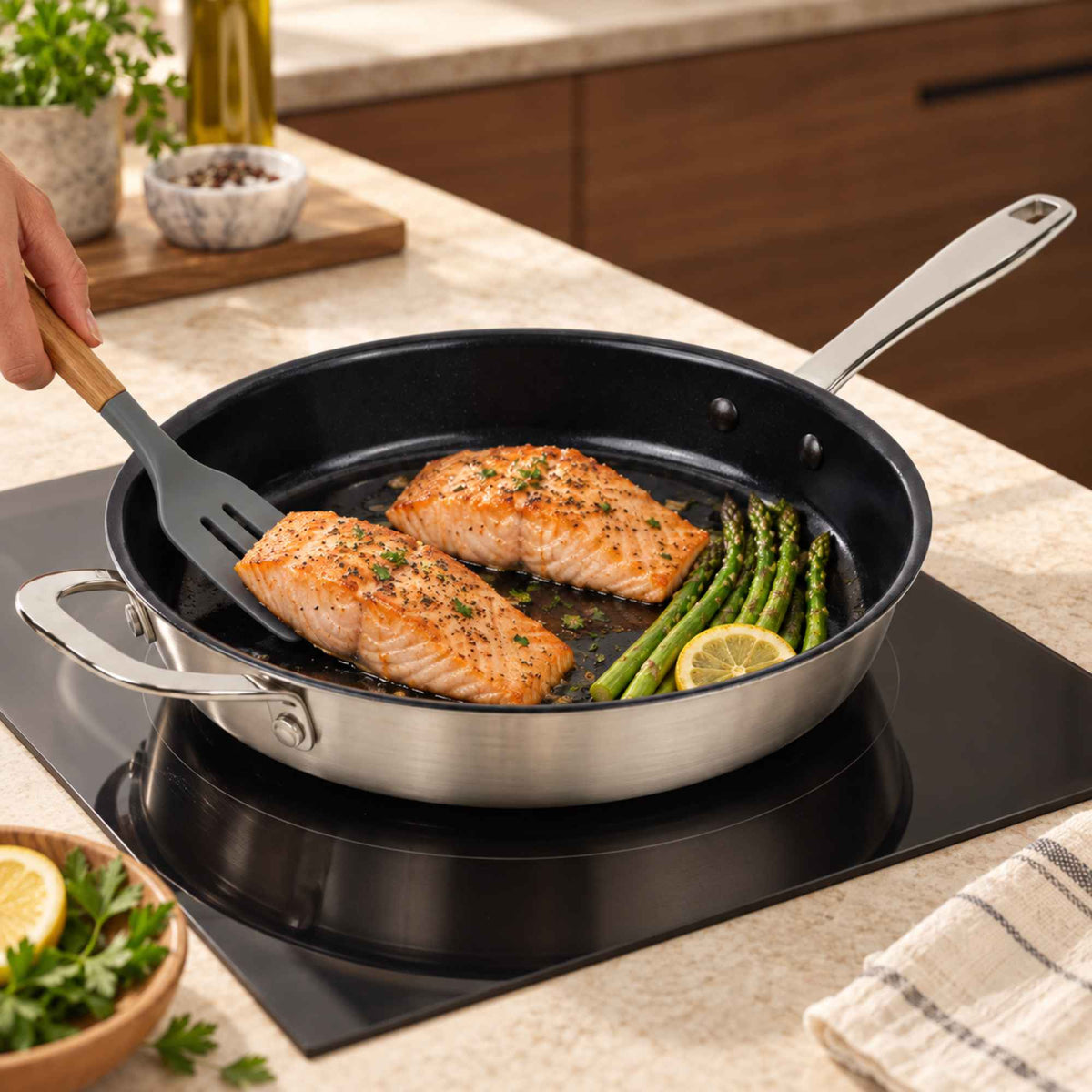
Ceramic nonstick works for light-duty soups and sauces, but it isn't what we'd choose for a high-heat boil or repeated heavy use. Alva's ceramic nonstick stock pot is oven-safe to 400°F, and its coating needs gentler care than bare stainless.
What to look for before you buy
- Clad construction through the sidewalls. Some pots are clad on the base only. Fully clad pots carry heat up the sides for steadier simmering.
- A heavy, tight-fitting lid. It holds in steam and heat and keeps liquids from evaporating during long simmers.
- Riveted handles. Full pots are heavy, and riveted handles are sturdier than welded ones. Check that both handles are comfortable to grip with oven mitts.
- Cooktop compatibility. If you have or might buy an induction range, confirm the exterior is magnetic. Our induction stainless guide explains the magnet test.
- Weight you can actually lift. A full 7-quart pot is already heavy before the food goes in, so make sure you can carry it to the sink.
Our pick: Alva Maestro 5-Ply Stainless Stock Pot, 7-Qt
The Maestro 5-Ply Stainless Stock Pot with Lid, 7-Qt is $229. It's fully clad with an aluminum core, an uncoated 18/10 stainless steel cooking surface and a magnetic stainless exterior, so it works on gas, electric, ceramic, halogen and induction cooktops. The stainless lid is included, the handles are riveted, and the pot is oven-safe to 500°F. It weighs 5.2 lbs empty. Maestro stainless carries a lifetime warranty. Free U.S. shipping over $99.
Because the cooking surface is bare steel, there's no coating to wear out over years of boiling, simmering and scrubbing. If you're building a stainless set piece by piece, the same line includes a saucepan for smaller jobs.
Where this isn't the right choice
A 7-quart stainless pot is more than you need if you cook for one or two and rarely make soup or pasta in bulk; a smaller saucepan will be easier to handle. It's also not the best pick if you want a pot for slow braises where a heavy enameled Dutch oven holds steadier low heat. And stainless isn't nonstick: sticky starches and milk-based sauces need a little attention and a proper preheat.
How to use and care for a stainless stock pot
Heat the pot before adding oil if you're sautéing aromatics, and add liquid once they've softened. Keep simmers at medium-low once a pot reaches a boil, since a clad pot holds heat well and doesn't need high flame to maintain it. For cleanup, let the pot cool before washing. Stainless is dishwasher-safe, though hand washing with a soft sponge is recommended for best long-term appearance.
Frequently asked questions
What size stock pot do I need for a family of four?
A 6- to 8-quart stock pot is the right size for most families of four. It holds a full pound of pasta with room to boil, a batch of chili or soup for leftovers, and the bones and vegetables for a pot of stock.
Is stainless steel or nonstick better for a stock pot?
Stainless steel is the better all-purpose choice for a stock pot. It tolerates high-heat boils and long simmers, works with metal utensils, and has no coating to degrade. Ceramic nonstick is easier for light-duty soups but needs gentler heat and utensils.
Can a stock pot go in the oven?
It depends on the pot. The Alva Maestro 5-Ply Stainless Stock Pot is oven-safe to 500°F. Alva's ceramic nonstick stock pot is oven-safe to 400°F. Always check the specific pot's rating, and the lid and handles too.
Will a stainless stock pot work on an induction cooktop?
Yes, if the exterior is magnetic. The Maestro 5-Ply Stock Pot has a magnetic stainless exterior and works on induction as well as gas, electric, ceramic and halogen cooktops.
What's the difference between a stock pot and a Dutch oven?
A stock pot is taller and narrower with thinner walls, built for boiling and simmering large volumes of liquid. A Dutch oven is wider, much heavier and holds heat, built for braising, baking and slow cooking. Many kitchens use both.


Leave a comment
This site is protected by hCaptcha and the hCaptcha Privacy Policy and Terms of Service apply.