






No-Knead Dutch Oven Bread (Crusty, Beginner-Proof)
This is the famous no-knead bread: four ingredients, no mixer, no kneading, and a bakery-quality crackly crust — because it bakes inside a covered Dutch oven, which traps steam and turns your home oven into a steam-injected bakery oven. If you have never baked bread before, start here. The pot does the hard part.
Total hands-on time is about 10 minutes. The dough does the rest overnight while you sleep.

Our Top Pick
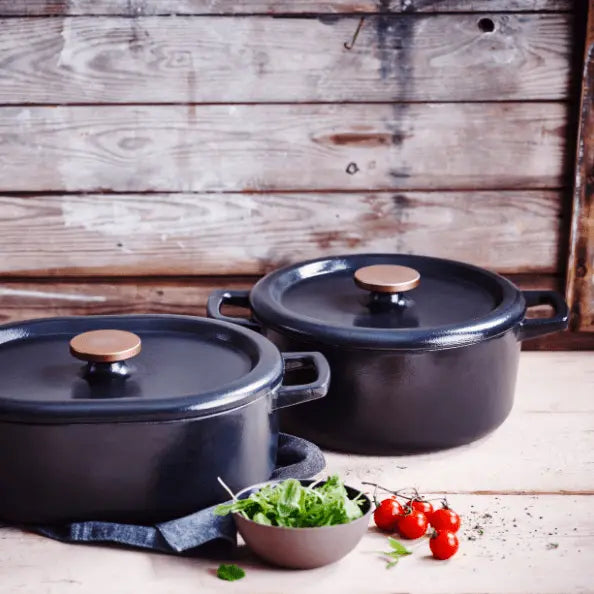
Enameled Cast Iron Round Dutch Oven, 5-Qt
Enameled cast iron holds steady heat for braises, bread, soups and one-pot meals—without seasoning—and is backed by a lifetime warranty.
Shop the Nori Dutch OvenWhy it works: the Dutch oven is the secret
Real crust needs steam. Commercial bakeries have steam-injected ovens; you have a heavy pot with a lid. As the dough bakes covered, it releases its own moisture, and the trapped steam keeps the crust soft long enough for the loaf to spring up dramatically — then you take the lid off and it browns into a deep, shattering crust. A heavy enameled cast iron Dutch oven is the ideal tool: it holds fierce, even heat and seals tightly. We use the Alva Nori 5-Qt Round Dutch Oven — the 5-quart round size fits a standard boule perfectly.
Ingredients
- 3 cups (390g) all-purpose or bread flour, plus more for dusting
- 1¼ teaspoons (7g) fine salt
- ½ teaspoon (2g) instant or active dry yeast
- 1½ cups (360ml) cool water
Instructions
- Mix (5 min). In a large bowl, whisk together the flour, salt, and yeast. Add the water and stir with a spoon until a shaggy, sticky dough forms and no dry flour remains. It will look rough — that is correct. Do not knead.
- Rest (12–18 hours). Cover the bowl with plastic wrap or a plate and leave at room temperature for 12 to 18 hours, until the surface is dotted with bubbles and the dough has more than doubled. This long, slow rise is where the flavor and structure come from.
- Shape (2 min). Scrape the dough onto a heavily floured surface. With floured hands, fold it over on itself a few times into a rough ball. Place it seam-side down on a piece of parchment paper and dust the top with flour.
- Second rise (30 min) + preheat. Let the shaped dough rest while you heat the oven. Put the empty covered Dutch oven into the oven and preheat to 450°F (230°C) for 30 minutes, so the pot is screaming hot.
- Bake covered (30 min). Carefully remove the hot pot. Lift the dough by the parchment and lower it, parchment and all, into the pot. Cover with the lid and bake for 30 minutes.
- Bake uncovered (15 min). Remove the lid and bake another 12–15 minutes, until the crust is deep golden brown. The loaf should sound hollow when tapped.
- Cool completely (1 hour). Lift the bread out and cool on a rack for at least an hour before slicing. Cutting too early makes the crumb gummy — this is the hardest step and the most important.
Tips
- Enameled cast iron needs no seasoning and the loaf lifts out cleanly on its parchment — no sticking, no scrubbing burnt flour.
- Oven-safe to 500°F, so the Nori Dutch oven handles the high preheat with room to spare.
- Weigh your flour if you can. 390g is more reliable than 3 cups, which varies a lot by how you scoop.
- For a deeper flavor, refrigerate the dough after mixing for up to 3 days, then continue from the shaping step.
The right pot makes this foolproof
Any heavy lidded pot works, but enameled cast iron is the gold standard — even heat, a tight lid, and a non-reactive interior that wipes clean. The Alva Nori 5-Qt Round Dutch Oven is induction-ready, oven-safe to 500°F, and backed by a lifetime warranty, so it is a one-and-done purchase for bread, braises like our fall-apart Dutch oven pot roast, stews, and soups. New to cast iron care? See how to clean cast iron and our cast iron guide.
Free U.S. shipping over $99.
Frequently asked questions
Do I need a Dutch oven to make no-knead bread?
A lidded, oven-safe heavy pot is what creates the steam that gives no-knead bread its crust, so yes — a Dutch oven (or any heavy covered pot rated to 450°F) is essential. Enameled cast iron is ideal because it holds even heat and seals tightly.
What size Dutch oven is best for bread?
A 5 to 6-quart round Dutch oven is ideal for a standard boule. The 5-quart Alva Nori round gives the loaf room to spring without spreading flat.
Why is my no-knead bread not rising?
The most common causes are dead yeast or too short a first rise. The dough should be visibly bubbly and more than doubled after 12–18 hours; if it isn't, your yeast may be expired or the room too cold.
Can I make this without a Dutch oven?
You can approximate it with a heavy oven-safe pot and a tight lid, or a baking stone with a pan of water for steam, but the crust won't be as good. The covered pot is what makes this recipe reliable.
More baking worth doing: moist banana bread and pumpkin bread.
Our top pickEnameled Cast Iron Round Dutch Oven, 5-QtShop now →


Leave a comment
This site is protected by hCaptcha and the hCaptcha Privacy Policy and Terms of Service apply.