






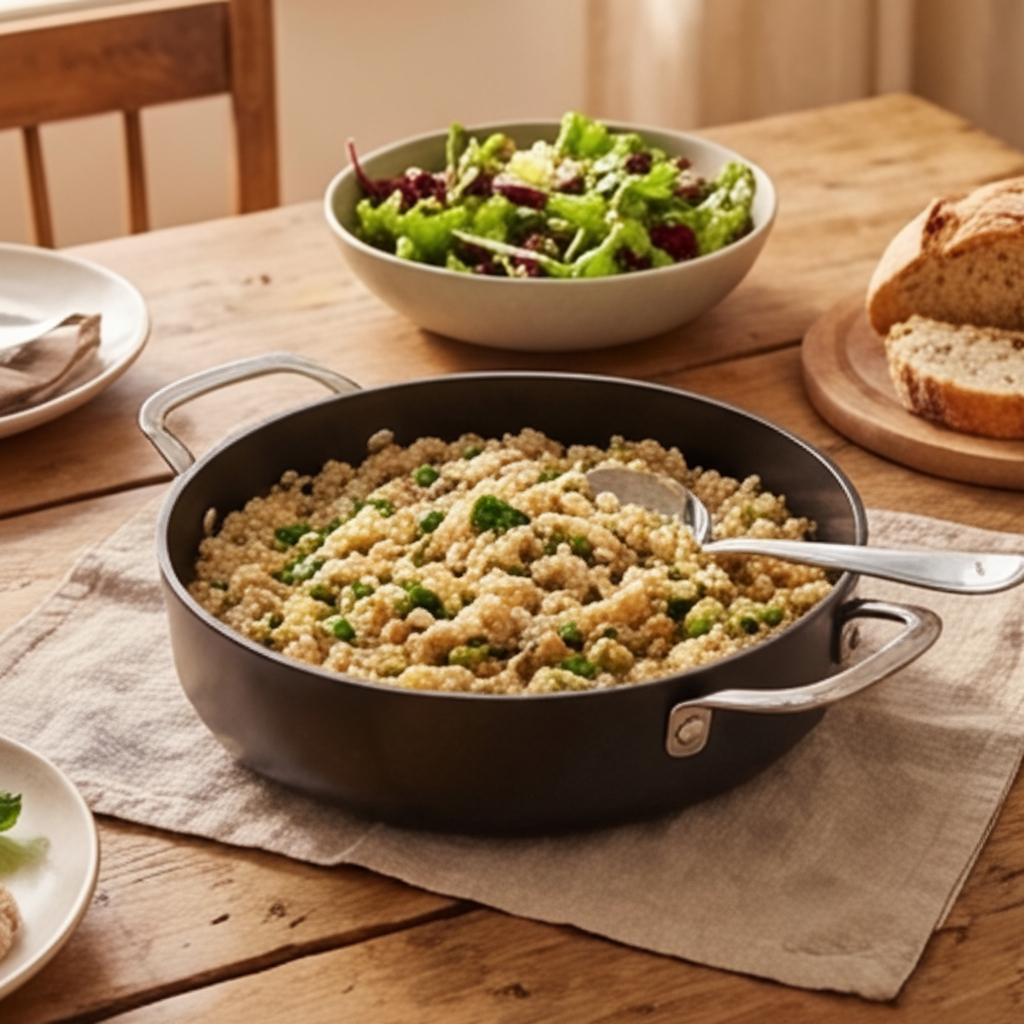
How Long Does Nonstick Cookware Last? (And How to Double It)
A cheap PTFE pan lasts one to three years. A well-made ceramic pan, treated properly, lasts three to five. An uncoated pan — stainless or carbon steel — lasts decades, because there is no coating to wear out. What decides it is not the brand: it is heat, utensils and the dishwasher, in that order. Get those three right and you roughly double the life of any coated pan.
By the Alva Cookware team · Updated September 17, 2026.
Nonstick has a reputation as a disposable product, and for most of what is sold that reputation is earned. But the failure is predictable, which means it is largely preventable. Below: honest lifespan ranges by type, exactly what destroys a coating, the five signs a pan is genuinely finished, the cost-per-year arithmetic most people never do, and what to buy when it is time.
Full guide: How to Make Ceramic Nonstick Last (and what "flaking" really means) — our complete ceramic care and durability guide.

Our Top Pick
Ceramic Nonstick Frying Pan
Easy ceramic nonstick for everyday meals. Made without PFAS, PTFE or PFOA, supported by published third-party testing, induction-ready, oven-safe to 400°F and backed by a 10-year limited warranty.
From $109
Shop the Maestro Frying PanHow long each type actually lasts
"Lasts" here means the pan still releases a fried egg with a little fat and a preheated surface. Ranges assume regular home use — several times a week — and reasonable care.
| Pan type | Realistic lifespan | What ends it | Can it be restored? |
|---|---|---|---|
| Budget PTFE (supermarket, under $30) | 1–3 years | Thin coating abrades and blisters; high heat degrades it | No |
| Premium PTFE (multi-layer, reinforced) | 3–5 years | Same failure, delayed by thicker layers | No |
| Budget ceramic (sol-gel, thin) | 1–2 years | Release fades as the silica layer breaks down under heat | No |
| Quality ceramic on a forged body | 3–5 years, often longer | Gradual loss of release; rarely flakes like PTFE | No, but it fades rather than fails suddenly |
| Carbon steel (uncoated) | Decades | Nothing — seasoning is rebuilt, not worn out | Yes, in about 20 minutes |
| Fully clad stainless (uncoated) | Decades | Warping from thermal shock, eventually | Nothing to restore — there is no coating |
The pattern is worth sitting with: every coated pan is on a clock, and every uncoated pan is not. That is the real decision, more than which brand of coating you pick. Carbon steel vs nonstick works through that trade-off in full.
What actually kills a coating
In order of how much damage they do:
- Heat. The single biggest factor. Coatings are designed for low and medium; a pan left empty on high, or used for a hard sear, degrades in months rather than years. Alva's ceramic is oven-safe to 400°F, and that is a useful mental ceiling for the stovetop too.
- Metal utensils. Every scratch is a place the coating starts to lift. Silicone, nylon or wood only — and that includes the whisk.
- The dishwasher. Detergent is abrasive and alkaline; a few cycles dull a surface that would have lasted years. Hand washing is recommended on all Alva ceramic.
- Aerosol cooking spray. The propellants and emulsifiers polymerise into a sticky varnish at temperatures below the pan's limit. It looks like the coating has failed when it is actually a layer on top of it — and it is very hard to remove. Use oil from a bottle.
- Thermal shock. A hot pan under cold water stresses the bond between coating and body, and can warp the base so it no longer sits flat.
- Stacking. Pans nested bare inside each other grind their coatings on rims. A paper towel or felt divider between them costs nothing.
Eight habits that roughly double the life
- Preheat on low to medium, never high, and never empty for more than a few seconds.
- Add a little fat — ceramic releases better with a teaspoon of oil or butter than bone dry.
- Use silicone, nylon or wood utensils, every time.
- Hand wash with a soft sponge, even when the label tolerates a dishwasher.
- Let the pan cool before rinsing.
- Skip aerosol sprays entirely.
- Store with a divider between stacked pans, or hang them.
- Keep a second, uncoated pan for searing so the coated one never has to do high heat. This is the habit that changes lifespan most.
The full cleaning routine, including how to lift baked-on residue without abrasives, is in how to clean a nonstick pan.
Five signs it is genuinely done
- Food sticks even with fat and a proper preheat. This is the functional test, and the only one that really matters.
- Visible flaking or blistering of the coating — stop using it now.
- Deep scratches you can feel with a fingernail, exposing the body underneath.
- A warped base that rocks or spins on a flat surface; oil pools at one edge and food cooks unevenly.
- A sticky film that will not wash off — usually spray buildup rather than coating failure, but if a gentle clean does not fix it, the pan's useful life is over.
Surface discolouration and faint utensil marks are not on that list. A stained pan that still releases food is a working pan.
Is a worn nonstick pan dangerous?
Honestly: a scratched coating is mostly a performance problem rather than an acute safety one. Flakes of PTFE that come off in food pass through the body inertly. The real concern with traditional PTFE is overheating — an empty pan pushed well past its rated temperature can release fumes, which is why the heat rule matters most for those pans.
The stronger reason to replace an old, unlabelled pan is that you do not know what is in it. PFOA was phased out of U.S. manufacture by 2013, but PTFE itself is a fluoropolymer — a PFAS — and older pans predate a lot of the disclosure that exists now. If you want the plain-English version, see what are PFAS, PFOA and PTFE, and is ceramic cookware safe for how sol-gel ceramic differs. Alva's ceramic is made without PFAS, PTFE or PFOA, and each coated line is independently tested by TÜV Rheinland with the reports published on our testing and materials page.
The cost-per-year math nobody does
This is the calculation that usually changes people's minds. Assume the same everyday frying pan, used several times a week:
| Pan | Price | Realistic life | Cost per year | Over 10 years |
|---|---|---|---|---|
| Supermarket PTFE pan | $25 | 2 years | $12.50 | ~$125 and five pans in landfill |
| Premium PTFE pan | $80 | 4 years | $20 | ~$200 |
| Alva Energy ceramic, 9.5" | $99 | 4–5 years | ~$22 | ~$200, PFAS-free throughout |
| Alva Maestro ceramic, 9.5" | $119 | 5+ years, 10-year warranty | ~$24 or less | ~$240 |
| Alva Maestro 5-ply stainless, 9.5" | $139 | Decades | $14 at 10 years, less after | $139 — one pan |
The cheap pan is the expensive one, and the uncoated pan is the cheapest thing in the table by year eleven. The honest catch: stainless will not cook an egg the way ceramic does, so for most kitchens the answer is one of each rather than one or the other — see stainless steel vs nonstick.
What to buy when it is time
If you want to stay with nonstick, buy a coating made without PFAS, PTFE and PFOA, on a body heavy enough not to warp, from a maker who publishes its test reports. Alva's ceramic lines are all three:
| Piece | Price | Oven | Warranty | Best for |
|---|---|---|---|---|
| Maestro Ceramic Frying Pan | $109 (8") · $119 (9.5") · $129 (11") | 400°F | 10-year | The everyday egg-and-fish pan; forged aluminum, 4.5 mm, induction base |
| Energy Ceramic Frying Pan | From $89 | Stovetop | 5-year | Recycled cast aluminum, the lightest way into PFAS-free ceramic |
| Neat Stackable Set, 5-Piece | $229 | 400°F | 5-year | Small kitchens — nests to save cupboard space, three colours |
| Ceramic Nonstick Set, 7-Piece | $425 | 400°F | 10-year | Fry pan, saucepan, sauté and stock pot with lids |
| Ceramic Nonstick Set, 9-Piece | $499 | 400°F | 10-year | Replacing a whole worn-out set at once |
All hand wash recommended, all induction-ready, all made without PFAS, PTFE or PFOA. Compare the field in best nonstick pans 2026 and best non-toxic frying pan.
Or stop replacing pans altogether
The other route is to accept a small technique change and buy something with no clock on it. A 5-ply stainless pan ($129–$149) sears better than any coated pan, is dishwasher-safe, and carries a lifetime warranty. A carbon steel pan ($99–$109) builds its own nonstick surface from seasoning and gets better with age rather than worse. Neither will match a new ceramic pan on a dry egg in week one — that is the trade. Our guide to non-toxic cookware that lasts 10+ years covers the full argument.
Frequently asked questions
How often should you replace a nonstick pan?
When it stops releasing food with fat and a proper preheat, or when the coating flakes, blisters or is deeply scratched — not on a schedule. In practice that is one to three years for a cheap PTFE pan and three to five or more for good ceramic that is hand washed and kept off high heat.
Is it safe to use a scratched nonstick pan?
A few scratches are mostly a performance problem; flakes that come off in food pass through inertly. Stop using a pan that is actively flaking or blistering, and replace old unlabelled pans, since you cannot know what coating they use. The bigger risk with traditional PTFE is overheating an empty pan, not the scratches.
Does ceramic nonstick last longer than PTFE?
A good ceramic pan on a heavy forged body, hand washed and kept on low to medium heat, will usually outlast a budget PTFE pan and match a premium one. Ceramic tends to fade gradually rather than flake. Cheap thin ceramic is the worst of both — it loses release fastest of all.
Can you restore a nonstick pan?
No. Coatings cannot be re-applied at home, and the "re-season your nonstick" advice online just leaves a layer of oil on top of a worn surface. What can be restored is a carbon steel or cast iron pan, whose seasoning is rebuilt in about twenty minutes — which is the argument for owning one.
Why did my nonstick pan stop working so quickly?
Almost always heat, metal utensils or the dishwasher. A close fourth is aerosol cooking spray, which bakes into a varnish that looks exactly like coating failure but is a layer sitting on top of it. Cook on medium, use silicone or wood, hand wash, and use oil from a bottle.
Can nonstick pans go in the dishwasher?
Even where a maker permits it, we would not. Dishwasher detergent is abrasive and alkaline and dulls a coating over repeated cycles. Alva recommends hand washing all of its ceramic nonstick; only the uncoated stainless line is genuinely dishwasher-safe for the life of the pan.
What is the longest-lasting nonstick pan?
The one you never have to sear in. A quality ceramic pan on a forged body, used only for eggs, fish and low-fat cooking on medium heat, can pass five years easily. Buy a stainless or carbon steel pan for high heat and the coated pan stops being the one that wears out.
Does a warranty cover a worn-out coating?
Generally no — warranties on coated cookware cover manufacturing defects, not wear from use, and Alva's 10-year ceramic warranty works the same way. That is worth knowing when a 10-year claim sits next to a coating that realistically performs for five.
Time to replace it? Start here
Made without PFAS, PTFE or PFOA · independently tested with the reports published · free U.S. shipping over $99.
Maestro Ceramic Frying Pan
The replacement for a worn everyday pan. Forged aluminum, 400°F, induction-ready, 10-year warranty.
From $109
Buy now
Ceramic Nonstick Set, 7-Piece
Replacing the whole worn-out set: fry pan, saucepan, 4-qt sauté and stock pot with lids.
$425 · 9-piece $499
Buy now
5-Ply Stainless Frying Pan
Done replacing pans? No coating to wear out, dishwasher-safe, 500°F, lifetime warranty.
From $129
Buy nowShop all PFAS-free nonstick → or read how to spot truly non-toxic cookware first.
Related reading: how to identify a nonstick pan and judge whether it is still safe, whether you can fry in a nonstick pan, and how long ceramic pans last.
Our top pickCeramic Nonstick Frying PanShop now →



Leave a comment
This site is protected by hCaptcha and the hCaptcha Privacy Policy and Terms of Service apply.