






Blackened Salmon Recipe (Cast Iron Crust, 15 Minutes)
This blackened salmon gets a deep, spice-charred crust and clean grill marks in about 15 minutes, no outdoor grill required. A Cajun-style spice rub caramelizes against screaming-hot cast iron ridges while the fish stays moist inside, and the ridges lift the fillets above rendered butter so the crust stays crisp instead of steaming.

Our Top Pick
Enameled Cast Iron Grill Pan, 11"
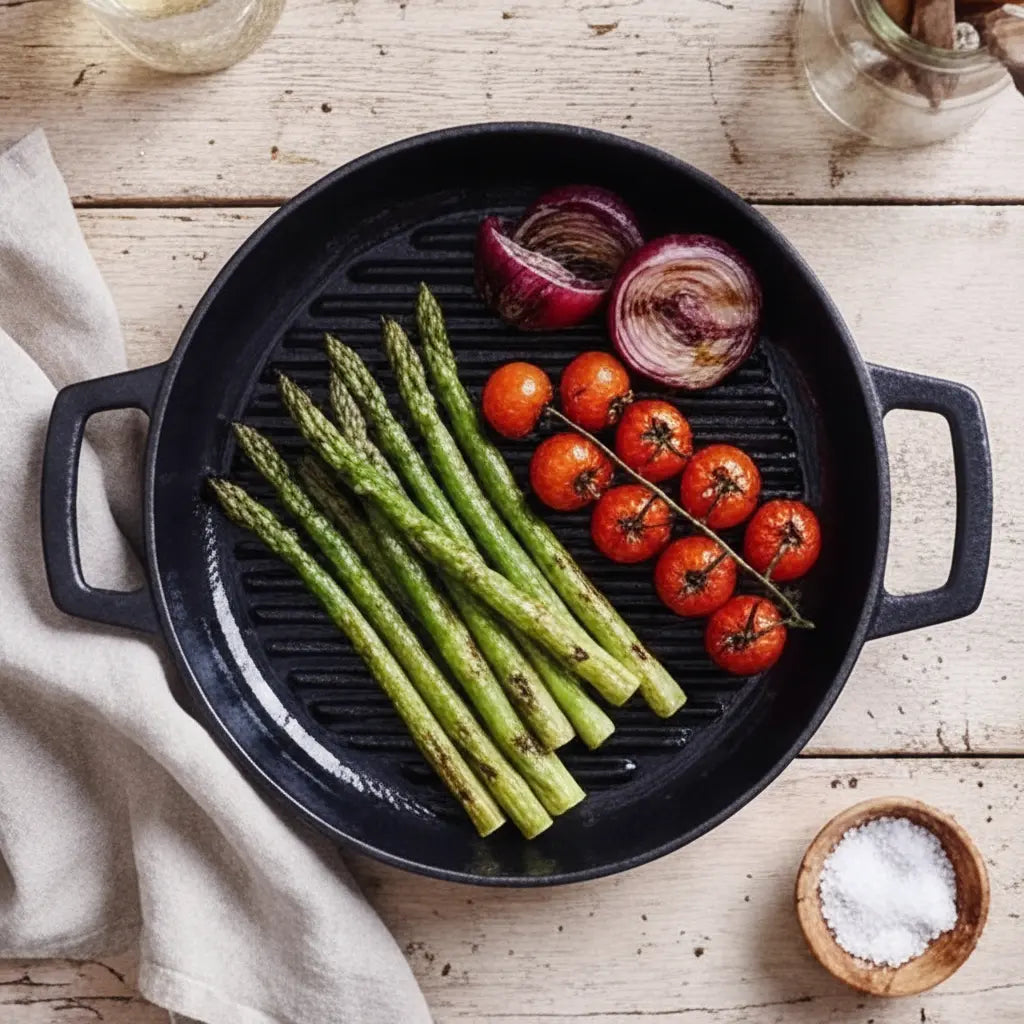
The raised ridges give you defined grill marks and lift the salmon above rendered butter so the blackened crust stays crisp. $149, with a 25-year limited warranty.
Shop the Grill PanWhy a cast iron grill pan: Real blackening depends on a pan that gets — and holds — very high, even heat, and the raised ridges do double duty by giving you defined grill marks and draining fat away from the fish. We used the Nori Enameled Cast Iron Grill Pan for this recipe. It's oven-safe to 500°F, works on induction, and the enamel surface needs no seasoning, so it's ready to go straight from the box. Free U.S. shipping over $99.
Ingredients
- 4 salmon fillets (about 6 oz each), skin removed
- 2 tbsp unsalted butter, melted
- 2 tsp smoked paprika
- 1 tsp garlic powder
- 1 tsp onion powder
- 1 tsp dried thyme
- 1/2 tsp dried oregano
- 1/2 tsp cayenne pepper (more or less to taste)
- 1/2 tsp kosher salt
- 1/4 tsp black pepper
- 1 tbsp neutral oil, such as avocado or grapeseed
- Lemon wedges, for serving
Instructions
- Pat the salmon fillets completely dry with paper towels — a dry surface is what lets the spice crust char instead of steam.
- In a small bowl, mix the smoked paprika, garlic powder, onion powder, thyme, oregano, cayenne, salt and pepper.
- Brush both sides of each fillet with melted butter, then press the spice blend evenly over all sides so it adheres.
- Set the grill pan over high heat for 4–5 minutes, until it's visibly hot (a drop of water should sizzle and skate on contact). This step matters more than any other for getting a real blackened crust.
- Add the oil and swirl to coat the ridges. Lay the fillets across the ridges at a slight angle for clean grill marks.
- Don't move the fish for 3–4 minutes, until a dark crust forms and releases easily from the ridges.
- Flip carefully and cook another 3–4 minutes, until the salmon reaches an internal temperature of 145°F at the thickest part.
- Rest for 2 minutes, then serve with lemon wedges.
Tips
- Blackening spices smoke at high heat by design — turn on your exhaust fan or crack a window before you start.
- Fully dry fish is non-negotiable here; wet fish steams the spice rub instead of charring it.
- Because enameled cast iron holds heat so evenly, you don't need to push it past high heat — medium-high is often enough once the pan is fully preheated.
- Stick to silicone, nylon or wooden utensils on the enamel surface, and let the pan cool before washing it by hand.
- New to cast iron care in general? Our guide on how to season cast iron covers the basics, though this enameled pan skips seasoning entirely.
Reach for the Nori Enameled Cast Iron Grill Pan any time you want steakhouse-style sear marks on chicken, burgers or vegetables, not just fish — it's part of our full cookware collection. If you're still deciding between grill pans, our cast iron skillet buying guide breaks down what to look for.
Frequently asked questions
What does "blackening" actually mean?
Blackening is a Cajun and Creole technique where seasoned fish or meat is seared in a very hot pan until the spice crust darkens and lightly chars. Despite the name, properly blackened food isn't burnt — it's deeply caramelized and smoky.
Can I use this recipe with other proteins?
Yes. The same spice blend and technique work well on chicken breast, shrimp or catfish — just adjust the cook time to the thickness of what you're using and confirm doneness with a thermometer (165°F for chicken).
Do I need a grill pan specifically, or will any cast iron work?
A flat cast iron skillet will still give you a great blackened crust. The ridges on a grill pan add authentic grill marks and lift the fish slightly out of any rendered butter, which helps keep the crust from going soft.
How do I know when the salmon is done?
Cook until the salmon reaches an internal temperature of 145°F at the thickest part, about 3–4 minutes per side after a dark crust has formed. Rest it for 2 minutes before serving.
Why is my kitchen so smoky, and what can I do about it?
Blackening spices smoke at high heat by design. Turn on your exhaust fan or crack a window before you start, and make sure the fish is fully dry so the rub chars instead of steams.


Leave a comment
This site is protected by hCaptcha and the hCaptcha Privacy Policy and Terms of Service apply.