






Saucepan vs Sauté Pan: What's the Difference (and Which to Buy)?
A saucepan is tall and narrow for liquid cooking - sauces, grains, and simmering. A sauté pan is wide and shallow with a big flat base for searing, browning, and braising. They look similar (both have straight sides and a lid) but do opposite jobs, and most kitchens benefit from owning both.
At a glance
- Shape: Saucepan = tall, narrow, small base. Sauté pan = wide, shallow, large base.
- Best for: Saucepan = sauces, grains, boiling, reheating. Sauté pan = searing, browning, shallow-frying, braising.
- Why the shape matters: tall sides slow evaporation (good for liquids); a wide base maximizes contact for browning.
- Handles: saucepans have one long handle; sauté pans often add a helper handle because they're heavier when full.
- Capacity feel: a 3-qt saucepan and a 3.5-qt sauté pan hold similar volume but spread it very differently.
What a saucepan does best
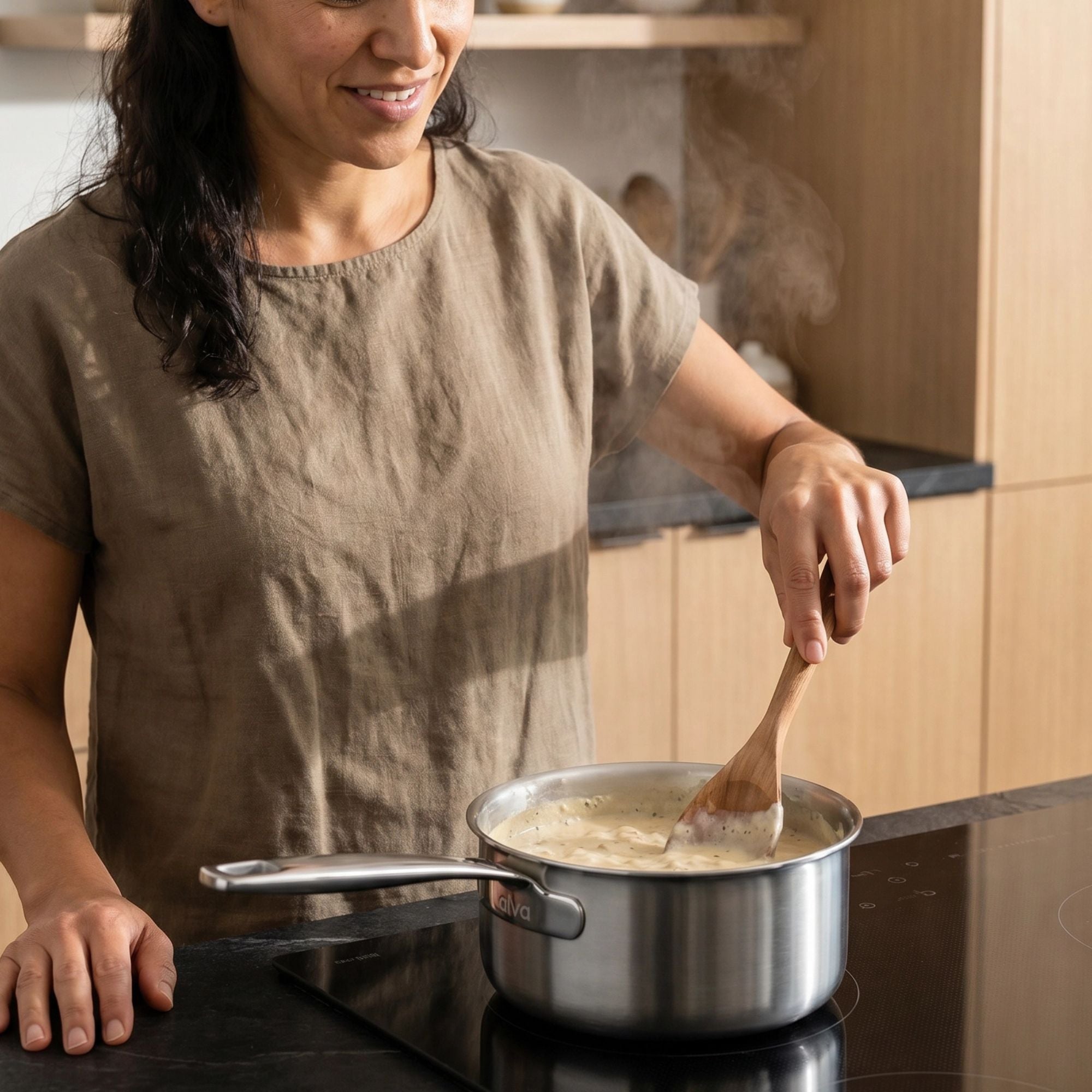
Its depth and small surface area slow evaporation, so it's ideal for anything liquid: simmering and reducing sauces, cooking rice and grains, boiling eggs or pasta portions, and reheating soup. A non-reactive, evenly heated stainless saucepan keeps acidic sauces tasting clean and won't scorch a slow reduction. (New to the format? See what is a saucepan.)

Our Top Pick
5-Ply Stainless Steel Saucepan with Lid
Fully clad 5-ply stainless steel for sauces, grains and gentle simmering. Uncoated, induction-ready and backed by a lifetime warranty.
From $139
Shop the 5-Ply SaucepanOur saucepan pick: the Maestro 5-Ply Saucepan with Lid (from $139) - fully clad stainless, vented lid, drip-free pour rim, induction-ready, lifetime warranty. If you're still weighing construction and sizes, our guide to choosing a stainless steel saucepan walks through the trade-offs.
What a sauté pan does best
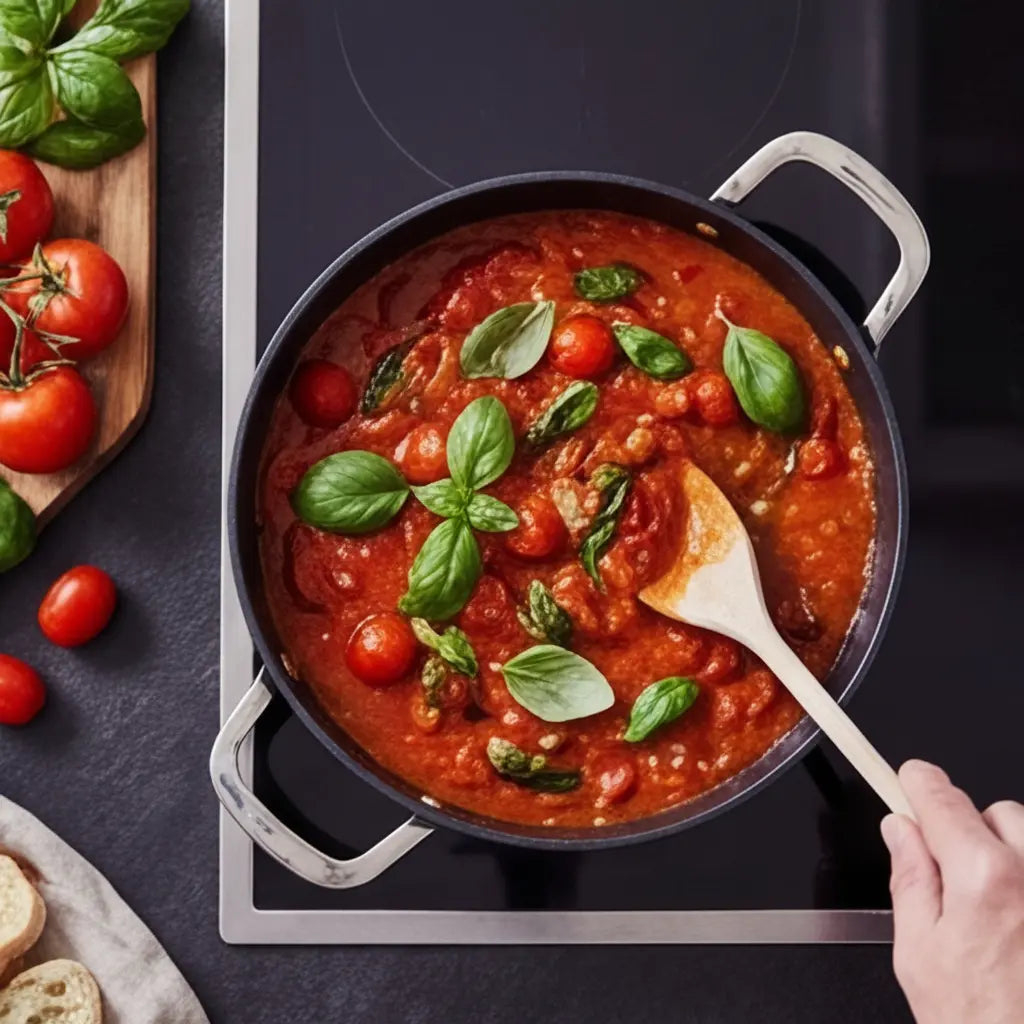
Its wide, flat base puts more food in direct contact with the heat, so it's the better tool for searing chicken, browning meat, shallow-frying, and building a one-pan braise. Those browned bits (fond) are also the start of a great pan sauce - see how to master pan sauces. Alva's stainless sauté pans live in the stainless steel collection, alongside the 5-ply frying pan.
Which should you buy?
- Buy a saucepan if you mostly make sauces, grains, oatmeal, and reheat - the everyday liquid workhorse, and the best non-toxic cookware for oatmeal.
- Buy a sauté pan if you sear proteins, shallow-fry, or make one-pan braises and skillet dinners - our sauté pan buying guide covers sizes, construction and our pick.
- Own both if you can - they cover different halves of the stovetop, and in clad stainless they'll both last a lifetime.
Frequently asked questions
What is the difference between a saucepan and a sauté pan?
A saucepan is tall and narrow with a small base, built for liquid cooking — sauces, grains, simmering. A sauté pan is wide and shallow with a large flat base, built for searing, browning and braising. Both have straight sides and a lid, which is why they get confused, but the proportions point them at opposite jobs.
Do I need both a saucepan and a sauté pan?
Most kitchens use both, because they cover different halves of the stovetop. If you can only buy one, decide by what you cook more of: liquids and grains point to a saucepan, proteins and one-pan dinners to a sauté pan.
Can a sauté pan replace a saucepan?
Partly. It will boil and simmer, but the wide base evaporates liquid much faster, so long reductions thicken before they have finished cooking and grains can dry out. For anything you want to hold at a gentle covered simmer, the saucepan shape genuinely works better.
What is the difference between a sauté pan and a frying pan?
The sides. A sauté pan has straight vertical sides and usually a lid, so it holds liquid for braising and shallow frying. A frying pan has low flared sides that let moisture escape and make it easy to slide food out — better for searing and tossing, worse for anything saucy.
Why does a sauté pan have a helper handle?
Because a full one is heavy. A 4-quart sauté pan holds a lot of liquid across a wide base, and lifting that with a single long handle puts all the weight at one end. The small loop opposite lets you carry it two-handed, which matters most moving a braise to the oven.
Which is better for a one-pan meal?
The sauté pan, comfortably. Its wide base lets you brown meat properly in one layer first — which a narrow saucepan cannot do without crowding — and then the straight sides hold enough liquid to braise everything together with the lid on.
The bottom line
Match the pan to the job: a saucepan for liquids and sauces, a sauté pan for searing and braising. Most cooks want one of each - both in fully clad stainless. See our safety standards.
Want to see both shapes side by side?
Every Alva saucepan, sauté pan and stock pot in one place, with capacities and prices — the easiest way to judge which proportions suit your cooking. Free U.S. shipping over $99.
Sauté pan recipes to try: shrimp scampi in garlic butter and skillet beef stroganoff.
Our top pick5-Ply Stainless Steel Saucepan with LidShop now →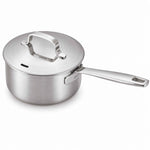


Leave a comment
This site is protected by hCaptcha and the hCaptcha Privacy Policy and Terms of Service apply.