






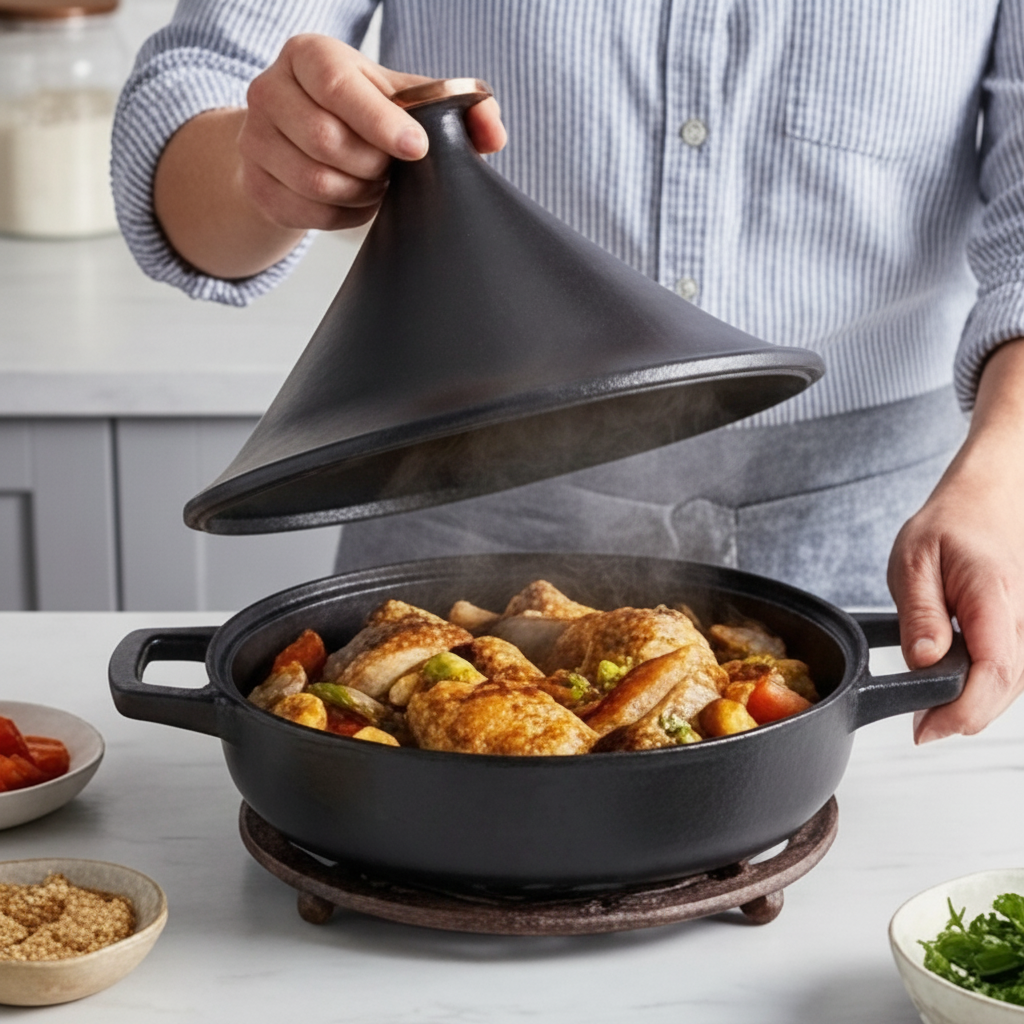
Chicken Tagine with Preserved Lemon & Olives (Classic Moroccan)
Chicken tagine with preserved lemon and olives is the classic Moroccan braise: chicken thighs marinated in garlic, ginger, and turmeric, seared right in the tagine base, then cooked over the lowest possible heat for 45–60 minutes under the conical lid — no peeking. The lid catches the steam and drips it back over the chicken, so the dish self-bastes into a silky, lemon-brightened sauce with barely half a cup of added liquid. Serve it over couscous or with crusty bread, straight from the pot.
If our Moroccan lamb tagine is the long, slow Sunday version, this chicken tagine is the one you can put on the table on a weeknight: brighter, faster, and forgiving enough for a first-timer. If you have never cooked in a tagine before, skim our step-by-step guide to using a cast iron tagine first — then come back and put it to work. Even shorter on time? Try our 30-minute version made with boneless thighs.
The pot this recipe was written for.
The Alva Nori 3-Qt enameled cast iron tagine sears on the stovetop and needs no seasoning — the conical lid does the slow-braise work for you.
Ingredients (serves 4)
- 8 bone-in, skin-on chicken thighs (about 3 pounds), trimmed of excess skin
- 1 preserved lemon — pulp scraped out and discarded, peel rinsed and cut into strips
- 1 cup green olives (Castelvetrano, Picholine, or cracked Moroccan beldi), rinsed
- 1 large yellow onion, grated or very thinly sliced
- 4 garlic cloves, minced
- 1 tablespoon grated fresh ginger (or 1 teaspoon ground ginger)
- 1 teaspoon ground turmeric
- Generous pinch of saffron threads, soaked in 2 tablespoons warm water (optional but classic)
- 1/2 cup chopped cilantro and flat-leaf parsley, plus more to finish
- 3 tablespoons olive oil, divided
- Salt and freshly ground black pepper
- 1/2 cup water or low-sodium chicken stock
A note on the two signature ingredients. Preserved lemons are whole lemons cured in salt until the peel turns soft, mellow, and intensely aromatic — it is the peel you eat, not the pulp. And the olives should be green and firm: buttery Castelvetrano is the crowd-pleaser, Picholine is sharper and more traditional-tasting. Rinse them so the brine doesn't take over the sauce.
Step 1: Marinate the chicken (at least 30 minutes)
In a large bowl, whisk together 2 tablespoons of the olive oil, the garlic, ginger, turmeric, half the chopped herbs, the saffron with its soaking water if using, a small pinch of salt, and plenty of black pepper. Add the chicken thighs and turn until every piece is coated, working the marinade under the skin where you can. Cover and marinate for at least 30 minutes at room temperature, or up to overnight in the refrigerator.
Don't skip this step. A chicken tagine cooks in about an hour, so the marinade is doing the flavor-building work that a long braise would otherwise do. Thirty minutes is genuinely the minimum; an hour or more is better. And go easy on salt here — preserved lemon and olives both bring plenty, and you can always adjust at the end.
Step 2: Sear in the tagine base
Set the tagine base over medium heat with the remaining tablespoon of oil. Because the Nori base is cast iron rather than clay, you can sear directly in it — no separate skillet to wash, no heat diffuser, and the browned bits stay in the pot where they belong. Scrape most of the marinade off the thighs (reserve it) and lay them in skin-side down. Brown for 4–5 minutes until deeply golden, then flip and give the other side 2 minutes. Work in two batches rather than crowding the pan; crowded chicken steams instead of searing. Transfer the thighs to a plate.
Step 3: Layer the tagine
Turn the heat down to low. Add the onion to the fat in the base and cook, stirring, for 4–5 minutes until soft and translucent, scraping up the browned bits as you go — that fond is the backbone of the sauce. Spread the onion into an even bed, then nestle the chicken on top, skin-side up, adding any reserved marinade and plate juices. Scatter the olives and strips of preserved lemon around and between the thighs, then pour the water or stock in around the edge — not over the chicken, so the seared skin stays intact.
It will look like far too little liquid. It isn't. A tagine is a closed loop: the conical lid condenses the rising steam and sends it back down over the food, so half a cup at the start becomes a full, glossy sauce at the end.
Step 4: Lowest heat, 45–60 minutes — and don't lift the lid
Set the conical lid in place and turn the burner to its lowest setting. Then walk away for 45 minutes. This is the hardest instruction in the recipe and the most important one: the self-basting cycle only works with the lid closed, and every peek releases the accumulated steam and sets the process back. The cast iron base holds a gentle, steady heat at a whisper of a flame, so nothing will scorch while you wait.
At 45 minutes, check once. The chicken should read at least 175°F near the bone and be close to falling off it, and the sauce should have loosened into a fragrant, golden gravy. If the thighs need more time, re-cover and give them up to 15 minutes more. If the sauce is thinner than you'd like, prop the lid slightly ajar for the last 5–10 minutes to let it reduce. Off the heat, taste and adjust the salt, then shower the whole pot with the remaining cilantro and parsley.
How to serve it
Two classic routes. Pile fluffy couscous into shallow bowls and spoon the chicken, olives, and sauce over the top — the grains drink up the lemony braising liquid. Or do it the Moroccan way: set the tagine base in the middle of the table with a stack of warm crusty bread or flatbread and let everyone tear, scoop, and swipe. The base doubles as a serving dish and keeps the food hot at the table, and the 3-quart size comfortably feeds four with this recipe. A simple cucumber-tomato salad on the side is all it needs.
Tips, swaps, and troubleshooting
- No preserved lemon? Stir together the finely grated zest of 1 lemon with 1/2 teaspoon of salt, let it sit for 10 minutes, and add it with a squeeze of juice at the end of cooking. It won't have the fermented depth of the real thing, but it lands in the same bright, salty-citrus place.
- No tagine? A Dutch oven works. Follow the exact same steps — sear, layer, lid on, lowest heat — but add an extra 1/4 cup of liquid, since a flat lid returns less moisture than a cone. See our full tagine vs Dutch oven comparison for how the two pots differ.
- Sauce too salty? The fix is dilution, not surgery: a splash of water and a squeeze of fresh lemon rebalances it in a minute.
- Deeper color? Some cooks add 1/2 teaspoon of sweet paprika or a small cinnamon stick with the onions. Both are traditional in some households; neither is required.
- Acidic ingredients are fine. The enamel surface is non-reactive, so the lemon and olive brine won't pick up any metallic taste — one of the quiet advantages over bare cast iron.
Frequently asked questions
Can I use chicken breast instead of thighs?
You can, but thighs are strongly recommended. Bone-in thighs stay juicy through an hour of braising; breasts dry out and turn stringy. If breast is all you have, use bone-in pieces and start checking at 30 minutes — pull them the moment they reach 160°F.
I don't have a tagine — what can I substitute?
A Dutch oven is the best stand-in: same searing, same layering, same lowest-heat braise, just with an extra splash of liquid to make up for the flat lid. A deep, heavy skillet with a tight lid also works in a pinch. What doesn't work is a thin, lightweight pot — at very low heat it develops hot spots and scorches the onions.
Can I make chicken tagine ahead?
Yes — like most braises it's arguably better the next day, once the preserved lemon has mellowed into the sauce. Cool it, refrigerate for up to 3 days, and reheat gently, covered, over low heat with a splash of water. Add the fresh herbs after reheating, not before storing.
What olives are best for chicken tagine?
Firm green olives: Castelvetrano for a buttery, mild flavor, Picholine or cracked Moroccan beldi for something sharper and more traditional. Avoid canned black olives — they turn mushy and flat in a braise. Rinse whichever you use so the brine doesn't over-salt the sauce.
Once this one is in your rotation, go deeper: try the traditional Moroccan lamb tagine next, and keep our tagine how-to guide bookmarked for heat and care basics.


Leave a comment
This site is protected by hCaptcha and the hCaptcha Privacy Policy and Terms of Service apply.