






Porterhouse Steak: What It Is, And How to Cook It
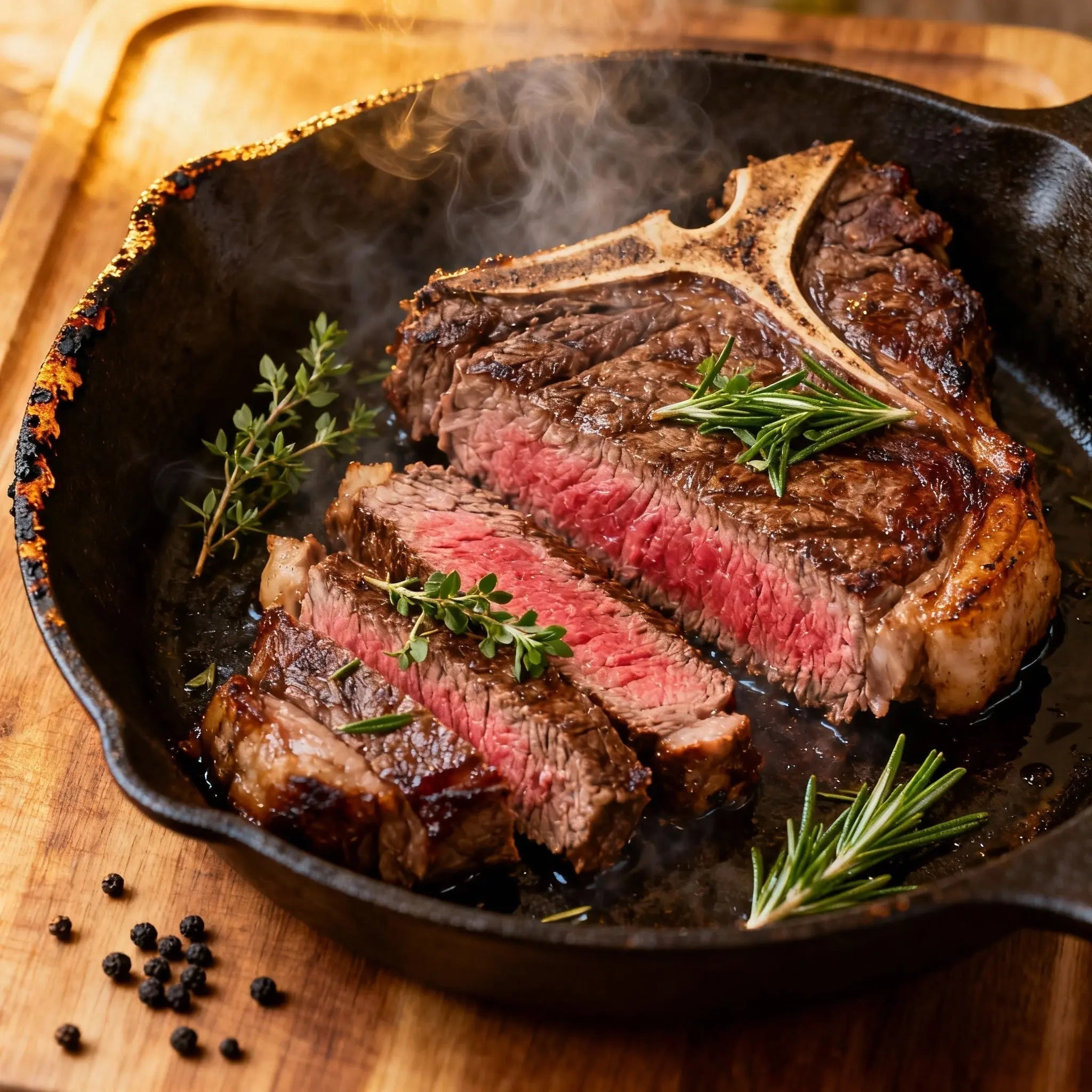
A perfectly seared Porterhouse hits the pan and the kitchen fills with that sizzle. The crust darkens to mahogany while the interior stays pink and warm. One bite and you know why this cut commands respect.
The tenderloin side melts on your tongue. The strip side delivers that beefy punch. Two steaks on one bone. That's the Porterhouse.

Our Top Pick
Black Angus Carbon Steel Frying Pan
Uncoated, pre-seasoned carbon steel built for high-heat searing. Oven-safe to 500°F, induction-ready and backed by a lifetime warranty.
Shop the Black AngusMost people know about it but never cook one at home. They assume it belongs only in steakhouses. Wrong. This cut is straightforward if you understand the technique.
This guide walks through what makes it special. How it differs from T-bone and exactly how to cook it perfectly using cast iron or a grill. By the end, you'll have mastered the technique that separates good from exceptional.
What Is a Porterhouse Steak?
The Porterhouse comes from the rear end of the short loin. Premium section. Tender meat. What makes it special is the composition.
On one side sits the tenderloin, also called filet mignon. The other side is the strip steak, also known as New York strip. A T-shaped bone separates them both and connects to the spine.

The USDA has a specific definition. The tenderloin section must be at least 1.25 inches wide. Anything narrower gets called a T-bone. This distinction matters because you're paying for that larger tenderloin.
Texture delivers two experiences:
-
Tenderloin side is incredibly tender, almost buttery
-
Strip side is firmer and more substantial, beefy flavor
-
Together they create balance
-
You get delicate richness alongside bold intensity
Portion size reflects the cut's prestige. Most Porterhouses weigh 16 to 24 ounces. Perfect for sharing or for someone with a serious appetite.
Porterhouse vs T-Bone: What's the Difference?
Many people confuse Porterhouse and T-bone steaks. They're similar but not the same thing. Both come from the short loin. Both have that iconic T-shaped bone. But the Porterhouse is the premium version.

|
Feature |
Porterhouse |
T-Bone |
|
Tenderloin Size |
1.25+ inches |
Less than 1.25 inches |
|
Portion Size |
16-24 oz |
12-16 oz |
|
Price |
Premium, higher |
Moderate |
|
Best For |
Two people or big appetites |
Single generous serving |
|
Cooking |
Sear-then-oven or grill |
Both methods work |
The main difference is size. A Porterhouse has a larger tenderloin portion. More of that buttery texture. A T-bone is smaller and slightly cheaper. Want maximum tenderloin experience? Porterhouse wins. Want pure beef flavor without much tenderness? T-bone works fine.
Both offer balance. But the Porterhouse reigns supreme for steak lovers because it delivers more premium cut.
How to Cook Porterhouse Steak
Preparing the Steak
Start with thick-cut. Look for 1.5 to 2 inches. Thin steaks don't give you control. The outside burns before the inside cooks.
Before we dive deeper into cooking methods, it's helpful to understand how different cuts behave in the pan — especially when you're working with substantial, multi-texture cuts like the Porterhouse. If you enjoy hearty, family-style beef dishes, you may also like exploring this classic home made beef lasagne recipe , which showcases how proper layering, heat distribution, and cookware choice affect richness and tenderness.
Remove from the fridge 30 to 40 minutes before cooking. Room temperature meat cooks evenly. Cold steak shocked by high heat creates uneven results.
Pat completely dry. Moisture prevents proper searing. Season generously:
-
Kosher salt on both sides
-
Black pepper on both sides
-
Don't be timid with seasoning
-
This cut deserves bold flavor
Optional: add a dry rub or light coat of olive oil for depth.
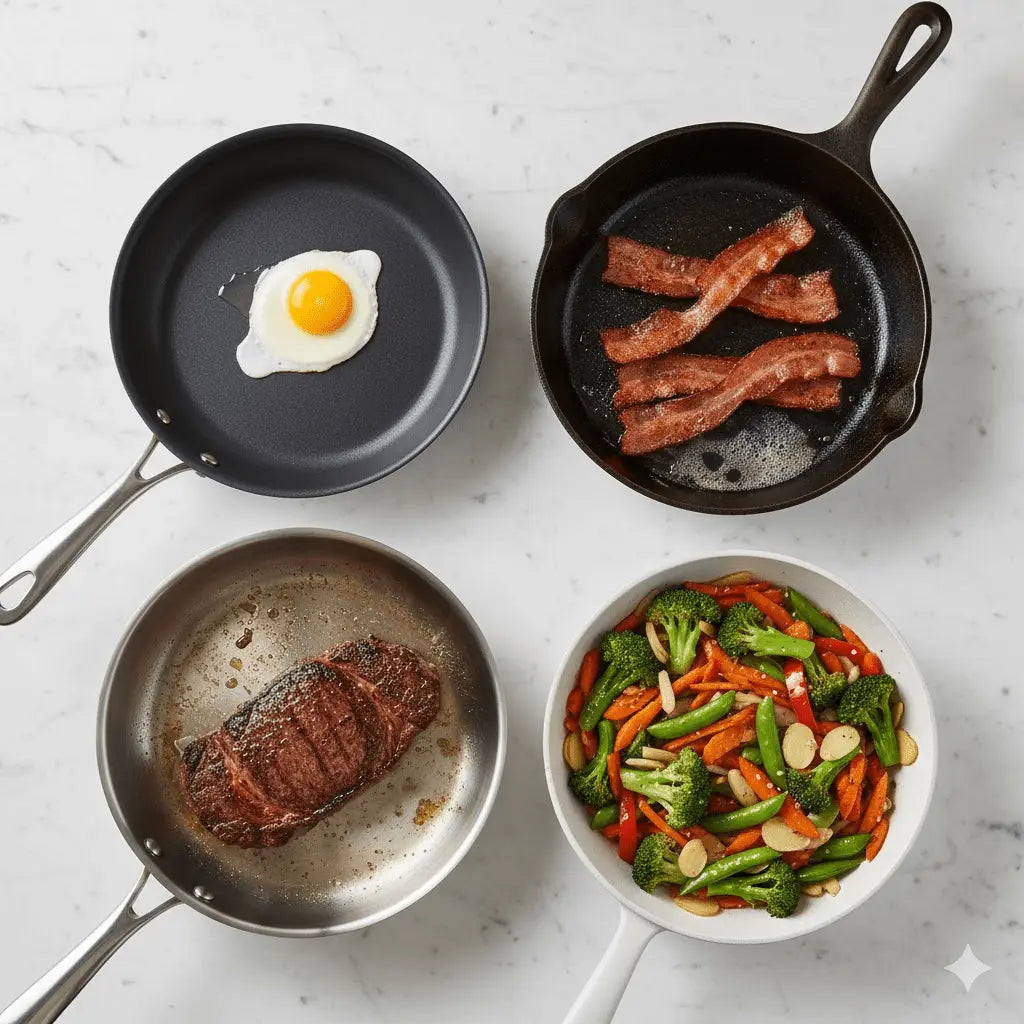
Best Pan for Searing Steak
Cast iron and carbon steel are the best choices, and the Black Angus Carbon Steel Frying Pan covers both halves of this recipe: it takes a hard sear on the stovetop and it is oven-safe to 500°F, so the same pan goes straight into the oven to finish. Our guide to the best steak pan walks through the alternatives.
Stainless steel works but doesn't retain heat consistently. Gets hot fast but cools when the steak touches it. Makes it harder to get proper sear.
Preheat the pan for 5 to 10 minutes. You want it smoking. If you're not seeing smoke, it's not hot enough.
Searing and Cooking Method
When you cook Porterhouse steak, place it in the hot pan. Don't move it. Resist the urge to flip. Let it sear for 2 to 3 minutes on the first side. You're building the crust that holds juices and adds flavor.
Pan matters more than technique here. We use the Black Angus carbon steel pan; give it a full 3 minutes on high before the steak goes in.
Flip once. Sear the other side for 2 to 3 minutes.
Transfer to a 400-degree oven. The oven surrounds with heat while the pan keeps the bottom searing. Cook for 2 to 5 minutes depending on thickness and desired doneness.
While the steak finishes, add to the pan:
-
2 tablespoons butter
-
Crushed garlic
-
Fresh thyme or rosemary
Tilt the pan and baste continuously. That brown butter coats the meat and adds richness. This is the steakhouse technique.
Remove and rest for 5 to 10 minutes. The muscle fibers relax and reabsorb the juices. Cut too early and juice runs onto your plate instead of staying in the meat.
Grilling Option
Use the two-zone method. One side direct high heat. One side empty for indirect heat.
Sear over direct heat for 2 to 3 minutes per side. Then move to indirect heat and cook until temperature is right. This prevents burning outside while inside catches up.
Porterhouse Steak Temperature and Doneness Guide
Getting the Porterhouse steak temperature right separates mediocre from perfect. The Porterhouse steak doneness challenge is unique.
The tenderloin is thinner and more delicate. It can overcook quickly. The strip side takes longer. Understanding this helps you cook both sides properly.
Use a meat thermometer. Insert horizontally into the thickest part, away from bone and fat.

Doneness levels:
-
Rare: 120-125°F, cold red center
-
Medium-Rare: 130-135°F, pink center with warmth (ideal level)
-
Medium: 140-145°F, some pink, mostly warm
-
Medium-Well: 150-155°F, just a hint of pink
-
Well-Done: 160°F+, no pink (skip this with Porterhouse)
Aim for medium-rare. The tenderloin stays buttery. The strip stays flavorful. Nothing is wasted.
Porterhouse Steak Recipe
This Porterhouse steak recipe uses a butter-basted skillet method that steakhouses use. You're mimicking their technique but controlling the quality.

Ingredients:
-
1 large Porterhouse steak (1.5 to 2 inches thick)
-
2 tablespoons olive oil
-
2 tablespoons butter
-
3 garlic cloves, crushed
-
Fresh rosemary or thyme
-
Kosher salt and black pepper
Instructions:
-
Pat steak completely dry with paper towels
-
Season both sides generously with salt and pepper
-
Let sit for 5 minutes so seasoning adheres
-
Heat the skillet over high heat for 5 to 10 minutes until smoking
-
Add olive oil (should shimmer immediately)
-
Place steak in pan without moving it
-
Sear for 2 to 3 minutes (let the crust develop)
-
Flip and sear the other side for 2 to 3 minutes
-
Transfer to 400-degree oven
-
Add butter and crushed garlic to the pan
-
Tilt pan and continuously baste steak with foaming brown butter for 2 to 5 minutes
-
Remove steak and rest on warm plate for at least 5 minutes
-
Slice perpendicular to the bone
-
Serve immediately with pan drippings spooned over top
Serve with mashed potatoes or roasted vegetables to complement the richness.
Expert Tips for Perfect Porterhouse Steak
Dry-brine overnight if you have time. Salt the steak, leave it uncovered in the fridge overnight, then cook it the next day. Salt breaks down proteins and makes the meat more tender and flavorful.
Use carbon steel, cast iron or grill pans. These create surface contact needed for real sear marks and crust development. Non-negotiable for premium cuts.
Always rest the steak. Five to ten minutes minimum. This isn't optional. Rushed steak loses juice onto the plate instead of staying in the meat.
Slice perpendicular to the bone. Preserves juiciness and presentation. Cutting parallel shreds the meat and lets juice escape.

Common mistakes to avoid:
-
Don't overcook the tenderloin side out of fear (it's delicate and forgiving at medium-rare)
-
Don't skip the rest period trying to serve immediately
-
Don't under-season because you think quality beef doesn't need help (it does)
-
Don't use thin cuts (they cook unevenly)
-
Don't move the steak while searing (ruins the crust)
Mastering the King of Steaks
The Porterhouse stands out because it delivers two distinct experiences in one piece. Tenderness and beef flavor. Elegance and substance.
Mastering it at home is straightforward with proper technique and temperature control. The stovetop-to-oven method works better than anything else. An oven-safe carbon steel or cast iron pan ensures proper crust. The rest period ensures juiciness. These techniques are simple but they matter.
Try this Porterhouse steak recipe tonight and taste why it's called the king of steaks. Once you nail the Porterhouse steak cooking technique, you'll cook at home more and order steak less.
A quality carbon steel or cast iron skillet makes all the difference when you're searing at high temperatures. Explore our cast iron and stainless steel cookware collections to find the best pan for searing steak and elevate every meal.
Need a pan that holds searing heat?
Compare every Alva searing pan side by side — carbon steel, cast iron and stainless, all uncoated, with sizes and weights in one place. Free U.S. shipping over $99.
Picking a steak pan? See the best carbon steel pans and the best cast iron skillets.
Frequently asked questions
What is the difference between a porterhouse and a T-bone?
Both come from the short loin with a T-shaped bone; a porterhouse must have a tenderloin section at least 1.25 inches wide — it's the bigger, two-steaks-in-one cut.



1 comment
Why TF you got a bone ribeye labeled porterhouse, quality Internet misinformation
Actual meat cutter
Leave a comment
This site is protected by hCaptcha and the hCaptcha Privacy Policy and Terms of Service apply.