






Saucepan vs Sauté Pan: What's the Difference (and Which to Buy)?
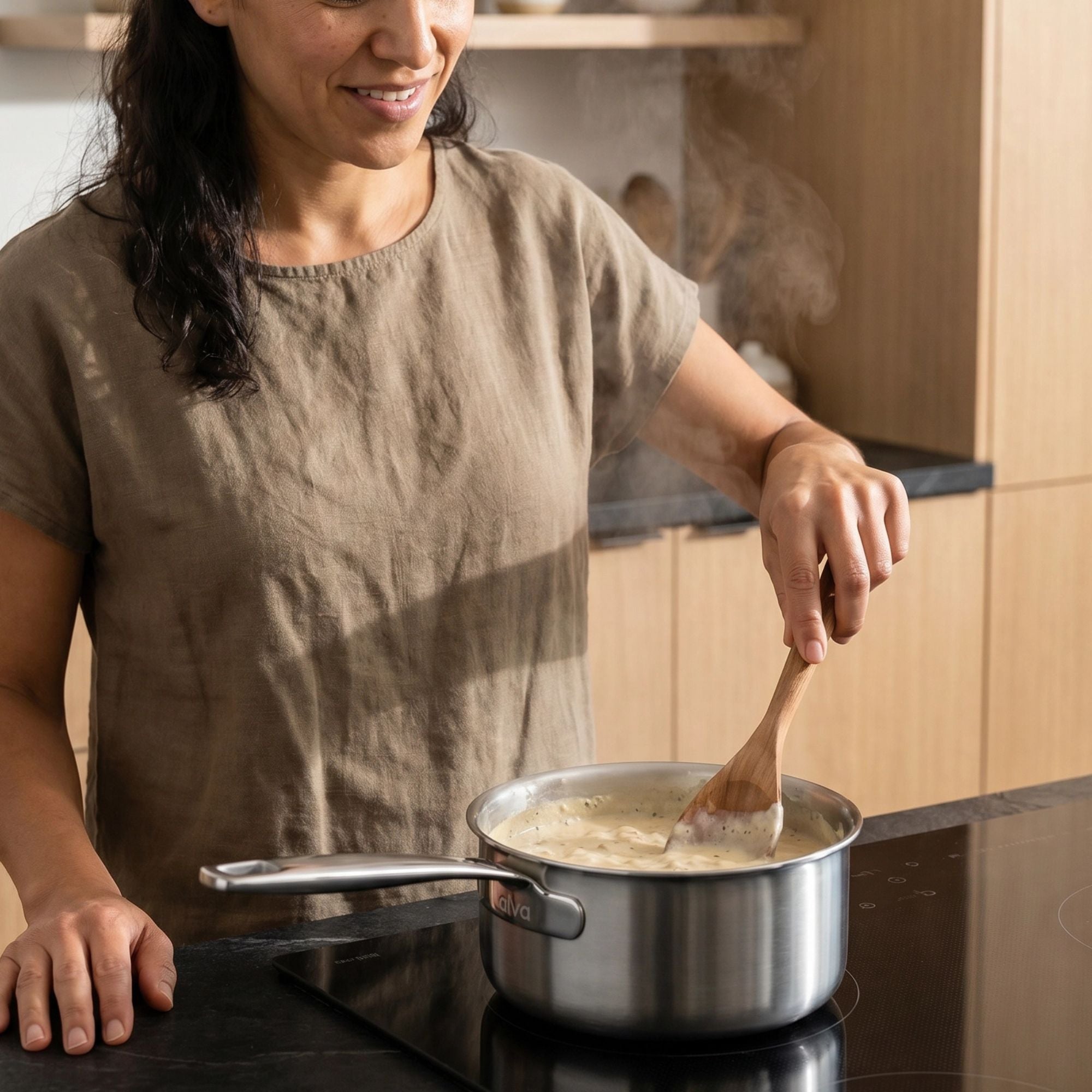
A saucepan is tall and narrow for liquid cooking - sauces, grains, and simmering. A sauté pan is wide and shallow with a big flat base for searing, browning, and braising. They look similar (both have straight sides and a lid) but do opposite jobs, and most kitchens benefit from owning both.
At a glance
- Shape: Saucepan = tall, narrow, small base. Sauté pan = wide, shallow, large base.
- Best for: Saucepan = sauces, grains, boiling, reheating. Sauté pan = searing, browning, shallow-frying, braising.
- Why the shape matters: tall sides slow evaporation (good for liquids); a wide base maximizes contact for browning.
- Handles: saucepans have one long handle; sauté pans often add a helper handle because they're heavier when full.
- Capacity feel: a 3-qt saucepan and a 3.5-qt sauté pan hold similar volume but spread it very differently.
What a saucepan does best
Its depth and small surface area slow evaporation, so it's ideal for anything liquid: simmering and reducing sauces, cooking rice and grains, boiling eggs or pasta portions, and reheating soup. A non-reactive, evenly heated stainless saucepan keeps acidic sauces tasting clean and won't scorch a slow reduction. (New to the format? See what is a saucepan.)

Our Top Pick
5-Ply Stainless Steel Saucepan with Lid
Fully clad 5-ply stainless steel for sauces, grains and gentle simmering. Uncoated, induction-ready and backed by a lifetime warranty.
From $139
Shop the 5-Ply SaucepanOur saucepan pick: the Maestro 5-Ply Saucepan with Lid (from $139) - fully clad stainless, vented lid, drip-free pour rim, induction-ready, lifetime warranty. If you're still weighing construction and sizes, our guide to choosing a stainless steel saucepan walks through the trade-offs.
What a sauté pan does best
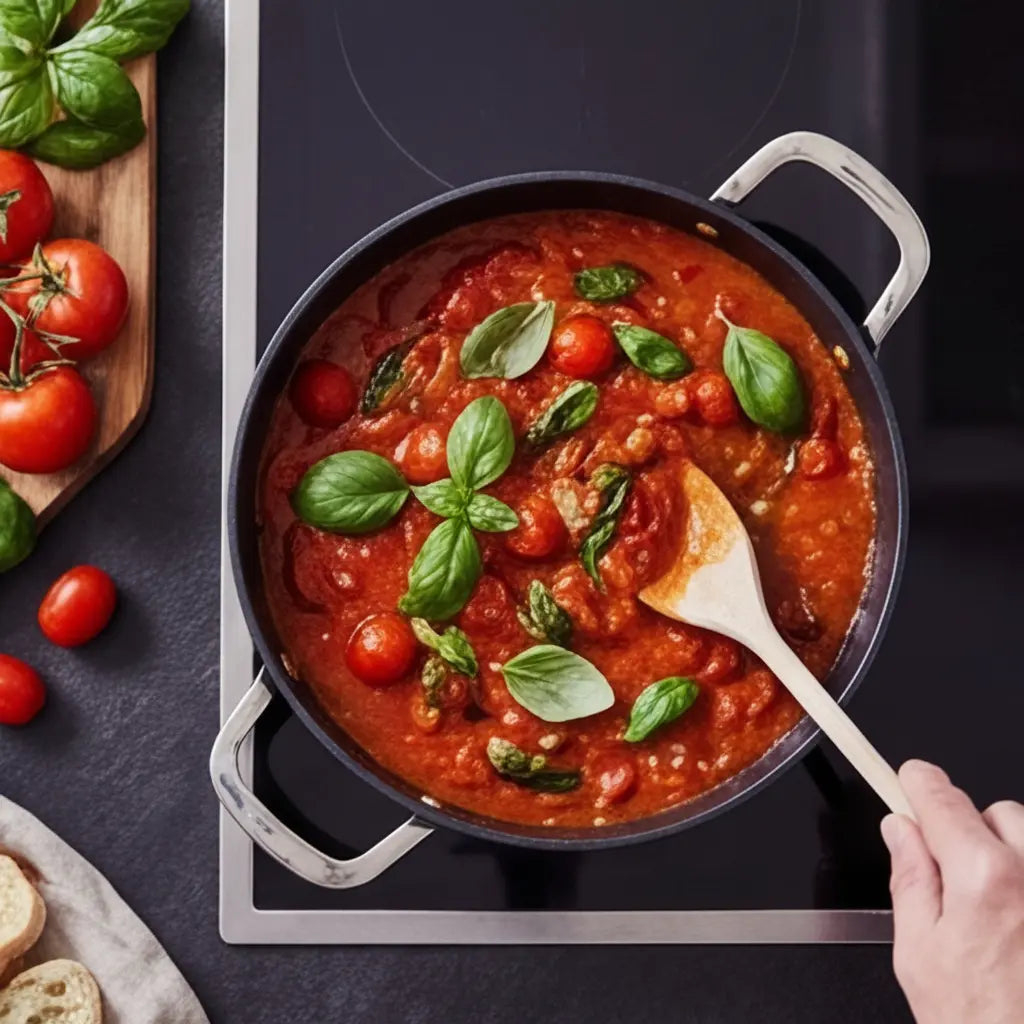
Its wide, flat base puts more food in direct contact with the heat, so it's the better tool for searing chicken, browning meat, shallow-frying, and building a one-pan braise. Those browned bits (fond) are also the start of a great pan sauce - see how to master pan sauces. Alva's stainless sauté pans live in the stainless steel collection, alongside the 5-ply frying pan.
Which should you buy?
- Buy a saucepan if you mostly make sauces, grains, oatmeal, and reheat - the everyday liquid workhorse, and the best non-toxic cookware for oatmeal.
- Buy a sauté pan if you sear proteins, shallow-fry, or make one-pan braises and skillet dinners.
- Own both if you can - they cover different halves of the stovetop, and in clad stainless they'll both last a lifetime.
Frequently asked questions
What's the difference between a saucepan and a saute pan?
A saucepan is tall and narrow with high straight sides for liquid cooking - sauces, grains, simmering. A saute pan is wide and shallow with a large flat base for searing, browning, and braising. Same straight sides, very different jobs.
Do I need both a saucepan and a saute pan?
For most kitchens, yes - they do different things. Use a saucepan for sauces, grains, and reheating; a saute pan for searing, shallow-frying, and one-pan braises. If you can only buy one, choose based on whether you cook more liquids or more proteins.
Can a saute pan replace a saucepan?
Partly - a saute pan can boil and simmer, but its wide base evaporates liquid faster, so it's less ideal for long reductions, grains, or anything you want to keep at a gentle simmer with the lid on.
The bottom line
Match the pan to the job: a saucepan for liquids and sauces, a sauté pan for searing and braising. Most cooks want one of each - both in fully clad stainless. See our safety standards.
Saute pan recipes to try: shrimp scampi in garlic butter and skillet beef stroganoff.
Our top pick5-Ply Stainless Steel Saucepan with LidShop now →


Laisser un commentaire
Ce site est protégé par hCaptcha, et la Politique de confidentialité et les Conditions de service de hCaptcha s’appliquent.