






Care & Cleaning
Caring for Your Ceramic Cookware
Use On Low to Medium Heat Only
Stovetop Agnostic
400°F Max Oven Heat
Handwash Only
Quick Tips for Cooking in Ceramic Nonstick Cookware
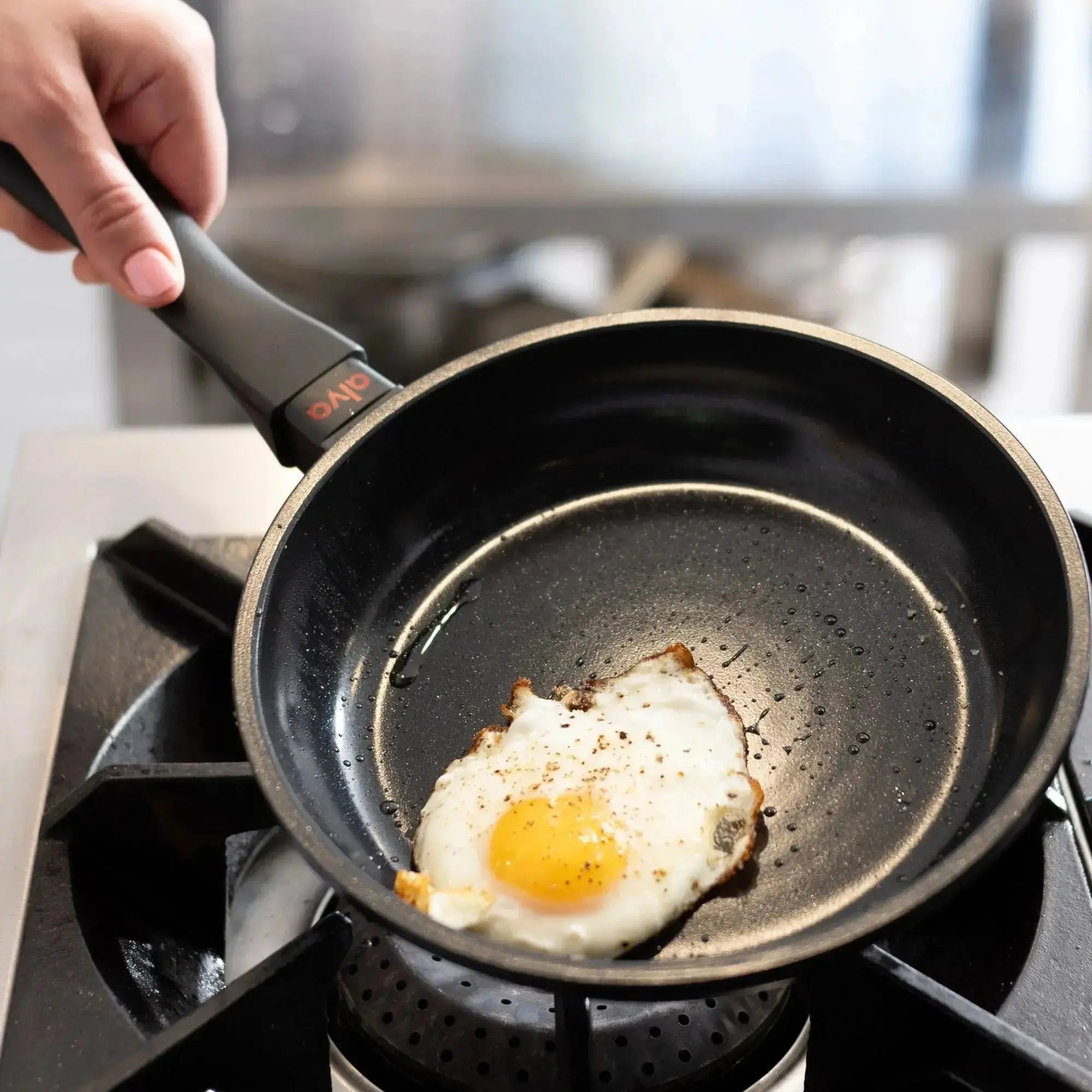
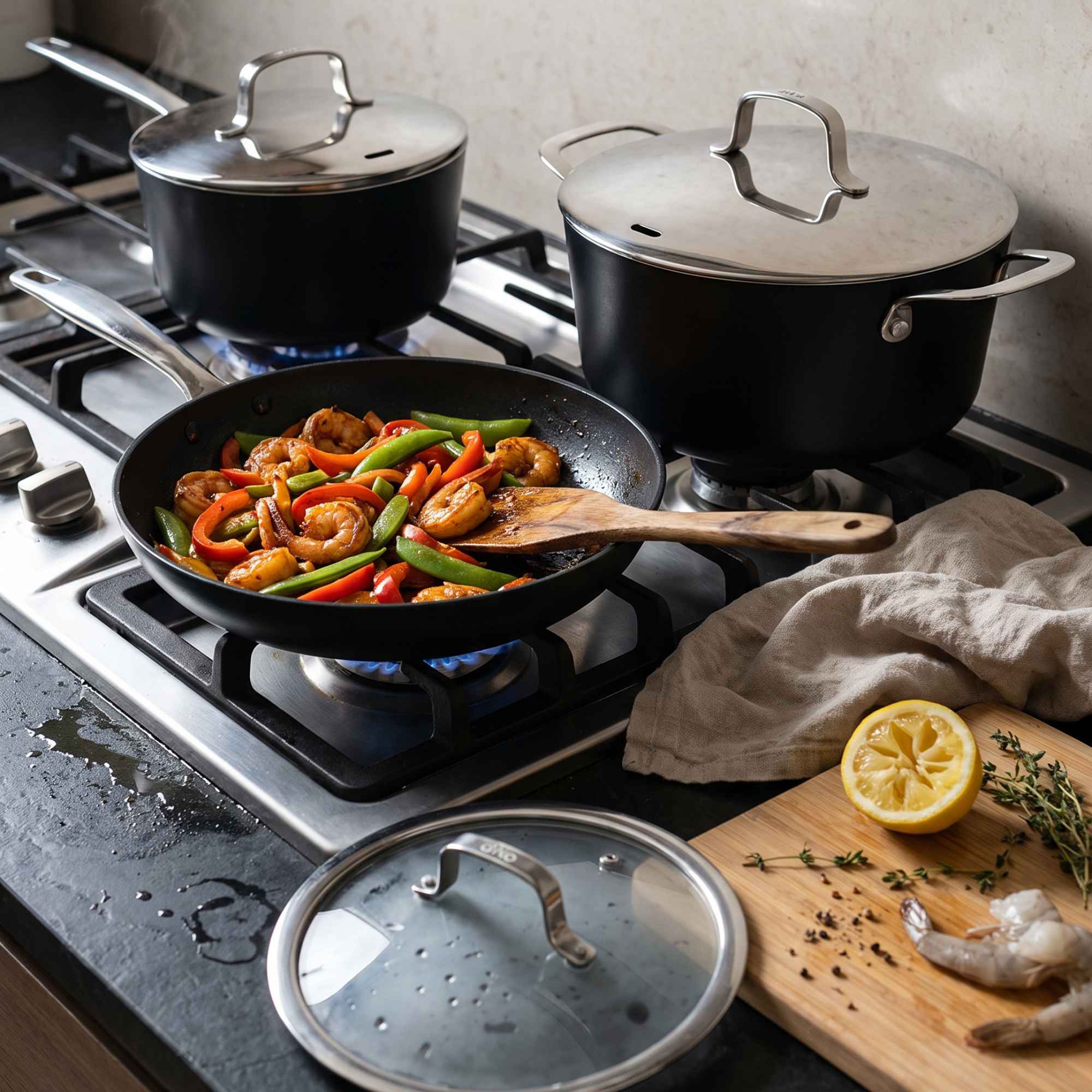
1. Use Low to Medium Heat: Ceramic pans are excellent heat conductors, so high heat is unnecessary and can damage the coating over time.
2. Avoid Metal Utensils: Stick to wooden, silicone, or plastic utensils.
3. Avoid Cooking Sprays: Aerosol sprays can leave a residue that builds up over time and affects the nonstick surface.
4. Hand Wash Only: Use warm, soapy water and a soft sponge.
5. Let It Cool: Never wash a hot pan; let it cool first.
How to Clean Ceramic Nonstick Cookware
Step 1 — Let the Pan Cool: Allow the pan to cool completely before cleaning to prevent warping.
Step 2 — Hand Wash Only: Use warm, soapy water and a soft sponge or cloth. Avoid abrasive scrubbers, steel wool, or harsh cleaning agents, as they can damage the ceramic coating.
Step 3 — Remove Stubborn Stains: For stuck-on food, soak the pan in warm, soapy water for 15-20 minutes before gently scrubbing. For tougher stains, create a paste with baking soda and water, apply it to the stain, and gently scrub with a soft sponge.
Step 4 — Dry Thoroughly: Use a soft towel to dry the pan completely to prevent water spots or rust on any exposed metal parts.
Do's
- Use low to medium heat for cooking.
- Hand wash with gentle soap and soft sponges.
- Store with a protective liner if stacking pans.
Don'ts
- Overheat the pan, as it can damage the coating.
- Use metal utensils or abrasive pads.
- Use aerosol cooking sprays, which can build up residue.
Shop Ceramic Cookware
Shop All

Method One: How to Restore a Burnt Pan with Soap and Water
Step 1 — Let the Pan Cool: Allow the pan to cool completely before cleaning.
Step 2 — Rinse: If food has been burnt on the surface of your pan, it's likely dried out. As anyone who's ever done the dishes knows, it's impossible to clean when pieces of food have hardened on any surface. Simply letting the pan soak in hot water for 10 to 15 minutes will help solve this issue.
Step 3 — Soap: Once the pan has soaked, dump the water and add dish soap to both your dish sponge and the pan. The dish soap will help break down oil, grease, and pieces of burnt food.
Step 4 — Sponge: Using the rough side of your dish sponge, scrub the burnt areas of your pan clean. Steer clear of anything more abrasive, like chain mail, steel wool, or heavy-duty scrubbing brushes—these can scratch and damage the coating.
Method Two: How to Restore a Burnt Pan with Vinegar and Baking Soda
Step 1 — Make the Slurry: Create a slurry of white vinegar, water, and baking soda directly in your nonstick pan. Pour enough water to cover the bottom of the pan, along with 2 tablespoons of both white vinegar and baking soda.
Step 2 — Boil: Bring the above mixture to a boil and stir to dissolve using a silicone or wooden spoon. Continue stirring for 5 minutes to encourage any burnt residue to loosen.
Step 3 — Sponge: Allow the mixture to cool completely after boiling. Discard the vinegar solution and rinse the pan with warm water, then continue with steps two and three of the first method, above.
Ceramic Nonstick
Frequently Asked Questions
It's best to hand wash ceramic nonstick pans to extend their lifespan. Dishwashers can cause the coating to wear out faster, though some models are dishwasher-safe.
Caring for Alva ceramic nonstick is simple: cook on low-to-medium heat, use a little oil or butter (never aerosol spray), stick to silicone, nylon, or wood utensils, and hand wash with a soft sponge after the pan has cooled. There's no seasoning required. Do that and the sol-gel ceramic coating keeps its easy release for years — Alva backs its ceramic lines with warranties up to 10 years.
The essentials, at a glance
Heat
Low to medium only. Ceramic conducts heat efficiently, so high heat is rarely needed and wears the coating faster.
Fat
A little oil or butter. Never aerosol cooking spray — it leaves a residue that ruins release over time.
Utensils
Silicone, nylon, or wood. No metal, and never cut food in the pan.
Washing
Let it cool, then hand wash with a soft sponge and mild soap. No dishwasher, no steel wool.
Before first use
Wash the pan in warm, soapy water, rinse, and dry. That's it — ceramic nonstick does not need seasoning the way carbon steel or cast iron does. The nonstick surface is ready from the first cook.
Everyday cooking
Preheat gently on low-to-medium heat, then add a small amount of oil or butter before your food. There's no need to blast the pan — ceramic reaches temperature quickly, and staying in the low-to-medium range is the single biggest thing you can do to protect the coating. Avoid aerosol cooking sprays entirely; the propellants leave a sticky varnish that carbonizes and degrades nonstick performance. Alva ceramic works on gas, electric, ceramic, halogen, and induction cooktops, and is oven-safe up to 400°F / 205°C (the Energy line is designed for stovetop use only — check its product page).
Cleaning
Let the pan cool before washing — plunging a hot pan into cold water causes thermal shock that can warp it or damage the coating. Hand wash with a soft sponge and mild dish soap. For stubborn or browned-on residue, make a paste of baking soda and water, let it sit a few minutes, and wipe gently. Never use steel wool, abrasive scouring pads, or harsh cleaners, and skip the dishwasher — its detergents are harsh enough to shorten the coating's life.
Storage & nesting
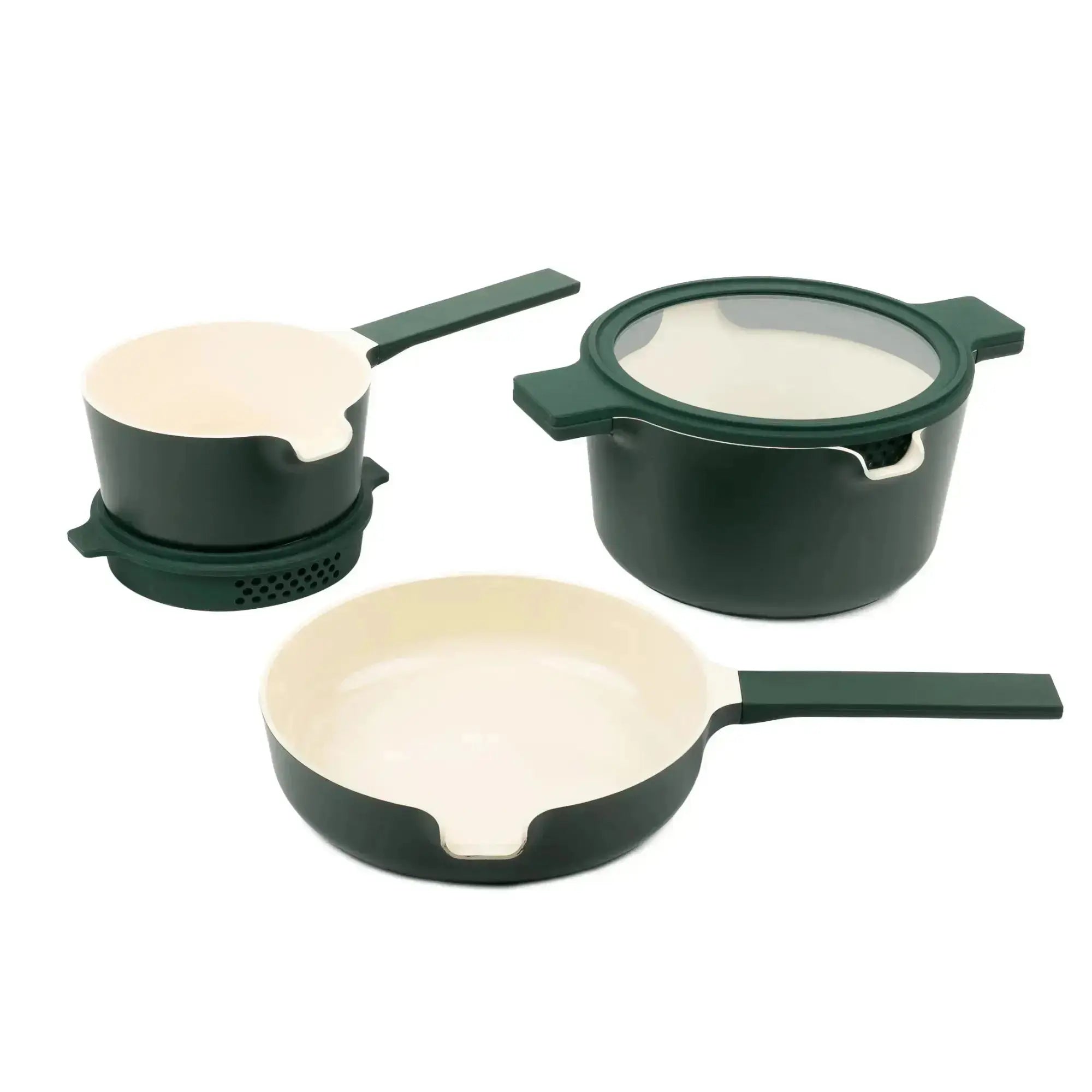
Dry the pan fully before putting it away — trapped moisture invites staining. If you stack or nest pans (Alva's Neat set is designed to nest into a single stack), place a soft cloth, paper towel, or pan protector between the coated surfaces so nothing rubs against the ceramic.
- Cook on low-to-medium heat
- Use a little oil or butter
- Use silicone, nylon, or wood utensils
- Let the pan cool, then hand wash
- Dry fully before stacking
- Crank it to high heat
- Use aerosol cooking sprays
- Use metal utensils or cut food in the pan
- Run it through the dishwasher or scrub with steel wool
- Shock a hot pan with cold water
Keeping it nonstick for longer
Every nonstick surface ages, but careful handling stretches that lifespan considerably. If your pan starts to stick, it's often just carbonized oil buildup that a baking-soda clean will remove — not permanent damage. For the full breakdown of what "wearing out" really looks like and when to replace a pan, see how to make ceramic nonstick last (and what "flaking" really means).
Materials & safety
Alva's ceramic nonstick is a sol-gel ceramic coating — not PTFE (Teflon) — made without PFAS, PTFE, PFOA, lead, or cadmium. Every coated line is independently tested by TÜV Rheinland against a 638-substance PFAS panel, with all substances below the laboratory reporting limit. You can read the published lab reports on the Testing & Materials transparency hub, or learn more in the ceramic cookware guide.
Frequently asked questions
Is Alva ceramic nonstick dishwasher-safe?
Hand washing is recommended. Dishwasher detergents are harsh and shorten the coating's life. Let the pan cool, then wash with a soft sponge and mild soap.
Do I need to season ceramic nonstick?
No. Unlike carbon steel or cast iron, ceramic nonstick works from first use — just wash, rinse, and dry before cooking.
Can I use metal utensils?
No — metal scratches the coating. Use silicone, nylon, or wood, and avoid cutting food in the pan.
Why is food starting to stick?
Usually it's carbonized oil or cooking-spray residue baked onto the surface, not permanent damage. Clean it with a baking-soda paste and a soft sponge and the release typically returns. If sticking persists after cleaning, the coating may be worn.
What heat is safe for ceramic nonstick?
Low to medium on the stovetop, and up to 400°F / 205°C in the oven (the Energy line is stovetop-only). High heat is the fastest way to wear the coating.
Related reading: is ceramic cookware safe?
Clean the pan thoroughly with warm, soapy water and a soft sponge to remove residue. Avoid high heat and use a small amount of oil when cooking. If the coating is significantly worn or scratched, it may be time to replace the pan.
Caring for Alva ceramic nonstick is simple: cook on low-to-medium heat, use a little oil or butter (never aerosol spray), stick to silicone, nylon, or wood utensils, and hand wash with a soft sponge after the pan has cooled. There's no seasoning required. Do that and the sol-gel ceramic coating keeps its easy release for years — Alva backs its ceramic lines with warranties up to 10 years.
The essentials, at a glance
Heat
Low to medium only. Ceramic conducts heat efficiently, so high heat is rarely needed and wears the coating faster.
Fat
A little oil or butter. Never aerosol cooking spray — it leaves a residue that ruins release over time.
Utensils
Silicone, nylon, or wood. No metal, and never cut food in the pan.
Washing
Let it cool, then hand wash with a soft sponge and mild soap. No dishwasher, no steel wool.
Before first use
Wash the pan in warm, soapy water, rinse, and dry. That's it — ceramic nonstick does not need seasoning the way carbon steel or cast iron does. The nonstick surface is ready from the first cook.
Everyday cooking
Preheat gently on low-to-medium heat, then add a small amount of oil or butter before your food. There's no need to blast the pan — ceramic reaches temperature quickly, and staying in the low-to-medium range is the single biggest thing you can do to protect the coating. Avoid aerosol cooking sprays entirely; the propellants leave a sticky varnish that carbonizes and degrades nonstick performance. Alva ceramic works on gas, electric, ceramic, halogen, and induction cooktops, and is oven-safe up to 400°F / 205°C (the Energy line is designed for stovetop use only — check its product page).
Cleaning
Let the pan cool before washing — plunging a hot pan into cold water causes thermal shock that can warp it or damage the coating. Hand wash with a soft sponge and mild dish soap. For stubborn or browned-on residue, make a paste of baking soda and water, let it sit a few minutes, and wipe gently. Never use steel wool, abrasive scouring pads, or harsh cleaners, and skip the dishwasher — its detergents are harsh enough to shorten the coating's life.
Storage & nesting
Dry the pan fully before putting it away — trapped moisture invites staining. If you stack or nest pans (Alva's Neat set is designed to nest into a single stack), place a soft cloth, paper towel, or pan protector between the coated surfaces so nothing rubs against the ceramic.
- Cook on low-to-medium heat
- Use a little oil or butter
- Use silicone, nylon, or wood utensils
- Let the pan cool, then hand wash
- Dry fully before stacking
- Crank it to high heat
- Use aerosol cooking sprays
- Use metal utensils or cut food in the pan
- Run it through the dishwasher or scrub with steel wool
- Shock a hot pan with cold water
Keeping it nonstick for longer
Every nonstick surface ages, but careful handling stretches that lifespan considerably. If your pan starts to stick, it's often just carbonized oil buildup that a baking-soda clean will remove — not permanent damage. For the full breakdown of what "wearing out" really looks like and when to replace a pan, see how to make ceramic nonstick last (and what "flaking" really means).
Materials & safety
Alva's ceramic nonstick is a sol-gel ceramic coating — not PTFE (Teflon) — made without PFAS, PTFE, PFOA, lead, or cadmium. Every coated line is independently tested by TÜV Rheinland against a 638-substance PFAS panel, with all substances below the laboratory reporting limit. You can read the published lab reports on the Testing & Materials transparency hub, or learn more in the ceramic cookware guide.
Frequently asked questions
Is Alva ceramic nonstick dishwasher-safe?
Hand washing is recommended. Dishwasher detergents are harsh and shorten the coating's life. Let the pan cool, then wash with a soft sponge and mild soap.
Do I need to season ceramic nonstick?
No. Unlike carbon steel or cast iron, ceramic nonstick works from first use — just wash, rinse, and dry before cooking.
Can I use metal utensils?
No — metal scratches the coating. Use silicone, nylon, or wood, and avoid cutting food in the pan.
Why is food starting to stick?
Usually it's carbonized oil or cooking-spray residue baked onto the surface, not permanent damage. Clean it with a baking-soda paste and a soft sponge and the release typically returns. If sticking persists after cleaning, the coating may be worn.
What heat is safe for ceramic nonstick?
Low to medium on the stovetop, and up to 400°F / 205°C in the oven (the Energy line is stovetop-only). High heat is the fastest way to wear the coating.
Related reading: is ceramic cookware safe?
Ceramic pans work best on low to medium heat. High heat can damage the nonstick coating and reduce the pan's lifespan. If you need high heat, consider using a different type of cookware.
Caring for Alva ceramic nonstick is simple: cook on low-to-medium heat, use a little oil or butter (never aerosol spray), stick to silicone, nylon, or wood utensils, and hand wash with a soft sponge after the pan has cooled. There's no seasoning required. Do that and the sol-gel ceramic coating keeps its easy release for years — Alva backs its ceramic lines with warranties up to 10 years.
The essentials, at a glance
Heat
Low to medium only. Ceramic conducts heat efficiently, so high heat is rarely needed and wears the coating faster.
Fat
A little oil or butter. Never aerosol cooking spray — it leaves a residue that ruins release over time.
Utensils
Silicone, nylon, or wood. No metal, and never cut food in the pan.
Washing
Let it cool, then hand wash with a soft sponge and mild soap. No dishwasher, no steel wool.
Before first use
Wash the pan in warm, soapy water, rinse, and dry. That's it — ceramic nonstick does not need seasoning the way carbon steel or cast iron does. The nonstick surface is ready from the first cook.
Everyday cooking
Preheat gently on low-to-medium heat, then add a small amount of oil or butter before your food. There's no need to blast the pan — ceramic reaches temperature quickly, and staying in the low-to-medium range is the single biggest thing you can do to protect the coating. Avoid aerosol cooking sprays entirely; the propellants leave a sticky varnish that carbonizes and degrades nonstick performance. Alva ceramic works on gas, electric, ceramic, halogen, and induction cooktops, and is oven-safe up to 400°F / 205°C (the Energy line is designed for stovetop use only — check its product page).
Cleaning
Let the pan cool before washing — plunging a hot pan into cold water causes thermal shock that can warp it or damage the coating. Hand wash with a soft sponge and mild dish soap. For stubborn or browned-on residue, make a paste of baking soda and water, let it sit a few minutes, and wipe gently. Never use steel wool, abrasive scouring pads, or harsh cleaners, and skip the dishwasher — its detergents are harsh enough to shorten the coating's life.
Storage & nesting
Dry the pan fully before putting it away — trapped moisture invites staining. If you stack or nest pans (Alva's Neat set is designed to nest into a single stack), place a soft cloth, paper towel, or pan protector between the coated surfaces so nothing rubs against the ceramic.
- Cook on low-to-medium heat
- Use a little oil or butter
- Use silicone, nylon, or wood utensils
- Let the pan cool, then hand wash
- Dry fully before stacking
- Crank it to high heat
- Use aerosol cooking sprays
- Use metal utensils or cut food in the pan
- Run it through the dishwasher or scrub with steel wool
- Shock a hot pan with cold water
Keeping it nonstick for longer
Every nonstick surface ages, but careful handling stretches that lifespan considerably. If your pan starts to stick, it's often just carbonized oil buildup that a baking-soda clean will remove — not permanent damage. For the full breakdown of what "wearing out" really looks like and when to replace a pan, see how to make ceramic nonstick last (and what "flaking" really means).
Materials & safety
Alva's ceramic nonstick is a sol-gel ceramic coating — not PTFE (Teflon) — made without PFAS, PTFE, PFOA, lead, or cadmium. Every coated line is independently tested by TÜV Rheinland against a 638-substance PFAS panel, with all substances below the laboratory reporting limit. You can read the published lab reports on the Testing & Materials transparency hub, or learn more in the ceramic cookware guide.
Frequently asked questions
Is Alva ceramic nonstick dishwasher-safe?
Hand washing is recommended. Dishwasher detergents are harsh and shorten the coating's life. Let the pan cool, then wash with a soft sponge and mild soap.
Do I need to season ceramic nonstick?
No. Unlike carbon steel or cast iron, ceramic nonstick works from first use — just wash, rinse, and dry before cooking.
Can I use metal utensils?
No — metal scratches the coating. Use silicone, nylon, or wood, and avoid cutting food in the pan.
Why is food starting to stick?
Usually it's carbonized oil or cooking-spray residue baked onto the surface, not permanent damage. Clean it with a baking-soda paste and a soft sponge and the release typically returns. If sticking persists after cleaning, the coating may be worn.
What heat is safe for ceramic nonstick?
Low to medium on the stovetop, and up to 400°F / 205°C in the oven (the Energy line is stovetop-only). High heat is the fastest way to wear the coating.
Related reading: is ceramic cookware safe?
Soak the pan in warm, soapy water for 15-20 minutes, then use a baking soda paste or, for tougher stains, equal parts white vinegar and water warmed in the pan. Avoid abrasive cleaners. To prevent discoloration, cook on low to medium heat and clean thoroughly after each use.
Caring for Alva ceramic nonstick is simple: cook on low-to-medium heat, use a little oil or butter (never aerosol spray), stick to silicone, nylon, or wood utensils, and hand wash with a soft sponge after the pan has cooled. There's no seasoning required. Do that and the sol-gel ceramic coating keeps its easy release for years — Alva backs its ceramic lines with warranties up to 10 years.
The essentials, at a glance
Heat
Low to medium only. Ceramic conducts heat efficiently, so high heat is rarely needed and wears the coating faster.
Fat
A little oil or butter. Never aerosol cooking spray — it leaves a residue that ruins release over time.
Utensils
Silicone, nylon, or wood. No metal, and never cut food in the pan.
Washing
Let it cool, then hand wash with a soft sponge and mild soap. No dishwasher, no steel wool.
Before first use
Wash the pan in warm, soapy water, rinse, and dry. That's it — ceramic nonstick does not need seasoning the way carbon steel or cast iron does. The nonstick surface is ready from the first cook.
Everyday cooking
Preheat gently on low-to-medium heat, then add a small amount of oil or butter before your food. There's no need to blast the pan — ceramic reaches temperature quickly, and staying in the low-to-medium range is the single biggest thing you can do to protect the coating. Avoid aerosol cooking sprays entirely; the propellants leave a sticky varnish that carbonizes and degrades nonstick performance. Alva ceramic works on gas, electric, ceramic, halogen, and induction cooktops, and is oven-safe up to 400°F / 205°C (the Energy line is designed for stovetop use only — check its product page).
Cleaning
Let the pan cool before washing — plunging a hot pan into cold water causes thermal shock that can warp it or damage the coating. Hand wash with a soft sponge and mild dish soap. For stubborn or browned-on residue, make a paste of baking soda and water, let it sit a few minutes, and wipe gently. Never use steel wool, abrasive scouring pads, or harsh cleaners, and skip the dishwasher — its detergents are harsh enough to shorten the coating's life.
Storage & nesting
Dry the pan fully before putting it away — trapped moisture invites staining. If you stack or nest pans (Alva's Neat set is designed to nest into a single stack), place a soft cloth, paper towel, or pan protector between the coated surfaces so nothing rubs against the ceramic.
- Cook on low-to-medium heat
- Use a little oil or butter
- Use silicone, nylon, or wood utensils
- Let the pan cool, then hand wash
- Dry fully before stacking
- Crank it to high heat
- Use aerosol cooking sprays
- Use metal utensils or cut food in the pan
- Run it through the dishwasher or scrub with steel wool
- Shock a hot pan with cold water
Keeping it nonstick for longer
Every nonstick surface ages, but careful handling stretches that lifespan considerably. If your pan starts to stick, it's often just carbonized oil buildup that a baking-soda clean will remove — not permanent damage. For the full breakdown of what "wearing out" really looks like and when to replace a pan, see how to make ceramic nonstick last (and what "flaking" really means).
Materials & safety
Alva's ceramic nonstick is a sol-gel ceramic coating — not PTFE (Teflon) — made without PFAS, PTFE, PFOA, lead, or cadmium. Every coated line is independently tested by TÜV Rheinland against a 638-substance PFAS panel, with all substances below the laboratory reporting limit. You can read the published lab reports on the Testing & Materials transparency hub, or learn more in the ceramic cookware guide.
Frequently asked questions
Is Alva ceramic nonstick dishwasher-safe?
Hand washing is recommended. Dishwasher detergents are harsh and shorten the coating's life. Let the pan cool, then wash with a soft sponge and mild soap.
Do I need to season ceramic nonstick?
No. Unlike carbon steel or cast iron, ceramic nonstick works from first use — just wash, rinse, and dry before cooking.
Can I use metal utensils?
No — metal scratches the coating. Use silicone, nylon, or wood, and avoid cutting food in the pan.
Why is food starting to stick?
Usually it's carbonized oil or cooking-spray residue baked onto the surface, not permanent damage. Clean it with a baking-soda paste and a soft sponge and the release typically returns. If sticking persists after cleaning, the coating may be worn.
What heat is safe for ceramic nonstick?
Low to medium on the stovetop, and up to 400°F / 205°C in the oven (the Energy line is stovetop-only). High heat is the fastest way to wear the coating.
Related reading: is ceramic cookware safe?
No, metal utensils can scratch and damage the ceramic coating. Use wooden, silicone, or plastic utensils to preserve the nonstick surface.
Caring for Alva ceramic nonstick is simple: cook on low-to-medium heat, use a little oil or butter (never aerosol spray), stick to silicone, nylon, or wood utensils, and hand wash with a soft sponge after the pan has cooled. There's no seasoning required. Do that and the sol-gel ceramic coating keeps its easy release for years — Alva backs its ceramic lines with warranties up to 10 years.
The essentials, at a glance
Heat
Low to medium only. Ceramic conducts heat efficiently, so high heat is rarely needed and wears the coating faster.
Fat
A little oil or butter. Never aerosol cooking spray — it leaves a residue that ruins release over time.
Utensils
Silicone, nylon, or wood. No metal, and never cut food in the pan.
Washing
Let it cool, then hand wash with a soft sponge and mild soap. No dishwasher, no steel wool.
Before first use
Wash the pan in warm, soapy water, rinse, and dry. That's it — ceramic nonstick does not need seasoning the way carbon steel or cast iron does. The nonstick surface is ready from the first cook.
Everyday cooking
Preheat gently on low-to-medium heat, then add a small amount of oil or butter before your food. There's no need to blast the pan — ceramic reaches temperature quickly, and staying in the low-to-medium range is the single biggest thing you can do to protect the coating. Avoid aerosol cooking sprays entirely; the propellants leave a sticky varnish that carbonizes and degrades nonstick performance. Alva ceramic works on gas, electric, ceramic, halogen, and induction cooktops, and is oven-safe up to 400°F / 205°C (the Energy line is designed for stovetop use only — check its product page).
Cleaning
Let the pan cool before washing — plunging a hot pan into cold water causes thermal shock that can warp it or damage the coating. Hand wash with a soft sponge and mild dish soap. For stubborn or browned-on residue, make a paste of baking soda and water, let it sit a few minutes, and wipe gently. Never use steel wool, abrasive scouring pads, or harsh cleaners, and skip the dishwasher — its detergents are harsh enough to shorten the coating's life.
Storage & nesting
Dry the pan fully before putting it away — trapped moisture invites staining. If you stack or nest pans (Alva's Neat set is designed to nest into a single stack), place a soft cloth, paper towel, or pan protector between the coated surfaces so nothing rubs against the ceramic.
- Cook on low-to-medium heat
- Use a little oil or butter
- Use silicone, nylon, or wood utensils
- Let the pan cool, then hand wash
- Dry fully before stacking
- Crank it to high heat
- Use aerosol cooking sprays
- Use metal utensils or cut food in the pan
- Run it through the dishwasher or scrub with steel wool
- Shock a hot pan with cold water
Keeping it nonstick for longer
Every nonstick surface ages, but careful handling stretches that lifespan considerably. If your pan starts to stick, it's often just carbonized oil buildup that a baking-soda clean will remove — not permanent damage. For the full breakdown of what "wearing out" really looks like and when to replace a pan, see how to make ceramic nonstick last (and what "flaking" really means).
Materials & safety
Alva's ceramic nonstick is a sol-gel ceramic coating — not PTFE (Teflon) — made without PFAS, PTFE, PFOA, lead, or cadmium. Every coated line is independently tested by TÜV Rheinland against a 638-substance PFAS panel, with all substances below the laboratory reporting limit. You can read the published lab reports on the Testing & Materials transparency hub, or learn more in the ceramic cookware guide.
Frequently asked questions
Is Alva ceramic nonstick dishwasher-safe?
Hand washing is recommended. Dishwasher detergents are harsh and shorten the coating's life. Let the pan cool, then wash with a soft sponge and mild soap.
Do I need to season ceramic nonstick?
No. Unlike carbon steel or cast iron, ceramic nonstick works from first use — just wash, rinse, and dry before cooking.
Can I use metal utensils?
No — metal scratches the coating. Use silicone, nylon, or wood, and avoid cutting food in the pan.
Why is food starting to stick?
Usually it's carbonized oil or cooking-spray residue baked onto the surface, not permanent damage. Clean it with a baking-soda paste and a soft sponge and the release typically returns. If sticking persists after cleaning, the coating may be worn.
What heat is safe for ceramic nonstick?
Low to medium on the stovetop, and up to 400°F / 205°C in the oven (the Energy line is stovetop-only). High heat is the fastest way to wear the coating.
Related reading: is ceramic cookware safe?

Thoughtful cookware, designed in Belgium since 1949.