






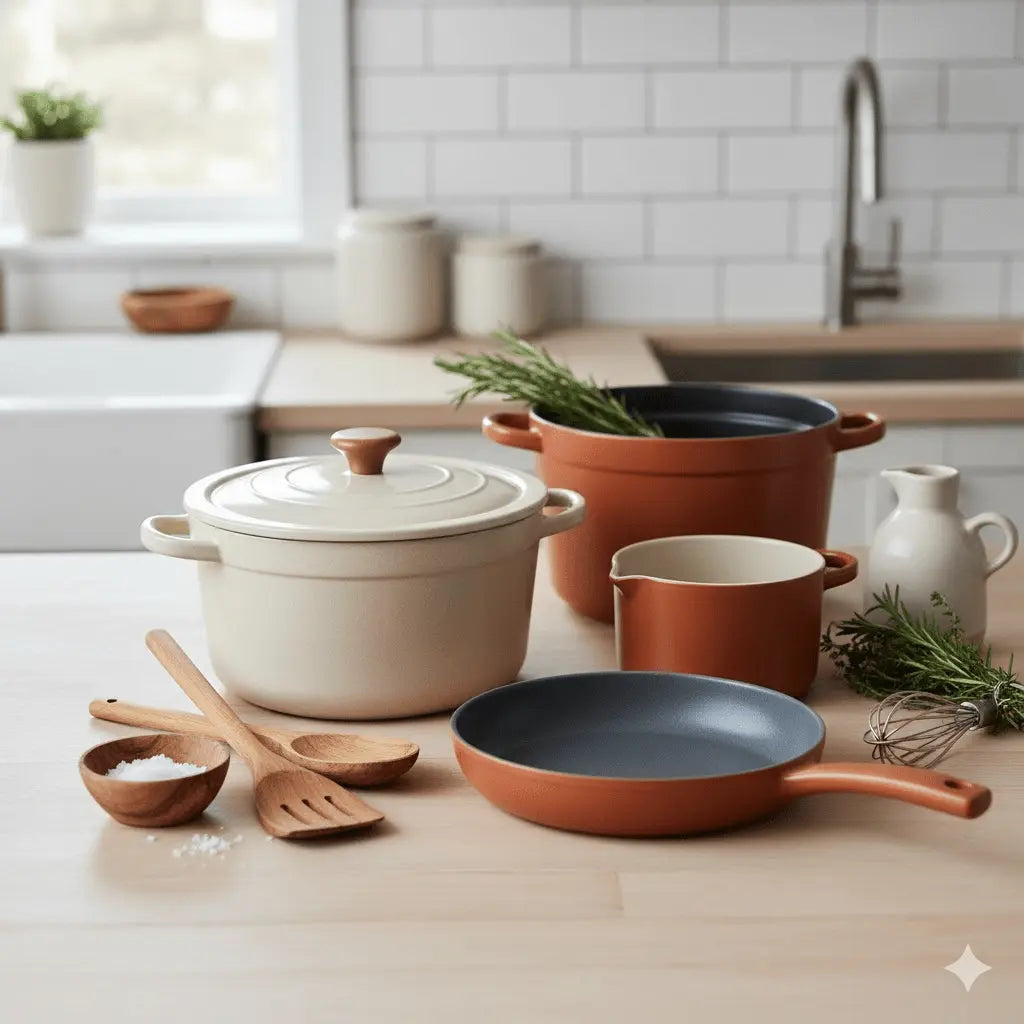
Is Ceramic Cookware Safe? What Lab Testing Shows (2026)
Yes — quality ceramic cookware is safe. Its sol-gel ceramic coating is made without PFAS, PTFE, PFOA, lead or cadmium and stays stable at normal cooking temperatures. Independently lab-tested ceramic — like Alva's, verified by TÜV Rheinland against a 638-substance panel — is a non-toxic choice.
Full guide: How to Make Ceramic Nonstick Last (and what "flaking" really means) — our complete ceramic care and durability guide.
This is the broad guide covering ceramic across pots, bakeware, dishware and full sets. For frying-pan-specific questions — scratches, replacement timing, pet birds — see are ceramic pans safe?

Our Top Pick
Quick Answer
Yes — quality ceramic nonstick cookware is safe when it's made without PFAS, PTFE or PFOA. Alva's ceramic coatings are independently tested by TÜV Rheinland against a 638-substance panel, with lead and cadmium below FDA food-contact limits — and every report is published.
Maestro Ceramic Nonstick Frying Pan
Easy release for eggs, fish and everyday cooking. Made without PFAS, PTFE or PFOA, supported by published third-party testing, induction-ready, oven-safe to 400°F and backed by a 10-year limited warranty.
From $109
Shop the Maestro Frying PanShopping for ceramic you can trust?
Every Alva ceramic line is a sol-gel ceramic coating made without PFAS, PTFE, PFOA, lead or cadmium — and independently tested by TÜV Rheinland against a 638-substance panel, with the lab reports published. Backed by 5–10 year warranties.
Shop non-toxic ceramicSee the lab reportsIs ceramic cookware safe?
Yes. A well-made ceramic nonstick coating is a sol-gel mineral layer with no Teflon, PFOA, PFAS, lead or cadmium, and it stays stable at ordinary stovetop temperatures. Because there are no fluoropolymers, there are no PTFE fumes to worry about, and nothing toxic to flake into food when the pan is cared for properly. The main variable is quality: choose brands that back their claims with third-party lab testing. For a deeper primer on materials and construction, see our ceramic cookware guide.
Is ceramic nonstick safe?
Yes — ceramic nonstick is safe for everyday cooking. The nonstick effect comes from a silica-based sol-gel coating, not from PTFE (Teflon), so there are no fluoropolymer fumes and no PFAS, PFOA, lead or cadmium in the surface. Use medium heat, avoid metal utensils, and choose a coating backed by published third-party lab testing — Alva's ceramic nonstick is verified by TÜV Rheinland against a 638-substance panel.
Is ceramic cookware non-toxic?
Quality ceramic cookware is non-toxic when the coating is made without PFAS, PTFE, PFOA, lead and cadmium and that formulation is independently verified. Because "non-toxic" is an unregulated term, the proof is the lab report, not the label. Alva ceramic is tested by TÜV Rheinland (638 substances, all below the reporting limit) and Neat is lab-tested for lead and cadmium below FDA limits.
Ceramic-coated vs solid ceramic: two different things
This is the confusion behind most safety questions, and it matters because the risks are genuinely different.
- Ceramic-coated cookware is metal — usually aluminium — with a thin silica sol-gel coating sprayed and cured onto it. This is what people mean by a "ceramic pan." The coating is inert and wears out over years.
- Solid ceramic and stoneware is fired clay all the way through: baking dishes, casseroles, mugs, tagines. Nothing is coated except the glaze on the surface.
The lead and cadmium question that follows people around applies almost entirely to the second category, and specifically to decorative glazes — not to modern ceramic nonstick coatings.
Does ceramic cookware contain lead or cadmium?
Reputable sol-gel ceramic nonstick is formulated without either, and responsible brands test finished products to confirm it. The historical concern comes from glazed ceramic dishware and bakeware, where lead was once used in decorative glazes to produce bright colours and a glossy finish, and cadmium for reds, oranges and yellows.
Where that risk still shows up: imported or handmade glazed pottery, vintage or antique dishware, brightly decorated ceramics bought as souvenirs, and any glazed piece sold as decorative rather than food-safe. Acidic food and drink — tomato sauce, citrus, coffee, wine — draw more out of a compromised glaze than neutral food does. If a glazed piece is chipped, crazed or worn dull where food sits, stop using it for food.
Modern cookware sold as food-safe in the US must meet FDA limits for leachable lead and cadmium. Look for published third-party lab testing rather than a claim on the box.
Is ceramic bakeware and stoneware safe?
Generally yes, and it is one of the more inert things you can bake in — fired clay is not going to react with your food the way bare aluminium can. The caveats are physical rather than chemical: stoneware is prone to thermal shock, so avoid moving a dish straight from fridge to hot oven or from oven to a wet surface, and check that any glaze is food-safe rather than decorative. Crazing, the fine crack network that develops in old glaze, traps bacteria and is a reason to retire a piece.
What makes a ceramic coating non-toxic?
A ceramic nonstick surface is a silica-based sol-gel coating — no Teflon, no PFOA, no PFAS, no added lead or cadmium. It will not off-gas at normal cooking temperatures the way overheated traditional nonstick can. This is what people mean by non-toxic cookware: a coating whose ingredients are disclosed and independently verified rather than simply labelled "safe."
Ceramic vs Teflon (PTFE): which is safer?
Both are considered safe when used as directed, but they differ in chemistry. Teflon is a PTFE fluoropolymer; older PTFE production used PFOA, and overheated PTFE can release fumes. Ceramic contains no PTFE, PFOA or PFAS at all, which removes those concerns entirely. If avoiding fluorochemicals is your priority, ceramic is the safer choice.
Is ceramic cookware safe at high heat?
Ceramic tolerates higher temperatures than traditional PTFE nonstick and releases no fluoropolymer fumes, because it contains none. Very high, empty-pan heating still shortens the life of the surface without making it unsafe. Alva ceramic is oven-safe to 400°F; our 5-ply stainless goes to 500°F. The pans guide covers day-to-day heat handling in more detail.
Demand proof, not labels
"Non-toxic" is not a regulated term. Look for brands that publish independent lab test results. Alva tests every coating for PFAS, PTFE and PFOA through TÜV Rheinland and publishes the actual reports — with report numbers, dates and downloadable PDFs. See Alva's independent lab test reports →
Provenance is part of the picture too — see the factories behind the brand. For how the ceramic holds up over time, see what independent testers found. If you are weighing popular brands, see our Caraway alternatives comparison.
Where ceramic is not the right choice
Worth saying plainly: no ceramic coating is permanent. Release fades over years of use, which is why our coated lines carry 5- and 10-year warranties rather than the lifetime cover on uncoated stainless and cast iron. If you want cookware that will outlive you, buy uncoated. If you want easy release and easy cleanup for eggs, fish and everyday cooking, ceramic is excellent at exactly that.
Care for longevity
- Medium heat, never high and empty.
- No metal utensils — silicone, nylon or wood.
- Hand wash; avoid abrasive scrubbers.
Shop verified non-toxic ceramic
Alva's ceramic nonstick line is lab-verified and induction-ready — made without PFAS, PTFE or PFOA, independently tested by TÜV Rheinland, and designed in Belgium since 1949. The Maestro Ceramic Nonstick Frying Pan starts at $109 with a 10-year warranty. Shop PFAS-free ceramic nonstick → Free U.S. shipping over $99.
Frequently asked questions
Is ceramic cookware safe?
Yes. Quality ceramic nonstick is a sol-gel mineral coating with no PFAS, PFOA, PTFE, lead or cadmium, and it stays stable at normal cooking temperatures. Choose brands that publish independent lab testing.
Is ceramic nonstick safe for your health?
Yes. Ceramic nonstick uses a silica-based sol-gel coating rather than PTFE, so there are no fluoropolymer fumes and no PFAS, PFOA, lead or cadmium in the cooking surface. Used on medium heat with non-metal utensils, independently lab-tested ceramic is a safe, non-toxic choice for your health.
Is ceramic cookware toxic?
No. Quality ceramic nonstick is made without PFAS, PTFE, PFOA, lead and cadmium, and it will not off-gas at normal cooking temperatures. Because "non-toxic" is an unregulated marketing term, rely on published third-party lab testing rather than the claim on the box.
Does ceramic cookware contain lead or cadmium?
Modern ceramic nonstick coatings are made without either. The historical concern relates to decorative glazes on ceramic dishware and pottery, not to nonstick cooking surfaces. Be cautious with imported, handmade, vintage or decorative glazed pieces, especially with acidic food.
What is the safest ceramic cookware?
The safest ceramic cookware is a sol-gel ceramic coating made without PFAS, PTFE, PFOA, lead and cadmium, with the lab reports published rather than just claimed. Alva ceramic is tested by TÜV Rheinland against a 638-substance panel (all below the reporting limit) and Neat is lab-tested for lead and cadmium below FDA limits, backed by 5–10 year warranties.
What is the difference between ceramic-coated and solid ceramic cookware?
Ceramic-coated cookware is metal with a thin silica sol-gel coating on the cooking surface. Solid ceramic and stoneware is fired clay throughout, like a baking dish or casserole. They raise different questions: coatings wear out, while glazes are where lead and cadmium concerns historically apply.
Is ceramic bakeware safe?
Generally yes, and it is chemically inert. The main risks are physical rather than chemical: thermal shock from sudden temperature changes, and crazed or chipped glaze on older pieces, which should be retired from food use.
Is ceramic cookware safe at high heat?
Ceramic tolerates higher temperatures than traditional PTFE nonstick and releases no fluoropolymer fumes because it contains none. Cooking on medium heat still makes any nonstick coating last longer. Alva ceramic is oven-safe to 400°F.
Ceramic vs Teflon: which is safer?
Both are safe when used as directed, but ceramic contains no PTFE, PFOA or PFAS, so it removes concerns about overheated-Teflon fumes. If avoiding fluorochemicals is your priority, ceramic is the safer choice.


Laisser un commentaire
Ce site est protégé par hCaptcha, et la Politique de confidentialité et les Conditions de service de hCaptcha s’appliquent.