






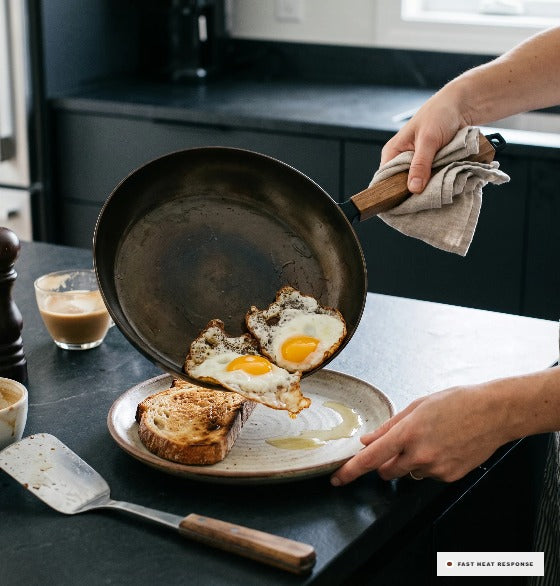
Carbon Steel vs Nonstick: Which Pan Should You Buy?
Carbon steel beats nonstick for searing, high heat, oven use and longevity — a seasoned pan releases food nearly as well and lasts decades. Nonstick beats carbon steel on day one for eggs, fish and low-fat cooking, needs no seasoning and no rust care, but wears out in years, not decades. Most kitchens are best with one of each: carbon steel for meat and heat, a ceramic nonstick for eggs.
By the Alva Cookware team · Published September 17, 2026.
"Nonstick" here means a coated pan — either traditional PTFE or a ceramic sol-gel coating like the one on Alva's Maestro ceramic line. Carbon steel is bare iron-and-carbon that you season with oil until it builds its own release layer. They solve the same problem two different ways, and the honest answer to "which is better" depends entirely on what you cook most. Here is the comparison, criterion by criterion, with the trade-offs stated plainly.

Our Top Pick
Black Angus Carbon Steel Frying Pan
Uncoated, pre-seasoned carbon steel for steakhouse searing. Oven-safe to 500°F, induction-ready, lifetime warranty.
From $99
Shop the Black AngusCarbon steel vs nonstick at a glance
| Carbon steel (seasoned) | Ceramic nonstick | PTFE nonstick | |
|---|---|---|---|
| Food release, day one | Good once seasoned; improves with use | Excellent | Excellent |
| Food release, year three | Better than day one | Declining; hand-wash and low heat extend it | Declining; scratches and high heat end it |
| Searing and browning | Excellent — takes any heat | Fair — medium heat only | Poor — coatings degrade above ~500°F |
| Oven / broiler | Alva Artist and Black Angus: 500°F. Forest line: stovetop only | Alva Maestro ceramic: 400°F | Varies; handles often limit it |
| Eggs, fish, crêpes | Fine on a well-seasoned pan with fat; not on a new one | Ideal | Ideal |
| Acidic foods (tomato, wine, citrus) | Avoid long simmers — they strip seasoning | Fine | Fine |
| Metal utensils | Yes | No | No |
| Dishwasher | Never | Hand wash recommended | Usually no |
| Weight (11" pan) | 2.3–3.6 lb | 3.1 lb | 2–3 lb |
| Care | Dry after washing, oil lightly, re-season if needed | Low heat, soft sponge, no sprays | Low heat, no metal, replace when scratched |
| Lifespan | Decades | Years; coating wears | Years; coating wears |
| Coating chemistry | None — iron and carbon | Silica-based sol-gel; Alva's is made without PFAS, PTFE or PFOA | PTFE (a PFAS); PFOA-free since 2013 |
| Alva warranty | Artist / Black Angus lifetime; Forest 10-year | 10-year | — |
Where carbon steel wins
Anything you want browned
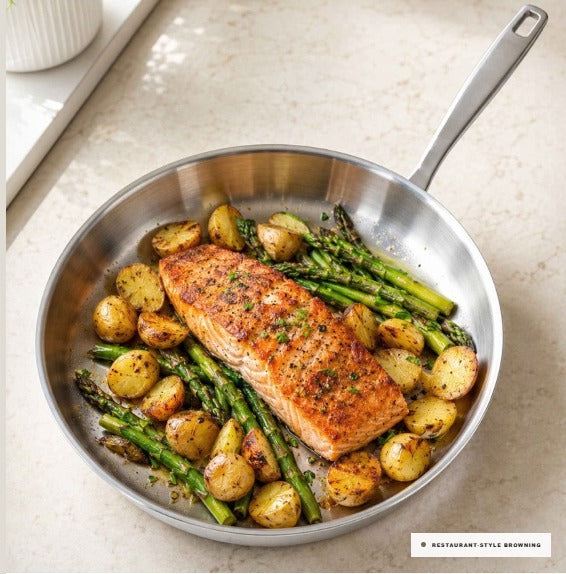
Steak, chops, smash burgers, skin-on chicken thighs, roasted vegetables, fried rice. Carbon steel takes the heat a crust needs and holds it when cold food lands. A ceramic pan on medium — the highest heat the coating tolerates — will cook the same food, but it will steam more than sear. This is the single biggest practical difference and the reason professional kitchens run carbon steel.
Oven finishing
Sear, then slide the pan into a 425°F oven to finish — the technique behind most restaurant proteins. The Alva Artist ($139–$149) and Black Angus ($99–$109) are rated to 500°F. The Forest line ($99–$119) is thinner and lighter and is stovetop-only, so pick Artist or Black Angus if the oven is part of your routine. Ceramic nonstick tops out at 400°F, which covers most finishing but not a broiler.
Lifespan and cost per year
A carbon steel pan with a scratched, dulled or even rusted surface is a twenty-minute rescue away from new. A nonstick pan with a worn coating is done. Over ten years, a $99–$149 carbon steel pan is the cheaper pan by a wide margin, which is why Artist and Black Angus carry a lifetime warranty and our ceramic line carries ten years.
Metal utensils and rough handling
Fish slices, metal tongs, a steel spatula under a smash burger — all fine on carbon steel, all forbidden on any coated pan.
Where nonstick wins
Eggs, fish and anything delicate, especially in a new pan
A ceramic nonstick pan releases an egg with no fat on its first morning. Carbon steel gets there after a few weeks of cooking with oil, and even then wants a little butter and a preheated pan. If your pan's main job is breakfast, nonstick is the right first pan; see our omelette pan guide.
Low-fat and acidic cooking
Poached-then-reduced tomato sauces, a wine pan sauce simmered for ten minutes, a squeeze of lemon over fish — all fine in a coated pan, all things that strip seasoning from carbon steel. You can cook acidic food in seasoned steel briefly, but it is not the pan for a long tomato braise.
Zero maintenance
No seasoning, no drying immediately after washing, no oiling before storage, no rust. For someone who will not do those four things, carbon steel will disappoint, and that is a fair reason to choose ceramic.
Weight, sometimes
The 11" Maestro ceramic is 3.1 lb with a forged aluminum body; the 11" Forest carbon steel is 2.3 lb, the Artist 3.6 lb. Carbon steel is not automatically heavier — the thin Forest is the lightest pan Alva makes — but the thick, oven-going Artist is heavier than ceramic.
The health question, stated plainly
Carbon steel has no coating at all — iron, carbon and a polymerised layer of the cooking oil you seasoned it with. There is nothing to flake. Alva's ceramic nonstick is a silica-based sol-gel coating made without PFAS, PTFE or PFOA, and each coated line is independently tested by TÜV Rheinland with the reports published on our testing and materials page. Traditional PTFE nonstick is a fluoropolymer; it is inert in normal use but degrades above about 500°F and cannot be repaired once scratched. If "no coating, ever" is your rule, carbon steel is the answer; if you want a coating with published third-party testing, ceramic is. Our best non-toxic frying pan guide lays out both routes; is ceramic cookware safe covers the coating in depth.
Which one should you buy?
- You cook meat, stir-fries and roasted vegetables more than eggs: carbon steel. Black Angus ($99–$109) if you want the lowest price with a 500°F rating and lifetime warranty; Artist ($139–$149) for the hammered finish and the same specs.
- You cook eggs, fish and quick weeknight meals, and you won't oil a pan: ceramic nonstick. Maestro ceramic frying pan ($109–$129), 400°F, 10-year warranty.
- You want the lightest pan and never use the oven for it: Forest carbon steel ($99–$119), 1.4–2.3 lb, stovetop-only, 10-year warranty.
- You want one pan that does everything: there isn't one. Buy an 11" carbon steel for heat and a 9.5" ceramic for eggs — $99 + $119 — and you'll use both every week. That is the pairing in our how many pots and pans do you need guide.
Still comparing materials? Carbon steel vs cast iron and stainless steel vs nonstick complete the set, and the best carbon steel pans ranks the three Alva lines.
Pre-seasoned carbon steel, ready on day one.
Alva Artist, Black Angus and Forest carbon steel arrive pre-seasoned, uncoated and induction-ready. Free U.S. shipping over $99.
Frequently asked questions
Is carbon steel really nonstick?
Once seasoned, yes — a layer of polymerised oil gives a release that handles eggs and fish with a little fat in a preheated pan. It is not as slick as a new coated pan on day one, and it gets better with every cook rather than worse.
Can you cook eggs in a carbon steel pan?
Yes, on a pan with established seasoning, medium heat and a teaspoon of butter or oil. On a brand-new pan they will stick; cook fattier foods for the first few weeks to build the surface first.
Is carbon steel healthier than nonstick?
Carbon steel has no coating, so there is nothing to wear or flake. Alva's ceramic nonstick is made without PFAS, PTFE or PFOA and is independently tested, so both are sound choices; carbon steel is the answer if you want no coating of any kind. Traditional PTFE pans should be replaced once scratched.
Does carbon steel rust?
It can if stored wet or left unseasoned. Dry it after washing and wipe a thin film of oil on the surface and it won't. If rust does appear it scrubs off and the pan re-seasons in about twenty minutes — see our rusty carbon steel guide.
Which lasts longer, carbon steel or nonstick?
Carbon steel, by decades. A coating wears with heat and use and cannot be restored; seasoning can be rebuilt indefinitely. That is why Alva's Artist and Black Angus carry a lifetime warranty and the ceramic line carries a 10-year warranty.
Can carbon steel go in the oven?
Alva Artist and Black Angus are oven-safe to 500°F. The Forest line, including the wok, is stovetop-only. Alva's Maestro ceramic nonstick is oven-safe to 400°F.
Cook it: crispy chicken drumsticks (carbon steel), skillet frittata (nonstick).
Our top pickBlack Angus Carbon Steel Frying PanShop now →


Laisser un commentaire
Ce site est protégé par hCaptcha, et la Politique de confidentialité et les Conditions de service de hCaptcha s’appliquent.