






How to Fix a Rusty Carbon Steel Pan (and Keep It From Coming Back)
A rusty carbon steel pan is not ruined. Scrub the rust off with steel wool or a paste of coarse salt and oil, wash and dry it completely, then re-season with a paper-thin coat of high-smoke-point oil in a 450–500°F oven (or on the stovetop for stovetop-only pans) for an hour. The whole rescue takes about twenty minutes of work, and the pan comes back as good as the day it arrived.
By the Alva Cookware team · Published September 17, 2026.
Rust is the one thing that makes people give up on carbon steel, and it is the least serious thing that can happen to the pan. Carbon steel is iron and carbon; iron plus water plus air is rust. It means the seasoning was thin or the pan sat wet — not that the metal is damaged. Below: how to tell surface rust from a real problem, the two ways to remove it, how to re-season so it doesn't come back, and the three habits that cause 95% of rusty pans.

Our Top Pick
Hammered Carbon Steel Frying Pan
Pre-seasoned, uncoated carbon steel. Oven-safe to 500°F, induction-ready, re-seasons indefinitely, lifetime warranty.
From $139
Shop the ArtistFirst, is it actually rust?
- Orange or reddish-brown powder or specks that come off on a paper towel: surface rust. Fixable in minutes.
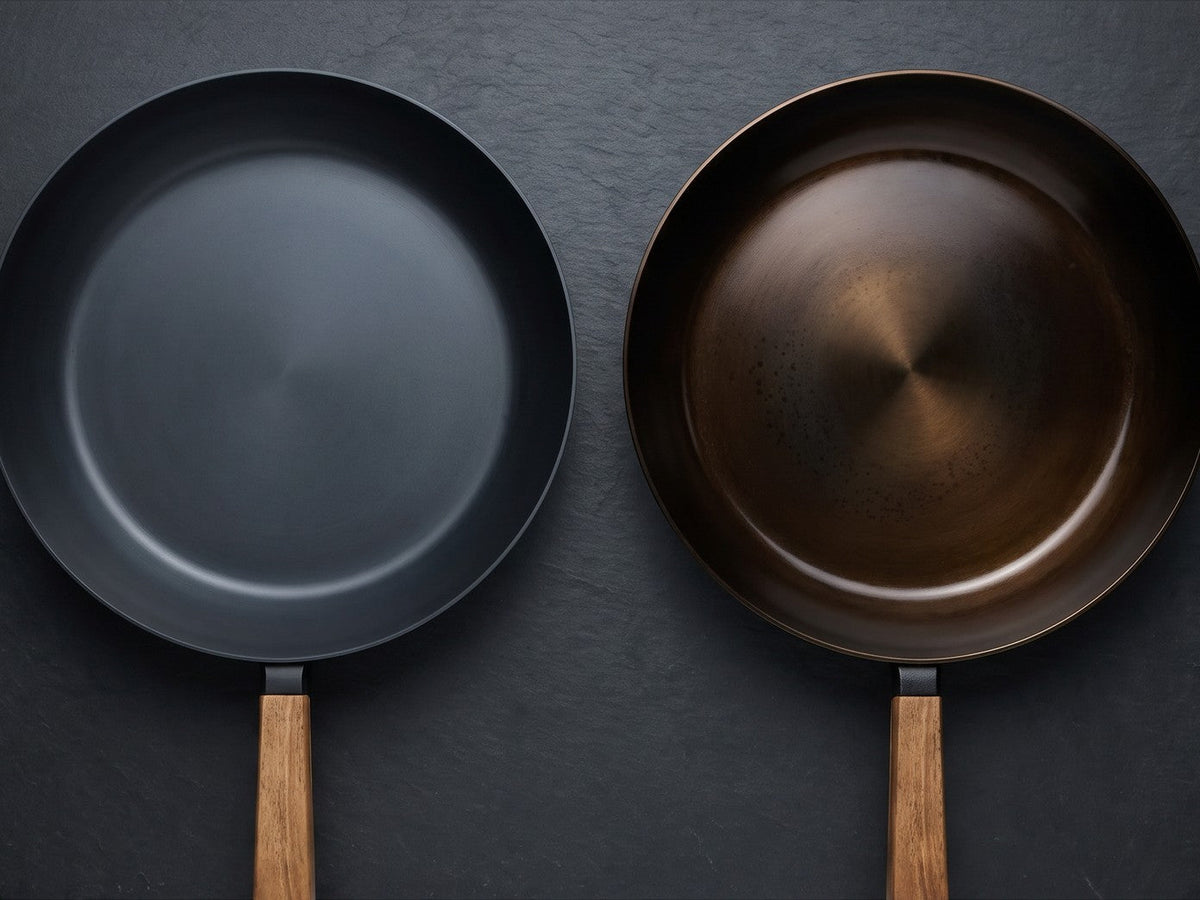
- Blotchy brown, bronze or blue-black patches that don't come off: that is seasoning and heat colouring, not rust. Carbon steel is supposed to look like this. Leave it alone.
- A sticky, gummy or tacky surface: too much oil during seasoning, not rust. Scrub it back and re-season with far less oil.
- Deep pitting you can feel with a fingernail after the rust is gone: rare, from months of wet storage. The pan still cooks; the pits just hold seasoning less evenly. Season it and use it.
How to remove the rust
Method 1: steel wool (light to moderate rust)
- Scrub the rusted areas under warm running water with fine steel wool (grade 00 or 000) or a scouring pad. A drop of dish soap is fine — you're removing seasoning anyway.
- Keep going until the orange is gone and the exposed metal is grey. On a lightly rusted pan this takes two or three minutes.
- Rinse, then dry immediately and completely — on a burner over low heat for a minute is the surest way. Wet bare steel starts rusting again within the hour.
Method 2: salt and oil (stubborn rust, or no steel wool to hand)
- Pour a tablespoon of coarse kosher salt into the dry pan and add a teaspoon of neutral oil.
- Scrub with a wadded paper towel or a cut potato, working the paste over the rust in circles. The salt is the abrasive; the oil keeps it from scattering.
- Wipe out, rinse, dry completely as above.
Method 3: vinegar soak (heavy, all-over rust only)
Soak the pan in a 1:1 mix of white vinegar and water for no more than 30 minutes — set a timer, because vinegar keeps eating steel after the rust is gone. Scrub, rinse, dry, and move straight to seasoning; a vinegar-stripped pan is fully bare and will flash-rust in minutes if left. Reserve this for a pan that has been rusting in a garage, not one that has a few spots.
How to re-season so it doesn't come back
Seasoning is oil polymerised into a hard, dark film by heat. The two rules that decide whether it works: use far less oil than feels right, and get it hot enough to set.
- Start with a dry, warm pan. Heat it on a burner for two minutes to drive off any remaining moisture.
- Oil it, then wipe it off. Rub a teaspoon of a high-smoke-point oil — grapeseed, canola, refined avocado, or a flaxseed-free seasoning blend — over every surface, inside, outside and handle. Then take a clean paper towel and wipe until the pan looks dry. The film that remains is the right amount; anything you can see pooling will turn sticky.
- Bake it. Artist and Black Angus pans (oven-safe to 500°F): place upside down in a 450–500°F oven for one hour, then turn the oven off and let the pan cool inside. Forest pans (stovetop-only): heat on a burner over medium-high until the oil just begins to smoke, hold it there for two to three minutes moving the pan so the sidewalls heat too, let it cool, and repeat two or three times.
- Repeat once or twice. Two or three thin coats beat one thick one. The surface should be matte and dark brown-to-black, not glossy.
- Cook fat-forward food first. Bacon, a fried egg in plenty of butter, roasted potatoes in oil. The first few cooks finish what the oven started. Save eggs-with-no-fat and acidic sauces for a month in.
Our step-by-step seasoning guide walks through each stage in more detail, and how to clean a carbon steel pan covers the everyday routine.
Why it rusted: the three habits that cause almost all of it
- Air-drying. A pan left in a rack to drip-dry rusts along the rim and handle rivets first. Dry it with a towel, then on a burner for thirty seconds, every time.
- Soaking. Ten minutes in the sink is enough to lift the seasoning at the edges. Deglaze stuck food with hot water in the pan while it's still warm instead.
- The dishwasher. Detergent strips seasoning completely, and the drying cycle leaves the pan damp and bare. One cycle equals a full rescue. Never.
Two lesser causes: cooking a long acidic braise (tomato, wine, citrus) that strips the seasoning and leaves bare steel, and storing the pan with a lid on so trapped moisture condenses. Avoid prolonged acidic cooking until the seasoning is well developed, and store uncovered — a sheet of paper towel between stacked pans absorbs what little moisture there is.
Preventing it in ten seconds a day
After washing: dry with a towel, set on a warm burner for thirty seconds, then wipe a few drops of oil across the surface with a paper towel while it's warm. That is the entire routine. A pan that gets this treatment will not rust in a normal kitchen, and the seasoning will keep building until food releases like a coated pan — without a coating. It is why Alva's Artist and Black Angus carry a lifetime warranty: there is nothing on the pan that can wear out.
When to stop worrying
A carbon steel pan that has been rescued from rust is not a weaker pan. Seasoning is a renewable layer, and the steel underneath is unchanged. Restaurant pans go through this cycle dozens of times over their lives. If you have rescued the same pan twice and it keeps rusting in the same spot — usually where a rivet meets the wall, or the rim — that spot is simply harder to dry; give it an extra pass with the towel and a drop of oil.
Deciding whether carbon steel is the right material for you in the first place? Carbon steel vs nonstick and carbon steel vs cast iron cover the trade-offs, and the best carbon steel pans compares Alva's three lines.
Pre-seasoned, uncoated, built to be rescued forever.
Alva Artist ($139–$149) and Black Angus ($99–$109) carbon steel are oven-safe to 500°F and carry a lifetime warranty; the lighter Forest line ($99–$119) is stovetop-only with a 10-year warranty. Free U.S. shipping over $99.
Frequently asked questions
Is it safe to cook in a carbon steel pan that had rust?
Yes, once the rust is scrubbed off and the pan is re-seasoned. Iron oxide is not toxic in the trace amounts involved, but it tastes metallic and prevents seasoning from bonding, so remove it fully before cooking.
Can I use Bar Keepers Friend on a rusty carbon steel pan?
Yes — it is an oxalic-acid cleanser that removes rust quickly. Rinse very thoroughly afterwards, dry immediately and re-season, because it strips the pan to bare steel just as a vinegar soak does.
What oil is best for re-seasoning carbon steel?
Any high-smoke-point neutral oil: grapeseed, canola, sunflower or refined avocado oil. Flaxseed builds a hard but brittle layer that flakes; olive oil and butter smoke too early. Whatever you use, wipe it nearly all off before heating.
Why is my carbon steel pan sticky after seasoning?
Too much oil. Unpolymerised oil stays tacky. Scrub the sticky layer off with hot water and a scouring pad, dry, and re-season with a film so thin the pan looks dry before it goes in the oven.
Can I re-season a Forest pan in the oven?
No — the Forest line, including the wok, is stovetop-only. Season it on a burner: oil, wipe nearly dry, heat until the oil just smokes, hold for two to three minutes tilting the pan to heat the walls, cool, and repeat. Artist and Black Angus pans can be seasoned in a 450–500°F oven.
How often should I season a carbon steel pan?
A full oven seasoning only when the surface is bare — after a rust rescue or a stripping mistake. Otherwise, the light oil wipe after each wash and normal cooking maintain it. A pan used a few times a week never needs a formal re-season.
Build the seasoning back with fat-forward cooking: crispy chicken drumsticks and sweet potato hash.
Our top pickHammered Carbon Steel Frying PanShop now →



Laisser un commentaire
Ce site est protégé par hCaptcha, et la Politique de confidentialité et les Conditions de service de hCaptcha s’appliquent.