






How to Cook on Stainless Steel Without Sticking (The Easy Way)
To keep food from sticking to stainless steel, preheat the dry pan for 2–3 minutes on medium, then add oil, then food. The water-drop (Leidenfrost) test tells you when it is ready: a few drops should bead into a ball that glides across the surface.
The number-one complaint about stainless steel is that food sticks. The good news: it is almost always a heat-and-timing issue, not the pan - and once you learn the routine, stainless releases food beautifully and gives you a sear nonstick cannot. Here is exactly how.
Shopping for stainless that lasts a lifetime?
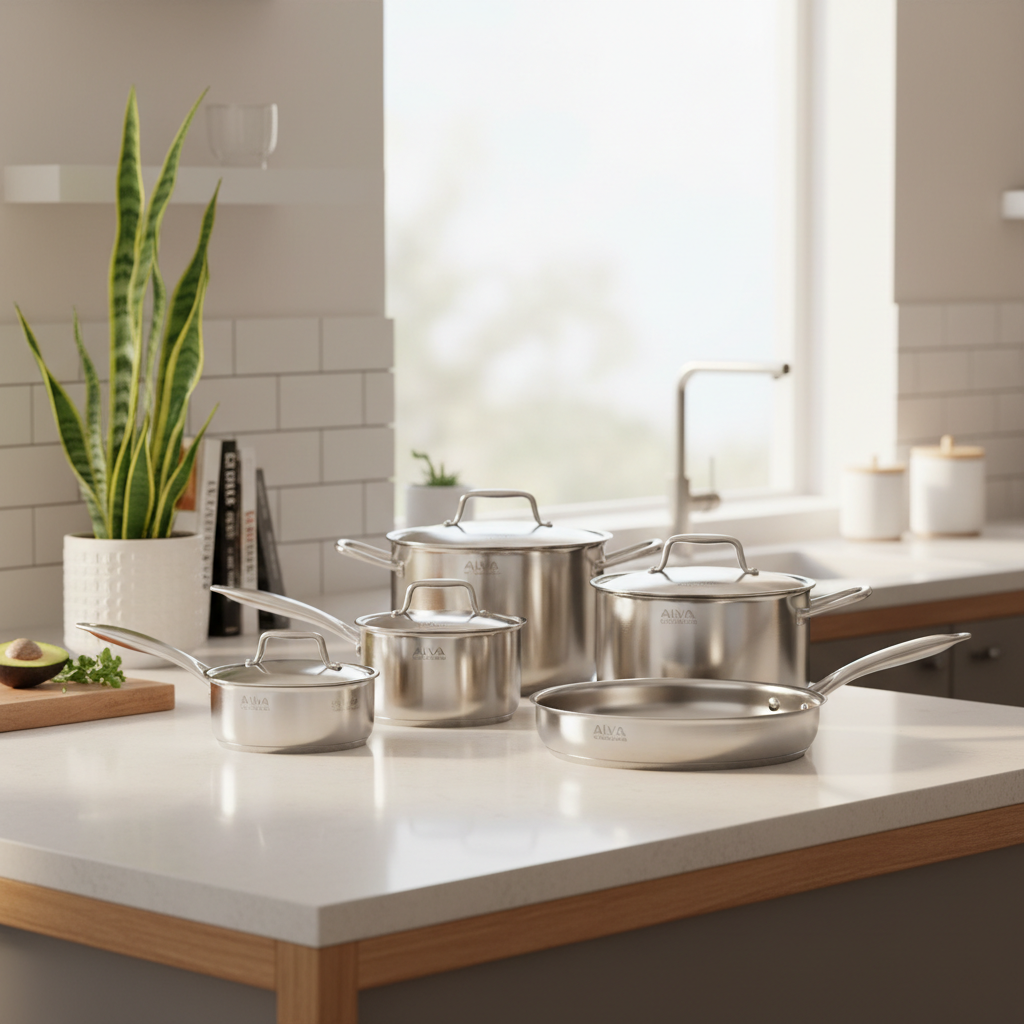
Alva Maestro Stainless is fully clad 5-ply — most pans in this category are 3-ply — with welded, rivet-free handles (no gunk ring), oven-safe to 500°F, dishwasher-safe, and backed by a lifetime warranty.
Why food sticks to stainless steel
Stainless has a microscopically porous surface. When it is cold, food proteins sink into those pores and bond - that is sticking. When the pan is properly preheated, the metal expands, the surface tightens, and a thin layer of oil creates a temporary nonstick barrier. Sticking means the pan was too cold or too crowded, not that stainless is bad.

Our Top Pick
5-Ply Stainless Steel Frying Pan
Fully clad 5-ply stainless steel for even heat, better browning and pan sauces. Uncoated, induction-ready, oven-safe to 500°F and backed by a lifetime warranty.
From $129
Shop the 5-Ply Frying PanThe water test
This is the whole trick:
- Preheat the dry pan on medium for 2-3 minutes.
- Flick in a few drops of water. If they sizzle and evaporate, it is not hot enough. When the water forms a ball that glides across the surface like mercury, the pan is ready.
- Add your oil now - it should shimmer almost immediately. Swirl to coat.
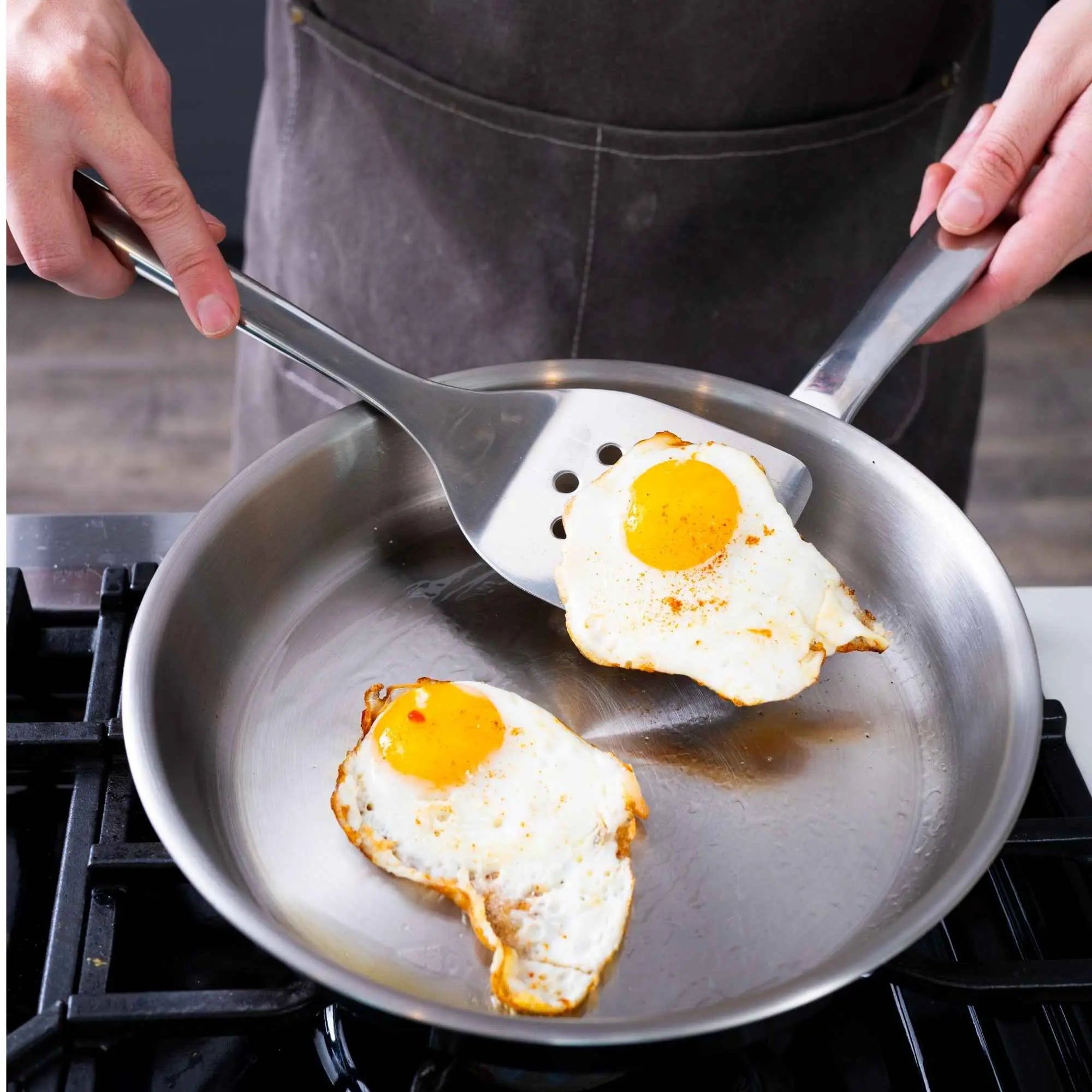
- Add the food and do not touch it. It will grip at first, then release on its own once a crust forms. If it is stuck, give it another 30-60 seconds.
More ways to prevent sticking
- Bring food to room temperature and pat it dry - cold, wet food drops the pan temperature and steams instead of searing.
- Do not overcrowd the pan; cook in batches.
- Use enough fat for delicate foods like eggs or fish.
- Let it release. Stainless tells you when it is ready - the food lifts cleanly once a crust has formed.
Why a quality pan makes it easier
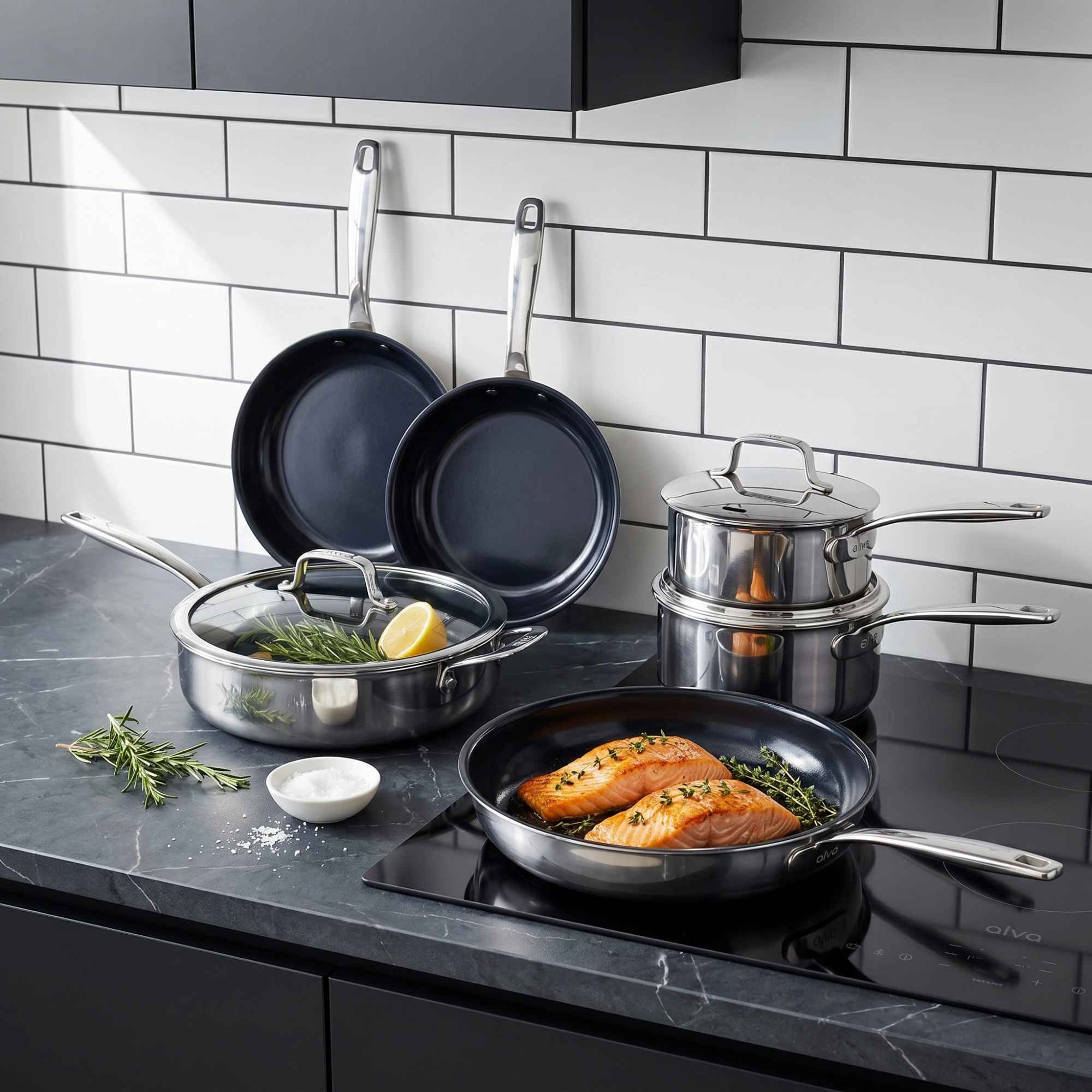
Even heat is what makes the technique reliable. A fully clad 5-ply stainless pan wraps an aluminum core in stainless so the whole surface heats evenly - no hot spots that scorch and stick in one place. It also explains why heat stops at the base on disc-bottom pans and food sticks unevenly. The Maestro 5-Ply Frying Pan is built for exactly this - steady enough for slow, starchy dishes like a creamy Parmesan risotto - and it is induction-ready and oven-safe. See why construction matters in advantages of 5-ply cookware.
Frequently asked questions
Oil in a cold or hot pan?
Hot - preheat first, then add oil, then food.
What oil is best?
A high-smoke-point oil like avocado or grapeseed for searing.
Is stainless harder than nonstick?
A little more technique, but it sears far better and lasts decades - compare in our stainless steel vs nonstick guide.
How do I clean it after?
Alva stainless has no nonstick coating - no PFAS or PTFE by design - see our safety standards. Shop the stainless steel collection.
Practice on these: pan-seared salmon, pan-fried fish in lemon butter and garlic butter shrimp.
Our top pick5-Ply Stainless Steel Frying PanShop now →

%20test%20tells%20you%20when%20it%20is%20ready:%20a%20few%20drops%20shou...)
Dejar un comentario
Este sitio está protegido por hCaptcha y se aplican la Política de privacidad de hCaptcha y los Términos del servicio.