





Artículo: What Size Saucepan Do You Need? 1.5-Qt vs 2-Qt vs 3-Qt, Explained
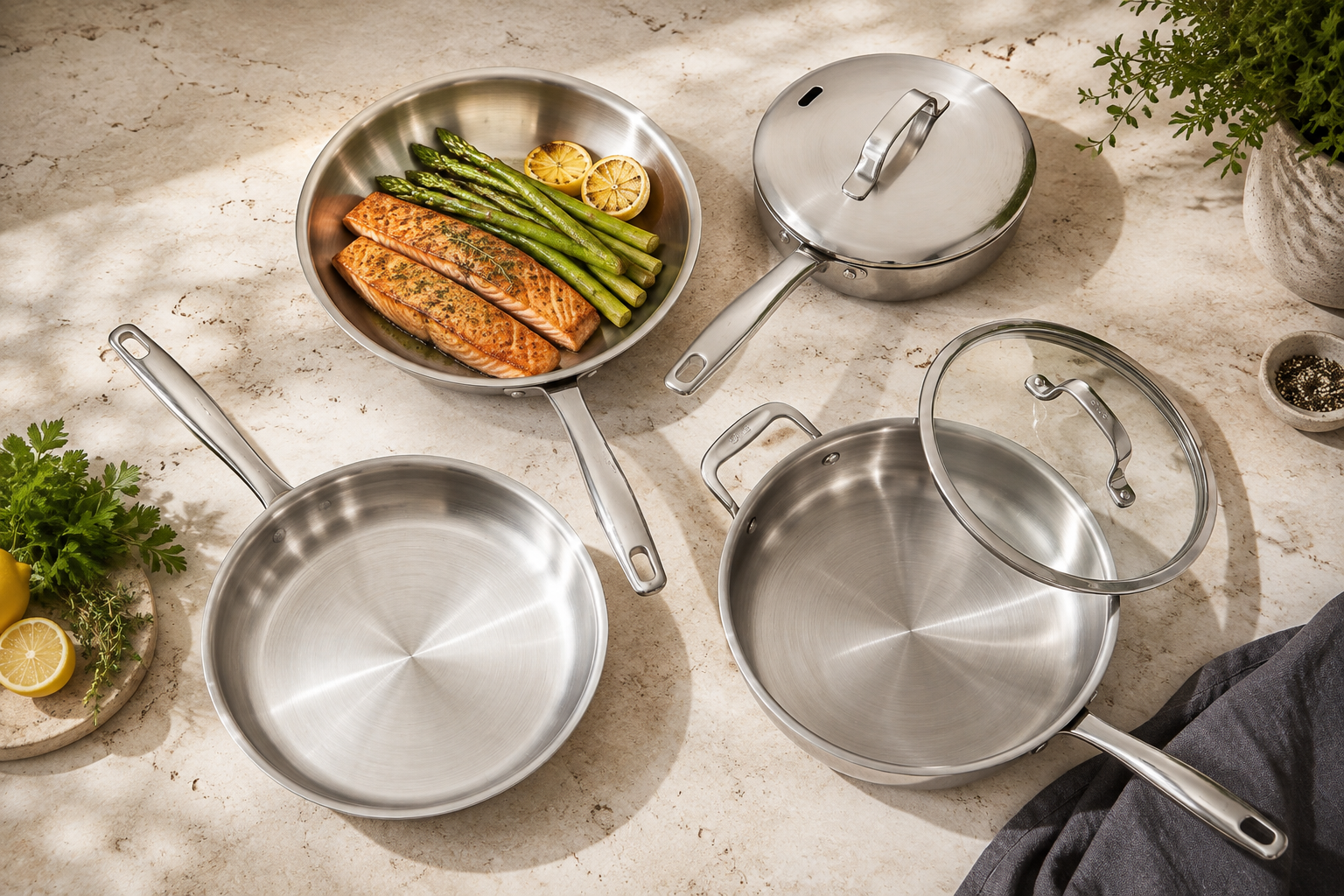
What Size Saucepan Do You Need? 1.5-Qt vs 2-Qt vs 3-Qt, Explained
For most home cooks, a 2- to 3-quart saucepan is the most useful size: big enough for boxed pasta, grains for four, and weeknight sauces, but still light enough to lift and pour one-handed. If you mostly cook for one or two — reheating, oatmeal, a single sauce — a 1.5-quart is easier to live with. If you regularly feed three or more, choose a 3-quart.
Saucepan sizes at a glance
| Size | Best for | Typical household |
|---|---|---|
| 1–1.5 quarts | Reheating leftovers, oatmeal, single portions of rice or grains, melting butter, one sauce | 1–2 people |
| 2 quarts | Sauces for a family meal, 1–2 cups of dry rice, packet soups, custards | 2–3 people |
| 3 quarts | A full pound of pasta shapes, batch grains, blanching vegetables, soups for four | 3–5 people |
| 4+ quarts | Big-batch soups and stocks — at this point a stockpot usually serves you better | Large households |
When a 1.5-quart saucepan is the right call
A 1.5-quart pan heats up fast, takes up little cabinet or stovetop space, and handles the small jobs that make up most weekday cooking: reheating, simmering a cup of rice, warming milk, making a pan sauce. Its limitation is headroom — boiling anything that foams (pasta, potatoes) gets messy quickly, and doubling a recipe usually means switching pans.
When a 3-quart saucepan is the right call
The 3-quart is the closest thing to a do-everything saucepan. It boils a pound of short pasta, cooks grains for a family, blanches vegetables, and still works fine for a single batch of sauce — the extra sidewall just gives you splash protection. If you only buy one saucepan, this is the safer choice; the main trade-off is a little more weight and slower heat-up for small tasks.
Does material change the answer?
Size matters more than material, but material decides how the pan behaves at that size. Fully clad stainless steel is the standard recommendation for saucepans because so much saucepan work is acidic or temperature-sensitive — tomato sauce, citrus, wine reductions, custards. A non-reactive 18/10 stainless surface won't interact with acidic ingredients, and there's no coating to baby. For a deeper comparison of specific pans, see our guide to the best stainless steel saucepans, or start with the basics in what a saucepan is and how it differs from pots and pans.
Our pick: one pan, two sizes
Alva's Maestro 5-Ply Stainless Steel Saucepan with Lid comes in exactly the two sizes this guide points to: a 1.5-quart at $139 and a 3-quart at $159. Five bonded layers carry heat up the sidewalls for even simmering, the uncoated 18/10 interior is non-reactive and takes metal utensils, and it's oven-safe to 500°F, induction-compatible, dishwasher-safe, and covered by a lifetime warranty. Free U.S. shipping over $99.
Where a saucepan isn't the right choice
An honest caveat: if your most common "saucepan job" is actually soup for six, chili, or stock, skip the 4-quart saucepan and get a stockpot — the wider base and taller sides are built for it. And for reducing sauces quickly, a sauté pan's wider surface evaporates faster than any saucepan. Our saucepan buying guide covers when each shape earns its place.
Frequently asked questions
What size saucepan is best for one person?
A 1.5-quart saucepan is the best size for one person. It handles single portions of grains, sauces, oatmeal, and reheating without wasted space or slow heat-up times.
What size saucepan do I need for a family of four?
A 3-quart saucepan is the right size for a family of four. It boils a full pound of pasta, cooks 2–3 cups of dry rice, and handles vegetable sides and soups in one batch.
Is a 2-quart saucepan big enough for pasta?
A 2-quart saucepan can boil about half a pound of small pasta shapes, but it's tight — water foams near the rim. For a full box of pasta, use a 3-quart saucepan or a stockpot.
Should I buy one saucepan or two?
If you cook most days, two saucepans — a small one (1.5 quarts) and a large one (3 quarts) — cover nearly every task without mid-recipe pan swaps. If you're buying just one, choose the 3-quart.
Are bigger saucepans always better?
No. Oversized saucepans heat slowly for small jobs, evaporate sauces unevenly, and are heavier to pour from. Matching pan size to portion size gives better results than defaulting to the largest pan.


Dejar un comentario
Este sitio está protegido por hCaptcha y se aplican la Política de privacidad de hCaptcha y los Términos del servicio.