






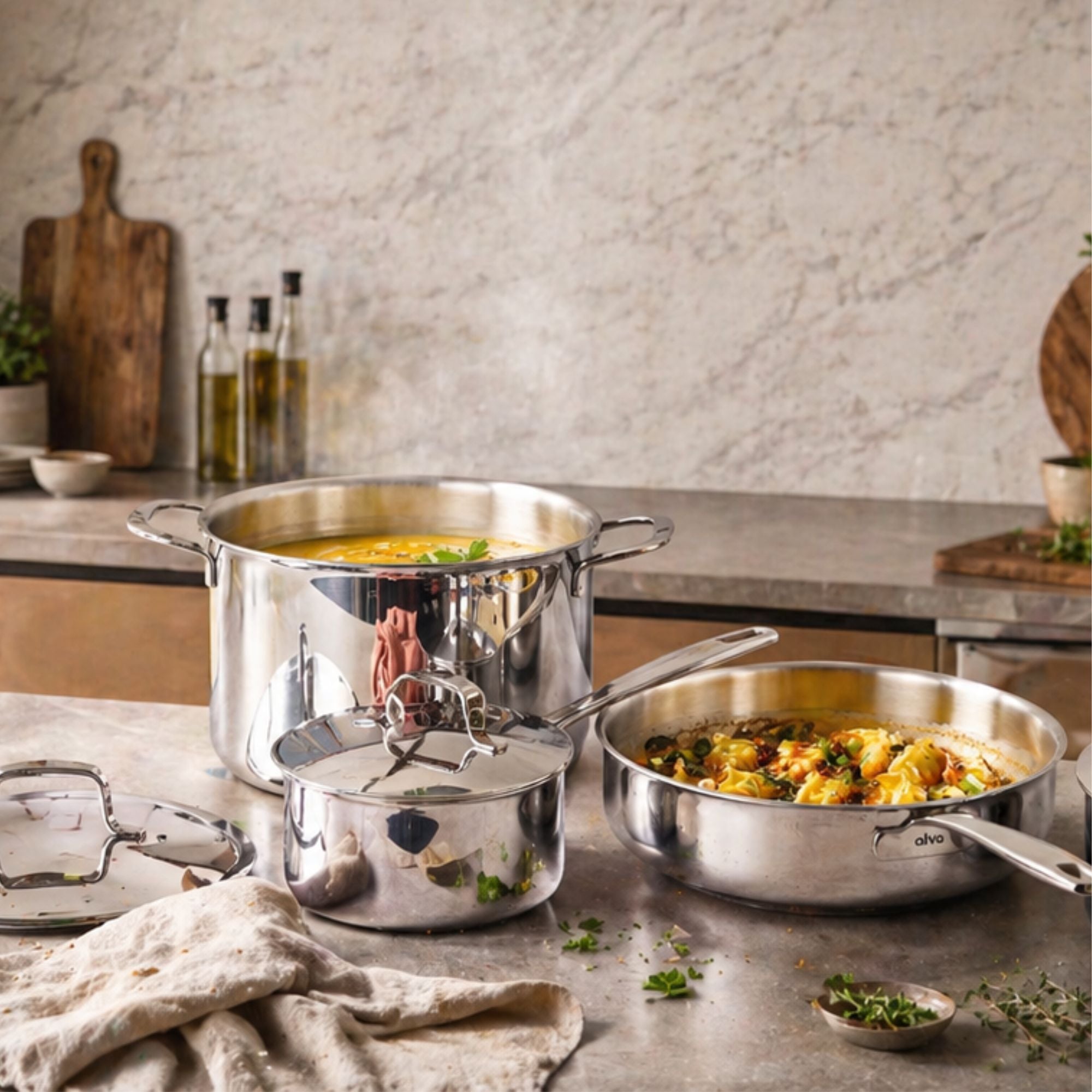
Does Stainless Steel Leach Nickel? (Is It Safe?)
Yes — quality stainless steel contains nickel, because 18/10 stainless is roughly 18% chromium and 10% nickel. But under normal cooking, the amount that leaches into food is tiny and well within safe limits. Leaching rises only with damaged or low-grade steel, or very long, very acidic cooks. Free U.S. shipping over $99.
Nickel is the one real objection people raise about stainless steel, and it deserves an honest answer rather than a brush-off. Here's what's actually true — including who should be cautious.

Our Top Pick
5-Ply Stainless Steel Frying Pan
Fully clad 5-ply stainless steel for even heat, better browning and pan sauces. Uncoated, induction-ready, oven-safe to 500°F and backed by a lifetime warranty.
From $129
Shop the 5-Ply Frying PanWhy stainless steel contains nickel at all
The "10" in 18/10 stainless is the nickel. Nickel is what gives good stainless its corrosion resistance, its non-reactive surface, and that bright, durable finish that doesn't pit or rust. It's not a contaminant that slipped in — it's a deliberate part of the alloy, and it's the reason a stainless pan can simmer tomato sauce for an hour without reacting the way bare iron or aluminium would.
How much nickel actually leaches?
For an intact, good-quality stainless pan, the answer is: very little. Studies that measure metal migration from stainless cookware consistently find nickel and chromium release in the range of micrograms to low milligrams per serving — small next to the nickel most people already get from ordinary foods like nuts, legumes, oats, chocolate, and shellfish. A daily diet delivers far more nickel than a well-made pan does.
Leaching goes up in a few specific situations, and it's worth being straight about them:
- Very acidic foods cooked for a long time — an all-day tomato or citrus simmer pulls out more than a quick sauté.
- Brand-new pans on their first few uses — release is highest early, then drops sharply as the surface stabilises.
- Damaged, scratched, or pitted surfaces — aggressive scouring or a corroded pan exposes more metal.
- Low-grade steel — thin, poorly finished pans leach more than dense, well-polished fully-clad steel.
Notice the pattern: the problems cluster around cheap or damaged steel, not stainless as a category.
When nickel is worth taking seriously
For most people, nickel from stainless cookware is a non-issue. The exception is a genuine nickel allergy (systemic nickel allergy syndrome), which affects a minority of people and can make even small dietary nickel a problem. If that's you, this isn't something to wave away.
If you have a diagnosed nickel sensitivity, you have real options: choose high-quality fully-clad stainless (denser, better-finished steel leaches less than budget pans), keep acidic long-cooks to enameled or coated cookware, and never cook in a scratched or pitted stainless pan. Some people with strong sensitivity prefer to move acidic cooking to enameled cast iron (a glass surface, no exposed metal) or seasoned carbon steel for everyday tasks. There's no shame in matching the pan to your body.
Stainless, nickel, and safety at a glance
| Situation | Nickel leaching risk |
|---|---|
| Everyday cooking, intact quality pan | Very low — well within safe limits |
| Quick sauté or sear | Negligible |
| Brand-new pan, first few uses | Slightly higher, then drops |
| Long acidic simmer (tomato, citrus, wine) | Higher — use enameled for all-day acid cooks |
| Scratched, pitted, or low-grade steel | Highest — replace or avoid |
| You have a diagnosed nickel allergy | Relevant — see the options above |
What to look for in a stainless pan
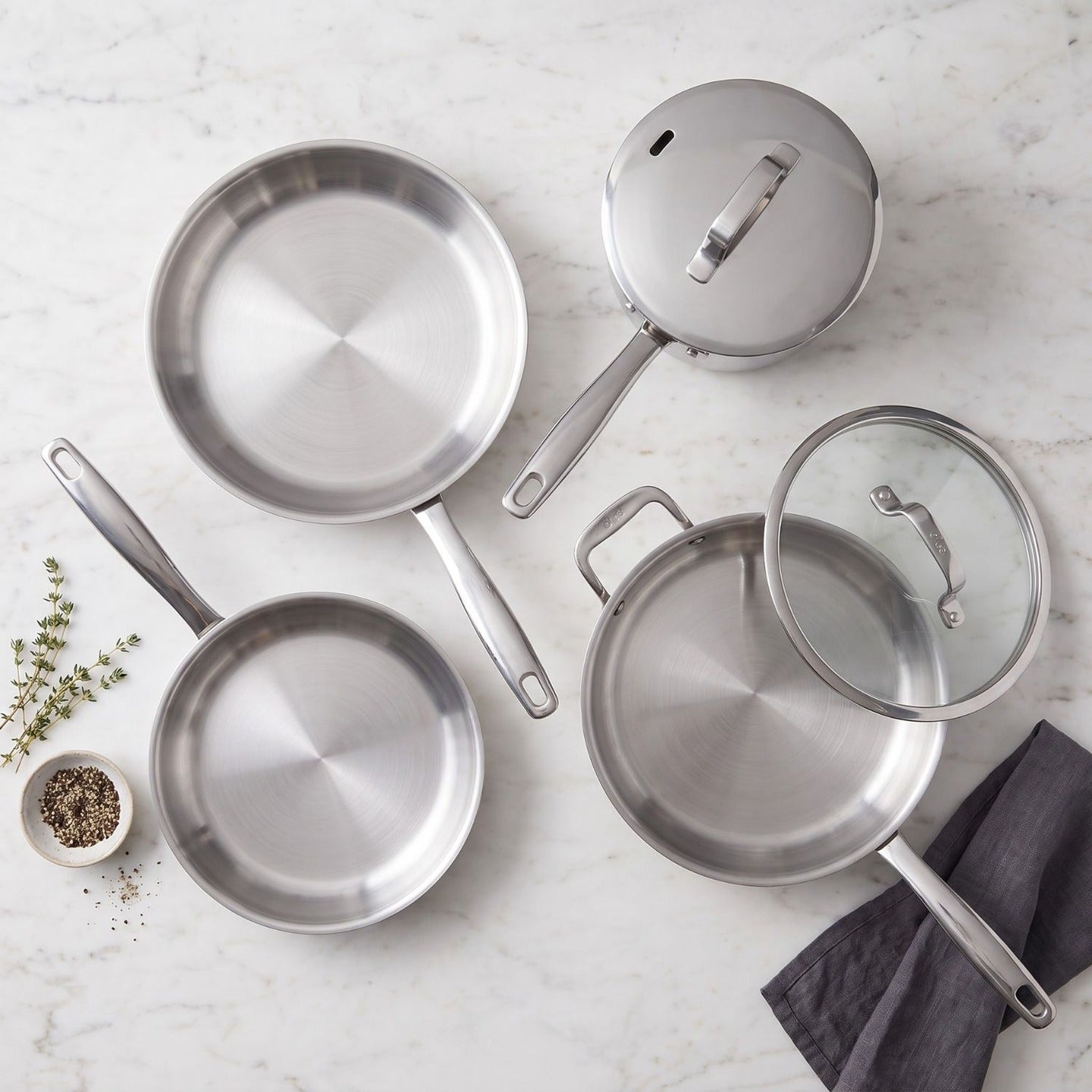
If nickel is on your mind, the single best move is to buy dense, well-finished, fully-clad steel and keep it in good condition. Thin disc-bottom pans and poorly polished budget steel are where most leaching worries actually come from. For more on why construction matters, see fully clad vs disc-bottom stainless steel, and if you're weighing your material options, stainless steel vs carbon steel lays out the trade-offs.
The pan we'd point you to
Alva's Maestro 5-Ply Frying Pan ($129) is fully clad base-to-rim in 18/10 stainless — dense, well-polished steel rather than a thin disc-bottom body, which is exactly the kind of construction that keeps metal migration low. It has no nonstick coating, so there's no PFAS or PTFE by design, it's oven-safe to 500°F, dishwasher-safe, works on all cooktops including induction, and it's backed by a lifetime warranty. Alva has been designing cookware in Belgium since 1949 (manufactured in China). For the fuller safety picture, read is stainless steel cookware safe. Shop the Maestro 5-Ply Frying Pan →
One honest caveat: if you have a confirmed systemic nickel allergy, no stainless pan is truly nickel-free — a quality fully-clad pan minimises exposure, but enameled cast iron may suit acidic cooking better for you.
Frequently asked questions
Does stainless steel leach nickel into food?
Yes, in very small amounts. 18/10 stainless steel contains about 10% nickel, and a little can migrate into food — but for an intact, quality pan under normal cooking the amount is tiny and within safe limits, far less than the nickel found in many everyday foods.
Is nickel in stainless steel cookware dangerous?
For most people, no. The quantities released during normal cooking are negligible compared with dietary nickel from foods like nuts, oats, and chocolate. The exception is people with a diagnosed nickel allergy, for whom even small amounts can matter.
What increases nickel leaching from stainless steel?
Long cooking of very acidic foods (tomato, citrus, wine), the first few uses of a brand-new pan, and — most of all — scratched, pitted, or low-grade steel. Dense, well-finished fully-clad stainless leaches the least.
What cookware is best if I have a nickel allergy?
No stainless pan is fully nickel-free, but high-quality fully-clad stainless minimises exposure. For acidic, long-simmer dishes, enameled cast iron gives you a glass cooking surface with no exposed metal, and seasoned carbon steel is another coating-free option for everyday tasks.
Is 18/10 stainless steel safe for cooking?
Yes. 18/10 is a food-grade, non-reactive alloy that is stable at high heat and has no synthetic coating to wear off. Keep it in good condition and avoid all-day acidic simmers in it, and it's one of the safest materials you can cook on.
The bottom line
Quality stainless does contain nickel, but leaching is minimal from an intact, well-made pan and only becomes worth worrying about with damaged, cheap steel — or if you have a real nickel allergy. Buy dense fully-clad steel, keep it in good shape, and move all-day acidic cooks to enameled if you're sensitive.
Our top pick5-Ply Stainless Steel Frying PanShop now →


Dejar un comentario
Este sitio está protegido por hCaptcha y se aplican la Política de privacidad de hCaptcha y los Términos del servicio.