





Best Non-Toxic Cookware (2026): A Buyer's Guide to PFAS-Free, Lab-Tested Pans
Updated for 2026 · Independently lab-tested picks
The best non-toxic cookware is defined by its material, not its marketing — stainless steel, PFAS-free ceramic nonstick, enameled cast iron and carbon steel. This guide ranks the best non-toxic cookware by material and need, and shows how to verify any claim with independent lab testing for PFAS, lead and cadmium — see ours on our Testing & Materials page.
Here's how to cut through the marketing and choose cookware you can actually trust.

Our Top Pick
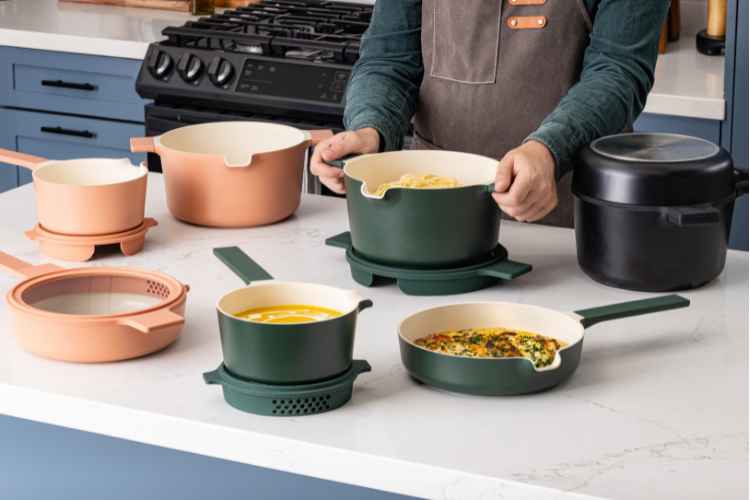
Ceramic Nonstick Cookware Set, 12-Piece
A complete ceramic nonstick kitchen in one set. Made without PFAS, PTFE or PFOA, supported by published third-party testing, induction-ready and backed by a 10-year limited warranty.
From $599
Shop the 12-Piece SetWant non-toxic cookware you can trust?
Alva's cookware is made without PFAS, PTFE, PFOA, lead or cadmium and independently tested by TÜV Rheinland against a 638-substance panel — with the lab reports published. Backed by 5–10 year warranties.
Shop non-toxic cookwareSee the lab reportsBest non-toxic cookware by material and need
Our top picks across every non-toxic material, so you can match the right pan to the way you actually cook. Every Alva line is independently tested and free of PFAS, PTFE, PFOA, lead and cadmium.
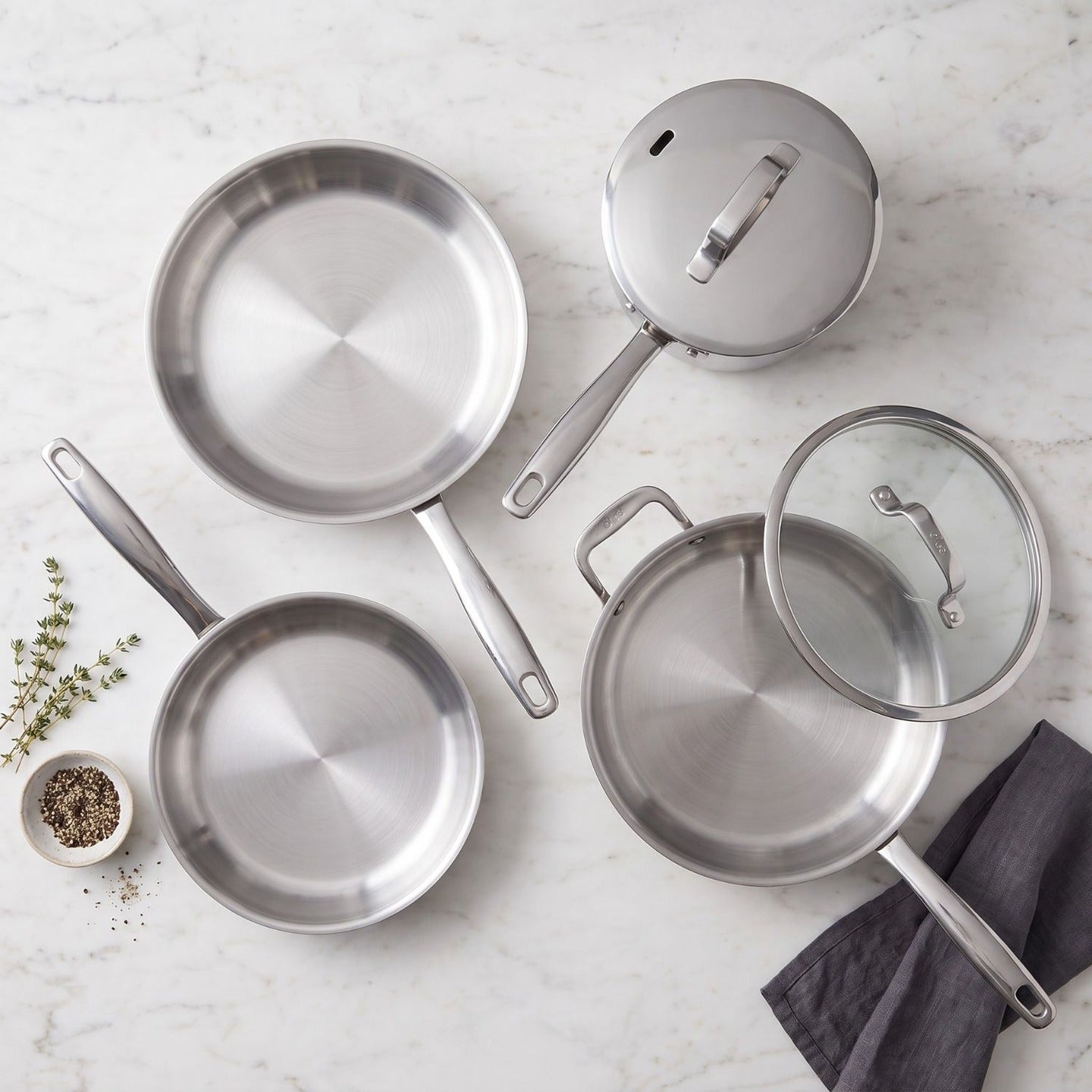
- Best overall — Maestro Stainless 5-Ply: Fully-clad stainless that sears, simmers and handles acidic foods with no coating to wear out. Oven-safe to 500°F.
- Best nonstick (ceramic) — Maestro Ceramic: PFAS-free mineral nonstick for eggs and delicate foods; oven-safe to 400°F.
- Best coating-free — Maestro Stainless 5-Ply: Nothing to flake or degrade, which makes bare stainless the most durable non-toxic surface you can buy.
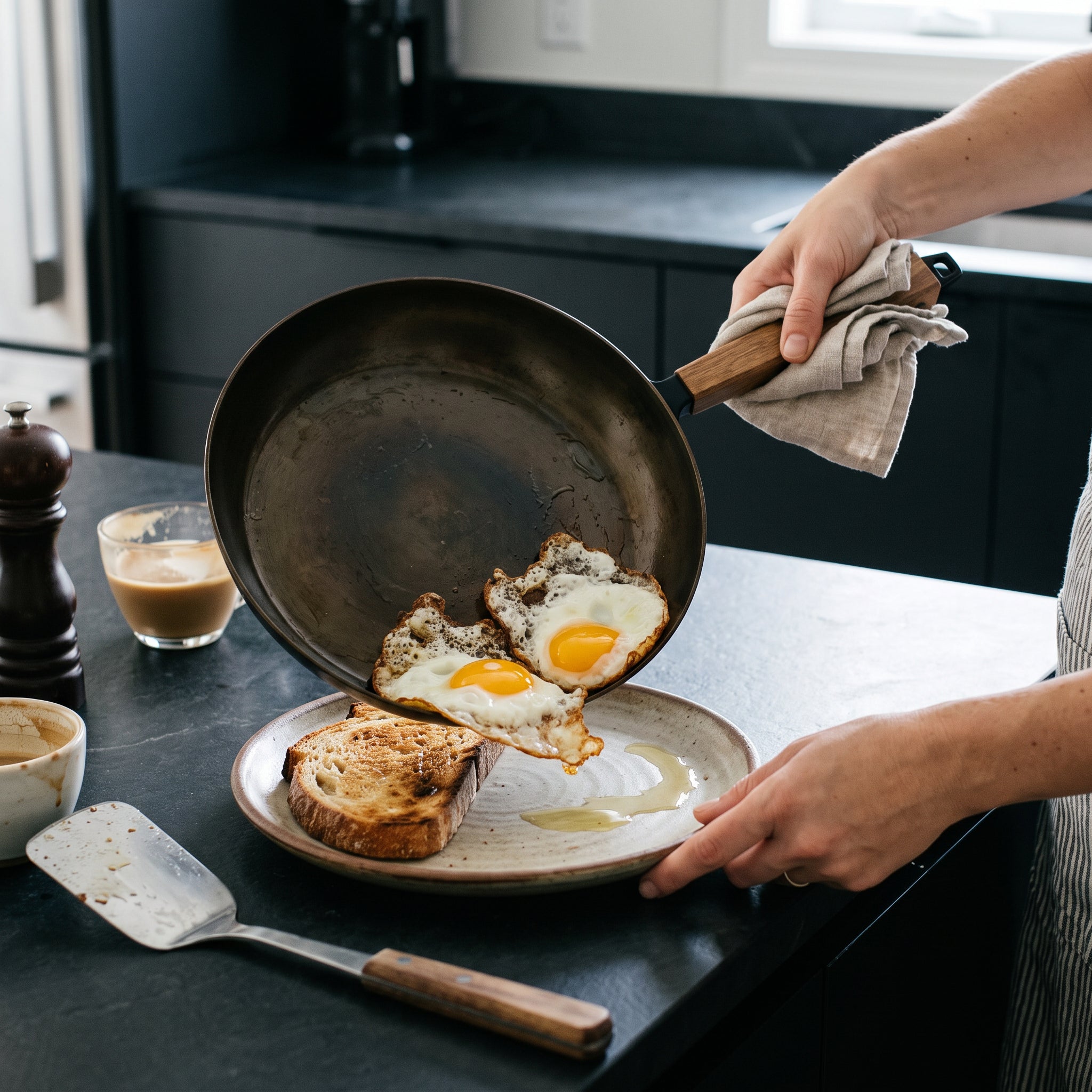
- Best carbon steel — Forest Carbon Steel: Seasons to a natural nonstick for high-heat searing, with no synthetic coating.
- Best cast iron — Nori Enameled Cast Iron: Enamel over iron for braises and acidic sauces; built to last a lifetime.
- Best value — Neat 5-Piece Stackable Ceramic Set: A complete PFAS-free nonstick starter set that stacks to save cabinet space.
- Best set — Ceramic Nonstick 12-Piece Set: A full non-toxic kitchen in one box — induction-ready and backed by a 10-year warranty.
| Pick | Material | Non-toxic (free of) | Oven-safe | Warranty | Shop |
|---|---|---|---|---|---|
| Maestro Stainless 5-Ply (Best overall / coating-free) | 5-ply stainless steel | PFAS, PTFE, PFOA, lead, cadmium | 500°F | Lifetime | Shop |
| Maestro Ceramic (Best nonstick) | PFAS-free ceramic nonstick | PFAS, PTFE, PFOA, lead, cadmium | 400°F | 5–10 yr | Shop |
| Forest Carbon Steel (Best carbon steel) | Carbon steel | PFAS, PTFE, PFOA, lead, cadmium | High-heat, oven & broiler | Lifetime | Shop |
| Nori Enameled Cast Iron (Best cast iron) | Enameled cast iron | PFAS, PTFE, PFOA, lead, cadmium | High-heat, oven-safe | Lifetime | Shop |
| Neat Stackable Ceramic Set (Best value) | PFAS-free ceramic nonstick | PFAS, PTFE, PFOA, lead, cadmium | 400°F | 5–10 yr | Shop |
| Ceramic Nonstick 12-Piece Set (Best set) | PFAS-free ceramic nonstick | PFAS, PTFE, PFOA, lead, cadmium | 400°F | 10-year | Shop |
What "non-toxic" really means (and why the label is often meaningless)
There is no legal definition of "non-toxic" cookware. Any brand can print it on a box. What matters is (1) what the cooking surface is made of, (2) whether it can release anything into your food under normal cooking heat, and (3) whether an independent lab has verified it. A genuine non-toxic pan is defined by its materials and its test results — not its packaging. Learn to vet a claim in five minutes with How to Spot Truly Non-Toxic Cookware.
The chemicals people are actually trying to avoid
- PFAS ("forever chemicals"): Used in traditional nonstick coatings (PTFE/Teflon-type). They persist in the body and environment. PFAS-free is the single most requested feature in non-toxic cookware.
- Lead & cadmium: Heavy metals that can appear in low-quality glazes and enamels. Reputable brands test finished products to confirm they're absent or within safe limits.
- PFOA: An older PFAS compound, now phased out of most cookware but still worth confirming.
The best non-toxic cookware materials, ranked by use
Stainless steel — best all-around
Non-reactive, durable, and safe for acidic foods. Fully-clad 5-ply stainless is the workhorse of a non-toxic kitchen. See Is Stainless Steel Cookware Safe? and shop the Maestro 5-ply collection.
Ceramic nonstick — best PFAS-free nonstick
A mineral-based coating that delivers nonstick performance without PFAS. Ideal for eggs and delicate foods; plan to replace it every few years as the coating wears. See Is Ceramic Cookware Safe? and shop ceramic nonstick.
Cast iron & enameled cast iron — best for high heat and longevity
Naturally non-toxic, essentially lasts forever, and enameled versions handle acidic braises. Shop enameled cast iron.
Carbon steel — best natural nonstick for searing
Seasons to a natural nonstick surface with no coating to wear off. Great high-heat alternative to nonstick. Shop carbon steel.
How to verify a brand's non-toxic claim
Ask three questions: Does the brand state exactly what the cooking surface is made of? Is it explicitly PFAS-free? And does it publish independent, third-party test results for heavy metals — not just a vague "safe" claim? If a brand can't answer all three, treat the label with skepticism. Alva publishes third-party lab results for every line; see the Testing & Materials page.
Building a fully non-toxic kitchen
You don't need to replace everything at once. Start with the pan you use most — usually an everyday skillet — then add a nonstick for eggs and a pot for soups and pasta. If you want to go a level deeper on which materials are genuinely healthy to cook on, we've broken that down separately. For a ready-made shortlist, see 7 Best Non-Toxic Cookware Sets and Best Non-Toxic Frying Pan. New to cookware overall? Our Complete Cookware Buying Guide walks through every decision.
How we chose these picks
Every recommendation here clears the same bar we hold our own cookware to:
- Material first. The cooking surface has to be an inherently safe material — coating-free stainless, carbon steel or cast iron, or a PFAS-free mineral ceramic — with no PTFE/Teflon-type nonstick.
- Free of what matters. No PFAS, PTFE, PFOA, lead or cadmium.
- Third-party tested. We prioritize cookware that has been independently tested. Alva's lines are verified by TÜV Rheinland against a 638-substance panel with results below the reporting limit, and Neat is lab-tested for lead and cadmium below FDA limits.
- Published reports. The lab results are public — not just a "safe" claim on the box.
- Built to last. Warranties run from 5 years to lifetime.
What makes cookware non-toxic
Non-toxic cookware is free of the compounds most people are trying to avoid — PFAS, PTFE and PFOA (the "forever chemicals" in traditional nonstick) and heavy metals like lead and cadmium that can hide in cheap glazes. Because the term is unregulated, the proof is third-party testing from an accredited lab and a published report you can actually read.
Still deciding between materials? Compare them in our non-toxic cookware guide and ceramic cookware guide, compare collections head-to-head, or find your cookware with our quiz.
Frequently asked questions
What is the safest non-toxic cookware?
Stainless steel, PFAS-free ceramic nonstick, cast iron, and carbon steel are the safest, most widely recommended non-toxic materials. The safest specific products are ones with published independent lab tests confirming they're PFAS-free and free of lead and cadmium.
Is stainless steel cookware non-toxic?
Yes. Quality stainless steel is non-reactive and does not leach harmful chemicals under normal cooking. It's one of the most trusted non-toxic materials and safe for acidic foods.
Is ceramic cookware really non-toxic?
Reputable ceramic nonstick is made without PFAS, PFOA, lead, or cadmium and is considered non-toxic. Because quality varies, choose ceramic cookware from a brand that publishes third-party test results.
Does "non-toxic" cookware actually mean anything?
Not on its own — the term is unregulated. It only means something when backed by a clear statement of materials and independent lab testing. Judge cookware by what it's made of and its test results, not the label.
How do I know if my cookware has PFAS?
Traditional nonstick coatings (PTFE/Teflon-type) typically contain PFAS. Stainless steel, cast iron, carbon steel, and modern ceramic-coated pans are PFAS-free. Check the brand's materials disclosure, and favor ones that state PFAS-free and publish testing.
Every Alva line is independently lab-tested for PFAS and heavy metals. See the results on our Testing & Materials page, or browse all non-toxic cookware.
What cookware has no PFAS?
Stainless steel, carbon steel, cast iron and enameled cast iron are inherently PFAS-free because they have no synthetic nonstick coating. Modern ceramic nonstick is also made without PFAS, PTFE or PFOA. Alva's ceramic, stainless, carbon steel and Nori cast iron lines are all PFAS-free and independently tested to confirm it.


Dejar un comentario
Este sitio está protegido por hCaptcha y se aplican la Política de privacidad de hCaptcha y los Términos del servicio.