





Cookware Materials Explained (2026): Every Type, Compared
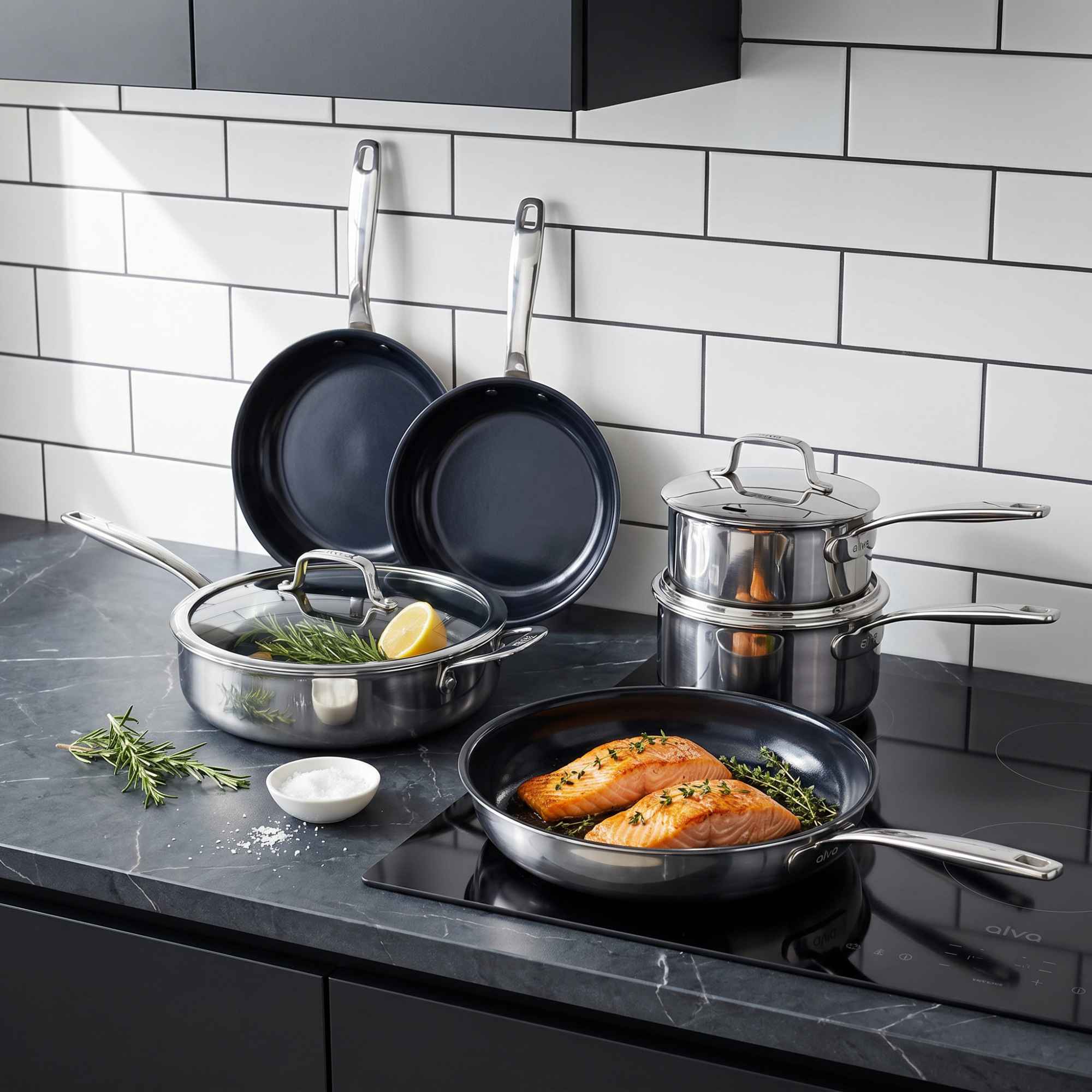
Short answer: There are six cookware materials worth knowing — stainless steel (best all-around), ceramic nonstick (best PFAS-free nonstick), cast iron (best heat retention), carbon steel (best natural nonstick for high heat), aluminum (light and cheap, usually as a core or coated), and copper (fastest, most responsive, high-maintenance). Most kitchens are best served by mixing two or three of these rather than relying on one.
Not sure which material is right for you?

Our Top Pick
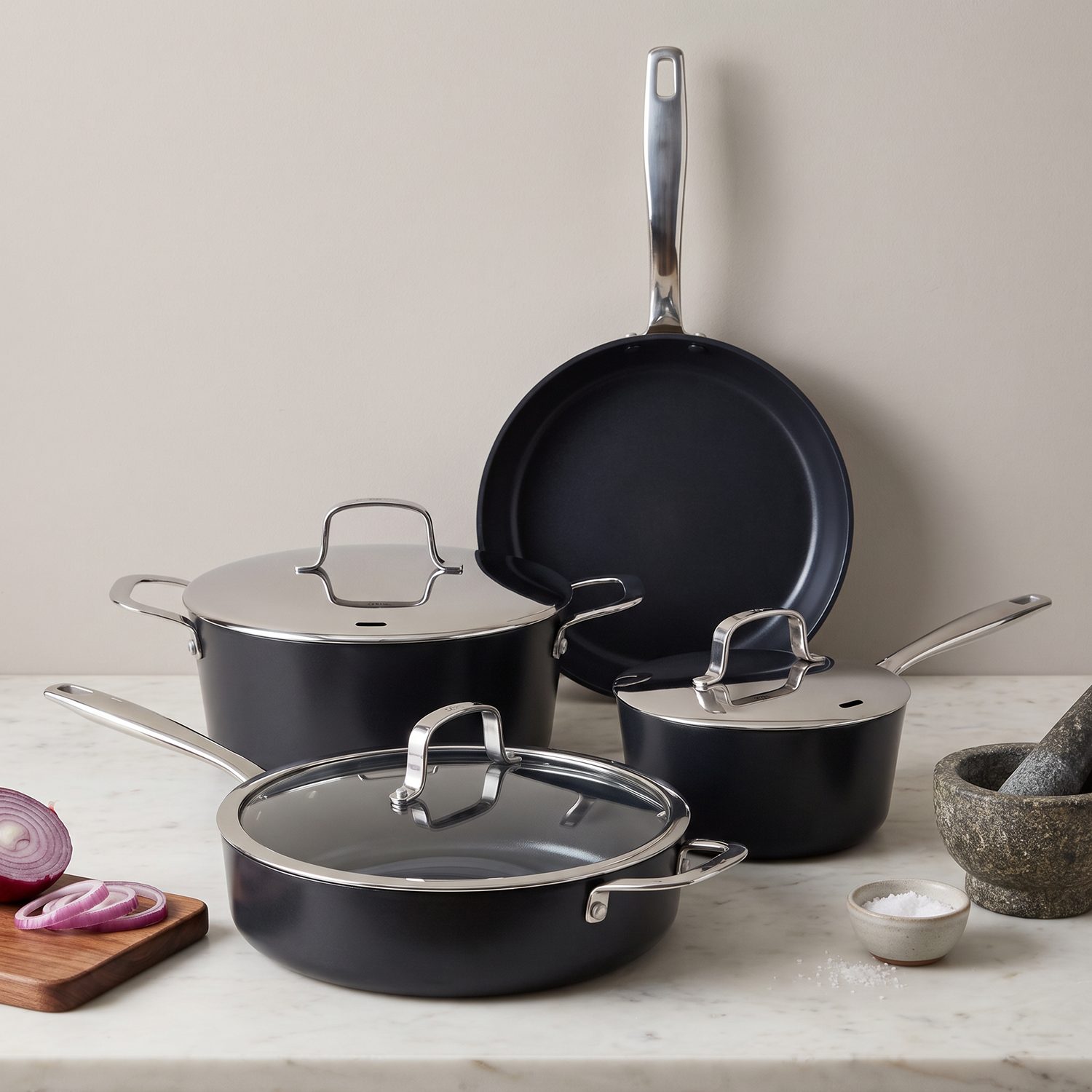
Ceramic Nonstick Cookware Set, 12-Piece
A complete ceramic nonstick kitchen in one set. Made without PFAS, PTFE or PFOA, supported by published third-party testing, induction-ready and backed by a 10-year limited warranty.
From $599
Shop the 12-Piece SetTake our 2-minute quiz and get a personalized cookware recommendation based on how you cook — nonstick, stainless, carbon steel, or cast iron.
Find your cookware →Here's what each material is made of, what it's best at, and its trade-offs.
Stainless steel
Best for: searing, browning, deglazing, sauces, acidic foods. Trade-off: food sticks without proper preheating. Look for fully-clad construction (aluminum/copper layered through the pan) and 3-ply or 5-ply. It's non-reactive, durable for decades, oven- and dishwasher-safe. Deep dives: Is Stainless Steel Cookware Safe? · Ceramic vs Stainless Steel. Shop Maestro 5-ply.
Ceramic nonstick
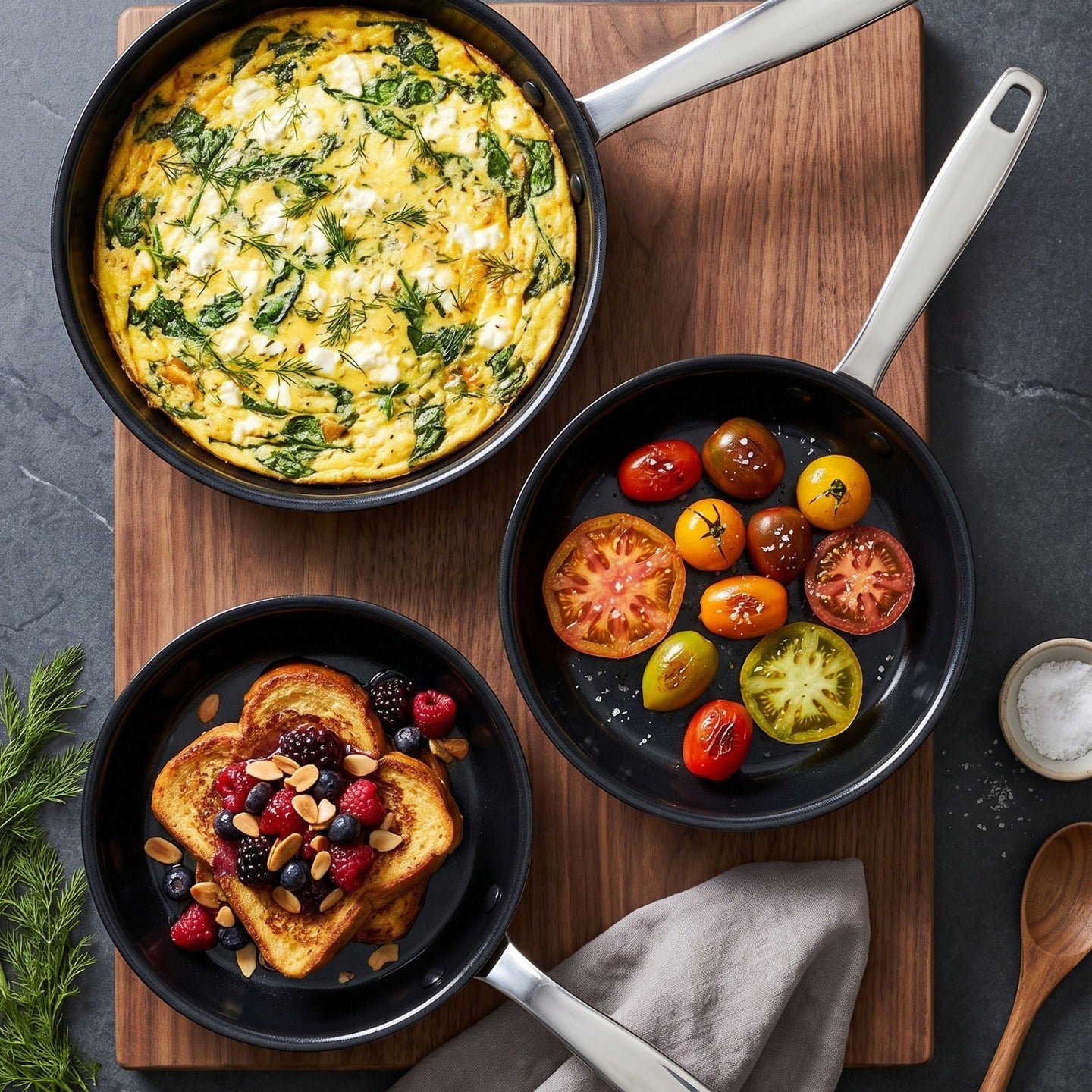
Best for: eggs, pancakes, fish, low-fat cooking. Trade-off: the coating wears in 2–5 years. A mineral-based, PFAS-free coating — the modern non-toxic answer to Teflon. Treat as a replaceable tool. Deep dive: Is Ceramic Cookware Safe?. Shop ceramic nonstick.
Cast iron & enameled cast iron
Best for: searing, frying, baking, braising (enameled). Trade-off: heavy; bare cast iron needs seasoning. Unbeatable heat retention and essentially lasts forever. Enameled versions skip seasoning and handle acidic foods. Shop enameled cast iron.
Carbon steel
Best for: high-heat searing, stir-fry, everyday frying. Trade-off: needs seasoning like cast iron. The chef's hybrid — heats fast like stainless, becomes naturally nonstick like cast iron, and is lighter than both. Deep dive: Carbon Steel vs Cast Iron. Shop carbon steel.
Aluminum
Best for: lightweight, budget cookware and as the conductive core inside clad pans. Trade-off: bare aluminum is reactive and soft, so it's usually anodized or used as a core layer rather than a cooking surface. Excellent heat conductor — which is why it lives inside quality clad stainless. Compare in Aluminum vs Nonstick Pan.
Copper
Best for: precise, responsive temperature control (think candy and delicate sauces). Trade-off: expensive, high-maintenance, and usually lined with another metal since bare copper is reactive. A specialist's material more than an everyday one. Safety notes: Safety of Copper Cookware.
How to pick the right material
Match the material to the task, not the other way around. A practical kitchen usually pairs clad stainless (everyday + searing) with a ceramic nonstick (eggs + fish) and one cast iron or carbon steel pan (high heat). For the full framework, see How to Choose Cookware and the Complete Cookware Buying Guide. If safety is a priority, read Best Non-Toxic Cookware.
Frequently asked questions
What is the best material for cookware?
Fully-clad stainless steel is the best all-around material for most cooking. But there's no single best — ceramic nonstick wins for eggs and fish, and cast iron or carbon steel wins for high-heat searing. The best kitchens mix materials.
What cookware material is the healthiest?
Stainless steel, cast iron, carbon steel, and PFAS-free ceramic are the healthiest, non-toxic options because they don't leach or shed chemicals under normal cooking. Look for brands that publish independent lab testing.
What's the difference between clad and disc-bottom cookware?
Fully-clad cookware layers conductive metal through the entire pan and up the sides for even heating. Disc-bottom cookware only has that layer on the base, so it heats less evenly. Clad is generally the better build.
Is aluminum cookware safe?
Anodized aluminum and aluminum used as a core layer inside clad cookware are considered safe. Bare, uncoated aluminum is reactive with acidic foods, which is why it's usually anodized or bonded inside other metals.
Which cookware material lasts the longest?
Cast iron and fully-clad stainless steel last the longest — often decades or a lifetime with care. Ceramic nonstick has the shortest lifespan because its coating naturally wears over a few years.
Ready to choose? Compare options in the Complete Cookware Buying Guide or browse all cookware.
Go deeper by material
Dedicated guides to each cookware material — what it is, safety, care, and how to choose:

,%20ceramic%20nonstick%20(best%20PFAS-free%20nonstick),%20cast%20iron%20(best%20heat%20retention),%20carbon%20steel%20(best%20nat...)
Deixar comentário
Este site é protegido por hCaptcha e a Política de privacidade e os Termos de serviço do hCaptcha se aplicam.