





Healthy Cookware Guide (2026): What's Actually Safe to Cook On
Short answer: The healthiest cookware is made from stable, non-reactive materials that don't shed or leach into food — stainless steel, cast iron, carbon steel, and PFAS-free ceramic. Avoid scratched or overheated traditional nonstick, low-quality glazes that may contain lead or cadmium, and any "non-toxic" claim with no independent testing behind it. Healthy cooking is as much about how you use a pan (heat, utensils, upkeep) as which one you buy.
What makes cookware "healthy"
A healthy pan is one whose cooking surface stays chemically stable at cooking temperatures — it doesn't release meaningful amounts of anything into your food. Three factors decide that: the material, the quality of its manufacture (glazes and coatings), and how you use and maintain it. A great material in a scratched, overheated pan isn't healthy; a well-made pan used correctly is.

Our Top Pick
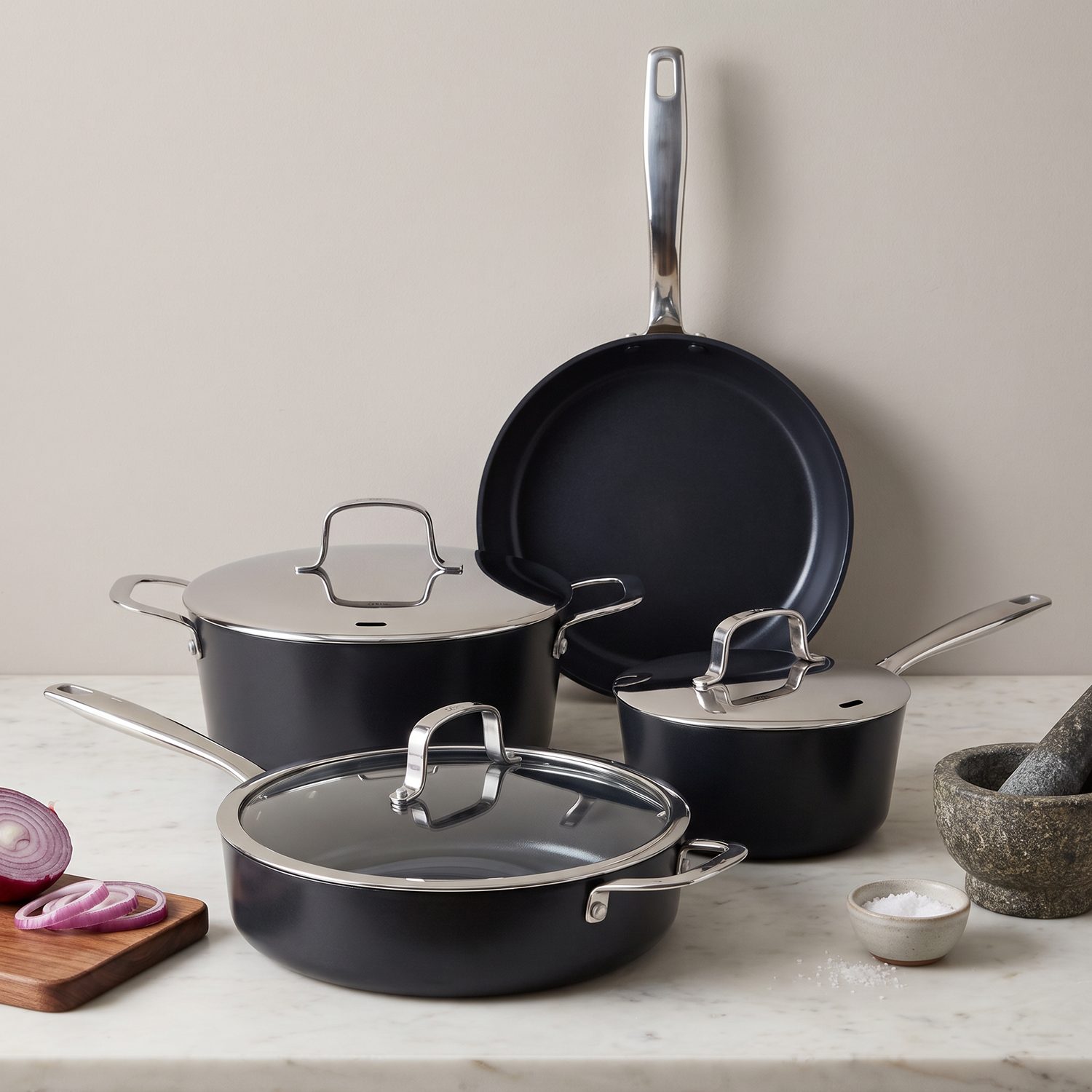
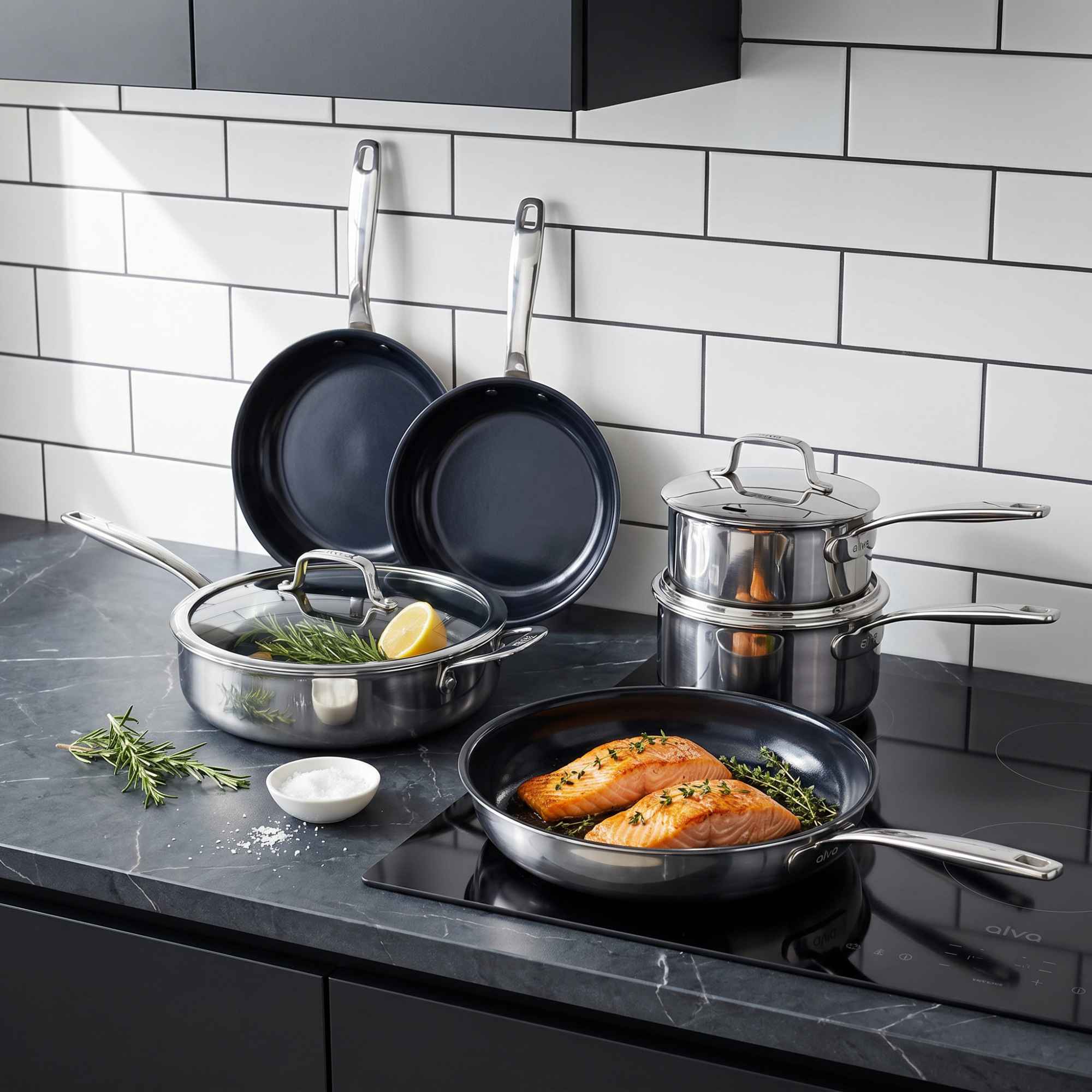
Ceramic Nonstick Cookware Set, 12-Piece
A complete ceramic nonstick kitchen in one set. Made without PFAS, PTFE or PFOA, supported by published third-party testing, induction-ready and backed by a 10-year limited warranty.
From $599
Shop the 12-Piece SetThe healthiest cookware materials
- Stainless steel — non-reactive and safe even with acidic foods. See Is Stainless Steel Cookware Safe?
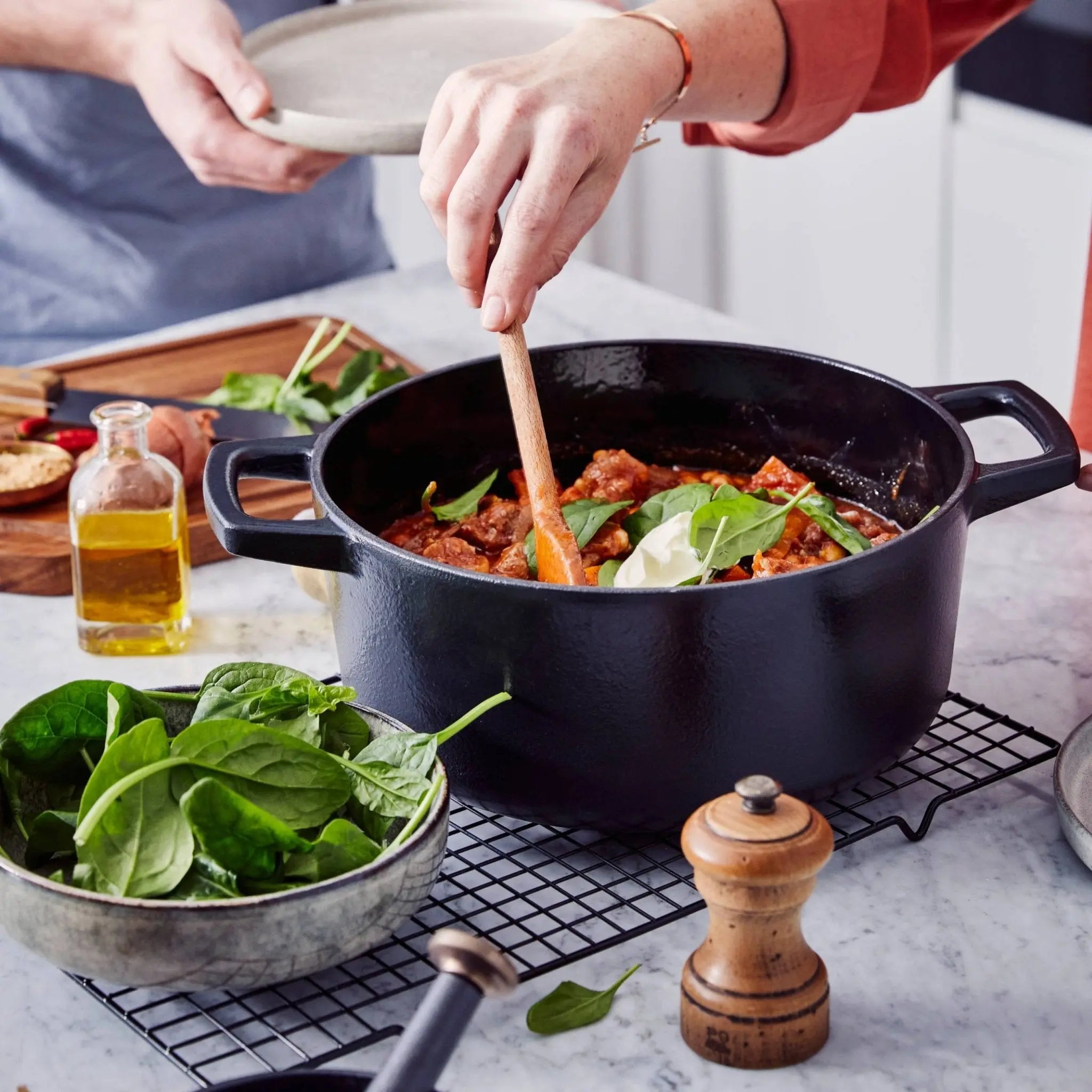
- Cast iron — stable, long-lasting, can even add trace dietary iron.
- Carbon steel — seasons to a natural nonstick surface with no synthetic coating.
- PFAS-free ceramic nonstick — nonstick performance without "forever chemicals." See Is Ceramic Cookware Safe? and Are Ceramic Pans Safe?
What to be cautious about
- Traditional PTFE nonstick: Safe at normal temperatures but can degrade and release fumes if overheated (above ~500°F/260°C) or badly scratched. If avoiding PFAS matters to you, choose ceramic or an uncoated material.
- Cheap glazes and enamels: Low-quality decorative or imported pieces can contain lead or cadmium. Buy from brands that test finished products.
- Reactive bare metals: Bare aluminum and unlined copper react with acidic foods, which is why quality cookware anodizes or lines them. See Safety of Copper Cookware.
How heat and food affect safety
High heat is the main risk multiplier: it's what can degrade nonstick coatings and what makes preheating stainless correctly important. Acidic foods (tomatoes, wine, citrus) draw more from reactive surfaces, so cook those in stainless, enameled, or well-seasoned pans rather than bare aluminum or unlined copper. Match the pan to the food and the heat, and most safety concerns disappear.
How to verify a healthy-cookware claim
"Non-toxic" and "healthy" aren't regulated terms. The only real proof is a clear materials disclosure plus independent, third-party lab testing for PFAS and heavy metals. Alva publishes those results for every line on our Testing & Materials page. For a step-by-step vetting method, read How to Spot Truly Non-Toxic Cookware and Best Non-Toxic Cookware.
Habits that keep cooking healthy
Use wood or silicone utensils on coated pans; avoid preheating empty nonstick on high; replace nonstick once it's scratched; season and dry cast iron and carbon steel; and cook acidic foods in non-reactive pans. These small habits matter as much as the pan you choose.
Frequently asked questions
What is the healthiest cookware to use?
Stainless steel, cast iron, carbon steel, and PFAS-free ceramic are the healthiest choices because they're stable and non-reactive under normal cooking. The healthiest specific products are ones with published independent lab testing.
Is nonstick cookware bad for your health?
Modern PFAS-free ceramic nonstick is considered safe. Traditional PTFE nonstick is safe at normal temperatures but can release fumes if overheated or used when badly scratched. If you want to avoid PFAS entirely, choose ceramic or an uncoated material.
What cookware should I avoid?
Avoid scratched or overheated traditional nonstick, cheap or decorative glazes that may contain lead or cadmium, and bare reactive metals with acidic foods. Also avoid any "non-toxic" claim with no independent testing behind it.
Is stainless steel or ceramic healthier?
Both are healthy choices. Stainless steel is the most durable and best for high heat and acidic foods; PFAS-free ceramic is best for nonstick tasks like eggs. Many kitchens use both.
How can I tell if my cookware is safe?
Check what the cooking surface is made of, confirm it's PFAS-free, and look for a brand that publishes third-party lab results for heavy metals. Inspect coated pans for scratches and replace them when worn.
See exactly what our cookware is made of and how it tests on the Testing & Materials page, or browse all cookware.


Deixar comentário
Este site é protegido por hCaptcha e a Política de privacidade e os Termos de serviço do hCaptcha se aplicam.