






Are Stackable Cookware Sets Worth It? An Honest Look
Short answer: for small kitchens, apartments, RVs, and anyone who hates cabinet clutter, a stackable (nesting) set is absolutely worth it - it stores a full set in the footprint of one pot without giving up everyday performance. If you have unlimited storage and cook with lots of specialty pans, the upside is smaller.
The pros
- Massive space savings - the whole set stores in one stack, lids included.
- Less clutter, faster access - no avalanche of pans and loose lids.
- Travels well - apartments, RVs, boats, dorms.
- Focused value - you pay for the core pieces you actually use.
The honest cons
- Fewer specialty sizes - nesting sets cover the essentials, not every niche pan.
- You must stack carefully - look for sets designed with protective lids so coatings don't scratch.
- Coating quality varies - cheap space-saving sets cut corners; insist on verified non-toxic coatings.
What to check before you buy
- Published PFAS/PTFE/PFOA test results - safety first.
- True nesting design - confirm the lids nest too.
- Induction + oven compatibility and a real warranty.
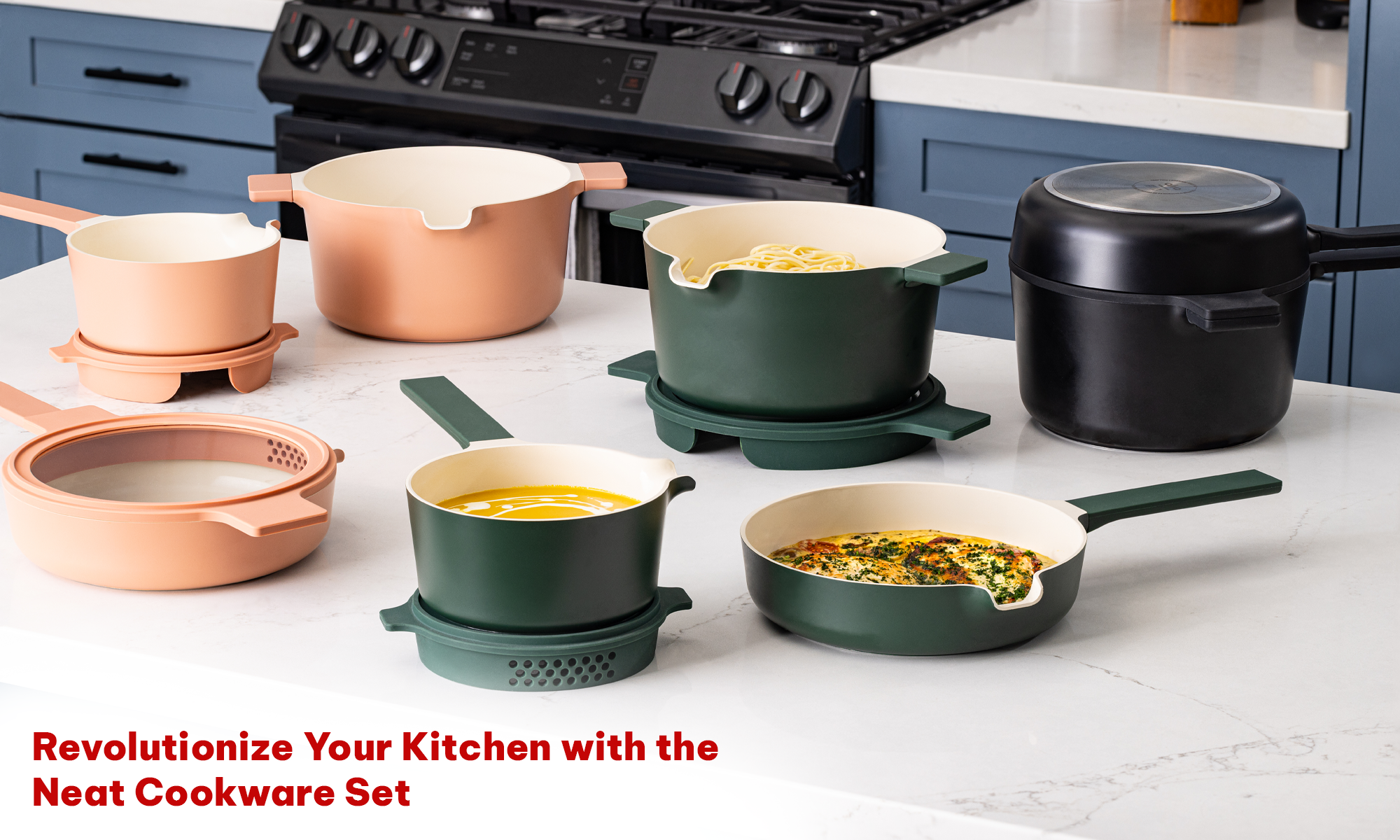
The Alva Neat 5-piece set ($229) checks all of these: independently tested PFAS-free ceramic, glass strainer lids that nest and protect the surface, induction-ready, oven-safe to 400°F, backed by a warranty. More in our stackable cookware guide and nesting vs traditional comparison.

Our Top Pick
5-Piece Stackable Ceramic Nonstick Set
Five ceramic nonstick pieces that nest into one compact stack. Made without PFAS, PTFE or PFOA, induction-ready and designed for smaller kitchens.
From $229
Shop the Neat Stackable SetShop the Neat set - $229, in 3 colors. Free U.S. shipping over $99.
The price-per-piece math
Stackable sets can look expensive next to a bargain 12-piece box - until you count the pieces you'll actually use. Big boxed sets often pad their count with lids and near-duplicate sizes, so the "per piece" price is flattering but hollow. A focused nesting set flips that: the Neat's $229 buys five pieces that all pull daily weight - frying pan, saucepan, stockpot, and two strainer lids that also replace a colander. When every piece earns its spot, the honest cost per used piece is usually lower than the big box's cost per stored piece. Not sure what you'd actually use? Start with how many pots and pans you really need.
Handle design and lid fit: the details that decide it
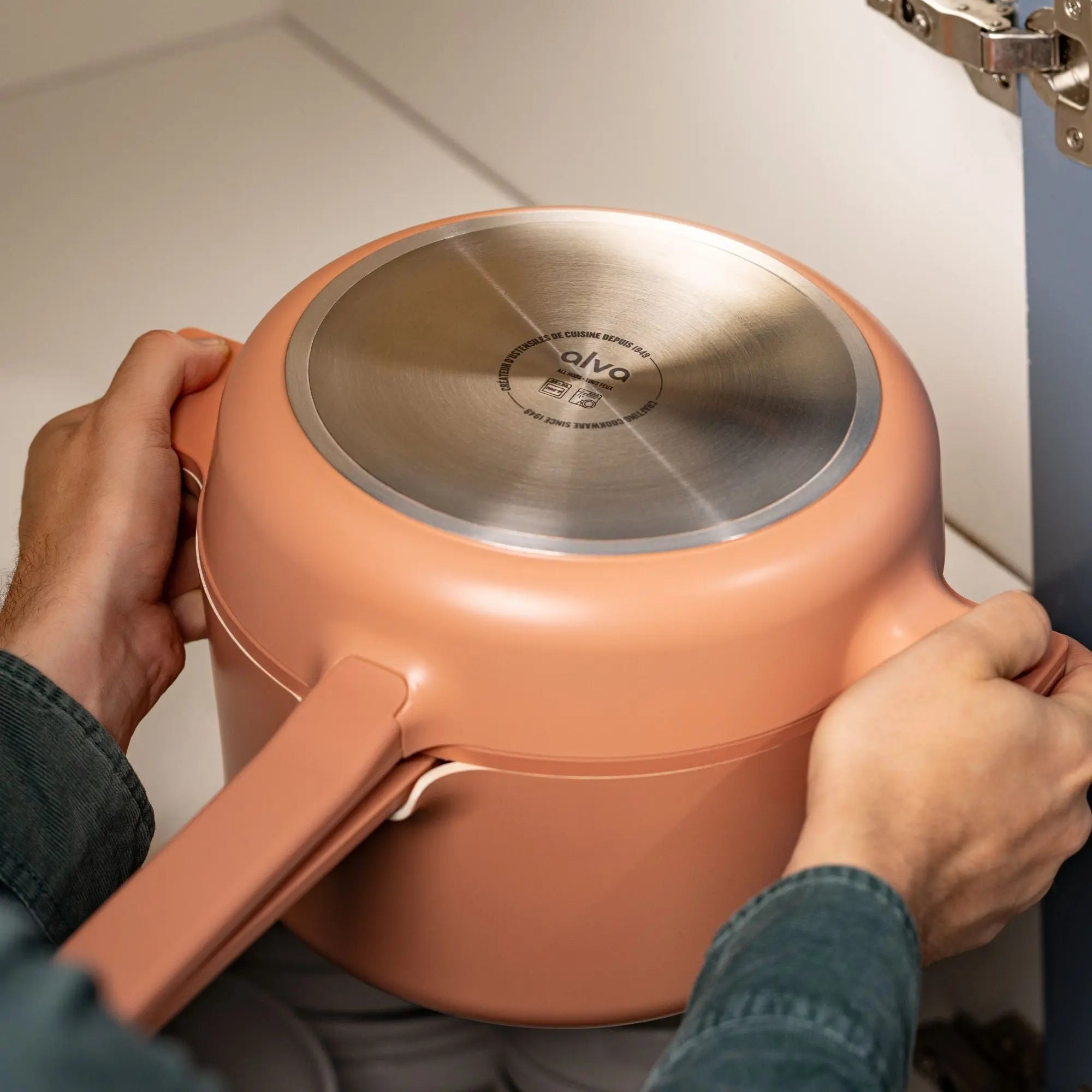
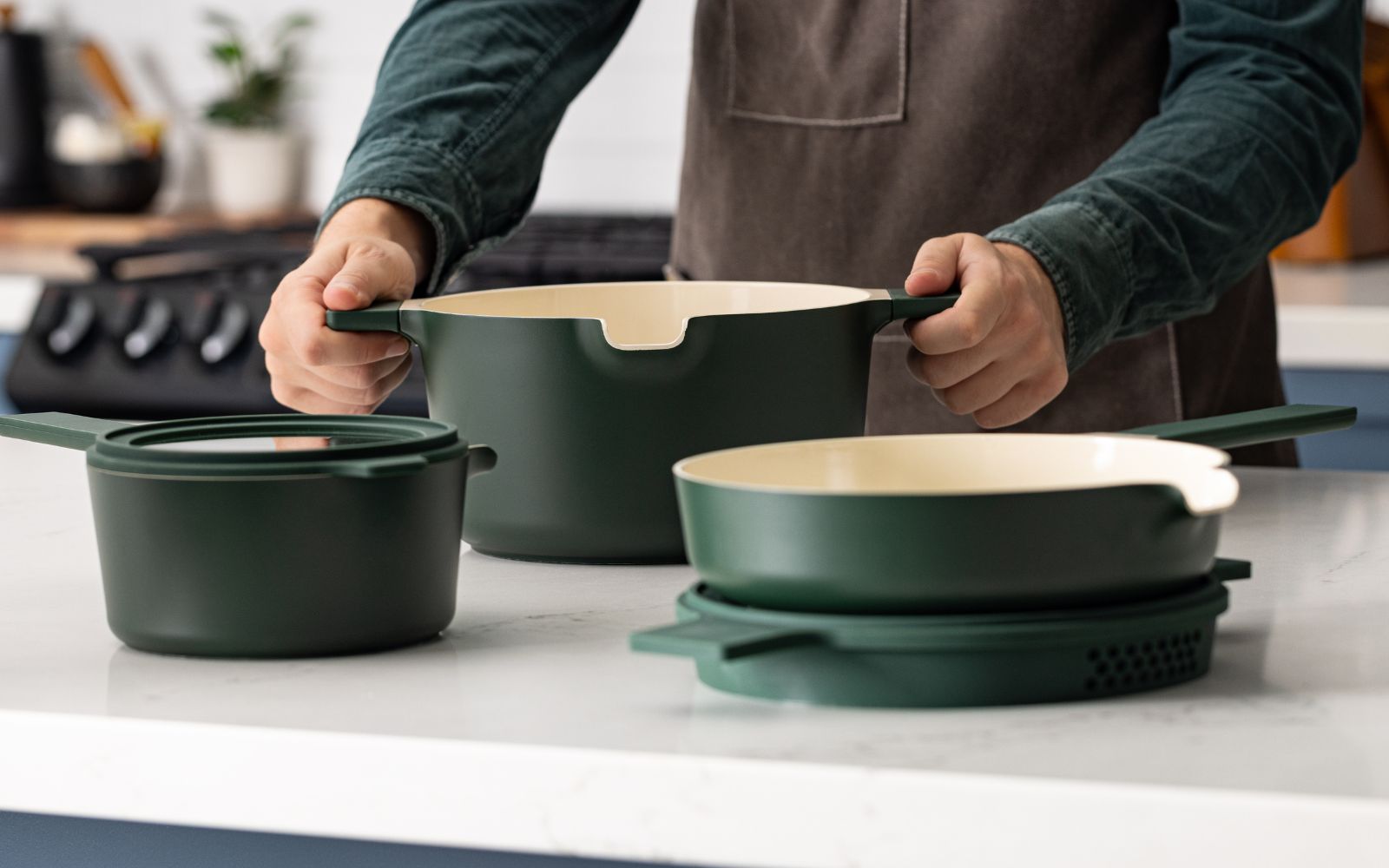
Whether a stackable set is worth it mostly comes down to two engineering details. First, handles: pans only nest if the handles are designed to clear each other, so check how the pieces actually sit together - a set that stacks crooked will wobble and scratch. Second, lid fit: the best nesting sets make lids do double duty. The Neat's glass lids seat into the stack, and their built-in strainers and pour spouts mean you drain pasta at the stove instead of storing a separate colander. If a set you're considering fails either test, the space savings evaporate in practice. For the full pre-purchase rundown, use the small kitchen cookware checklist.
Frequently asked questions
Are stackable cookware sets worth it?
For small kitchens, apartments, RVs, and anyone who wants less clutter, yes - they store a full set in one pot's footprint without sacrificing everyday cooking. If you have unlimited storage and want many specialty pans, the benefit is smaller.
Do stackable pans scratch when stacked?
Quality nesting sets are designed with protective lids or rims so pieces stack without scratching. Avoid stacking bare coatings directly, and use a soft protector if needed.
Do stackable cookware sets cook as well as regular pans?
Yes - stacking is a storage feature, not a cooking compromise. Judge a nesting set the same way you'd judge any cookware: base construction, coating quality, and cooktop compatibility.
What is the downside of stackable cookware?
Fewer specialty sizes and the need to stack with a little care so coatings stay pristine. If you routinely cook with a wok, a grill pan, and three skillets at once, a nesting set alone won't cover you - though it still handles the daily core.
How many pieces should a stackable cookware set have?
Around five is the sweet spot: a frying pan, a saucepan, a larger pot, and lids that nest with them. That covers most everyday cooking while keeping the stack compact - the Neat's five pieces stack into a single 17.5″ x 13.2″ x 6.1″ footprint.
The bottom line
If storage or clutter is a problem, a stackable set pays off fast. The Neat set is our pick.
Our top pick5-Piece Stackable Ceramic Nonstick SetShop now →

%20set%20is%20absolutely%20worth%20it%20-%20it%20stores%20a%20full%20set%20in%20the%20footprint%20of%20one%20pot%20without%20...)
Laisser un commentaire
Ce site est protégé par hCaptcha, et la Politique de confidentialité et les Conditions de service de hCaptcha s’appliquent.