






Crepe Pan vs Crepe Maker: Which Should You Actually Buy?
A crepe maker is a single-purpose electric griddle with a fixed heating element; a crepe pan is a low-sided stovetop pan that makes the same crepes and then goes on to cook pancakes, omelettes, and tortillas. For almost every home kitchen the pan wins — it costs less, stores in a normal cupboard, has nothing to break, and doesn't sit idle 51 weeks a year. The exception is genuine volume: if you're making crepes for a crowd on a schedule, the flat electric surface has a real advantage.
The short answer
| Crepe pan | Electric crepe maker | |
|---|---|---|
| Typical price | $129 (Alva 10" ceramic) | $40–$200+ (consumer to commercial) |
| Other jobs it does | Pancakes, omelettes, eggs, tortillas, dosa, grilled sandwiches | Crepes. Sometimes pancakes. |
| Storage | Hangs or stacks with your pans | A dedicated appliance footprint |
| Can it fail? | No electronics — nothing to break | Element, thermostat, and cord can all fail |
| Heat control | Your cooktop, instantly responsive | Thermostat, slower to respond |
| Batch speed | One crepe at a time | One large crepe at a time, no lifting |
| Spreading technique | Swirl the pan (or use a spreader) | Spreader tool — flat surface is easier for beginners |
| Warranty | 10-year on Alva's ceramic coating | Typically 1–2 years |
What an electric crepe maker actually gives you
Two real advantages, and they're worth naming honestly. First, the cooking surface is flat and rimless, so a wooden spreader (the rozell) glides across it in one arc — that's how crêperies get paper-thin, perfectly round crepes, and it's genuinely easier to learn than the swirl-the-pan method. Second, the surface is wide, usually 12–13 inches, and holds a steady thermostat-set temperature through crepe after crepe without you adjusting a burner.

Our Top Pick
Ceramic Nonstick Crepe Pan, 10"
A low-sided ceramic nonstick pan designed for crepes, pancakes, eggs and easy flipping. Made without PFAS, PTFE or PFOA and induction-ready.
From $129
Shop the Crepe PanIf you host crepe parties, run a market stall, or make crepes most weekends for a family of five, those two things matter.
What it costs you
A crepe maker does one thing. It occupies cupboard space year-round for a breakfast you make occasionally, and it has an element, a thermostat, and a cord — three things a pan doesn't have and three things that eventually fail. Most consumer models carry a one- or two-year warranty, and the nonstick plate isn't replaceable: when the coating goes, the appliance goes. There's also the surface question — many budget models use PTFE-based nonstick, so if you're avoiding forever chemicals, check what the plate is actually coated with before buying.
What a crepe pan gives you
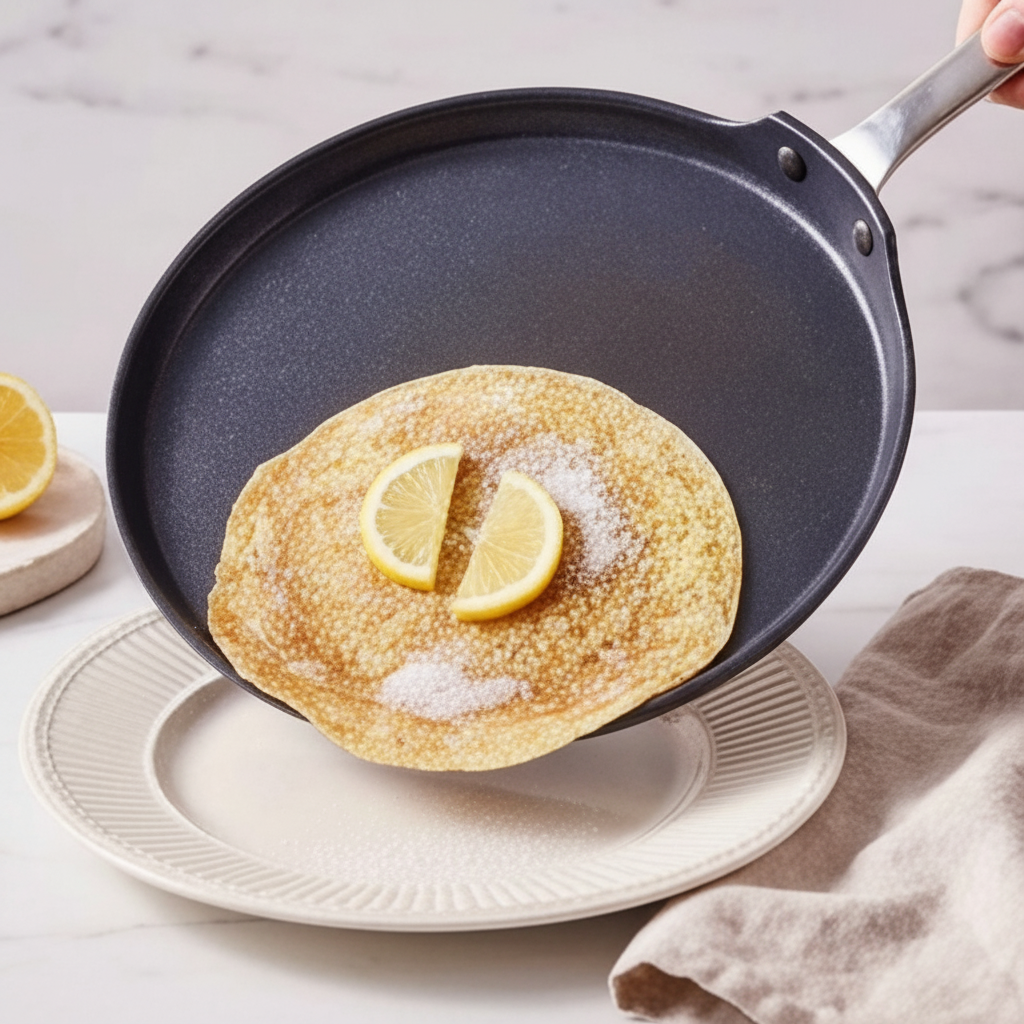
The same crepes, plus every other flat-batter job in your kitchen. A good crepe pan has low, sloping sides so your spatula slides under a paper-thin crepe without tearing it, a flat cooking surface that takes batter in one swirl, and a base that heats fast and evenly. That exact shape is also the best pancake pan, the best pan for a flat omelette, and a very good tortilla and dosa pan.
Our pick is the Ceramic Nonstick Crepe Pan, 10" ($129): a sol-gel ceramic surface independently tested free of PFAS, PTFE, and PFOA, a 4.5mm forged aluminum body for even heat, a stainless induction base so it works on every cooktop, and a 10-year warranty. At 2.1 lbs it's light enough to lift and swirl one-handed — the motion that replaces the spreader. Full detail in our best crepe pan guide.
Shop the Ceramic Nonstick Crepe Pan — $129
Which should you buy?
Buy the pan if: you make crepes occasionally or weekly, you want the same purchase to cover pancakes and eggs, your kitchen storage is finite, you cook on induction, or you'd rather own a tool with no failure points and a 10-year warranty than an appliance with a 1-year one.
Buy the crepe maker if: you make crepes in genuine volume, you specifically want the spreader technique on a flat rimless surface, and you have somewhere to keep it. Even then, a lot of people find the pan handles their real-world frequency perfectly well.
You don't need both. If you already own a crepe maker and it works, keep using it — but when it dies, a pan is the replacement most kitchens are happier with.
Getting crepe-maker results out of a pan
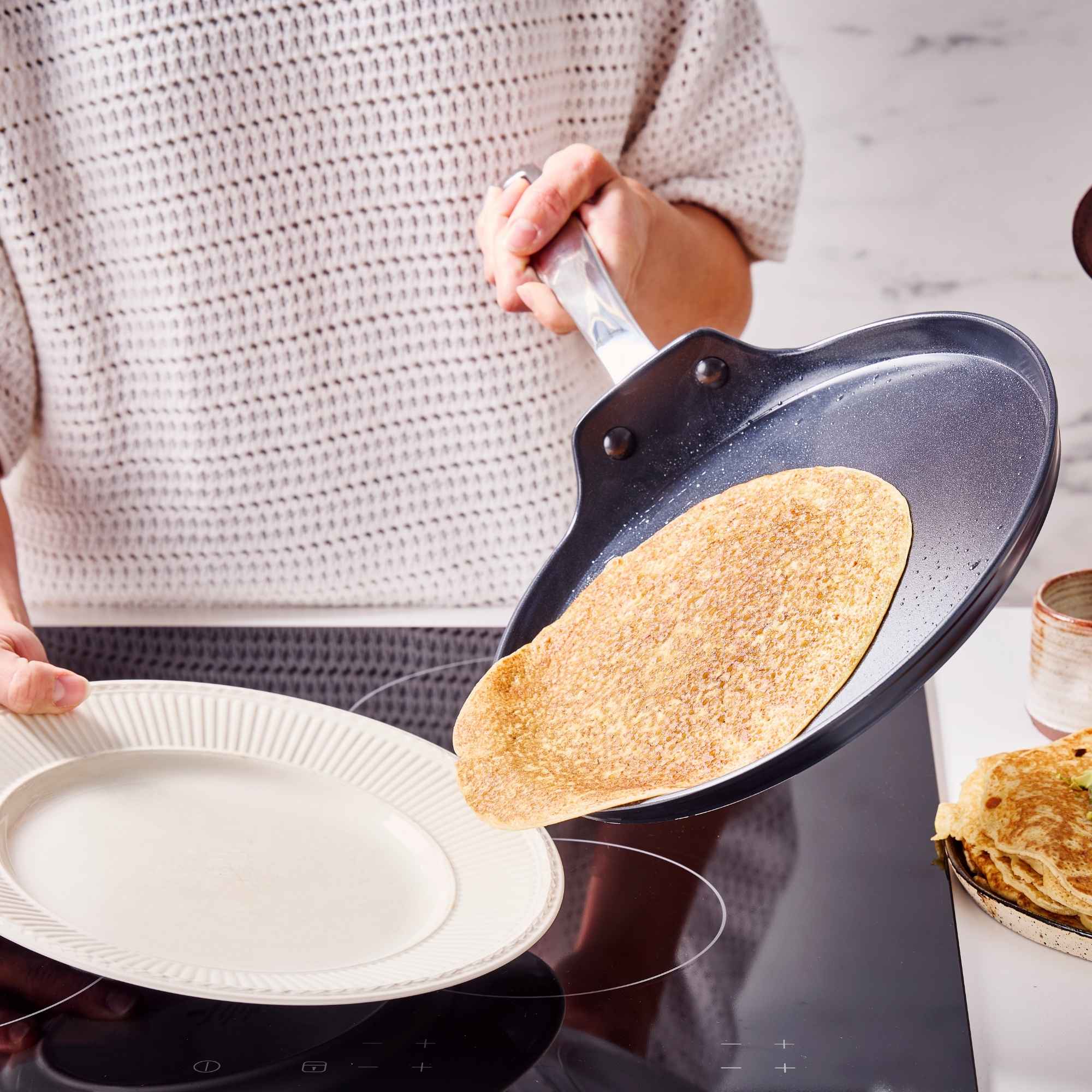
Preheat over medium, not high — crepes want steady moderate heat, and a hot pan sets the batter before it spreads. Use a small ladle so every crepe is the same size. Pour into the center and immediately lift and swirl the pan in a circle so the batter runs to the rim. Let the first side cook until the edges lift and the surface looks dry, about 45–60 seconds, then flip. And accept that the first crepe is a sacrifice — that's true on a crepe maker too; it's how you calibrate the heat.
A batter rest of 30 minutes in the fridge makes more difference to crepe texture than any equipment choice — it lets the flour hydrate and the gluten relax, which is what makes a crepe tender rather than rubbery.
Frequently asked questions
Is a crepe maker better than a pan?
Only for volume. A crepe maker's flat, rimless surface makes the spreader technique easier and holds a steady temperature through many crepes. A crepe pan makes the same crepes, costs less, stores easily, has no parts to fail, and doubles as a pancake, omelette, and tortilla pan.
Can you make real crepes in a regular pan?
Yes — crepes were made in stovetop pans for centuries before electric makers existed. What matters is a flat surface, low sides, and even moderate heat. A dedicated crepe pan makes it easier than a tall-walled frying pan because your spatula can get under the crepe.
Do I need a crepe spreader?
Not with a pan — you swirl the pan instead, which spreads the batter by tilting. Spreaders are designed for flat, rimless surfaces like a crepe maker or a large griddle.
What size crepe pan replaces a crepe maker?
A 10-inch pan makes a classic crepe size and stays light enough to swirl one-handed. Most consumer crepe makers are 12–13 inches, but larger crepes are harder to flip without tearing.
Are crepe makers non-toxic?
It depends entirely on the plate coating — many budget models use PTFE-based nonstick, and few publish lab testing. If avoiding PFAS matters to you, check the specification before buying, or choose a pan with published third-party test results like those on our safety standards page.
The bottom line
For nearly every home kitchen, buy the pan. The Ceramic Nonstick Crepe Pan, 10" ($129) makes the same crepes as a $150 appliance, then makes your pancakes and omelettes too — and it's still there in ten years. Free U.S. shipping over $99.
Our top pickCeramic Nonstick Crepe Pan, 10"Shop now →


Dejar un comentario
Este sitio está protegido por hCaptcha y se aplican la Política de privacidad de hCaptcha y los Términos del servicio.