






Nesting vs Traditional Cookware Sets: Which Should You Buy?
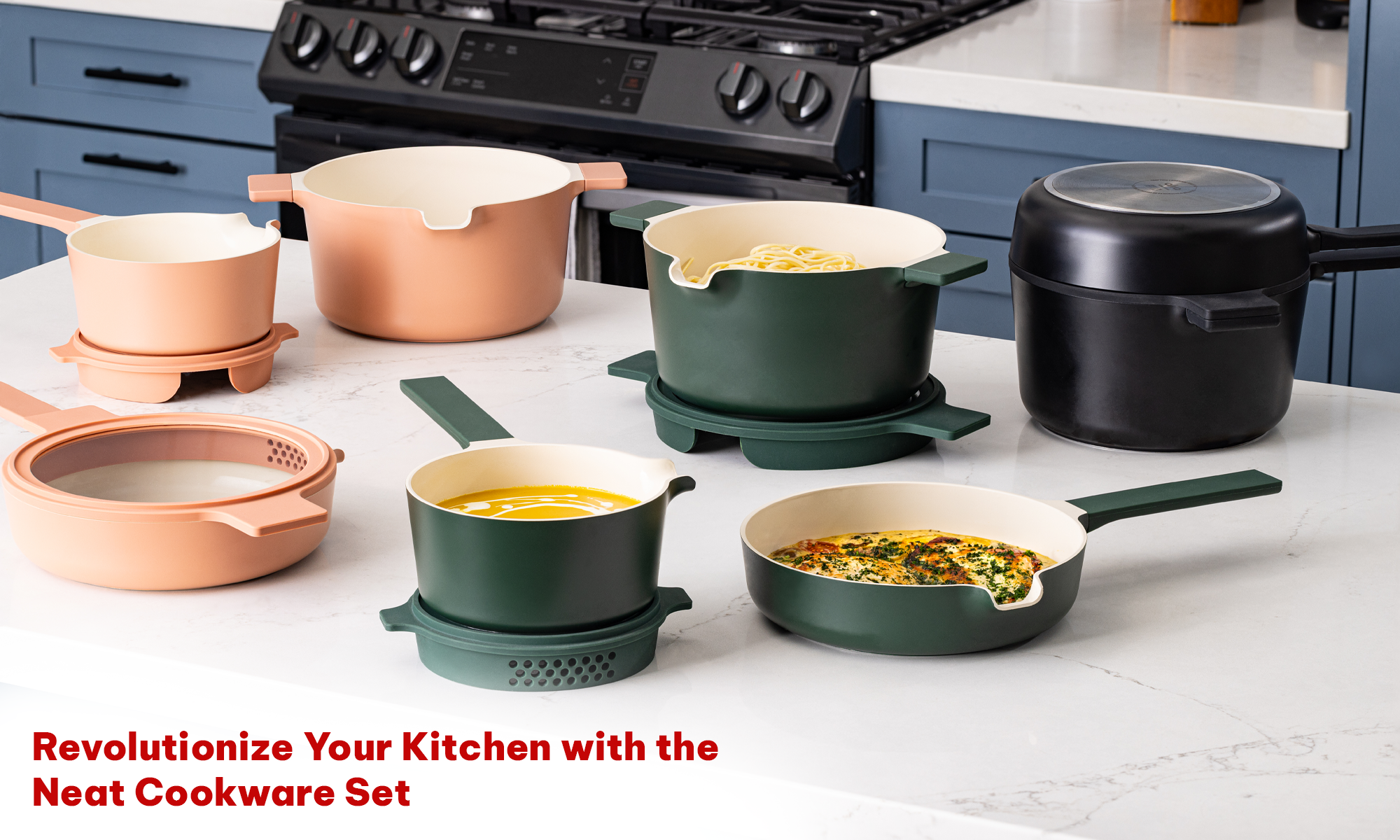
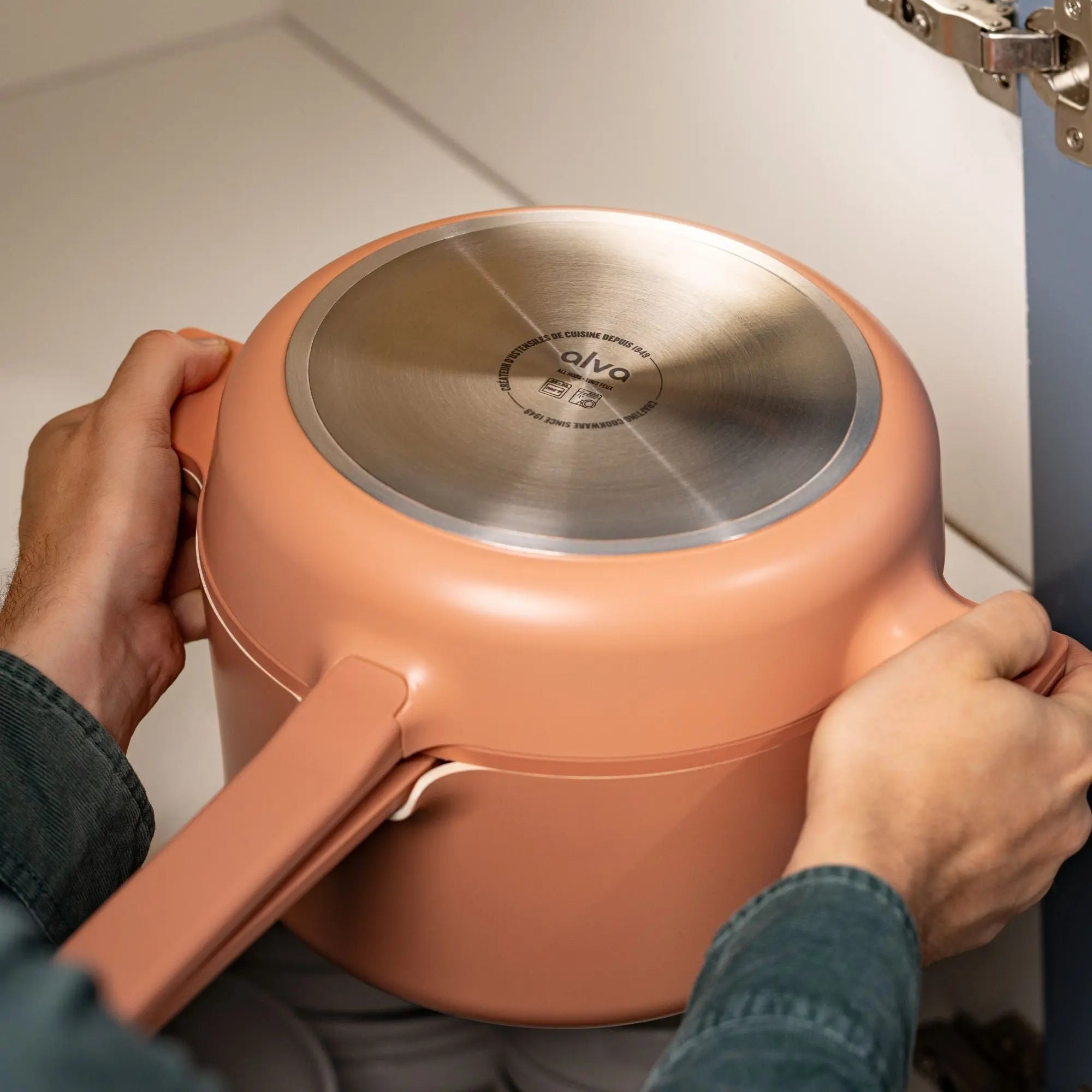
Nesting (stackable) cookware stores a full set in the footprint of one pot; a traditional boxed set spreads across a cabinet but offers more specialized pieces. For most home cooks - especially in apartments and small kitchens - nesting wins on space without giving up everyday performance.
At a glance
- Storage: Nesting stacks into one pot's space. Traditional sets need a full cabinet and a lid rack.
- Versatility: Traditional sets include more specialty sizes; nesting sets focus on the core pieces you use daily.
- Value: Big boxed sets pad the piece count with near-duplicates; nesting sets charge for pieces you'll actually use.
- Portability: Nesting sets travel - apartments, RVs, boats, dorms.
- Performance: A tie, when both use a quality clad/multi-layer base and a safe coating.
Who should buy nesting cookware
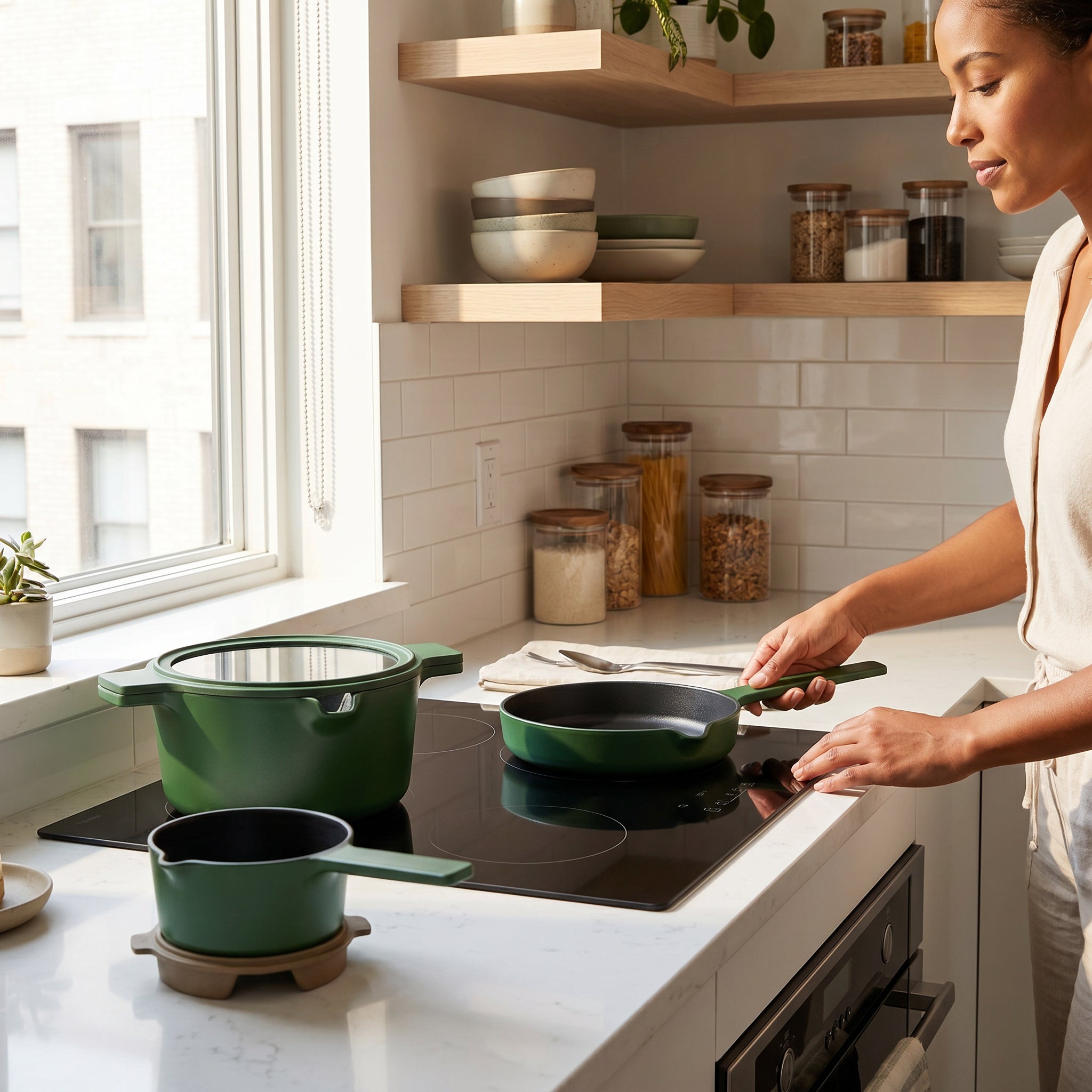
Anyone short on cabinet space, or who values fewer, better pieces. The Alva Neat 5-piece set ($229) is the clearest example: frying pan, saucepan, stockpot, and glass strainer lids that nest into one stack - PFAS/PTFE/PFOA-free ceramic, induction-ready, oven-safe to 400°F. See the full case in our best stackable cookware set guide.

Our Top Pick
5-Piece Stackable Ceramic Nonstick Set
Five ceramic nonstick pieces that nest into one compact stack. Made without PFAS, PTFE or PFOA, induction-ready and designed for smaller kitchens.
From $229
Shop the Neat Stackable SetShop the Neat set - $229, in 3 colors. Free U.S. shipping over $99.
Who should stick with a traditional set
If you have plenty of storage and cook a wide range of dishes that need many specialized pans, a larger traditional set can make sense - just don't overbuy. Not sure how much you need? See how many pots and pans you actually need.
The trade-offs, honestly
Neither design is free of compromise. Here's how the two actually compare on the details that matter day to day:
| Nesting set | Traditional set | |
|---|---|---|
| Storage footprint | One stack - the Neat's five pieces fit a 17.5″ x 13.2″ x 6.1″ footprint | A full cabinet, plus somewhere for loose lids |
| Handle design | Engineered so pieces clear each other in the stack - check this before buying any brand | Conventional handles; no stacking constraint, but pans pile awkwardly |
| Lid fit | Lids nest into the stack; the Neat's double as strainers with pour spouts | One lid per pot, stored separately - the usual source of cabinet chaos |
| Piece selection | Core essentials only; add specialty pans individually later | More sizes out of the box, often including near-duplicates |
| Price per used piece | Higher sticker per piece, but every piece pulls daily weight | Lower sticker per piece, but filler pieces dilute the real value |
| Cooking performance | Equal - judged by base and coating quality, not stacking | Equal - same rule applies |
Two practical notes. First, inspect how any nesting set actually stacks before you commit - handles that don't clear each other or lids that sit proud undo the whole benefit. Second, the two approaches mix well: plenty of cooks run a nesting set as the daily core and add one or two traditional specialty pieces. For a deeper cost breakdown, see are stackable cookware sets worth it, and run any purchase through the small kitchen cookware checklist.
Frequently asked questions
Is nesting cookware better than a traditional set?
For small kitchens and anyone short on storage, yes - nesting cookware stores in one stack and covers the core jobs. Traditional sets make sense if you have ample cabinet space and want many specialized pieces.
Does nesting cookware perform as well as regular cookware?
A quality nesting set cooks just as well - the difference is storage, not performance. Look for a fully clad or multi-layer base and a verified non-toxic coating.
What are the disadvantages of nesting cookware?
Fewer specialty sizes, and you need to stack pieces with some care so coatings stay unmarked. Well-designed sets minimize both: the Neat's lids nest into the stack and protect the surfaces below them.
Can you mix nesting and traditional cookware?
Absolutely - a common setup is a nesting set as the everyday core plus one or two traditional specialty pieces (a Dutch oven, a wok) bought individually as your cooking demands them.
Are big traditional cookware sets worth the money?
Only if you'll genuinely use most of the pieces. Many boxed sets inflate the count with lids and near-duplicate sizes, so compare what you'd actually cook with - for most people that's three to five pieces.
The bottom line
If storage is tight or you prefer fewer, better pieces, nesting wins. Start with the Neat set.
Our top pick5-Piece Stackable Ceramic Nonstick SetShop now →

%20cookware%20stores%20a%20full%20set%20in%20the%20footprint%20of%20one%20pot;%20a%20traditional%20boxed%20set%20spreads%20across%20a%20cabinet%20but%20offers%20more%20specialized%20pieces.%20For%20most%20home%20cooks%20-%20especially%20in%20...)
Deixar comentário
Este site é protegido por hCaptcha e a Política de privacidade e os Termos de serviço do hCaptcha se aplicam.