






Best Dosa Pan (2026): Ceramic & Induction-Ready Tawa Picks
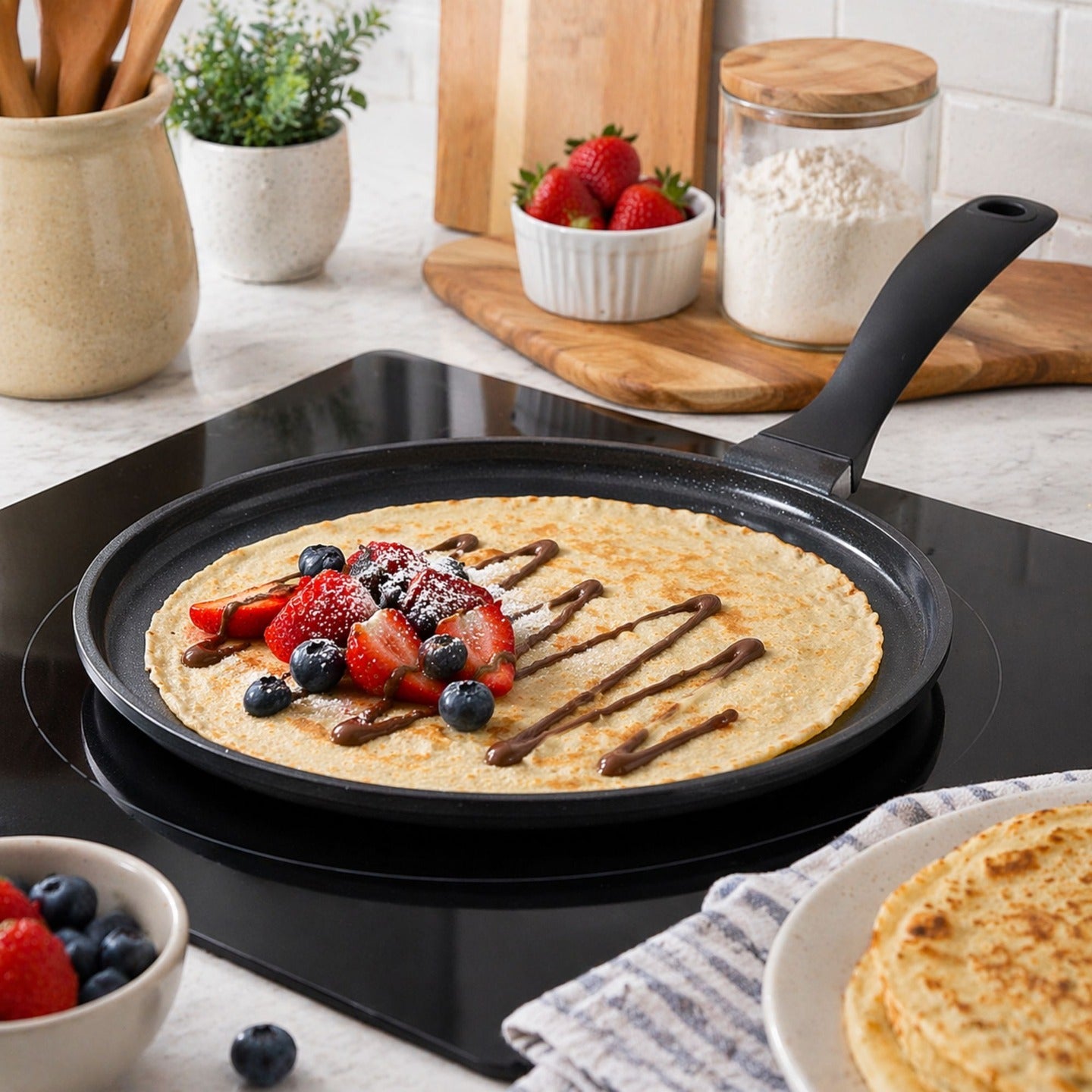
The best dosa pan is a wide, flat tawa that holds steady heat and lets batter spread thin in one spiral. Two routes work: a PFAS-free ceramic nonstick pan for reliable release without seasoning — Alva's Ceramic Nonstick Crepe Pan, 10" ($129) — or seasoned carbon steel for the traditional high-heat, crisp-edged dosa. Honest guidance on which suits your cooking below, including which one to skip if you want a really dark, crackly dosa.
At a glance
| Pan | Price | Best for | Heat range | Warranty |
|---|---|---|---|---|
| Ceramic Nonstick Crepe Pan, 10" | $129 | Everyday dosa and uttapam, no seasoning, easy release | Low–medium | 10-year |
| Forest Carbon Steel Frying Pan, 11" | $119 | Traditional high-heat crisp dosa — stovetop only | High | 10-year |
| Carbon Steel Frying Pan, 11" | $109 | High-heat dosa plus oven use to 500°F | High | Lifetime |
What a dosa pan needs
A dosa tawa has one job: take a ladle of fermented batter and let you spread it outward in a thin spiral before it sets. That requires a wide, genuinely flat surface (curve makes the spiral impossible), even heat across the whole diameter so the rim crisps at the same time as the center, and a low or minimal rim so you can slide a spatula under and roll the dosa out.

Our Top Pick
Ceramic Nonstick Crepe Pan, 10"
A low-sided ceramic nonstick pan designed for crepes, pancakes, eggs and easy flipping. Made without PFAS, PTFE or PFOA and induction-ready.
From $129
Shop the Crepe PanTraditional tawas are cast iron or carbon steel because dosa is classically cooked hot — that's what gives the dark lacy underside and the crackle. But a lot of home cooks want a dosa that releases every time without maintaining a seasoning layer, and that's where ceramic nonstick earns its place.
The honest trade-off
Let's be straight about this rather than sell you the wrong pan.
Ceramic nonstick is the easy route. Batter releases reliably with barely any oil, there's no seasoning to build or protect, and cleanup is a rinse. The limit is heat: ceramic coatings should be used on low-to-medium heat, so you'll get a golden, crisp dosa rather than the very dark, blistered restaurant-style one that comes off a screaming-hot tawa. For everyday dosa, uttapam, and adai — and especially if you're cooking for people who like a softer dosa — it's excellent, and it's the more forgiving pan by a wide margin.
Carbon steel is the traditional route. Once seasoned it becomes naturally nonstick, it takes as much heat as your burner produces, and it gives you the classic crisp, dark dosa. The trade is maintenance: season it, dry it immediately, wipe it with oil, and keep it away from long-simmered acidic food. Note that dosa batter is fermented and mildly acidic, so a well-established patina matters here — a brand-new seasoning layer may need a few cooks before release is consistent.
Our everyday pick: Ceramic Nonstick Crepe Pan, 10" ($129)
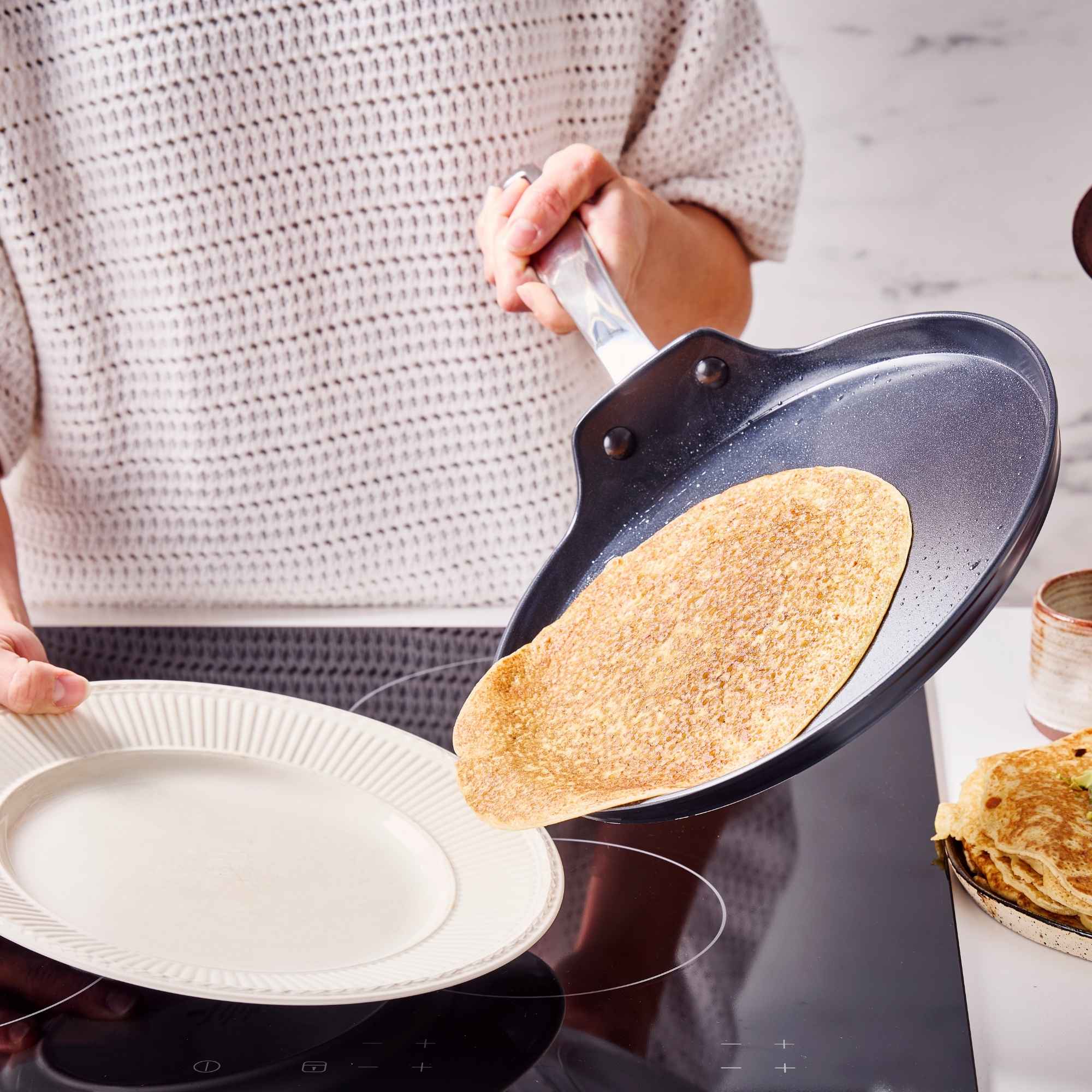
The Ceramic Nonstick Crepe Pan is the pan we'd point most home cooks to. The cooking surface is dead flat with low sloping sides, so batter spreads cleanly and a spatula gets under the dosa without tearing it. The sol-gel ceramic coating is made without PFAS, PTFE, or PFOA and independently tested by TÜV Rheinland — reports published on our safety standards page — which matters if you're moving away from older nonstick tawas. The 4.5mm forged aluminum body heats evenly rather than concentrating heat at the center, and the stainless base means it works on induction as well as gas.
Good to know: use low-to-medium heat, silicone or wooden utensils, and hand-wash it — it isn't dishwasher-safe. Oven-safe to 400°F, 10-year warranty.
Shop the Ceramic Nonstick Crepe Pan — $129
Best dosa pan for induction
Induction is where a lot of traditional tawas fail — plain aluminum and some cast iron tawas either won't work or heat unevenly on a coil. Every pan on this page is induction-ready: the ceramic crepe pan has a dedicated magnetic stainless base, and carbon steel is magnetic by nature. On induction, give the pan a moment to settle at your chosen setting before the first dosa; the fast response that makes induction great also means it climbs quickly.
If you want the traditional crisp dosa
Go carbon steel. The Black Angus Carbon Steel Frying Pan (from $99) is pre-seasoned, takes high heat, is oven-safe to 500°F, and carries a lifetime warranty. The Forest Carbon Steel Frying Pan (from $99) is the lighter, thinner, faster-responding option with a 10-year warranty — note the Forest line is stovetop-only, which is no limitation at all for dosa. Both need seasoning care: see how to season a carbon steel pan and our carbon steel guide.
Technique: getting the spread right
Heat the pan first — a properly preheated surface is what stops batter grabbing. On ceramic, medium is hot enough; test with a few drops of water, which should sizzle steadily rather than skitter and vanish. Wipe the surface with a very thin film of oil (a halved onion dipped in oil is the traditional tool and it works beautifully). Ladle batter into the center and spread outward in a continuous spiral with the back of the ladle, working quickly before it sets. Drizzle a little oil around the rim, cook until the edges lift and the underside is golden, then fold or roll. Most dosas need no flip.
Between dosas, let the pan come back down slightly — wiping it with a damp cloth is the classic trick, and it also resets the surface so the next spread goes smoothly.
The same pan does more
A flat, low-sided pan is a genuinely versatile piece of kit: it's also the best crepe pan shape, a very good pancake pan, and it handles chapati, tortillas, uttapam, and grilled sandwiches. See how to clean a nonstick pan to keep the release, or are ceramic pans safe for the material background.
Frequently asked questions
What is the best pan for dosa?
A wide, flat tawa with even heat. For easy everyday dosa with no seasoning to maintain, a PFAS-free ceramic nonstick like Alva's 10" Ceramic Nonstick Crepe Pan ($129). For traditional crisp, dark dosa cooked hot, seasoned carbon steel.
Is a ceramic dosa pan good?
Yes, with one caveat. Ceramic gives reliable release with minimal oil and needs no seasoning, which suits everyday dosa and uttapam. Because ceramic coatings should be kept to low-to-medium heat, you'll get a golden dosa rather than the very dark, blistered restaurant style.
What size dosa pan should I buy?
10 to 11 inches for home cooking — wide enough to spread a proper dosa, light enough to handle. Larger tawas make impressive dosas but are heavy and awkward on a domestic burner.
Can I use a dosa pan on an induction cooktop?
Only if it has a magnetic base. Many traditional aluminum tawas aren't induction-compatible. Alva's ceramic crepe pan has a stainless induction base, and carbon steel pans work on induction by nature.
Do I need to season a dosa pan?
Carbon steel and cast iron tawas need seasoning and ongoing care. Ceramic nonstick needs none — that's its main practical advantage for a home kitchen.
Why does my dosa stick to the pan?
Usually an underheated pan, too little oil, or a seasoning layer that isn't established yet on carbon steel. Preheat properly, wipe on a thin film of oil, and let the pan recover between dosas.
The bottom line
For reliable everyday dosa with no maintenance, get the Ceramic Nonstick Crepe Pan, 10" ($129). If you want the traditional dark, crisp dosa and don't mind seasoning a pan, choose carbon steel (from $99). Free U.S. shipping over $99.
Our top pickCeramic Nonstick Crepe Pan, 10"Shop now →


Deixar comentário
Este site é protegido por hCaptcha e a Política de privacidade e os Termos de serviço do hCaptcha se aplicam.